Nvidia Invests $5 Billion in Intel Stock
Written by Emily J. Thompson, Senior Investment Analyst
Updated: Mar 06 2026
0mins
Source: Fool
- Significant Investment: Nvidia's $5 billion investment in Intel's common stock, acquiring 214,776,632 shares, positions Intel as the largest holding in Nvidia's $13.1 billion portfolio, reflecting confidence in the AI market and strategic alignment.
- Collaboration Potential: This investment goes beyond capital infusion, as both companies will collaborate to integrate architectures, with Intel developing custom CPUs for data centers and incorporating Nvidia's RTX GPU chiplets into PC systems, enhancing competitiveness in their respective markets.
- Positive Market Reaction: Intel's stock has surged nearly 80% in the past six months, indicating investor optimism about its recovery, although challenges remain in the AI sector; the newly announced
Trade with 70% Backtested Accuracy
Stop guessing "Should I Buy INTC?" and start using high-conviction signals backed by rigorous historical data.
Sign up today to access powerful investing tools and make smarter, data-driven decisions.
Analyst Views on INTC
Wall Street analysts forecast INTC stock price to fall
29 Analyst Rating
5 Buy
19 Hold
5 Sell
Hold
Current: 127.860

Low
20.00
Averages
39.30
High
52.00
Current: 127.860
Low
20.00
Averages
39.30
High
52.00
About INTC
Intel Corporation is a global designer and manufacturer of semiconductor products. The Company's segments include Intel Products, Intel Foundry, and All Other. Its Intel Products comprise Client Computing Group (CCG) and Data Center and AI (DCAI). CCG delivers platforms and processors that power PCs and edge devices, enabling enhanced performance, connectivity and user experience for consumer and commercial markets with capabilities that also support retail, industrial robotics and AI ecosystems at the edge. DCAI delivers workload-optimized solutions based upon its x86 architecture for data centers, including CPUs, AI accelerators, NICs, IPUs and custom ASICs, enabling performance and scalability for cloud, enterprise, telecommunication and HPC environments. The Intel Foundry segment comprises technology development, manufacturing and foundry services, developing new semiconductor process technologies and advanced packaging technologies. All Other segments include Mobileye and Other.
About the author

Emily J. Thompson
Emily J. Thompson, a Chartered Financial Analyst (CFA) with 12 years in investment research, graduated with honors from the Wharton School. Specializing in industrial and technology stocks, she provides in-depth analysis for Intellectia’s earnings and market brief reports.
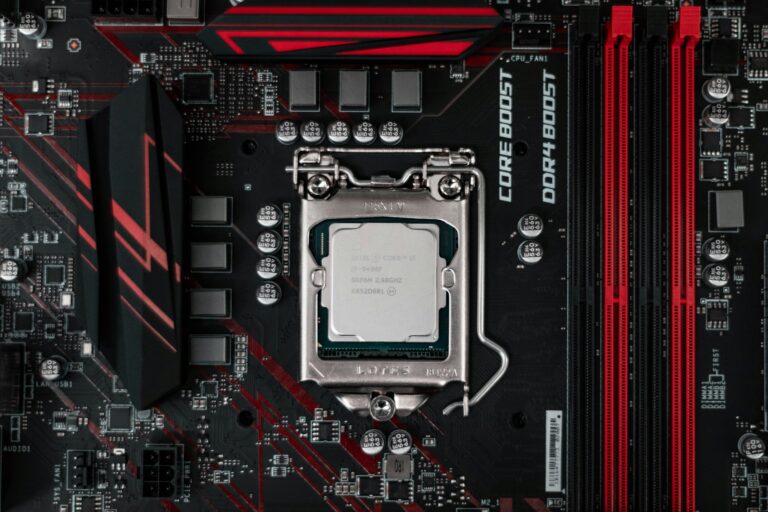
Intel's 18A Manufacturing Process Enters Risk Production Amid Strong Demand

- New Process Launch: Intel announced that its 18A manufacturing process has entered risk production, indicating the company's commitment to manufacturing and potentially attracting external customer interest, thereby enhancing its market competitiveness.
- Performance Improvement: Compared to 18A, the 18A-P delivers a 9% performance increase at the same power level or an 18% reduction in power consumption at the same processing speed, which will enhance product market appeal and meet customer demand for high-performance chips.
- Strong Customer Demand: In the first quarter, demand for Intel's central processors surged, particularly from companies offering AI services, leading to sales of chips that were originally slated for write-off, demonstrating strong market demand for its products.
- Revenue Forecast Upgrade: Intel forecasts second-quarter revenue between $13.8 billion and $14.8 billion, exceeding the market estimate of $13.07 billion, reflecting the company's robust performance in the rapidly growing AI market.
See More

U.S. Stocks Close Mixed: Dow Hits All-Time High


- Dow Hits All-Time High: The Dow Jones Industrial Average rose by 0.64%, reaching a new all-time high, reflecting investor confidence in economic recovery, despite mixed overall market performance indicating divergent views among investors on various sectors.
- Chip Stocks Decline: With Marvell Technology and Intel falling over 9% and 8% respectively, the weakness in chipmakers weighed on the broader market, suggesting that the pressure on tech stocks may impact future investment sentiment.
- Weak Housing Data: U.S. May housing starts fell 15.4% month-over-month to a six-year low of 1.177 million, below expectations of 1.430 million, indicating that the weakness in the housing market could pose challenges to economic growth.
- Oil Prices Plummet: WTI crude oil prices dropped more than 5% to a 3.5-month low due to the U.S.-Iran agreement to reopen the Strait of Hormuz, enhancing expectations for a revival in oil supplies, which may affect the performance of energy stocks.
See More

Intel Advances Chip Production with 18A-P Node


- Chip Production Milestone: Intel announced at the VLSI Symposium in Hawaii that it has begun production of its latest 18A-P chip node, indicating a potential deal to manufacture chips for Apple devices, which reflects the company's recovery potential in the semiconductor sector.
- Performance and Efficiency Gains: The 18A-P chip delivers 9% higher performance and 18% lower power consumption compared to the previous 18A chip, along with enhanced heat resistance, which is expected to attract more customers and strengthen Intel's position in a competitive market.
- Positive Market Reaction: Following investments from the U.S. government and Nvidia, Intel's stock surged 84% in 2025 and over 200% in 2026, demonstrating strong market confidence in its recovery and anticipated commitments from additional foundry customers.
- Packaging Technology Opportunity: Intel's EMIB packaging technology offers a competitive edge in complex chip interconnections, especially as TSMC faces packaging bottlenecks, positioning Intel to capitalize on this low-hanging opportunity to expand its market share.
See More
Intel Updates 18A-P Progress at VLSI Symposium
- Technological Advancement: At the 2026 VLSI Symposium, Intel announced that Intel 18A-P has entered risk production, delivering 9% higher performance or 18% lower power consumption, showcasing its ongoing innovation in semiconductor technology.
- New Transistor Options: The introduction of the Power Boost dual contact low-resistance transistor option enhances drive current and frequency, further increasing design flexibility and is expected to boost future product competitiveness in the market.
- Thermal Management Optimization: Intel 18A-P achieves a 20-40% improvement in thermal resistance through material and design innovations, significantly enhancing chip efficiency and performance to meet high-performance computing demands.
- Future R&D Directions: Intel showcased long-term research achievements in CFET and GaN + Si integration, indicating its forward-looking strategy in logic scaling and power management, aimed at maintaining a technological leadership position.
See More

Intel Begins Production of 18A-P Chip Node, Aiming for Apple Deal
- Advanced Chip Production: Intel has commenced risk production of its latest 18A-P chip node, marking a significant step in its efforts to become a chip manufacturer for other companies, which is expected to attract more customers.
- Performance and Efficiency Gains: The 18A-P chip delivers a 9% performance increase and an 18% reduction in power consumption compared to the 18A, enhancing Intel's product appeal in a competitive market.
- Positive Market Reaction: With investments from the U.S. government and Nvidia, Intel's stock has surged over 200% this year, reflecting strong market expectations for its business rebound, particularly in light of a preliminary deal with Apple.
- Packaging Technology Opportunity: Intel's advanced packaging technology, EMIB, is seen as a key factor in attracting customers, especially as TSMC faces packaging bottlenecks, providing Intel with a low-hanging opportunity to increase market share.
See More

Analysis of SoFi Technologies' Significant Stock Decline


- Significant Customer Growth: As of March 31, SoFi's customer base reached 14.7 million, nearly tripling from the end of 2022, which has supported substantial revenue growth and highlights its rapid expansion potential in the financial services sector.
- Increased Stock Pressure: As of June 15, SoFi's stock price has fallen 47% from its record high in November 2025 and is down 35% in 2026, reflecting market concerns about its future growth, particularly following a negative short report.
- Inflation Impact Intensifies: The Consumer Price Index rose at its fastest pace in three years in May, reducing the likelihood of a Federal Reserve interest rate cut soon, and prolonged high rates may pressure growth for banking entities, further affecting SoFi's market performance.
- Solid Fundamentals Remain: Despite facing challenges, management expects adjusted revenue and earnings per share to grow by 30% and 54%, respectively, in 2026, indicating strong long-term growth potential for SoFi, with a current forward P/E ratio of 28.6 presenting an attractive investment opportunity.
See More
Intel's 18A Manufacturing Process Enters Risk Production Amid Strong Demand
- New Process Launch: Intel announced that its 18A manufacturing process has entered risk production, indicating the company's commitment to manufacturing and potentially attracting external customer interest, thereby enhancing its market competitiveness.
- Performance Improvement: Compared to 18A, the 18A-P delivers a 9% performance increase at the same power level or an 18% reduction in power consumption at the same processing speed, which will enhance product market appeal and meet customer demand for high-performance chips.
- Strong Customer Demand: In the first quarter, demand for Intel's central processors surged, particularly from companies offering AI services, leading to sales of chips that were originally slated for write-off, demonstrating strong market demand for its products.
- Revenue Forecast Upgrade: Intel forecasts second-quarter revenue between $13.8 billion and $14.8 billion, exceeding the market estimate of $13.07 billion, reflecting the company's robust performance in the rapidly growing AI market.
See More
U.S. Stocks Close Mixed: Dow Hits All-Time High
- Dow Hits All-Time High: The Dow Jones Industrial Average rose by 0.64%, reaching a new all-time high, reflecting investor confidence in economic recovery, despite mixed overall market performance indicating divergent views among investors on various sectors.
- Chip Stocks Decline: With Marvell Technology and Intel falling over 9% and 8% respectively, the weakness in chipmakers weighed on the broader market, suggesting that the pressure on tech stocks may impact future investment sentiment.
- Weak Housing Data: U.S. May housing starts fell 15.4% month-over-month to a six-year low of 1.177 million, below expectations of 1.430 million, indicating that the weakness in the housing market could pose challenges to economic growth.
- Oil Prices Plummet: WTI crude oil prices dropped more than 5% to a 3.5-month low due to the U.S.-Iran agreement to reopen the Strait of Hormuz, enhancing expectations for a revival in oil supplies, which may affect the performance of energy stocks.
See More
Intel Advances Chip Production with 18A-P Node
- Chip Production Milestone: Intel announced at the VLSI Symposium in Hawaii that it has begun production of its latest 18A-P chip node, indicating a potential deal to manufacture chips for Apple devices, which reflects the company's recovery potential in the semiconductor sector.
- Performance and Efficiency Gains: The 18A-P chip delivers 9% higher performance and 18% lower power consumption compared to the previous 18A chip, along with enhanced heat resistance, which is expected to attract more customers and strengthen Intel's position in a competitive market.
- Positive Market Reaction: Following investments from the U.S. government and Nvidia, Intel's stock surged 84% in 2025 and over 200% in 2026, demonstrating strong market confidence in its recovery and anticipated commitments from additional foundry customers.
- Packaging Technology Opportunity: Intel's EMIB packaging technology offers a competitive edge in complex chip interconnections, especially as TSMC faces packaging bottlenecks, positioning Intel to capitalize on this low-hanging opportunity to expand its market share.
See More
Intel Updates 18A-P Progress at VLSI Symposium
- Technological Advancement: At the 2026 VLSI Symposium, Intel announced that Intel 18A-P has entered risk production, delivering 9% higher performance or 18% lower power consumption, showcasing its ongoing innovation in semiconductor technology.
- New Transistor Options: The introduction of the Power Boost dual contact low-resistance transistor option enhances drive current and frequency, further increasing design flexibility and is expected to boost future product competitiveness in the market.
- Thermal Management Optimization: Intel 18A-P achieves a 20-40% improvement in thermal resistance through material and design innovations, significantly enhancing chip efficiency and performance to meet high-performance computing demands.
- Future R&D Directions: Intel showcased long-term research achievements in CFET and GaN + Si integration, indicating its forward-looking strategy in logic scaling and power management, aimed at maintaining a technological leadership position.
See More
Intel Begins Production of 18A-P Chip Node, Aiming for Apple Deal
- Advanced Chip Production: Intel has commenced risk production of its latest 18A-P chip node, marking a significant step in its efforts to become a chip manufacturer for other companies, which is expected to attract more customers.
- Performance and Efficiency Gains: The 18A-P chip delivers a 9% performance increase and an 18% reduction in power consumption compared to the 18A, enhancing Intel's product appeal in a competitive market.
- Positive Market Reaction: With investments from the U.S. government and Nvidia, Intel's stock has surged over 200% this year, reflecting strong market expectations for its business rebound, particularly in light of a preliminary deal with Apple.
- Packaging Technology Opportunity: Intel's advanced packaging technology, EMIB, is seen as a key factor in attracting customers, especially as TSMC faces packaging bottlenecks, providing Intel with a low-hanging opportunity to increase market share.
See More
Analysis of SoFi Technologies' Significant Stock Decline
- Significant Customer Growth: As of March 31, SoFi's customer base reached 14.7 million, nearly tripling from the end of 2022, which has supported substantial revenue growth and highlights its rapid expansion potential in the financial services sector.
- Increased Stock Pressure: As of June 15, SoFi's stock price has fallen 47% from its record high in November 2025 and is down 35% in 2026, reflecting market concerns about its future growth, particularly following a negative short report.
- Inflation Impact Intensifies: The Consumer Price Index rose at its fastest pace in three years in May, reducing the likelihood of a Federal Reserve interest rate cut soon, and prolonged high rates may pressure growth for banking entities, further affecting SoFi's market performance.
- Solid Fundamentals Remain: Despite facing challenges, management expects adjusted revenue and earnings per share to grow by 30% and 54%, respectively, in 2026, indicating strong long-term growth potential for SoFi, with a current forward P/E ratio of 28.6 presenting an attractive investment opportunity.
See More