Nvidia Aims for Level 4 Robotaxis by 2027 to Compete with Tesla
Written by Emily J. Thompson, Senior Investment Analyst
Updated: Jan 06 2026
0mins

Should l Buy GOOGL?
Source: Benzinga
- Robotaxi Strategy: Nvidia plans to launch Level 4 robotaxis by 2027, aiming to support fleets with its AI chips and Drive AV software, thereby directly competing with Tesla in the autonomous driving market.
- Hardware Innovation: The newly introduced Drive AGX Thor automotive computer, priced at approximately $3,500 per chip, is designed to reduce R&D costs for automakers and shorten development timelines, accelerating the adoption of autonomous driving technology.
- Open Platform Launch: Nvidia unveiled the Alpamayo open-source model, integrating perception, reasoning, and action, which has attracted interest from industry leaders like Lucid and Uber to develop reasoning-based AV systems, facilitating the realization of Level 4 autonomy.
- Market Competitive Pressure: Nvidia's strategy targets not only Tesla but also Alphabet's Waymo, and as demand for autonomous driving technology increases, Nvidia's innovations could reshape the market landscape and enhance its competitiveness in the autonomous driving sector.
Trade with 70% Backtested Accuracy
Stop guessing "Should I Buy GOOGL?" and start using high-conviction signals backed by rigorous historical data.
Sign up today to access powerful investing tools and make smarter, data-driven decisions.
Analyst Views on GOOGL
Wall Street analysts forecast GOOGL stock price to rise over the next 12 months. According to Wall Street analysts, the average 1-year price target for GOOGL is 338.25 USD with a low forecast of 279.00 USD and a high forecast of 390.00 USD. However, analyst price targets are subjective and often lag stock prices, so investors should focus on the objective reasons behind analyst rating changes, which better reflect the company's fundamentals.
34 Analyst Rating
27 Buy
7 Hold
0 Sell
Strong Buy
Current: 331.250

Low
279.00
Averages
338.25
High
390.00
Current: 331.250
Low
279.00
Averages
338.25
High
390.00
About GOOGL
Alphabet Inc. is a holding company. The Company's segments include Google Services, Google Cloud, and Other Bets. The Google Services segment includes products and services such as ads, Android, Chrome, devices, Google Maps, Google Play, Search, and YouTube. The Google Cloud segment includes infrastructure and platform services, collaboration tools, and other services for enterprise customers. Its Other Bets segment is engaged in the sale of healthcare-related services and Internet services. Its Google Cloud provides enterprise-ready cloud services, including Google Cloud Platform and Google Workspace. Google Cloud Platform provides access to solutions such as artificial intelligence (AI) offerings, including its AI infrastructure, Vertex AI platform, and Gemini for Google Cloud; cybersecurity, and data and analytics. Google Workspace includes cloud-based communication and collaboration tools for enterprises, such as Calendar, Gmail, Docs, Drive, and Meet.
About the author

Emily J. Thompson
Emily J. Thompson, a Chartered Financial Analyst (CFA) with 12 years in investment research, graduated with honors from the Wharton School. Specializing in industrial and technology stocks, she provides in-depth analysis for Intellectia’s earnings and market brief reports.

Alphabet Plans Significant Increase in AI Investments

- Stock Price Fluctuation: Alphabet's stock closed at $331.25, down 0.54%, as investors assessed the company's plan to increase AI capital expenditures to approximately $180 billion by 2026, indicating market concerns over future cash flow and AI growth.
- Surge in Trading Volume: Trading volume reached 87.1 million shares, about 136% above the three-month average of 36.8 million shares, reflecting heightened investor interest in the company's future prospects.
- Earnings Beat Expectations: In Q4, Alphabet reported sales and earnings per share growth of 18% and 31%, respectively, surpassing Wall Street's consensus, with Google Search and YouTube showing steady growth rates of 17% and 9% each.
- Cloud Business Highlight: The cloud backlog surged 55% sequentially, more than doubling from Q4 2024, indicating strong demand in the cloud services sector, while management's confidence in AI-related spending continues to grow.
See More
Amazon's Cloud Growth Lags Behind Rivals


- Market Share Decline: Amazon Web Services (AWS) reported a 20% growth in 2025, significantly trailing behind Google Cloud's 36% and Microsoft's Azure at 39%, indicating a weakening competitive position in the cloud infrastructure market that could impact future leadership.
- Revenue and Profit Comparison: AWS added over $21.2 billion in revenue in 2025, achieving an operating income of $45.6 billion, which is substantially higher than Google Cloud's $13.9 billion and Microsoft's Azure's $19 billion, highlighting AWS's profitability advantage, yet its growth rate lags behind competitors.
- Capital Expenditure Plans: Amazon is targeting $200 billion in capital expenditures for 2025, primarily for AWS and AI workloads, which may lead to negative free cash flow in 2026, but underscores the company's long-term commitment to its cloud business despite potential short-term financial strain.
- Stable Financial Performance: Amazon's quarterly revenue rose 14% to $213.4 billion in 2025, with operating income increasing 18% to $25 billion, indicating strong execution capabilities even as market reactions to its spending plans remain lukewarm, reflecting the company's resilience in financial performance.
See More

Oracle CDS Pricing Signals Market Skepticism


- Bond Market Pressure: Oracle's credit default swap (CDS) pricing surged in November, currently at nearly four times the levels seen in September, indicating market concerns over its debt, which could lead to increased financing costs and impact the company's capital expenditures and investment decisions.
- AI Investment Risks: Oracle and Microsoft face heightened risks due to their $300 billion deal with OpenAI, as market skepticism grows over OpenAI's internal projections of burning through over $100 billion in cash before 2030, potentially undermining investor confidence in AI-related companies.
- Market Divergence: While the bond market adopts a cautious stance on Oracle's outlook, the equity market continues to invest in AI companies, reflecting differing views on the AI sector, which may prompt investors to reassess the value and sustainability of AI firms.
- Alphabet's Advantage: Compared to Oracle and Microsoft, Alphabet has minimal exposure to OpenAI and a stronger financial position, enabling it to better support AI-related capital expenditures, potentially giving it a competitive edge in future market dynamics.
See More

Equinix Aims to Double Data Center Capacity in Five Years

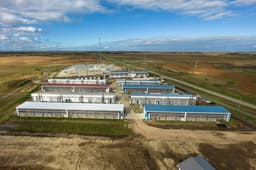
- Massive Investment Plans: Hyperscale cloud companies like Google, Amazon, and Microsoft are set to invest up to $500 billion in 2023, with Google planning to invest between $175 billion and $185 billion by 2026, significantly exceeding analysts' expectations of $115 billion, indicating a strong demand for AI computing power.
- Strong Demand for Data Centers: Equinix achieved record annualized bookings of $394 million in Q3, a 25% year-over-year increase, closing over 4,400 deals with more than 3,400 customers, which drove an 11% increase in adjusted funds from operations (FFO), reflecting robust demand for its data centers.
- Expansion Strategy: Equinix is advancing 58 major projects globally, including 12 AI-ready xScale data centers, aiming to double its data center capacity by 2029, with the CEO stating that the capacity brought online in the next five years will match that of the past 27 years, showcasing its ambitious expansion plans.
- Increased Capital Expenditure: Under its
See More

Alphabet Poised to Dominate AI Market by 2027
- Market Share Growth: Google's Gemini has increased its market share from 7% to 21% in 2023, and is expected to surpass ChatGPT this year, demonstrating its strong competitive position in the enterprise large language model market and further solidifying Alphabet's leadership in AI.
- Hardware Independence: Alphabet is reducing its reliance on Nvidia by developing its TPU chip in partnership with Broadcom, which is expected to provide a more competitive hardware alternative, while Anthropic's use of Google's TPUs further expands its market influence.
- Financial Advantage: Alphabet's revenue is projected to exceed $400 billion in 2025, a 15% increase, with net income reaching $132.1 billion, showcasing its profitability and financial robustness in the AI sector, providing strong support for future capital expenditures.
- Capital Expenditure Plans: The company plans to increase capital expenditures to between $175 billion and $185 billion in 2026; despite this increase, Alphabet's ability to maintain a 59.6% gross margin and 32% net margin indicates its financial health, allowing for significant investments in AI.
See More

Brookfield and Oneok's Sustainable Growth Outlook

- Stable Cash Flow: Brookfield Renewable secures 90% of its electricity sales through long-term power purchase agreements (PPAs) with an average contract length of 13 years, with 70% of its revenue linked to inflation, ensuring stable and steadily rising cash flow.
- Major Project Progress: Brookfield recently signed two 20-year hydropower agreements with Google, expected to generate over $3 billion in revenue, while the company has an 84 gigawatt backlog of renewable energy projects, aiming to increase its annual delivery capacity to 10 gigawatts by 2027.
- Acquisition-Driven Growth: Oneok, a leading pipeline company, generates over 90% of its revenue from long-term contracts and government-regulated rate structures, significantly expanding and diversifying its operations through acquisitions, with expectations of capturing hundreds of millions in commercial synergies in the coming years.
- Visible Dividend Growth: Both Brookfield and Oneok generate durable cash flows backed by long-term contracts, supporting their high-yield dividends; Brookfield plans to increase its dividend by 5% to 9% annually, while Oneok aims for a 3% to 4% increase, enhancing investor confidence for long-term holdings.
See More
Alphabet Plans Significant Increase in AI Investments
- Stock Price Fluctuation: Alphabet's stock closed at $331.25, down 0.54%, as investors assessed the company's plan to increase AI capital expenditures to approximately $180 billion by 2026, indicating market concerns over future cash flow and AI growth.
- Surge in Trading Volume: Trading volume reached 87.1 million shares, about 136% above the three-month average of 36.8 million shares, reflecting heightened investor interest in the company's future prospects.
- Earnings Beat Expectations: In Q4, Alphabet reported sales and earnings per share growth of 18% and 31%, respectively, surpassing Wall Street's consensus, with Google Search and YouTube showing steady growth rates of 17% and 9% each.
- Cloud Business Highlight: The cloud backlog surged 55% sequentially, more than doubling from Q4 2024, indicating strong demand in the cloud services sector, while management's confidence in AI-related spending continues to grow.
See More
Amazon's Cloud Growth Lags Behind Rivals
- Market Share Decline: Amazon Web Services (AWS) reported a 20% growth in 2025, significantly trailing behind Google Cloud's 36% and Microsoft's Azure at 39%, indicating a weakening competitive position in the cloud infrastructure market that could impact future leadership.
- Revenue and Profit Comparison: AWS added over $21.2 billion in revenue in 2025, achieving an operating income of $45.6 billion, which is substantially higher than Google Cloud's $13.9 billion and Microsoft's Azure's $19 billion, highlighting AWS's profitability advantage, yet its growth rate lags behind competitors.
- Capital Expenditure Plans: Amazon is targeting $200 billion in capital expenditures for 2025, primarily for AWS and AI workloads, which may lead to negative free cash flow in 2026, but underscores the company's long-term commitment to its cloud business despite potential short-term financial strain.
- Stable Financial Performance: Amazon's quarterly revenue rose 14% to $213.4 billion in 2025, with operating income increasing 18% to $25 billion, indicating strong execution capabilities even as market reactions to its spending plans remain lukewarm, reflecting the company's resilience in financial performance.
See More
Oracle CDS Pricing Signals Market Skepticism
- Bond Market Pressure: Oracle's credit default swap (CDS) pricing surged in November, currently at nearly four times the levels seen in September, indicating market concerns over its debt, which could lead to increased financing costs and impact the company's capital expenditures and investment decisions.
- AI Investment Risks: Oracle and Microsoft face heightened risks due to their $300 billion deal with OpenAI, as market skepticism grows over OpenAI's internal projections of burning through over $100 billion in cash before 2030, potentially undermining investor confidence in AI-related companies.
- Market Divergence: While the bond market adopts a cautious stance on Oracle's outlook, the equity market continues to invest in AI companies, reflecting differing views on the AI sector, which may prompt investors to reassess the value and sustainability of AI firms.
- Alphabet's Advantage: Compared to Oracle and Microsoft, Alphabet has minimal exposure to OpenAI and a stronger financial position, enabling it to better support AI-related capital expenditures, potentially giving it a competitive edge in future market dynamics.
See More
Equinix Aims to Double Data Center Capacity in Five Years
- Massive Investment Plans: Hyperscale cloud companies like Google, Amazon, and Microsoft are set to invest up to $500 billion in 2023, with Google planning to invest between $175 billion and $185 billion by 2026, significantly exceeding analysts' expectations of $115 billion, indicating a strong demand for AI computing power.
- Strong Demand for Data Centers: Equinix achieved record annualized bookings of $394 million in Q3, a 25% year-over-year increase, closing over 4,400 deals with more than 3,400 customers, which drove an 11% increase in adjusted funds from operations (FFO), reflecting robust demand for its data centers.
- Expansion Strategy: Equinix is advancing 58 major projects globally, including 12 AI-ready xScale data centers, aiming to double its data center capacity by 2029, with the CEO stating that the capacity brought online in the next five years will match that of the past 27 years, showcasing its ambitious expansion plans.
- Increased Capital Expenditure: Under its
See More
Alphabet Poised to Dominate AI Market by 2027
- Market Share Growth: Google's Gemini has increased its market share from 7% to 21% in 2023, and is expected to surpass ChatGPT this year, demonstrating its strong competitive position in the enterprise large language model market and further solidifying Alphabet's leadership in AI.
- Hardware Independence: Alphabet is reducing its reliance on Nvidia by developing its TPU chip in partnership with Broadcom, which is expected to provide a more competitive hardware alternative, while Anthropic's use of Google's TPUs further expands its market influence.
- Financial Advantage: Alphabet's revenue is projected to exceed $400 billion in 2025, a 15% increase, with net income reaching $132.1 billion, showcasing its profitability and financial robustness in the AI sector, providing strong support for future capital expenditures.
- Capital Expenditure Plans: The company plans to increase capital expenditures to between $175 billion and $185 billion in 2026; despite this increase, Alphabet's ability to maintain a 59.6% gross margin and 32% net margin indicates its financial health, allowing for significant investments in AI.
See More
Brookfield and Oneok's Sustainable Growth Outlook
- Stable Cash Flow: Brookfield Renewable secures 90% of its electricity sales through long-term power purchase agreements (PPAs) with an average contract length of 13 years, with 70% of its revenue linked to inflation, ensuring stable and steadily rising cash flow.
- Major Project Progress: Brookfield recently signed two 20-year hydropower agreements with Google, expected to generate over $3 billion in revenue, while the company has an 84 gigawatt backlog of renewable energy projects, aiming to increase its annual delivery capacity to 10 gigawatts by 2027.
- Acquisition-Driven Growth: Oneok, a leading pipeline company, generates over 90% of its revenue from long-term contracts and government-regulated rate structures, significantly expanding and diversifying its operations through acquisitions, with expectations of capturing hundreds of millions in commercial synergies in the coming years.
- Visible Dividend Growth: Both Brookfield and Oneok generate durable cash flows backed by long-term contracts, supporting their high-yield dividends; Brookfield plans to increase its dividend by 5% to 9% annually, while Oneok aims for a 3% to 4% increase, enhancing investor confidence for long-term holdings.
See More