NETHERLANDS GRANTS RTX'S RAYTHEON A $627 MILLION CONTRACT FOR PATRIOT AIR AND MISSILE DEFENSE SYSTEMS
Written by Emily J. Thompson, Senior Investment Analyst
Updated: Apr 08 2026
0mins
Should l Buy RTX?
Source: moomoo
- Contract Award: The Netherlands has awarded a $627 million contract to RTX for the supply of Patriot air and missile defense equipment.
- Defense Investment: This contract signifies a significant investment in enhancing the Netherlands' defense capabilities.
Trade with 70% Backtested Accuracy
Stop guessing "Should I Buy RTX?" and start using high-conviction signals backed by rigorous historical data.
Sign up today to access powerful investing tools and make smarter, data-driven decisions.
Analyst Views on RTX
Wall Street analysts forecast RTX stock price to rise
14 Analyst Rating
9 Buy
5 Hold
0 Sell
Moderate Buy
Current: 176.070

Low
168.00
Averages
195.77
High
215.00
Current: 176.070
Low
168.00
Averages
195.77
High
215.00
About RTX
RTX Corporation is an aerospace and defense company, which provides advanced systems and services for commercial, military, and government customers worldwide. The Company operates through three segments: Collins Aerospace, Pratt & Whitney, and Raytheon. Collins Aerospace segment provides technologically advanced aerospace and defense products and aftermarket service solutions for civil and military aircraft manufacturers, commercial airlines, and regional, business and general aviation, as well as for defense and commercial space operations. The Pratt & Whitney segment supplies aircraft engines for commercial, military, business jet, and general aviation customers. The Raytheon segment provides defensive and offensive threat detection, tracking and mitigation capabilities for the United States and foreign government and commercial customers. The Raytheon designs, develops, and provides advanced capabilities in integrated air and missile defense, smart weapons, missiles and others.
About the author

Emily J. Thompson
Emily J. Thompson, a Chartered Financial Analyst (CFA) with 12 years in investment research, graduated with honors from the Wharton School. Specializing in industrial and technology stocks, she provides in-depth analysis for Intellectia’s earnings and market brief reports.

Raytheon Secures $206.2M Navy Contract for GPS Systems

- Contract Value: Raytheon has secured a $206.2 million cost-plus incentive contract focused on developing advanced GPS-related systems for the U.S. Navy, highlighting the company's strong competitive position in the defense sector.
- Project Scope: The contract encompasses design, engineering, testing, and integration of next-gen M-Code GPS, along with the construction of four prototype models, ensuring the Navy's technological edge in modern warfare.
- Funding Source: Approximately $11.5 million from FY2026 Navy R&D funds will be utilized for the contract, indicating the government's trust in Raytheon's technological capabilities while providing financial backing for future R&D efforts.
- Timeline: The project is scheduled for completion by April 2030, reflecting Raytheon's long-term commitment and strategic planning in high-tech defense projects.
See More

Impact of Iran War on Defense Stocks

- Defense Industry Spotlight: The ongoing Iran war has drawn attention to the defense sector, with major companies like Lockheed Martin and Northrop Grumman earning billions annually through military contracts; however, despite increased trading volumes, stock prices have generally declined, with Lockheed Martin down 18% over the past three months.
- Increased Military Spending: The Pentagon reported that the war has cost approximately $25 billion, excluding repair costs for military bases, and more funding is expected to flow to defense contractors, particularly Lockheed Martin, which benefited from a $4.8 billion contract for Patriot missiles.
- Impact of Technological Change: As technology advances, companies like Palantir are becoming increasingly important to the Pentagon, with its AI software set to help optimize munitions use, and it is expected to receive a $2.3 billion contract, altering traditional military budget spending practices.
- Analysts' Cautious Outlook: Analysts from Morgan Stanley and UBS have expressed caution regarding defense stocks, lowering price targets for Lockheed Martin and Northrop Grumman; while there is long-term potential for these companies, short-term volatility is anticipated due to the current situation.
See More

US Plans $71 Billion Investment to Upgrade Nuclear Arsenal

- Massive Budget Commitment: The U.S. Department of Defense's fiscal year 2027 budget proposal includes a substantial $71 billion investment aimed at modernizing the nuclear triad, with $6.1 billion allocated for the B-21 stealth bomber and $4.6 billion for the Sentinel system to replace older missiles, underscoring the focus on nuclear deterrence capabilities.
- Submarine and Missile System Upgrades: The budget also earmarks $16.2 billion for the construction of Columbia-class submarines and $1.5 billion for the development of a new long-range cruise missile, aiming to fully replace outdated weaponry rather than making incremental upgrades, thereby enhancing sea-based nuclear defense.
- Beneficiaries Among Major Contractors: General Dynamics (GD), as the primary contractor for the Columbia-class submarines, is expected to reap the most benefits from the Navy's upgrade program, while BWX Technologies (BWXT) plays a crucial role by supplying the unique nuclear reactor technology essential for the sea-based nuclear force.
- Positive Stock Market Reaction: BWXT and Curtiss-Wright (CW) stocks have surged over 25% and 30% year-to-date, respectively, while GD's stock has gained 2%, reflecting market optimism regarding defense investments, despite RTX's stock declining by 4%.
See More
RTX Secures $335.11M U.S. Navy Missile Contract Modification
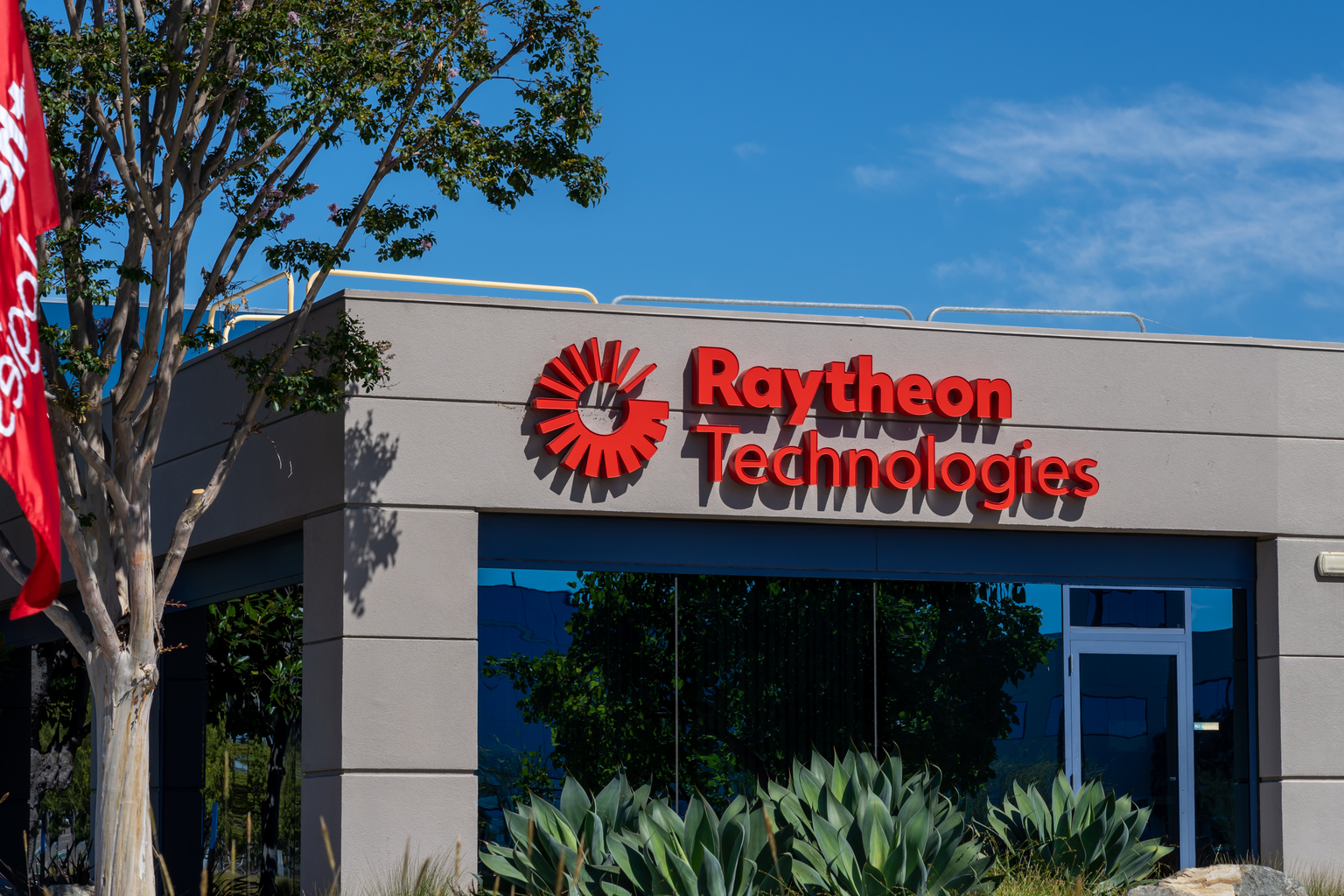
- Contract Value: RTX has received a $335.11 million contract modification to continue manufacturing, assembling, testing, and delivering Standard Missile-6 tactical missiles, demonstrating the company's strong position in the defense sector.
- Project Completion Timeline: The work is expected to be completed by May 30, 2030, ensuring a stable revenue stream for RTX over the coming years, which enhances the company's financial stability.
- Funding Source: The funding for this contract comes from the Navy's weapons procurement budget, with $295.98 million allocated for FY2025 and $39.13 million for FY2026, already locked in at the time of award, ensuring financial security for the project.
- Stock Price Reaction: Following the announcement, RTX's stock rose by 2% to $176.10, reflecting the market's positive response to the contract and optimism regarding the company's future performance.
See More

RTX Declares Dividend Increase to 73 Cents
- Dividend Growth: RTX's board of directors has declared a dividend of 73 cents per share, representing a 7.4% increase over the previous quarter, reflecting the company's ongoing profitability and commitment to shareholder returns.
- Payment Schedule: The dividend will be payable on June 11, 2026, to shareholders of record as of May 22, 2026, ensuring that investors receive their returns in a timely manner.
- Dividend History: RTX has paid cash dividends annually since 1936, demonstrating the company's ability to maintain stable cash flow and profitability through economic fluctuations, thereby enhancing investor confidence.
- Company Scale and Influence: With over 180,000 employees and sales exceeding $88 billion in 2025, RTX's technological and scientific innovation capabilities keep it at the forefront of the aviation and defense sectors, further solidifying its market position.
See More
Strategic Shift in Rare Earth Alloy Market


- Supply Chain Restructuring: REalloys (ALOY) focuses on bringing the rare earth alloy supply chain back to the U.S., aiming to meet the Pentagon's ban on Chinese-origin materials by 2027, thereby ensuring the security and independence of the defense supply chain.
- Market Price Fluctuations: Rare earth metal prices rebounded to $130-150/kg by mid-2024, reflecting strong demand for rare earth materials, particularly in the production of high-performance permanent magnets, which directly impacts the production capabilities of defense and EV industries.
- Heavy Rare Earth Production Capacity: REalloys partners with the Saskatchewan Research Council to achieve an initial production of 525 tonnes of NdPr metal by early 2027, scaling up to 3,500 tonnes, positioning itself as one of North America's largest heavy rare earth producers and significantly enhancing U.S. competitiveness in the global rare earth market.
- High Demand Drives Profit Growth: With rare earth metals priced at $1,200-1,500/kg in the U.S. market, REalloys' business model shifts from mere production to delivering high-value non-China materials, expected to substantially increase the company's profitability and market share.
See More
Raytheon Secures $206.2M Navy Contract for GPS Systems
- Contract Value: Raytheon has secured a $206.2 million cost-plus incentive contract focused on developing advanced GPS-related systems for the U.S. Navy, highlighting the company's strong competitive position in the defense sector.
- Project Scope: The contract encompasses design, engineering, testing, and integration of next-gen M-Code GPS, along with the construction of four prototype models, ensuring the Navy's technological edge in modern warfare.
- Funding Source: Approximately $11.5 million from FY2026 Navy R&D funds will be utilized for the contract, indicating the government's trust in Raytheon's technological capabilities while providing financial backing for future R&D efforts.
- Timeline: The project is scheduled for completion by April 2030, reflecting Raytheon's long-term commitment and strategic planning in high-tech defense projects.
See More
Impact of Iran War on Defense Stocks
- Defense Industry Spotlight: The ongoing Iran war has drawn attention to the defense sector, with major companies like Lockheed Martin and Northrop Grumman earning billions annually through military contracts; however, despite increased trading volumes, stock prices have generally declined, with Lockheed Martin down 18% over the past three months.
- Increased Military Spending: The Pentagon reported that the war has cost approximately $25 billion, excluding repair costs for military bases, and more funding is expected to flow to defense contractors, particularly Lockheed Martin, which benefited from a $4.8 billion contract for Patriot missiles.
- Impact of Technological Change: As technology advances, companies like Palantir are becoming increasingly important to the Pentagon, with its AI software set to help optimize munitions use, and it is expected to receive a $2.3 billion contract, altering traditional military budget spending practices.
- Analysts' Cautious Outlook: Analysts from Morgan Stanley and UBS have expressed caution regarding defense stocks, lowering price targets for Lockheed Martin and Northrop Grumman; while there is long-term potential for these companies, short-term volatility is anticipated due to the current situation.
See More
US Plans $71 Billion Investment to Upgrade Nuclear Arsenal
- Massive Budget Commitment: The U.S. Department of Defense's fiscal year 2027 budget proposal includes a substantial $71 billion investment aimed at modernizing the nuclear triad, with $6.1 billion allocated for the B-21 stealth bomber and $4.6 billion for the Sentinel system to replace older missiles, underscoring the focus on nuclear deterrence capabilities.
- Submarine and Missile System Upgrades: The budget also earmarks $16.2 billion for the construction of Columbia-class submarines and $1.5 billion for the development of a new long-range cruise missile, aiming to fully replace outdated weaponry rather than making incremental upgrades, thereby enhancing sea-based nuclear defense.
- Beneficiaries Among Major Contractors: General Dynamics (GD), as the primary contractor for the Columbia-class submarines, is expected to reap the most benefits from the Navy's upgrade program, while BWX Technologies (BWXT) plays a crucial role by supplying the unique nuclear reactor technology essential for the sea-based nuclear force.
- Positive Stock Market Reaction: BWXT and Curtiss-Wright (CW) stocks have surged over 25% and 30% year-to-date, respectively, while GD's stock has gained 2%, reflecting market optimism regarding defense investments, despite RTX's stock declining by 4%.
See More
RTX Secures $335.11M U.S. Navy Missile Contract Modification
- Contract Value: RTX has received a $335.11 million contract modification to continue manufacturing, assembling, testing, and delivering Standard Missile-6 tactical missiles, demonstrating the company's strong position in the defense sector.
- Project Completion Timeline: The work is expected to be completed by May 30, 2030, ensuring a stable revenue stream for RTX over the coming years, which enhances the company's financial stability.
- Funding Source: The funding for this contract comes from the Navy's weapons procurement budget, with $295.98 million allocated for FY2025 and $39.13 million for FY2026, already locked in at the time of award, ensuring financial security for the project.
- Stock Price Reaction: Following the announcement, RTX's stock rose by 2% to $176.10, reflecting the market's positive response to the contract and optimism regarding the company's future performance.
See More
RTX Declares Dividend Increase to 73 Cents
- Dividend Growth: RTX's board of directors has declared a dividend of 73 cents per share, representing a 7.4% increase over the previous quarter, reflecting the company's ongoing profitability and commitment to shareholder returns.
- Payment Schedule: The dividend will be payable on June 11, 2026, to shareholders of record as of May 22, 2026, ensuring that investors receive their returns in a timely manner.
- Dividend History: RTX has paid cash dividends annually since 1936, demonstrating the company's ability to maintain stable cash flow and profitability through economic fluctuations, thereby enhancing investor confidence.
- Company Scale and Influence: With over 180,000 employees and sales exceeding $88 billion in 2025, RTX's technological and scientific innovation capabilities keep it at the forefront of the aviation and defense sectors, further solidifying its market position.
See More
Strategic Shift in Rare Earth Alloy Market
- Supply Chain Restructuring: REalloys (ALOY) focuses on bringing the rare earth alloy supply chain back to the U.S., aiming to meet the Pentagon's ban on Chinese-origin materials by 2027, thereby ensuring the security and independence of the defense supply chain.
- Market Price Fluctuations: Rare earth metal prices rebounded to $130-150/kg by mid-2024, reflecting strong demand for rare earth materials, particularly in the production of high-performance permanent magnets, which directly impacts the production capabilities of defense and EV industries.
- Heavy Rare Earth Production Capacity: REalloys partners with the Saskatchewan Research Council to achieve an initial production of 525 tonnes of NdPr metal by early 2027, scaling up to 3,500 tonnes, positioning itself as one of North America's largest heavy rare earth producers and significantly enhancing U.S. competitiveness in the global rare earth market.
- High Demand Drives Profit Growth: With rare earth metals priced at $1,200-1,500/kg in the U.S. market, REalloys' business model shifts from mere production to delivering high-value non-China materials, expected to substantially increase the company's profitability and market share.
See More