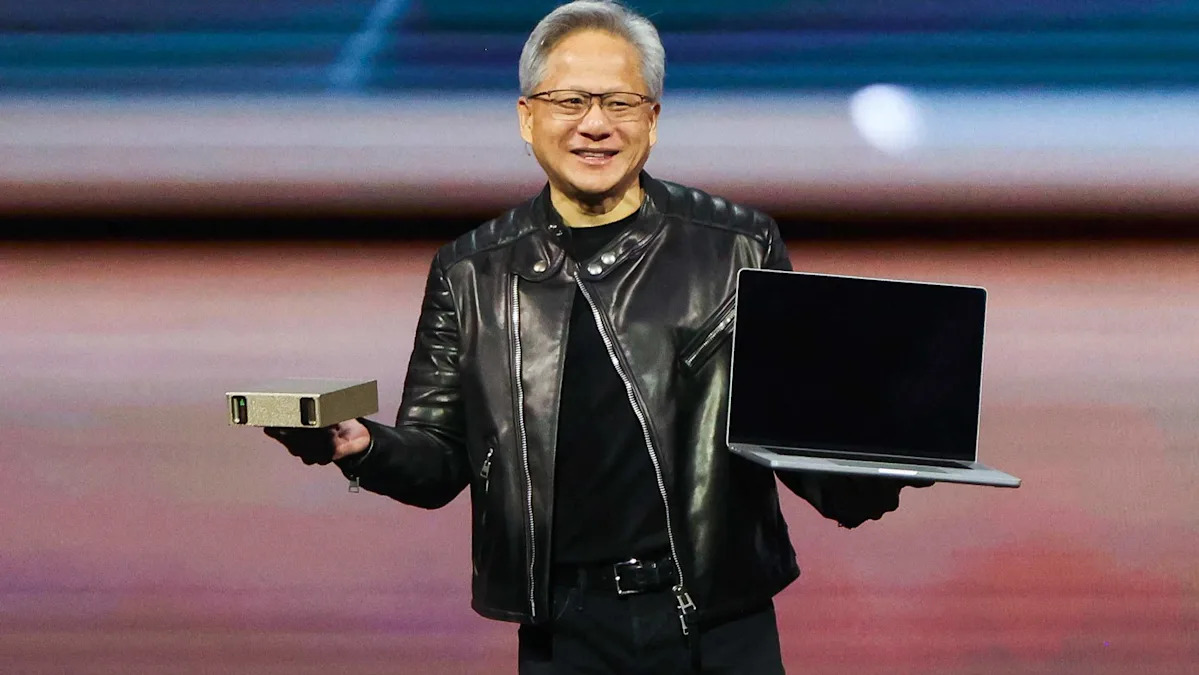
Musk Praises Nvidia and Envisions Future AI Chip Developments
Written by Emily J. Thompson, Senior Investment Analyst
Updated: 1 hour ago
0mins
Should l Buy TSLA?
Source: stocktwits
- Admiration for Nvidia: Musk expressed that he is a “huge admirer” of Nvidia and CEO Jensen Huang, stating that the company's valuation is “well-deserved,” which underscores Nvidia's pivotal role in Tesla's AI strategy.
- AI Chip Development Plans: Musk revealed that Tesla's upcoming AI5 chip is primarily designed for edge computing, although it can also be used for training in data centers, indicating significant performance enhancements for Optimus and Robotaxi, showcasing Tesla's ongoing progress in in-house chip development.
- Tesla's Semiconductor Initiative: Musk announced that Tesla's “Terafab Project” will launch in seven days, aiming to establish a large-scale semiconductor manufacturing facility to address potential bottlenecks in AI compute and memory supply over the next three to four years, with estimates suggesting Tesla may need over 200 million chips annually.
- SpaceX's AI Potential: Musk indicated that SpaceX could “far exceed everyone combined” in AI, emphasizing that the merger with xAI will enhance AI model development, further solidifying its importance within the AI ecosystem.
Trade with 70% Backtested Accuracy
Stop guessing "Should I Buy TSLA?" and start using high-conviction signals backed by rigorous historical data.
Sign up today to access powerful investing tools and make smarter, data-driven decisions.
Analyst Views on TSLA
Wall Street analysts forecast TSLA stock price to rise
30 Analyst Rating
12 Buy
11 Hold
7 Sell
Hold
Current: 399.270

Low
25.28
Averages
401.93
High
600.00
Current: 399.270
Low
25.28
Averages
401.93
High
600.00
About TSLA
Tesla, Inc. designs, develops, manufactures, sells and leases high-performance fully electric vehicles and energy generation and storage systems, and offers services related to its products. Its segments include automotive, and energy generation and storage. The automotive segment includes the design, development, manufacturing, sales and leasing of high-performance fully electric vehicles, and sales of automotive regulatory credits. It also includes sales of used vehicles, non-warranty maintenance services and collisions, part sales, paid supercharging, insurance services revenue and retail merchandise sales. The energy generation and storage segment include the design, manufacture, installation, sales and leasing of solar energy generation and energy storage products and related services and sales of solar energy systems incentives. Its consumer vehicles include the Model 3, Y, S, X and Cybertruck. Its lithium-ion battery energy storage products include Powerwall and Megapack.
About the author

Emily J. Thompson
Emily J. Thompson, a Chartered Financial Analyst (CFA) with 12 years in investment research, graduated with honors from the Wharton School. Specializing in industrial and technology stocks, she provides in-depth analysis for Intellectia’s earnings and market brief reports.

BYD Set to Release Earnings; Investors Should Pay Attention

- Global EV Sales Leader: BYD surpassed Tesla in 2025 to become the world's top-selling EV brand, a shift that not only enhances brand recognition but also attracts cost-conscious consumers globally, thereby strengthening its competitive position.
- International Market Expansion: BYD exported over one million cars for the first time in 2025, capturing approximately 4.8% of the European market with a remarkable 271.8% year-over-year growth, indicating strong international momentum as it aims to sell 1.6 million cars outside China this year.
- Technological Innovation Advantage: The introduction of BYD's second-generation Blade Battery, which charges from 10% to 97% in just nine minutes, showcases its leadership in battery technology, while its vertically integrated model, producing 80% of core components in-house, provides significant cost and margin advantages.
- Attractive Valuation: With a forward P/E ratio of just 17 and a PEG ratio of 0.78, BYD appears undervalued compared to Tesla's high valuation, and despite facing market risks and competition, its current valuation and upcoming earnings could serve as catalysts for stock price appreciation.
See More

BYD Exports Over One Million Cars in 2025
- Sales Milestone: BYD exported over one million cars in 2025, becoming the world's top-selling EV brand, which signifies rapid growth in its international market presence and increased brand recognition.
- Market Share Growth: In Europe, BYD captured approximately 4.8% of the EV market share, reflecting a remarkable 271.8% year-over-year growth, showcasing its strong momentum internationally despite fierce domestic competition.
- Technological Innovation: BYD unveiled its second-generation Blade Battery, capable of charging from 10% to 97% in just nine minutes, which enhances its product competitiveness and consumer appeal significantly.
- Financial Valuation Advantage: With a forward P/E ratio of only 17 and a PEG ratio of 0.78, BYD appears undervalued relative to its long-term growth potential, attracting investor interest despite existing market risks and competitive pressures.
See More

Musk Praises Nvidia and Envisions Future AI Chip Developments

- Admiration for Nvidia: Musk expressed that he is a “huge admirer” of Nvidia and CEO Jensen Huang, stating that the company's valuation is “well-deserved,” which underscores Nvidia's pivotal role in Tesla's AI strategy.
- AI Chip Development Plans: Musk revealed that Tesla's upcoming AI5 chip is primarily designed for edge computing, although it can also be used for training in data centers, indicating significant performance enhancements for Optimus and Robotaxi, showcasing Tesla's ongoing progress in in-house chip development.
- Tesla's Semiconductor Initiative: Musk announced that Tesla's “Terafab Project” will launch in seven days, aiming to establish a large-scale semiconductor manufacturing facility to address potential bottlenecks in AI compute and memory supply over the next three to four years, with estimates suggesting Tesla may need over 200 million chips annually.
- SpaceX's AI Potential: Musk indicated that SpaceX could “far exceed everyone combined” in AI, emphasizing that the merger with xAI will enhance AI model development, further solidifying its importance within the AI ecosystem.
See More

US Stocks Plunge Amid Rising Inflation Pressures


- Market Decline: The S&P 500 Index fell by 1.36%, and the Dow Jones Industrial Average hit a 3.75-month low, indicating a decline in investor confidence due to rising inflation concerns that could impact future market performance.
- Inflation Data Surpasses Expectations: The US February Producer Price Index (PPI) rose by 0.7% month-over-month and 3.4% year-over-year, exceeding forecasts, which suggests persistent price pressures that may influence the Federal Reserve's monetary policy decisions.
- Energy Price Volatility: Crude oil prices have become more volatile due to Iran's attacks on neighboring countries, with the IEA warning that the conflict could disrupt global oil supply by 8 million barrels per day, further heightening inflation expectations.
- Mortgage Applications Decline: US MBA mortgage applications fell by 10.9%, reflecting weakened home-buying demand, while the average 30-year fixed mortgage rate increased to 6.30%, potentially hindering the recovery of the housing market.
See More

SEC Approves Nasdaq's Tokenized Stock Trading Proposal

- Tokenized Trading Approval: The SEC approved Nasdaq's proposal on Wednesday, allowing the trading of certain high-volume stocks like Nvidia and Tesla in tokenized forms, marking a significant shift towards blockchain technology in traditional stock markets.
- Increased Trading Flexibility: Investors can now choose to trade either traditional shares or tokens, all within Nasdaq's existing exchange, enhancing market liquidity and trading convenience.
- Unified Trading Identifiers: Both tokenized and traditional stocks will trade under the same ticker and Cusip number, ensuring interchangeability and simplifying the trading experience for investors.
- Settlement Mechanism Assurance: All trades will settle through the Depository Trust Company, which processes many stock trades, further enhancing transaction security and efficiency while promoting market trust.
See More

Micron Reports Strong Earnings, Revenue Nearly Triples

- Significant Revenue Growth: Micron's latest quarter revenue reached $23.86 billion, nearly tripling from $8.05 billion a year earlier and exceeding analyst expectations of $20.07 billion, showcasing the company's robust performance amid surging AI-driven memory demand.
- Improved Profitability: Adjusted earnings per share stood at $12.20, well above the market expectation of $9.31, while gross margin soared from 36.8% a year ago to 74.4%, reflecting the high-margin advantage of high-bandwidth memory products.
- Optimistic Future Outlook: Micron anticipates revenue of approximately $33.5 billion for the upcoming quarter, representing over 200% growth from $9.3 billion a year ago, indicating strong demand and execution in the memory market.
- Increased Capital Expenditure: Micron plans to significantly ramp up capital expenditures in fiscal 2027, exceeding $10 billion for the construction of two large manufacturing campuses in Idaho and New York, aimed at enhancing memory production capacity in the U.S. and solidifying its market position.
See More
BYD Set to Release Earnings; Investors Should Pay Attention
- Global EV Sales Leader: BYD surpassed Tesla in 2025 to become the world's top-selling EV brand, a shift that not only enhances brand recognition but also attracts cost-conscious consumers globally, thereby strengthening its competitive position.
- International Market Expansion: BYD exported over one million cars for the first time in 2025, capturing approximately 4.8% of the European market with a remarkable 271.8% year-over-year growth, indicating strong international momentum as it aims to sell 1.6 million cars outside China this year.
- Technological Innovation Advantage: The introduction of BYD's second-generation Blade Battery, which charges from 10% to 97% in just nine minutes, showcases its leadership in battery technology, while its vertically integrated model, producing 80% of core components in-house, provides significant cost and margin advantages.
- Attractive Valuation: With a forward P/E ratio of just 17 and a PEG ratio of 0.78, BYD appears undervalued compared to Tesla's high valuation, and despite facing market risks and competition, its current valuation and upcoming earnings could serve as catalysts for stock price appreciation.
See More
BYD Exports Over One Million Cars in 2025
- Sales Milestone: BYD exported over one million cars in 2025, becoming the world's top-selling EV brand, which signifies rapid growth in its international market presence and increased brand recognition.
- Market Share Growth: In Europe, BYD captured approximately 4.8% of the EV market share, reflecting a remarkable 271.8% year-over-year growth, showcasing its strong momentum internationally despite fierce domestic competition.
- Technological Innovation: BYD unveiled its second-generation Blade Battery, capable of charging from 10% to 97% in just nine minutes, which enhances its product competitiveness and consumer appeal significantly.
- Financial Valuation Advantage: With a forward P/E ratio of only 17 and a PEG ratio of 0.78, BYD appears undervalued relative to its long-term growth potential, attracting investor interest despite existing market risks and competitive pressures.
See More
Musk Praises Nvidia and Envisions Future AI Chip Developments
- Admiration for Nvidia: Musk expressed that he is a “huge admirer” of Nvidia and CEO Jensen Huang, stating that the company's valuation is “well-deserved,” which underscores Nvidia's pivotal role in Tesla's AI strategy.
- AI Chip Development Plans: Musk revealed that Tesla's upcoming AI5 chip is primarily designed for edge computing, although it can also be used for training in data centers, indicating significant performance enhancements for Optimus and Robotaxi, showcasing Tesla's ongoing progress in in-house chip development.
- Tesla's Semiconductor Initiative: Musk announced that Tesla's “Terafab Project” will launch in seven days, aiming to establish a large-scale semiconductor manufacturing facility to address potential bottlenecks in AI compute and memory supply over the next three to four years, with estimates suggesting Tesla may need over 200 million chips annually.
- SpaceX's AI Potential: Musk indicated that SpaceX could “far exceed everyone combined” in AI, emphasizing that the merger with xAI will enhance AI model development, further solidifying its importance within the AI ecosystem.
See More
US Stocks Plunge Amid Rising Inflation Pressures
- Market Decline: The S&P 500 Index fell by 1.36%, and the Dow Jones Industrial Average hit a 3.75-month low, indicating a decline in investor confidence due to rising inflation concerns that could impact future market performance.
- Inflation Data Surpasses Expectations: The US February Producer Price Index (PPI) rose by 0.7% month-over-month and 3.4% year-over-year, exceeding forecasts, which suggests persistent price pressures that may influence the Federal Reserve's monetary policy decisions.
- Energy Price Volatility: Crude oil prices have become more volatile due to Iran's attacks on neighboring countries, with the IEA warning that the conflict could disrupt global oil supply by 8 million barrels per day, further heightening inflation expectations.
- Mortgage Applications Decline: US MBA mortgage applications fell by 10.9%, reflecting weakened home-buying demand, while the average 30-year fixed mortgage rate increased to 6.30%, potentially hindering the recovery of the housing market.
See More
SEC Approves Nasdaq's Tokenized Stock Trading Proposal
- Tokenized Trading Approval: The SEC approved Nasdaq's proposal on Wednesday, allowing the trading of certain high-volume stocks like Nvidia and Tesla in tokenized forms, marking a significant shift towards blockchain technology in traditional stock markets.
- Increased Trading Flexibility: Investors can now choose to trade either traditional shares or tokens, all within Nasdaq's existing exchange, enhancing market liquidity and trading convenience.
- Unified Trading Identifiers: Both tokenized and traditional stocks will trade under the same ticker and Cusip number, ensuring interchangeability and simplifying the trading experience for investors.
- Settlement Mechanism Assurance: All trades will settle through the Depository Trust Company, which processes many stock trades, further enhancing transaction security and efficiency while promoting market trust.
See More
Micron Reports Strong Earnings, Revenue Nearly Triples
- Significant Revenue Growth: Micron's latest quarter revenue reached $23.86 billion, nearly tripling from $8.05 billion a year earlier and exceeding analyst expectations of $20.07 billion, showcasing the company's robust performance amid surging AI-driven memory demand.
- Improved Profitability: Adjusted earnings per share stood at $12.20, well above the market expectation of $9.31, while gross margin soared from 36.8% a year ago to 74.4%, reflecting the high-margin advantage of high-bandwidth memory products.
- Optimistic Future Outlook: Micron anticipates revenue of approximately $33.5 billion for the upcoming quarter, representing over 200% growth from $9.3 billion a year ago, indicating strong demand and execution in the memory market.
- Increased Capital Expenditure: Micron plans to significantly ramp up capital expenditures in fiscal 2027, exceeding $10 billion for the construction of two large manufacturing campuses in Idaho and New York, aimed at enhancing memory production capacity in the U.S. and solidifying its market position.
See More