

Microsoft CEO Warns of Imminent AI-Driven Job Displacement
Written by Emily J. Thompson, Senior Investment Analyst
Updated: Mar 03 2026
0mins
Source: Benzinga
- Job Market Transformation: Microsoft CEO Satya Nadella warns that AI-driven job displacement is imminent, particularly in software development, with an estimated $150 billion to $250 billion in labor value migrating to AI compute, posing risks for companies and workers who ignore this shift.
- Need for Skill Transformation: Nadella emphasizes that understanding new tools and skills is the best protection against job loss, drawing parallels to the unforeseen proliferation of personal computers, suggesting that AI will similarly transform the workforce, requiring proactive adaptation from employees.
- Widespread Impact Warning: Anthropic engineer Boris Cherny cautions that the shift will extend to nearly all computer-related jobs, with many workers facing a painful transition, particularly those who are disengaged or idly sitting in their roles, making them ripe for disruption.
- Social Control and Technology Acceptance: Nadella notes that rapid waves of unemployment will be challenging, but political systems and elections provide society with control over outcomes, asserting that the public will not accept technology that fails to deliver broad benefits.
Trade with 70% Backtested Accuracy
Stop guessing "Should I Buy MSFT?" and start using high-conviction signals backed by rigorous historical data.
Sign up today to access powerful investing tools and make smarter, data-driven decisions.
Analyst Views on MSFT
Wall Street analysts forecast MSFT stock price to rise
34 Analyst Rating
32 Buy
2 Hold
0 Sell
Strong Buy
Current: 379.400

Low
500.00
Averages
631.36
High
678.00
Current: 379.400
Low
500.00
Averages
631.36
High
678.00
About MSFT
Microsoft Corporation is a technology company. The Company develops and supports software, services, devices, and solutions. The Company’s segments include Productivity and Business Processes, Intelligent Cloud, and More Personal Computing. The Productivity and Business Processes segment consists of products and services in its portfolio of productivity, communication, and information services. This segment primarily comprises: Office Commercial, Office Consumer, LinkedIn, and Dynamics business solutions. The Intelligent Cloud segment consists of server products and cloud services, including Azure and other cloud services, SQL Server, Windows Server, Visual Studio, System Center, and related Client Access Licenses (CALs), and Nuance and GitHub; and Enterprise Services, including enterprise support services, industry solutions and Nuance professional services. The More Personal Computing segment primarily comprises Windows, Devices, Gaming, and search and news advertising.
About the author

Emily J. Thompson
Emily J. Thompson, a Chartered Financial Analyst (CFA) with 12 years in investment research, graduated with honors from the Wharton School. Specializing in industrial and technology stocks, she provides in-depth analysis for Intellectia’s earnings and market brief reports.
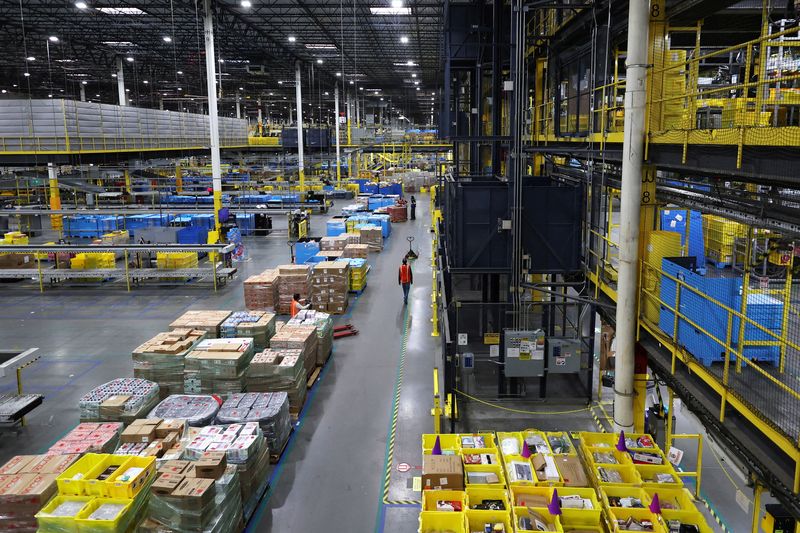
Amazon's Market Cap Narrows Gap with Microsoft


- Market Dynamics: Amazon's market cap stands at $2.6 trillion while Microsoft's is at $2.8 trillion; despite Amazon's 6% rise this year, Microsoft's 22% drop has narrowed the gap, with expectations that Amazon could surpass Microsoft and reclaim a $3 trillion valuation this summer.
- Sales Growth: Amazon reported a 17% increase in net sales in its latest quarter, marking the strongest growth in four years, which underscores its robust e-commerce performance and strengthens its market position.
- Cloud Computing Competition: While Microsoft's Azure faces challenges, Amazon's AWS remains the leader in cloud hosting, contributing over half of the company's operating profit, demonstrating its resilience amid the AI revolution.
- Investor Confidence: Although Microsoft trades at a lower valuation of nearly 20 times next year's earnings compared to Amazon's 25 times, investors are prioritizing Amazon's growth momentum, anticipating it will emerge as a more lucrative investment opportunity in the future.
See More
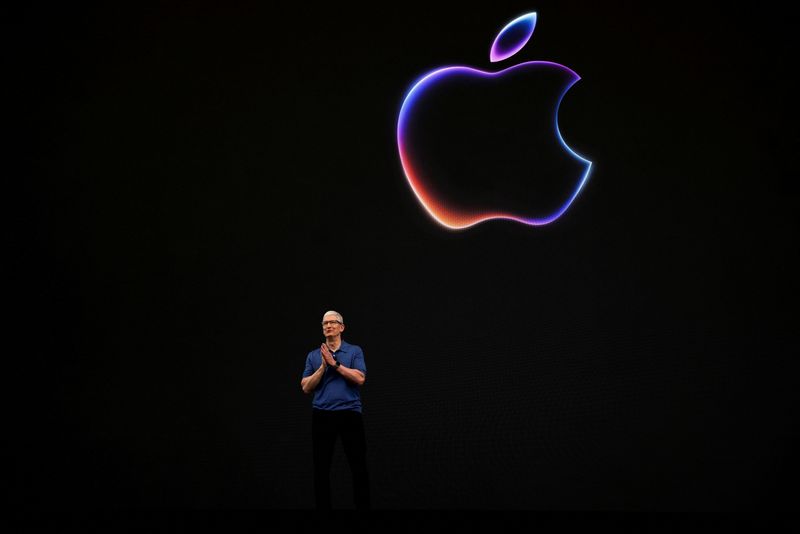
Microsoft CEO Advocates for Diverse AI Solutions
- Strategic Shift in AI: Microsoft CEO Satya Nadella emphasized in an interview with The Wall Street Journal that the AI industry should not be dominated by a few companies, advocating for more choices, lower costs, and stronger user control to meet the demand for diverse AI solutions.
- Product Diversification: As a major partner of OpenAI, Microsoft is adding cheaper model options to products like Copilot Cowork and exploring the use of DeepSeek models for lower-cost AI tasks, enabling businesses to reduce expenses without sacrificing efficiency.
- Trust Issues: Nadella raised concerns that a small number of companies controlling AI's direction could lead to public fears about job losses and safety risks, potentially resulting in user pushback against AI technologies and impacting Microsoft's market position.
- Ecosystem Maintenance: By offering flexible AI models, Microsoft aims to keep customers within its software ecosystem while avoiding high AI costs, with the future challenge being whether companies will embrace this flexible model approach.
See More

Microsoft's Market Cap Declines as Amazon Gains Ground
- Market Cap Comparison: Microsoft's market cap has fallen to $2.8 trillion after a 22% drop this year, while Amazon's steadier performance at $2.6 trillion indicates an intensifying competition between the two giants.
- Sales Growth: Amazon reported a 17% increase in net sales in its latest quarter, marking its strongest top-line growth in four years, suggesting that its robust e-commerce performance may give it an edge in future market competition.
- Investor Sentiment Shift: Despite Microsoft achieving an 18% year-over-year growth rate in three of the last four quarters, investor concerns about the future of its core products like Windows and Office 365 have emerged due to the rise of competitors to OpenAI.
- Capital Expenditure Competition: Both Amazon and Microsoft are making significant capital expenditures in cloud computing and other areas, with Amazon's AWS remaining the leader in cloud hosting, contributing over half of the company's operating profit, demonstrating its relative resilience amid the AI revolution.
See More
Chevron Partners with Microsoft for Natural Gas Power Supply

- Long-Term Power Agreement: Chevron announced a 20-year agreement with Microsoft to supply natural gas for the Project Kilby data center in West Texas, which is expected to consume nearly 2.7 gigawatts of electricity, equivalent to the needs of about 2 million homes.
- Power Infrastructure Development: The electricity for the data center will primarily come from large gas turbines provided by Chevron's partner GE Vernova, with Caterpillar also supplying turbines, showcasing Chevron's robust capabilities in power infrastructure development.
- Investment Decision Timeline: Although construction for Project Kilby has not yet begun, Chevron expects to make a final investment decision later this year, with plans to start supplying power to the data center in 2028, indicating a forward-looking approach to future energy demands.
- AI-Driven Energy Demand: Microsoft plans to invest $190 billion in data center construction this year, a 61% increase over 2025, reflecting strong demand driven by rapidly growing artificial intelligence applications, while also indicating a diversification strategy in energy sources, including reliance on natural gas.
See More

Chevron Signs 20-Year Natural Gas Power Deal with Microsoft
- Long-Term Power Agreement: Chevron has signed a 20-year natural gas power agreement with Microsoft to supply electricity for a proposed data center in West Texas, highlighting a strategic collaboration between the two companies in energy supply.
- Project Scale and Timeline: Named Kilby, the project is expected to provide initial power by 2028 and ramp up to 2.67 gigawatts over time, addressing the rapidly growing demand for AI services.
- Market Demand Drivers: This agreement reflects strong market demand for sustainable energy solutions as technology companies, including Microsoft, rush to secure electricity for their expanding data centers, particularly in the context of rapid advancements in AI technology.
- Investment Decision Outlook: Chevron anticipates announcing a final investment decision for the Kilby project by the end of this year, which will further enhance the company's positioning in the renewable energy sector and could impact future market competition.
See More

Chevron Signs 20-Year Natural Gas Power Deal with Microsoft
- Long-Term Partnership: Chevron has signed a 20-year agreement with Microsoft to provide natural gas-fired power for a proposed ~$7 billion West Texas data center, highlighting the potential for deep collaboration between energy and technology sectors.
- Project Scale and Timeline: Named Project Kilby, the initiative is expected to begin electricity production by 2028 and ramp up to 2.67 GW, indicating Chevron's significant role in the transition to renewable energy.
- Market Demand Drivers: Microsoft plans to double its data center footprint over the next two years, and this partnership is expected to supply the large quantities of reliable power needed for energy-intensive AI models, reflecting the growing demand for such technologies.
- Geographical Advantage: The project is located near Pecos, Texas, in the heart of the Permian Basin, the largest oil-producing field in the U.S., leveraging the region's abundant energy resources to support future power needs.
See More
Amazon's Market Cap Narrows Gap with Microsoft
- Market Dynamics: Amazon's market cap stands at $2.6 trillion while Microsoft's is at $2.8 trillion; despite Amazon's 6% rise this year, Microsoft's 22% drop has narrowed the gap, with expectations that Amazon could surpass Microsoft and reclaim a $3 trillion valuation this summer.
- Sales Growth: Amazon reported a 17% increase in net sales in its latest quarter, marking the strongest growth in four years, which underscores its robust e-commerce performance and strengthens its market position.
- Cloud Computing Competition: While Microsoft's Azure faces challenges, Amazon's AWS remains the leader in cloud hosting, contributing over half of the company's operating profit, demonstrating its resilience amid the AI revolution.
- Investor Confidence: Although Microsoft trades at a lower valuation of nearly 20 times next year's earnings compared to Amazon's 25 times, investors are prioritizing Amazon's growth momentum, anticipating it will emerge as a more lucrative investment opportunity in the future.
See More
Microsoft CEO Advocates for Diverse AI Solutions
- Strategic Shift in AI: Microsoft CEO Satya Nadella emphasized in an interview with The Wall Street Journal that the AI industry should not be dominated by a few companies, advocating for more choices, lower costs, and stronger user control to meet the demand for diverse AI solutions.
- Product Diversification: As a major partner of OpenAI, Microsoft is adding cheaper model options to products like Copilot Cowork and exploring the use of DeepSeek models for lower-cost AI tasks, enabling businesses to reduce expenses without sacrificing efficiency.
- Trust Issues: Nadella raised concerns that a small number of companies controlling AI's direction could lead to public fears about job losses and safety risks, potentially resulting in user pushback against AI technologies and impacting Microsoft's market position.
- Ecosystem Maintenance: By offering flexible AI models, Microsoft aims to keep customers within its software ecosystem while avoiding high AI costs, with the future challenge being whether companies will embrace this flexible model approach.
See More
Microsoft's Market Cap Declines as Amazon Gains Ground
- Market Cap Comparison: Microsoft's market cap has fallen to $2.8 trillion after a 22% drop this year, while Amazon's steadier performance at $2.6 trillion indicates an intensifying competition between the two giants.
- Sales Growth: Amazon reported a 17% increase in net sales in its latest quarter, marking its strongest top-line growth in four years, suggesting that its robust e-commerce performance may give it an edge in future market competition.
- Investor Sentiment Shift: Despite Microsoft achieving an 18% year-over-year growth rate in three of the last four quarters, investor concerns about the future of its core products like Windows and Office 365 have emerged due to the rise of competitors to OpenAI.
- Capital Expenditure Competition: Both Amazon and Microsoft are making significant capital expenditures in cloud computing and other areas, with Amazon's AWS remaining the leader in cloud hosting, contributing over half of the company's operating profit, demonstrating its relative resilience amid the AI revolution.
See More
Chevron Partners with Microsoft for Natural Gas Power Supply
- Long-Term Power Agreement: Chevron announced a 20-year agreement with Microsoft to supply natural gas for the Project Kilby data center in West Texas, which is expected to consume nearly 2.7 gigawatts of electricity, equivalent to the needs of about 2 million homes.
- Power Infrastructure Development: The electricity for the data center will primarily come from large gas turbines provided by Chevron's partner GE Vernova, with Caterpillar also supplying turbines, showcasing Chevron's robust capabilities in power infrastructure development.
- Investment Decision Timeline: Although construction for Project Kilby has not yet begun, Chevron expects to make a final investment decision later this year, with plans to start supplying power to the data center in 2028, indicating a forward-looking approach to future energy demands.
- AI-Driven Energy Demand: Microsoft plans to invest $190 billion in data center construction this year, a 61% increase over 2025, reflecting strong demand driven by rapidly growing artificial intelligence applications, while also indicating a diversification strategy in energy sources, including reliance on natural gas.
See More
Chevron Signs 20-Year Natural Gas Power Deal with Microsoft
- Long-Term Power Agreement: Chevron has signed a 20-year natural gas power agreement with Microsoft to supply electricity for a proposed data center in West Texas, highlighting a strategic collaboration between the two companies in energy supply.
- Project Scale and Timeline: Named Kilby, the project is expected to provide initial power by 2028 and ramp up to 2.67 gigawatts over time, addressing the rapidly growing demand for AI services.
- Market Demand Drivers: This agreement reflects strong market demand for sustainable energy solutions as technology companies, including Microsoft, rush to secure electricity for their expanding data centers, particularly in the context of rapid advancements in AI technology.
- Investment Decision Outlook: Chevron anticipates announcing a final investment decision for the Kilby project by the end of this year, which will further enhance the company's positioning in the renewable energy sector and could impact future market competition.
See More
Chevron Signs 20-Year Natural Gas Power Deal with Microsoft
- Long-Term Partnership: Chevron has signed a 20-year agreement with Microsoft to provide natural gas-fired power for a proposed ~$7 billion West Texas data center, highlighting the potential for deep collaboration between energy and technology sectors.
- Project Scale and Timeline: Named Project Kilby, the initiative is expected to begin electricity production by 2028 and ramp up to 2.67 GW, indicating Chevron's significant role in the transition to renewable energy.
- Market Demand Drivers: Microsoft plans to double its data center footprint over the next two years, and this partnership is expected to supply the large quantities of reliable power needed for energy-intensive AI models, reflecting the growing demand for such technologies.
- Geographical Advantage: The project is located near Pecos, Texas, in the heart of the Permian Basin, the largest oil-producing field in the U.S., leveraging the region's abundant energy resources to support future power needs.
See More




