Micron Technology's Stock Surges Past $700 Billion Market Cap
Written by Emily J. Thompson, Senior Investment Analyst
Updated: May 05 2026
0mins


Source: CNBC
- Stock Surge: Micron Technology's shares surged 11% on Tuesday, pushing its market cap past $700 billion for the first time, with a 124% increase this year and nearly 700% over the past 12 months, making it one of the top ten tech companies in the U.S.
- Surging Memory Demand: The rapid growth of artificial intelligence has led to a surge in memory demand, resulting in a global shortage, with chipmakers like Nvidia and AMD significantly increasing their memory requirements, further boosting Micron's market performance.
- New Product Launch: Micron announced the start of shipments for its largest commercially available solid-state drive, which allows for greater memory storage with lower power demands compared to traditional hard drives, providing data center operators with a new lever for cost control.
- Supply Chain Challenges: Despite strong demand, Micron's CEO noted that key customers are only receiving 50% to two-thirds of their requirements, highlighting the supply constraints faced by memory manufacturers amid the AI boom.
Trade with 70% Backtested Accuracy
Stop guessing "Should I Buy NVDA?" and start using high-conviction signals backed by rigorous historical data.
Sign up today to access powerful investing tools and make smarter, data-driven decisions.
Analyst Views on NVDA
Wall Street analysts forecast NVDA stock price to rise
41 Analyst Rating
39 Buy
1 Hold
1 Sell
Strong Buy
Current: 199.000

Low
200.00
Averages
264.97
High
352.00
Current: 199.000
Low
200.00
Averages
264.97
High
352.00
About NVDA
NVIDIA Corporation is an artificial intelligence (AI) infrastructure company. The Company is engaged in accelerated computing to help solve the challenging computational problems. Its segments include Compute & Networking and Graphics. The Compute & Networking segment includes its Data Center accelerated computing and networking platforms and AI solutions and software, and automotive platforms and autonomous and electric vehicle solutions, including software. The Graphics segment includes GeForce GPUs for gaming and personal computers (PCs), and Quadro/NVIDIA RTX GPUs for enterprise workstation graphics. Its technology stack includes the foundational NVIDIA CUDA development platform that runs on all NVIDIA GPUs, as well as hundreds of domain-specific software libraries, frameworks, algorithms, software development kits (SDKs), and application programming interfaces (APIs). Its platforms address four markets, which include Data Center, Gaming, Professional Visualization, and Automotive.
About the author

Emily J. Thompson
Emily J. Thompson, a Chartered Financial Analyst (CFA) with 12 years in investment research, graduated with honors from the Wharton School. Specializing in industrial and technology stocks, she provides in-depth analysis for Intellectia’s earnings and market brief reports.

Nvidia's AI Infrastructure Growth Accelerates

- Data Center Revenue Surge: Nvidia's data center revenue reached a record $75.2 billion in the first quarter of fiscal 2027, marking a 92% year-over-year increase, reflecting robust demand for its hardware and software and underscoring the company's central role in AI infrastructure development.
- Optimistic Capital Expenditure Outlook: Analysts project that hyperscaler capital spending could exceed $1 trillion by 2027, positioning Nvidia, as the dominant supplier of accelerated computing platforms, to capture a significant share of this spending, further driving company growth.
- New CPU Platform Launch: Nvidia's Vera CPU, designed for the emerging era of agentic AI, has been delivered to leading AI labs and cloud providers, optimizing integration with its GPUs and expected to accelerate growth in its data center business.
- Valuation Expansion Potential: Nvidia's current P/E ratio is well below historical levels during earlier phases of the AI revolution, and if it re-rates to between 24 and 27 times its expected fiscal 2028 EPS of $12.73, the stock price could exceed $300, implying over 50% upside from current trading levels.
See More
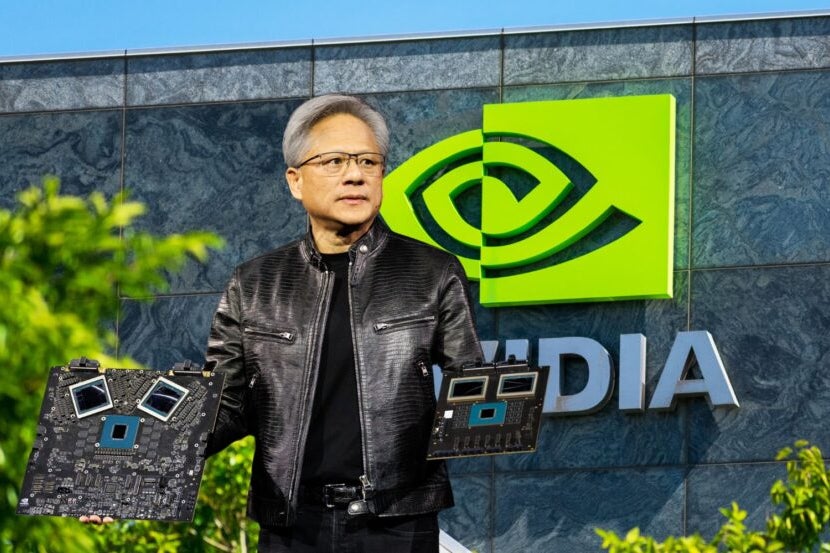
Nvidia Prioritizes U.S. National Security Over Commercial Opportunities
- National Security Priority: Nvidia CEO Jensen Huang stated at the shareholder meeting that the company would prioritize U.S. interests over commercial opportunities if they conflict with national security, emphasizing the importance of national security.
- Export Restriction Challenges: Huang noted that attempting to smuggle Nvidia chips into countries with export restrictions, such as China, would face difficulties as the company would not provide support or repairs, reinforcing its commitment to national security.
- Financial Return Commitment: Nvidia plans to return 50% of its free cash flow to investors through share repurchases and dividends over the next few years, with projected free cash flow exceeding $96 billion in fiscal 2026, showcasing strong financial execution.
- Shareholder Meeting Decisions: At the annual meeting, shareholders approved the executive compensation plan and re-elected all 10 board members, indicating strong support and trust in the company's governance.
See More

Nvidia vs AMD: Market Competition Analysis

- Market Share Comparison: Nvidia dominates the discrete GPU market with over 90% share, while AMD holds a single-digit share; despite AMD's efforts to compete with cheaper chips, it faces significant pressure, highlighting the intense market competition.
- Financial Performance Discrepancy: Over the past five years, Nvidia's stock has surged over 930%, compared to AMD's nearly 520% increase, yet Nvidia's P/E ratio stands at 21 times, significantly lower than AMD's 97 times, indicating Nvidia's fundamental attractiveness.
- Revenue Growth Potential: In Q1 of fiscal 2027, Nvidia's revenue soared 85% year-over-year to $81.6 billion, exceeding analyst expectations by $2.5 billion, demonstrating strong demand and growth potential in the data center GPU market.
- Future Growth Expectations: Analysts project revenue and EPS growth for Nvidia and AMD at CAGRs of 46% and 44% respectively from 2026 to 2029; although AMD's growth is slower, its new products may still attract more customers.
See More
Microsoft Raises Xbox Console Prices Amid Component Crisis

- Price Increase: Microsoft announced that starting August 1, the price of the Xbox Series S with 512GB will rise by $100 to approximately $500, while the 1TB model will increase by $150, reflecting rising component costs that put additional pressure on consumers.
- Component Crisis: The consumer electronics industry is facing a component crisis due to surging demand from AI chipmakers, resulting in memory prices increasing by over 2.5 times, with expectations of another doubling by fall 2027, intensifying market competition.
- Industry Impact: Following Apple's price hikes for MacBooks and iPads, Microsoft is also forced to raise Xbox console prices, highlighting the widespread cost pressures in the consumer electronics sector, particularly as game consoles are typically sold at a loss, affecting profit margins.
- Market Reaction: Microsoft's shares fell nearly 4% on Thursday, reflecting investor concerns about the company's future profitability, while Apple's stock also dropped 5%, indicating a pessimistic sentiment regarding the overall outlook for the consumer electronics industry.
See More

Netflix: An Undervalued Investment Opportunity

- Market Position Shift: Once a core member of the FANG/FAANG group, Netflix's stock has plummeted 46% from its 2025 high of $134, now valued at $303 billion, highlighting the challenges and opportunities it faces in the competitive streaming market.
- Financial Performance Analysis: With a price-to-earnings ratio of 23 and a free cash flow multiple of 25, both below the S&P 500 averages, Netflix's current stock price appears attractive, potentially offering investors a favorable entry point in the current market environment.
- Acquisition Strategy Adjustment: Despite losing bids for Warner Bros. Discovery and Roku, Netflix's management opted not to overpay, demonstrating fiscal discipline that could lead to more sustainable growth in the future.
- Growth Potential Outlook: Holding less than 10% of U.S. TV viewing time while linear television commands over 40%, Netflix shows significant growth potential in international expansion, video games, and advertising platforms, indicating ample room for future development.
See More

Microsoft Raises Xbox Console Prices Amid Component Crisis
- Price Increase: Microsoft announced that starting August 1, the price of the Xbox Series S will rise by $100 to approximately $500, while the 1TB model will increase by $150, with the entry-level Xbox Series X starting at $750, reflecting rising component costs.
- Component Crisis Impact: Storage and memory prices have surged more than 2.5 times in recent months, with expectations of another doubling by fall 2027, putting additional pressure on consumers looking to purchase devices like smartphones, tablets, and computers.
- Industry Challenges: Microsoft noted that the entire consumer electronics industry is grappling with the current component crisis, with consoles being particularly hard hit, as they are typically sold at a loss compared to phones and computers.
- Market Reaction: Microsoft's shares fell nearly 4% on Thursday, while Apple's stock dropped 5%, indicating market concerns over price increases and component shortages.
See More
Nvidia's AI Infrastructure Growth Accelerates
- Data Center Revenue Surge: Nvidia's data center revenue reached a record $75.2 billion in the first quarter of fiscal 2027, marking a 92% year-over-year increase, reflecting robust demand for its hardware and software and underscoring the company's central role in AI infrastructure development.
- Optimistic Capital Expenditure Outlook: Analysts project that hyperscaler capital spending could exceed $1 trillion by 2027, positioning Nvidia, as the dominant supplier of accelerated computing platforms, to capture a significant share of this spending, further driving company growth.
- New CPU Platform Launch: Nvidia's Vera CPU, designed for the emerging era of agentic AI, has been delivered to leading AI labs and cloud providers, optimizing integration with its GPUs and expected to accelerate growth in its data center business.
- Valuation Expansion Potential: Nvidia's current P/E ratio is well below historical levels during earlier phases of the AI revolution, and if it re-rates to between 24 and 27 times its expected fiscal 2028 EPS of $12.73, the stock price could exceed $300, implying over 50% upside from current trading levels.
See More
Nvidia Prioritizes U.S. National Security Over Commercial Opportunities
- National Security Priority: Nvidia CEO Jensen Huang stated at the shareholder meeting that the company would prioritize U.S. interests over commercial opportunities if they conflict with national security, emphasizing the importance of national security.
- Export Restriction Challenges: Huang noted that attempting to smuggle Nvidia chips into countries with export restrictions, such as China, would face difficulties as the company would not provide support or repairs, reinforcing its commitment to national security.
- Financial Return Commitment: Nvidia plans to return 50% of its free cash flow to investors through share repurchases and dividends over the next few years, with projected free cash flow exceeding $96 billion in fiscal 2026, showcasing strong financial execution.
- Shareholder Meeting Decisions: At the annual meeting, shareholders approved the executive compensation plan and re-elected all 10 board members, indicating strong support and trust in the company's governance.
See More
Nvidia vs AMD: Market Competition Analysis
- Market Share Comparison: Nvidia dominates the discrete GPU market with over 90% share, while AMD holds a single-digit share; despite AMD's efforts to compete with cheaper chips, it faces significant pressure, highlighting the intense market competition.
- Financial Performance Discrepancy: Over the past five years, Nvidia's stock has surged over 930%, compared to AMD's nearly 520% increase, yet Nvidia's P/E ratio stands at 21 times, significantly lower than AMD's 97 times, indicating Nvidia's fundamental attractiveness.
- Revenue Growth Potential: In Q1 of fiscal 2027, Nvidia's revenue soared 85% year-over-year to $81.6 billion, exceeding analyst expectations by $2.5 billion, demonstrating strong demand and growth potential in the data center GPU market.
- Future Growth Expectations: Analysts project revenue and EPS growth for Nvidia and AMD at CAGRs of 46% and 44% respectively from 2026 to 2029; although AMD's growth is slower, its new products may still attract more customers.
See More
Microsoft Raises Xbox Console Prices Amid Component Crisis
- Price Increase: Microsoft announced that starting August 1, the price of the Xbox Series S with 512GB will rise by $100 to approximately $500, while the 1TB model will increase by $150, reflecting rising component costs that put additional pressure on consumers.
- Component Crisis: The consumer electronics industry is facing a component crisis due to surging demand from AI chipmakers, resulting in memory prices increasing by over 2.5 times, with expectations of another doubling by fall 2027, intensifying market competition.
- Industry Impact: Following Apple's price hikes for MacBooks and iPads, Microsoft is also forced to raise Xbox console prices, highlighting the widespread cost pressures in the consumer electronics sector, particularly as game consoles are typically sold at a loss, affecting profit margins.
- Market Reaction: Microsoft's shares fell nearly 4% on Thursday, reflecting investor concerns about the company's future profitability, while Apple's stock also dropped 5%, indicating a pessimistic sentiment regarding the overall outlook for the consumer electronics industry.
See More
Netflix: An Undervalued Investment Opportunity
- Market Position Shift: Once a core member of the FANG/FAANG group, Netflix's stock has plummeted 46% from its 2025 high of $134, now valued at $303 billion, highlighting the challenges and opportunities it faces in the competitive streaming market.
- Financial Performance Analysis: With a price-to-earnings ratio of 23 and a free cash flow multiple of 25, both below the S&P 500 averages, Netflix's current stock price appears attractive, potentially offering investors a favorable entry point in the current market environment.
- Acquisition Strategy Adjustment: Despite losing bids for Warner Bros. Discovery and Roku, Netflix's management opted not to overpay, demonstrating fiscal discipline that could lead to more sustainable growth in the future.
- Growth Potential Outlook: Holding less than 10% of U.S. TV viewing time while linear television commands over 40%, Netflix shows significant growth potential in international expansion, video games, and advertising platforms, indicating ample room for future development.
See More
Microsoft Raises Xbox Console Prices Amid Component Crisis
- Price Increase: Microsoft announced that starting August 1, the price of the Xbox Series S will rise by $100 to approximately $500, while the 1TB model will increase by $150, with the entry-level Xbox Series X starting at $750, reflecting rising component costs.
- Component Crisis Impact: Storage and memory prices have surged more than 2.5 times in recent months, with expectations of another doubling by fall 2027, putting additional pressure on consumers looking to purchase devices like smartphones, tablets, and computers.
- Industry Challenges: Microsoft noted that the entire consumer electronics industry is grappling with the current component crisis, with consoles being particularly hard hit, as they are typically sold at a loss compared to phones and computers.
- Market Reaction: Microsoft's shares fell nearly 4% on Thursday, while Apple's stock dropped 5%, indicating market concerns over price increases and component shortages.
See More