Micron Technology Profits Surge Amid AI Boom
Written by Emily J. Thompson, Senior Investment Analyst
Updated: 1 hour ago
0mins
Source: Fool
- Surging Market Demand: Micron Technology has seen a surge in demand for its DRAM and data storage products, with customers signing contracts that cover the entire sector's future production capacity, pushing the company's market capitalization above $1 trillion and highlighting its role as a key hardware supplier in the AI revolution.
- Profit Growth Risks: Despite Micron's net income soaring over eightfold year-over-year from $1.6 billion to $13.8 billion, the high profits may attract competition, leading to potential declines in future returns, which investors should be cautious about.
- Monitoring Industry Dynamics: Investors should keep an eye on key indicators such as gross margin, product pricing, and returns on capital to assess Micron's long-term prospects, especially in light of increasing competition and production capacity expansion.
- Sustainability Considerations: Amid the AI trend, investors need to consider whether Micron's current high profits are sustainable, as this will determine whether the recent stock rally marks the beginning of a long-term growth story or the peak of another memory cycle.
Trade with 70% Backtested Accuracy
Stop guessing "Should I Buy MU?" and start using high-conviction signals backed by rigorous historical data.
Sign up today to access powerful investing tools and make smarter, data-driven decisions.
Analyst Views on MU
Wall Street analysts forecast MU stock price to fall
26 Analyst Rating
24 Buy
2 Hold
0 Sell
Strong Buy
Current: 996.000

Low
235.00
Averages
336.12
High
500.00
Current: 996.000
Low
235.00
Averages
336.12
High
500.00
About MU
Micron Technology, Inc. provides memory and storage solutions. The Company delivers a portfolio of high-performance dynamic random-access memory (DRAM), NAND, and NOR memory and storage products through its Micron and Crucial brands. The Company's products enable advancing in artificial intelligence (AI) and compute-intensive applications. Its segments include Cloud Memory Business Unit (CMBU), Core Data Center Business Unit (CDBU), Mobile and Client Business Unit (MCBU) and Automotive and Embedded Business Unit (AEBU). CMBU is focused on memory solutions for large hyperscale cloud customers, and high bandwidth memory (HBM) for all data center customers. CDBU is focused on memory solutions for mid-tier cloud, enterprise, and OEM data center customers and storage solutions for all data center customers. MCBU is focused on memory and storage solutions for mobile and client segments. AEBU is focused on memory and storage solutions for the automotive, industrial, and consumer segments.
About the author

Emily J. Thompson
Emily J. Thompson, a Chartered Financial Analyst (CFA) with 12 years in investment research, graduated with honors from the Wharton School. Specializing in industrial and technology stocks, she provides in-depth analysis for Intellectia’s earnings and market brief reports.
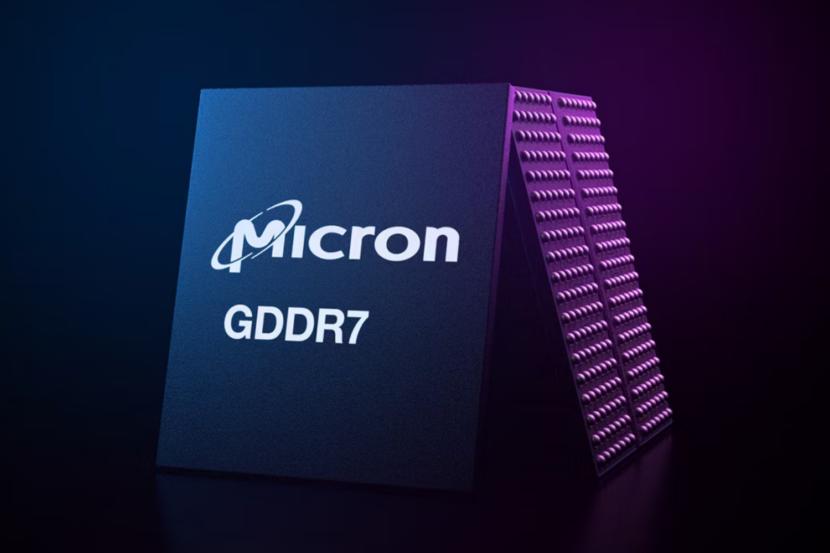
Micron Technology Profits Surge Amid AI Boom

- Surging Market Demand: Micron Technology has seen a surge in demand for its DRAM and data storage products, with customers signing contracts that cover the entire sector's future production capacity, pushing the company's market capitalization above $1 trillion and highlighting its role as a key hardware supplier in the AI revolution.
- Profit Growth Risks: Despite Micron's net income soaring over eightfold year-over-year from $1.6 billion to $13.8 billion, the high profits may attract competition, leading to potential declines in future returns, which investors should be cautious about.
- Monitoring Industry Dynamics: Investors should keep an eye on key indicators such as gross margin, product pricing, and returns on capital to assess Micron's long-term prospects, especially in light of increasing competition and production capacity expansion.
- Sustainability Considerations: Amid the AI trend, investors need to consider whether Micron's current high profits are sustainable, as this will determine whether the recent stock rally marks the beginning of a long-term growth story or the peak of another memory cycle.
See More

Micron Faces Profit Risks Amid AI Boom
- Profit Surge Risks: Micron's latest quarterly net income skyrocketed over eightfold year-over-year from $1.6 billion to $13.8 billion, driven by strong demand for its products, yet this surge may attract competitors to ramp up production, potentially leading to a decline in future profits.
- Supply-Demand Dynamics: While investments in AI infrastructure have created enormous demand for advanced memory products, history shows that temporary profit spikes often lead to supply-demand imbalances, which can trigger cyclical fluctuations in the market and impact long-term profitability.
- Key Metrics Monitoring: Investors should focus on monitoring gross margins, product pricing, and returns on capital to assess Micron's long-term prospects, especially against a backdrop of increasing competition and capacity expansion, as these metrics will provide clearer insights into the economic landscape.
- Cautious Investor Approach: Despite Micron's impressive performance amid the AI boom, investors need to be cautious and avoid overlooking potential risks when market conditions appear favorable, particularly regarding whether current high profits are sustainable as supply gradually catches up, which will be crucial in determining future stock price movements.
See More

Nvidia Shares Drop Amid Macro Pressures and Senate Hearing


- Stock Decline: Nvidia shares fell 5.9% in the afternoon session, primarily driven by macroeconomic pressures and an impending Senate hearing, despite impressive product updates earlier this week.
- Product Launch: At Computex, Nvidia confirmed that the Vera Rubin data center platform has entered full production, with deliveries expected to begin in Q3 2026, while also unveiling the RTX Spark AI processor, directly challenging Intel and AMD in the market.
- China Market Risk: Senator Elizabeth Warren has invited CEO Jensen Huang to testify on June 11 regarding Nvidia's export compliance to China, which could impact investor confidence in the company's future prospects.
- Market Reaction: Although Nvidia's stock has risen 9.3% this year, the current price remains 12.6% below its 52-week high, indicating market concerns about future growth, prompting investors to carefully assess buying opportunities.
See More

US Stocks Plunge Sharply, Tech Sector Under Pressure


- Market Decline: The S&P 500 fell 2.64% and the Nasdaq 100 dropped 4.77%, indicating a significant loss of investor confidence in tech stocks, particularly as AI infrastructure and semiconductor companies faced sell-offs, which could impact future investment strategies.
- Strong Employment Data: US nonfarm payrolls rose by 172,000 in May, significantly exceeding expectations of 88,000, while the unemployment rate held steady at 4.3%, potentially prompting the Fed to consider a rate hike at the upcoming meeting, thereby affecting market liquidity and investor sentiment.
- Rising Bond Yields: The 10-year Treasury yield climbed to 4.55%, a two-week high, reflecting heightened expectations for future rate hikes, which may lead to capital outflows from the stock market, further exacerbating market volatility.
- Tech Stock Retreat: Following Broadcom's disappointing chip sales outlook, Marvell and Micron stocks plummeted over 16% and 13%, respectively, suggesting that the market's overly optimistic sentiment towards tech stocks may be correcting, impacting investor confidence.
See More

Chipmakers Lose Over $1 Trillion in Market Value Amid AI Concerns

- Market Value Loss: U.S.-traded chipmakers lost over $1 trillion in market value on Friday, with significant declines in AI heavyweights like Nvidia, Micron, and AMD, indicating growing investor concerns about overpriced tech stocks.
- Index Plunge: The PHLX chip index slumped nearly 8.5% in afternoon trading, marking its largest single-day loss since the 'Liberation Day' tariff selloff in April 2025, reflecting heightened anxiety among investors about future market conditions.
- Poor Stock Performance: Nvidia's stock fell about 6%, erasing over $300 billion in market capitalization, while Micron tumbled 11%, losing $127 billion in value, highlighting investor fears regarding insufficient demand for AI chips.
- Rising Rate Concerns: The S&P 500 index dropped 2.3% due to worries about rising interest rates following stronger-than-expected jobs data, further exacerbating market unease, with Broadcom's stock down 7.5%, resulting in a two-day loss of 19%.
See More

SpaceX Set for Historic $75 Billion IPO


- Unprecedented IPO: SpaceX is set to debut next Friday with an expected $75 billion raise and a valuation of $1.77 trillion, positioning it among the top 10 public companies globally, surpassing Meta, Tesla, and Micron Technology, showcasing its significant market impact.
- Musk's Wealth Surge: With SpaceX's IPO, CEO Elon Musk is projected to become the world's first trillionaire, holding 85% of the voting power, which not only enhances his personal wealth but also reinforces the company's leadership in the aerospace and technology sectors.
- Market Volatility Risks: According to Truist Wealth, shares of major IPOs over the past 15 years have averaged a 9% drop in the first year, and SpaceX's IPO may face even greater challenges due to new Nasdaq 100 rules that inflate its market cap weighting to $225 billion, potentially exacerbating overall market volatility as investors chase the stock.
- Economic Data Impact: Next week will see the release of consumer and producer price indexes, with consumer inflation expected to rise from 3.8% to 4.3%, providing investors with insights into interest rate trajectories, which could also influence SpaceX's IPO performance and reflect ongoing market focus on the AI narrative.
See More
Micron Technology Profits Surge Amid AI Boom
- Surging Market Demand: Micron Technology has seen a surge in demand for its DRAM and data storage products, with customers signing contracts that cover the entire sector's future production capacity, pushing the company's market capitalization above $1 trillion and highlighting its role as a key hardware supplier in the AI revolution.
- Profit Growth Risks: Despite Micron's net income soaring over eightfold year-over-year from $1.6 billion to $13.8 billion, the high profits may attract competition, leading to potential declines in future returns, which investors should be cautious about.
- Monitoring Industry Dynamics: Investors should keep an eye on key indicators such as gross margin, product pricing, and returns on capital to assess Micron's long-term prospects, especially in light of increasing competition and production capacity expansion.
- Sustainability Considerations: Amid the AI trend, investors need to consider whether Micron's current high profits are sustainable, as this will determine whether the recent stock rally marks the beginning of a long-term growth story or the peak of another memory cycle.
See More
Micron Faces Profit Risks Amid AI Boom
- Profit Surge Risks: Micron's latest quarterly net income skyrocketed over eightfold year-over-year from $1.6 billion to $13.8 billion, driven by strong demand for its products, yet this surge may attract competitors to ramp up production, potentially leading to a decline in future profits.
- Supply-Demand Dynamics: While investments in AI infrastructure have created enormous demand for advanced memory products, history shows that temporary profit spikes often lead to supply-demand imbalances, which can trigger cyclical fluctuations in the market and impact long-term profitability.
- Key Metrics Monitoring: Investors should focus on monitoring gross margins, product pricing, and returns on capital to assess Micron's long-term prospects, especially against a backdrop of increasing competition and capacity expansion, as these metrics will provide clearer insights into the economic landscape.
- Cautious Investor Approach: Despite Micron's impressive performance amid the AI boom, investors need to be cautious and avoid overlooking potential risks when market conditions appear favorable, particularly regarding whether current high profits are sustainable as supply gradually catches up, which will be crucial in determining future stock price movements.
See More
Nvidia Shares Drop Amid Macro Pressures and Senate Hearing
- Stock Decline: Nvidia shares fell 5.9% in the afternoon session, primarily driven by macroeconomic pressures and an impending Senate hearing, despite impressive product updates earlier this week.
- Product Launch: At Computex, Nvidia confirmed that the Vera Rubin data center platform has entered full production, with deliveries expected to begin in Q3 2026, while also unveiling the RTX Spark AI processor, directly challenging Intel and AMD in the market.
- China Market Risk: Senator Elizabeth Warren has invited CEO Jensen Huang to testify on June 11 regarding Nvidia's export compliance to China, which could impact investor confidence in the company's future prospects.
- Market Reaction: Although Nvidia's stock has risen 9.3% this year, the current price remains 12.6% below its 52-week high, indicating market concerns about future growth, prompting investors to carefully assess buying opportunities.
See More
US Stocks Plunge Sharply, Tech Sector Under Pressure
- Market Decline: The S&P 500 fell 2.64% and the Nasdaq 100 dropped 4.77%, indicating a significant loss of investor confidence in tech stocks, particularly as AI infrastructure and semiconductor companies faced sell-offs, which could impact future investment strategies.
- Strong Employment Data: US nonfarm payrolls rose by 172,000 in May, significantly exceeding expectations of 88,000, while the unemployment rate held steady at 4.3%, potentially prompting the Fed to consider a rate hike at the upcoming meeting, thereby affecting market liquidity and investor sentiment.
- Rising Bond Yields: The 10-year Treasury yield climbed to 4.55%, a two-week high, reflecting heightened expectations for future rate hikes, which may lead to capital outflows from the stock market, further exacerbating market volatility.
- Tech Stock Retreat: Following Broadcom's disappointing chip sales outlook, Marvell and Micron stocks plummeted over 16% and 13%, respectively, suggesting that the market's overly optimistic sentiment towards tech stocks may be correcting, impacting investor confidence.
See More
Chipmakers Lose Over $1 Trillion in Market Value Amid AI Concerns
- Market Value Loss: U.S.-traded chipmakers lost over $1 trillion in market value on Friday, with significant declines in AI heavyweights like Nvidia, Micron, and AMD, indicating growing investor concerns about overpriced tech stocks.
- Index Plunge: The PHLX chip index slumped nearly 8.5% in afternoon trading, marking its largest single-day loss since the 'Liberation Day' tariff selloff in April 2025, reflecting heightened anxiety among investors about future market conditions.
- Poor Stock Performance: Nvidia's stock fell about 6%, erasing over $300 billion in market capitalization, while Micron tumbled 11%, losing $127 billion in value, highlighting investor fears regarding insufficient demand for AI chips.
- Rising Rate Concerns: The S&P 500 index dropped 2.3% due to worries about rising interest rates following stronger-than-expected jobs data, further exacerbating market unease, with Broadcom's stock down 7.5%, resulting in a two-day loss of 19%.
See More
SpaceX Set for Historic $75 Billion IPO
- Unprecedented IPO: SpaceX is set to debut next Friday with an expected $75 billion raise and a valuation of $1.77 trillion, positioning it among the top 10 public companies globally, surpassing Meta, Tesla, and Micron Technology, showcasing its significant market impact.
- Musk's Wealth Surge: With SpaceX's IPO, CEO Elon Musk is projected to become the world's first trillionaire, holding 85% of the voting power, which not only enhances his personal wealth but also reinforces the company's leadership in the aerospace and technology sectors.
- Market Volatility Risks: According to Truist Wealth, shares of major IPOs over the past 15 years have averaged a 9% drop in the first year, and SpaceX's IPO may face even greater challenges due to new Nasdaq 100 rules that inflate its market cap weighting to $225 billion, potentially exacerbating overall market volatility as investors chase the stock.
- Economic Data Impact: Next week will see the release of consumer and producer price indexes, with consumer inflation expected to rise from 3.8% to 4.3%, providing investors with insights into interest rate trajectories, which could also influence SpaceX's IPO performance and reflect ongoing market focus on the AI narrative.
See More