Lunai Bioworks Secures U.S. Patent for Debiasing Drug Discovery Data
Lunai Bioworks announced the issuance of a U.S. patent titled "Methods, Systems, and Frameworks for Debiasing Data in Drug Discovery Predictions." The newly issued patent protects the foundational first step of Lunai's proprietary closed-loop disease reverse engineering platform, multimodal data standardization and structural bias removal prior to predictive modeling. Lunai's patented architecture systematically detects, standardizes, and removes structural bias across multimodal inputs before downstream artificial intelligence modeling begins. By protecting this core data layer, Lunai aims to strengthen its ability to accurately identify biologically coherent patient subtypes and trace those subtypes to the gene networks most strongly associated with each disease type.
Trade with 70% Backtested Accuracy
Analyst Views on LNAI
About LNAI
About the author

Lunai Bioworks Completes $20 Million Preferred Equity Issuance

- Transaction Completion: Lunai Bioworks has completed a $20 million preferred equity issuance to acquire intellectual property assets from two counterparties, thereby expanding its central nervous system platform and enhancing treatment capabilities for neurological diseases like Alzheimer's.
- Delivery Technology Integration: The transaction introduces two distinct CNS delivery methods, including a BBB-crossing prodrug system and a nose-to-brain delivery pathway, aimed at supporting both single and combination therapies, increasing drug concentration in the brain while reducing systemic exposure.
- Strategic Development Focus: By integrating these new assets, Lunai Bioworks plans to develop targeted therapeutic combinations for specific patient subgroups in neurological diseases and biodefense, improving candidate selection efficiency in line with its AI-driven patient stratification strategy.
- Compliance and Market Position: Following the merger, the company expects its stockholders' equity to exceed the $2.5 million minimum required by Nasdaq, although it awaits formal compliance confirmation from the Nasdaq panel to mitigate potential delisting risks.

Lunai Bioworks Completes $20 Million Financing to Enhance CNS Platform
- Financing Completion: Lunai Bioworks has completed a $20 million preferred equity issuance aimed at acquiring intellectual property assets from two counterparties, thereby expanding its central nervous system platform to enhance treatment capabilities for neurological diseases such as Alzheimer's.
- Technology Integration: The transaction integrates two distinct CNS delivery strategies into Lunai's platform, including a BBB-crossing prodrug system and a nose-to-brain delivery pathway, intended to increase drug concentration in the brain while reducing systemic exposure.
- Market Opportunities: By combining novel neurotherapeutic compounds with complementary delivery technologies, Lunai plans to develop both single-agent and combination therapies tailored to specific patient subgroups, while also supporting 505(b)(2) development pathways to enhance market competitiveness.
- Compliance Challenges: Following the merger, the company expects its stockholders' equity to exceed the $2.5 million minimum required by Nasdaq, but it awaits the Panel's formal compliance determination, facing potential delisting risks if conditions are not met.
Lunai and Geneial Collaborate to Advance Rare Disease Research
- Strategic Collaboration: Lunai Bioworks' subsidiary BioSymetrics has signed a Letter of Intent with Geneial to leverage patient-generated data for drug development in rare neurological disorders, potentially unlocking multi-billion-dollar market opportunities for pharmaceutical partnerships.
- Data Integration Initiatives: Initial programs will integrate datasets from multiple patient registries, incorporating longitudinal clinical data to support cohort development and translational research, which is expected to significantly enhance trial success rates and reduce development timelines.
- Market Opportunity: With approximately 300 million people affected by rare diseases globally, the collaboration aims to address the bottleneck of limited structured patient data, thereby improving drug development efficiency and success rates, which holds substantial strategic market implications.
- Future Prospects: Although the Letter of Intent is non-binding, BioSymetrics and Geneial plan to define specific projects and commercial terms in future definitive agreements, further advancing potential collaborations with pharmaceutical and biotechnology partners to create significant revenue opportunities.
Lunai and Geneial Collaborate to Advance Rare Disease Research
- Strategic Collaboration: Lunai Bioworks' subsidiary BioSymetrics has signed a Letter of Intent with Geneial to integrate patient-generated data, supporting drug development for rare neurological disorders and providing actionable clinical trial cohorts for pharmaceutical companies.
- Market Opportunity: Approximately 300 million people globally are affected by rare diseases, and despite drug development challenges due to limited data access, the targeted rare neurological segment represents a multi-billion-dollar market opportunity, highlighting significant commercial potential.
- Data Integration and Analysis: The collaboration aims to integrate datasets from multiple patient registries, utilizing longitudinal clinical data to support cohort development, thereby improving trial success rates and accelerating timelines by addressing key bottlenecks in rare disease drug development.
- Future Commercial Partnerships: The companies expect to leverage this collaboration to pursue commercial partnerships, supporting potential revenue-generating collaborations and downstream opportunities with pharmaceutical and biotechnology partners, further advancing precision medicine initiatives.
Lunai Bioworks Partners for AI-Enabled Chemical Threat Detection
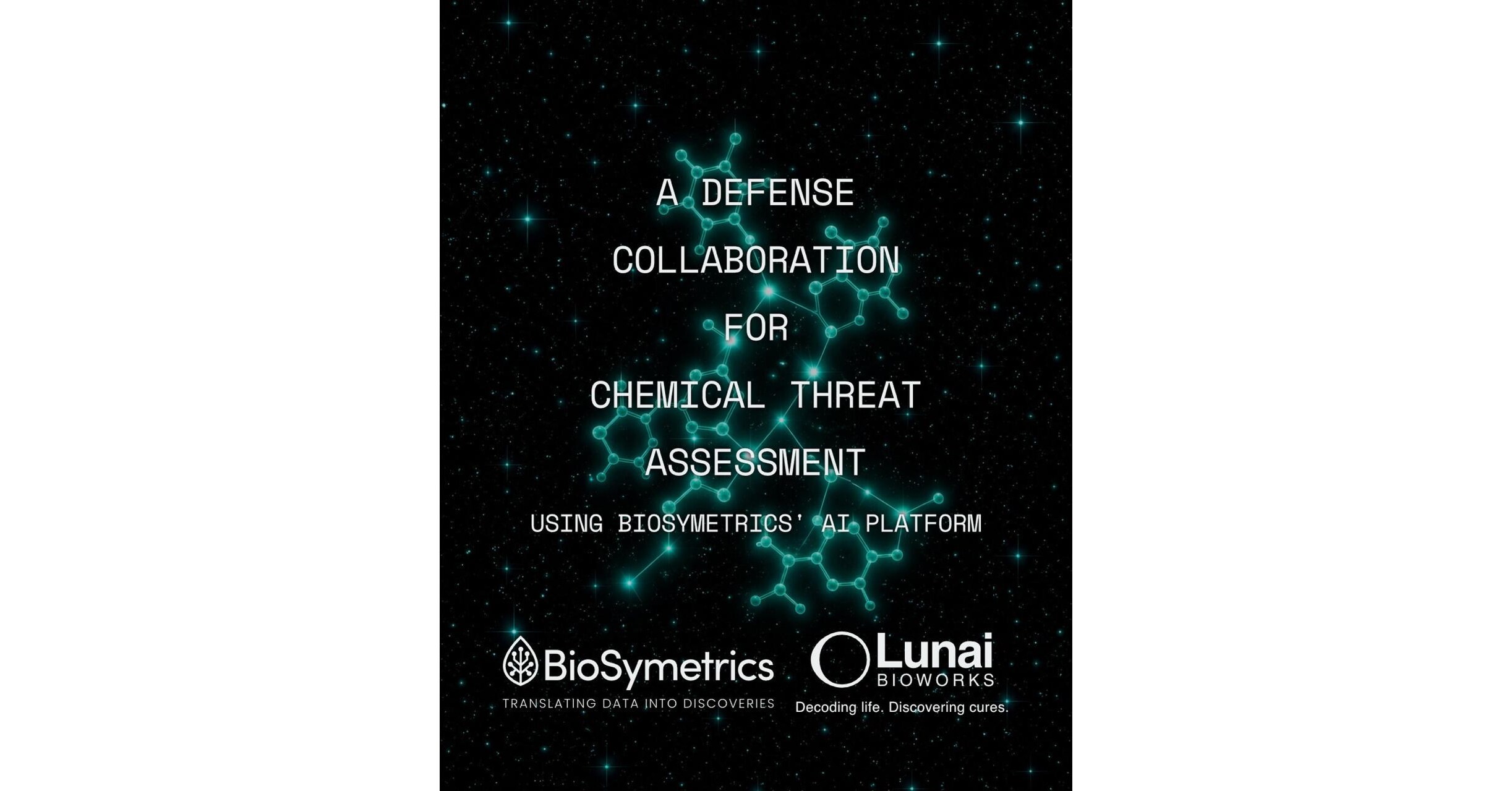
- Commercial Collaboration Initiated: Lunai Bioworks' subsidiary BioSymetrics has entered a revenue-generating collaboration with a specialized biotechnology partner to develop an advanced AI-enabled platform for chemical threat assessment, with initial engagement underway and further discussions ongoing.
- Innovative Technology Application: BioSymetrics will leverage its proprietary phenotypic screening and AI capabilities to enhance the identification, classification, and mechanistic understanding of neuroactive and neurotoxic compounds, which is expected to accelerate the detection and characterization of chemical threats while improving operational applicability.
- Diversified Strategic Advancement: This collaboration represents a significant step in expanding Lunai Bioworks' presence in defense and national security applications, while also reinforcing its strategic focus on dual-use technologies encompassing drug safety, toxicity prediction, and neurobiology.
- Efficient Screening Capability: The new platform integrates in vivo zebrafish-based phenotypic screening with AI-driven mechanism-of-action prediction, enabling the evaluation of hundreds to thousands of compounds weekly, thereby rapidly generating and validating hypotheses and significantly enhancing insights into complex chemical threats.
Lunai Bioworks Partners to Advance AI Chemical Threat Detection
- Defense Collaboration Agreement: Lunai Bioworks' subsidiary BioSymetrics has entered into a commercial defense collaboration with a biotechnology partner to develop an advanced AI platform for chemical threat assessment, marking a significant expansion into defense and national security applications.
- Integrated Technology Advantage: The collaboration will combine in vivo zebrafish phenotypic screening with AI-driven mechanism-of-action predictions, enabling the evaluation of hundreds to thousands of compounds weekly, thereby accelerating the detection and characterization of chemical threats while enhancing operational applicability.
- Diverse Application Prospects: BioSymetrics' AI platform focuses on screening neuroactive agents and integrates biological and computational datasets to improve the identification of neuroactive and toxic compounds, thereby enhancing readiness for potential threats.
- Commitment to Global Security: CEO David Weinstein stated that this collaboration reflects Lunai Bioworks' commitment to applying cutting-edge AI and phenotypic science to real-world global security challenges, further advancing the company's dual-use technology strategy in defense and pharmaceuticals.
Lunai Bioworks Completes $20 Million Preferred Equity Issuance
- Transaction Completion: Lunai Bioworks has completed a $20 million preferred equity issuance to acquire intellectual property assets from two counterparties, thereby expanding its central nervous system platform and enhancing treatment capabilities for neurological diseases like Alzheimer's.
- Delivery Technology Integration: The transaction introduces two distinct CNS delivery methods, including a BBB-crossing prodrug system and a nose-to-brain delivery pathway, aimed at supporting both single and combination therapies, increasing drug concentration in the brain while reducing systemic exposure.
- Strategic Development Focus: By integrating these new assets, Lunai Bioworks plans to develop targeted therapeutic combinations for specific patient subgroups in neurological diseases and biodefense, improving candidate selection efficiency in line with its AI-driven patient stratification strategy.
- Compliance and Market Position: Following the merger, the company expects its stockholders' equity to exceed the $2.5 million minimum required by Nasdaq, although it awaits formal compliance confirmation from the Nasdaq panel to mitigate potential delisting risks.
Lunai Bioworks Completes $20 Million Financing to Enhance CNS Platform
- Financing Completion: Lunai Bioworks has completed a $20 million preferred equity issuance aimed at acquiring intellectual property assets from two counterparties, thereby expanding its central nervous system platform to enhance treatment capabilities for neurological diseases such as Alzheimer's.
- Technology Integration: The transaction integrates two distinct CNS delivery strategies into Lunai's platform, including a BBB-crossing prodrug system and a nose-to-brain delivery pathway, intended to increase drug concentration in the brain while reducing systemic exposure.
- Market Opportunities: By combining novel neurotherapeutic compounds with complementary delivery technologies, Lunai plans to develop both single-agent and combination therapies tailored to specific patient subgroups, while also supporting 505(b)(2) development pathways to enhance market competitiveness.
- Compliance Challenges: Following the merger, the company expects its stockholders' equity to exceed the $2.5 million minimum required by Nasdaq, but it awaits the Panel's formal compliance determination, facing potential delisting risks if conditions are not met.
Lunai and Geneial Collaborate to Advance Rare Disease Research
- Strategic Collaboration: Lunai Bioworks' subsidiary BioSymetrics has signed a Letter of Intent with Geneial to leverage patient-generated data for drug development in rare neurological disorders, potentially unlocking multi-billion-dollar market opportunities for pharmaceutical partnerships.
- Data Integration Initiatives: Initial programs will integrate datasets from multiple patient registries, incorporating longitudinal clinical data to support cohort development and translational research, which is expected to significantly enhance trial success rates and reduce development timelines.
- Market Opportunity: With approximately 300 million people affected by rare diseases globally, the collaboration aims to address the bottleneck of limited structured patient data, thereby improving drug development efficiency and success rates, which holds substantial strategic market implications.
- Future Prospects: Although the Letter of Intent is non-binding, BioSymetrics and Geneial plan to define specific projects and commercial terms in future definitive agreements, further advancing potential collaborations with pharmaceutical and biotechnology partners to create significant revenue opportunities.
Lunai and Geneial Collaborate to Advance Rare Disease Research
- Strategic Collaboration: Lunai Bioworks' subsidiary BioSymetrics has signed a Letter of Intent with Geneial to integrate patient-generated data, supporting drug development for rare neurological disorders and providing actionable clinical trial cohorts for pharmaceutical companies.
- Market Opportunity: Approximately 300 million people globally are affected by rare diseases, and despite drug development challenges due to limited data access, the targeted rare neurological segment represents a multi-billion-dollar market opportunity, highlighting significant commercial potential.
- Data Integration and Analysis: The collaboration aims to integrate datasets from multiple patient registries, utilizing longitudinal clinical data to support cohort development, thereby improving trial success rates and accelerating timelines by addressing key bottlenecks in rare disease drug development.
- Future Commercial Partnerships: The companies expect to leverage this collaboration to pursue commercial partnerships, supporting potential revenue-generating collaborations and downstream opportunities with pharmaceutical and biotechnology partners, further advancing precision medicine initiatives.
Lunai Bioworks Partners for AI-Enabled Chemical Threat Detection
- Commercial Collaboration Initiated: Lunai Bioworks' subsidiary BioSymetrics has entered a revenue-generating collaboration with a specialized biotechnology partner to develop an advanced AI-enabled platform for chemical threat assessment, with initial engagement underway and further discussions ongoing.
- Innovative Technology Application: BioSymetrics will leverage its proprietary phenotypic screening and AI capabilities to enhance the identification, classification, and mechanistic understanding of neuroactive and neurotoxic compounds, which is expected to accelerate the detection and characterization of chemical threats while improving operational applicability.
- Diversified Strategic Advancement: This collaboration represents a significant step in expanding Lunai Bioworks' presence in defense and national security applications, while also reinforcing its strategic focus on dual-use technologies encompassing drug safety, toxicity prediction, and neurobiology.
- Efficient Screening Capability: The new platform integrates in vivo zebrafish-based phenotypic screening with AI-driven mechanism-of-action prediction, enabling the evaluation of hundreds to thousands of compounds weekly, thereby rapidly generating and validating hypotheses and significantly enhancing insights into complex chemical threats.
Lunai Bioworks Partners to Advance AI Chemical Threat Detection
- Defense Collaboration Agreement: Lunai Bioworks' subsidiary BioSymetrics has entered into a commercial defense collaboration with a biotechnology partner to develop an advanced AI platform for chemical threat assessment, marking a significant expansion into defense and national security applications.
- Integrated Technology Advantage: The collaboration will combine in vivo zebrafish phenotypic screening with AI-driven mechanism-of-action predictions, enabling the evaluation of hundreds to thousands of compounds weekly, thereby accelerating the detection and characterization of chemical threats while enhancing operational applicability.
- Diverse Application Prospects: BioSymetrics' AI platform focuses on screening neuroactive agents and integrates biological and computational datasets to improve the identification of neuroactive and toxic compounds, thereby enhancing readiness for potential threats.
- Commitment to Global Security: CEO David Weinstein stated that this collaboration reflects Lunai Bioworks' commitment to applying cutting-edge AI and phenotypic science to real-world global security challenges, further advancing the company's dual-use technology strategy in defense and pharmaceuticals.