JPMorgan Chase Modifies Advertising Claims for Sapphire Reserve Cards Following NAD Review
Written by Emily J. Thompson, Senior Investment Analyst
Updated: Dec 03 2025
0mins
Should l Buy JPM?
Source: Globenewswire
- Advertising Claims Adjustment: Following a challenge from Capital One, the NAD found that certain claims regarding JPMorgan Chase's CSR credit cards lacked specific product feature support and need modification or discontinuation, ensuring advertising truthfulness and consumer trust.
- Annual Value Support: The NAD confirmed that the claim of “over $2,500 in annual value” for the CSR Business card is supported, but the assertion of “no competition” was deemed exaggerated relative to competitors, recommending its discontinuation to avoid misleading consumers.
- Reward Points Transparency: The NAD emphasized that JPMorgan Chase must disclose the basis for its “most rewarding” claims, highlighting the importance of transparency so consumers can better understand the rewards and benefits offered.
- Self-Regulation Commitment: JPMorgan Chase stated it will comply with the NAD's decision, reflecting the company's commitment to advertising compliance and aiming to enhance consumer trust while maintaining fair market competition.
Trade with 70% Backtested Accuracy
Stop guessing "Should I Buy JPM?" and start using high-conviction signals backed by rigorous historical data.
Sign up today to access powerful investing tools and make smarter, data-driven decisions.
Analyst Views on JPM
Wall Street analysts forecast JPM stock price to rise
19 Analyst Rating
11 Buy
7 Hold
1 Sell
Moderate Buy
Current: 289.480

Low
260.00
Averages
341.38
High
400.00
Current: 289.480
Low
260.00
Averages
341.38
High
400.00
About JPM
JPMorgan Chase & Co. is a financial holding company. The Company is engaged in investment banking, financial services for consumers and small businesses, commercial banking, financial transaction processing and asset management. The Company operates through three segments: Consumer & Community Banking (CCB), Commercial & Investment Bank (CIB), and Asset & Wealth Management (AWM). Its CCB segment offers products and services to consumers and small businesses through bank branches, ATMs, digital and telephone banking. Its CIB segment consists of banking and payments and markets and securities services, and offers a suite of investment banking, lending, payments, market-making, financing, custody and securities products and services to a global base of corporate and institutional clients. AWM segment offers investment and wealth management solutions. It offers multi-asset investment management solutions, retirement products and services, brokerage, custody, estate planning, and others.
About the author

Emily J. Thompson
Emily J. Thompson, a Chartered Financial Analyst (CFA) with 12 years in investment research, graduated with honors from the Wharton School. Specializing in industrial and technology stocks, she provides in-depth analysis for Intellectia’s earnings and market brief reports.

Surge in Demand for Vertiv's Cooling Systems


- Investment Surge: Institutional investors are flocking to Vertiv due to skyrocketing demand for cooling systems in data centers, with 920 institutions opening or expanding positions as of September 30, 2025, indicating strong market confidence in its future growth.
- Strong Financial Performance: Vertiv's net sales reached $10.23 billion in 2025, a 26% increase year-over-year, exceeding guidance by $30 million, showcasing its robust competitiveness in the rapidly growing AI infrastructure market.
- Profitability Improvement: In Q4 2025, Vertiv's adjusted EPS surged 47% to $1.36, with projections for 2026 indicating a continued growth of 28%, further solidifying its leadership position in the industry.
- Reasonable Market Valuation: Although Vertiv's current P/E ratio stands at 73.24, down from 75.74 in 2024, its PEG ratio of 0.80 suggests that the stock remains undervalued in light of anticipated future earnings growth, attracting more investor interest.
See More
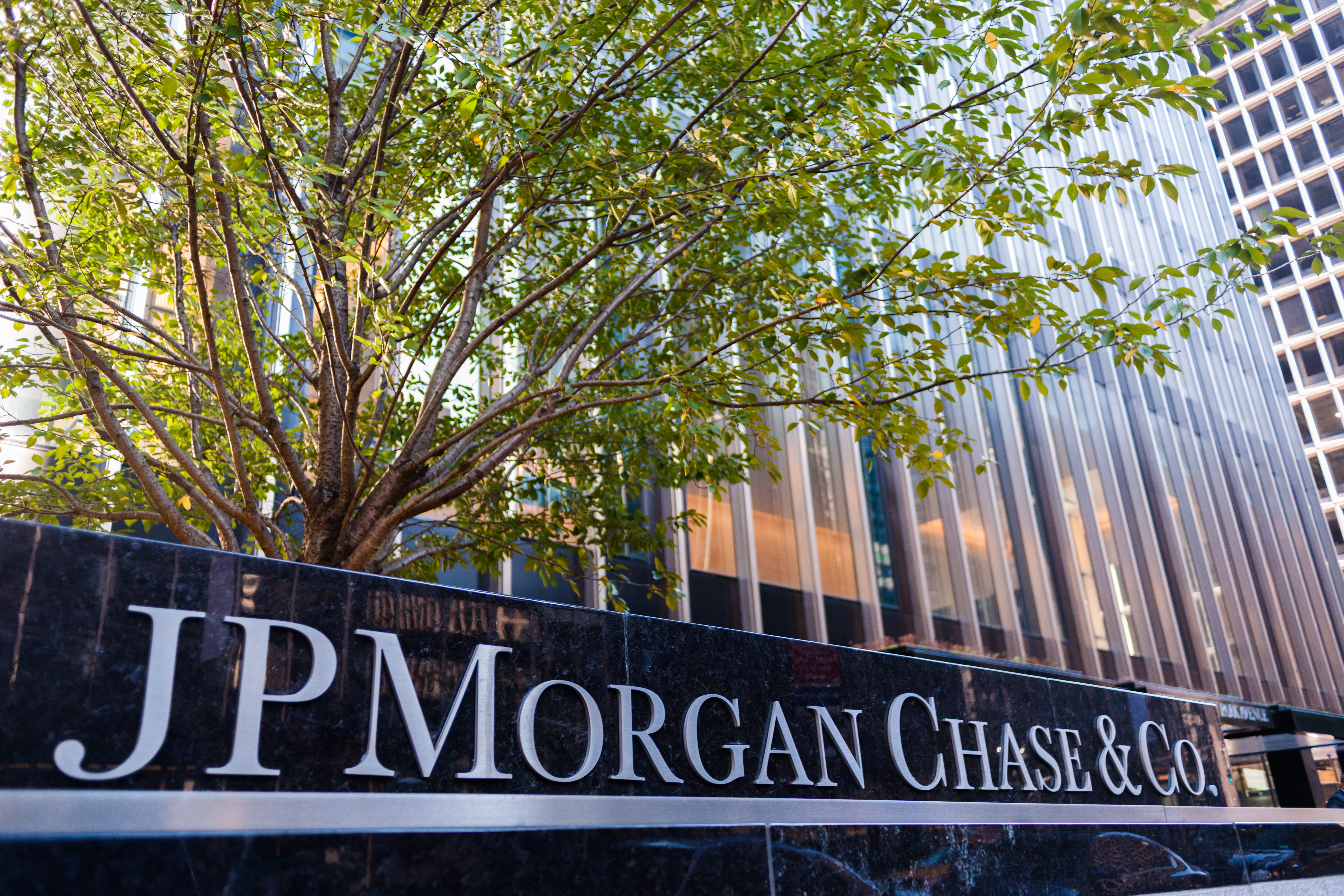
Judge Rules Employees Can Sue JPMorgan Chase Over CVS Payments
- Lawsuit Ruling: A judge has ruled that employees can sue JPMorgan Chase, accusing the bank of allowing unauthorized excessive payments to CVS Caremark, which allegedly violates the Employee Retirement Income Security Act of 1974.
- Drug Price Increases: The complaint alleges that JPMorgan permitted CVS Caremark to raise prices on 366 generic drugs by an average of 211%, resulting in some employees paying more than uninsured patients, significantly impacting their financial burden.
- Fiduciary Duty Dispute: Although the judge stated that JPMorgan did not breach fiduciary duties of loyalty and prudence, employees can still pursue claims regarding mismanagement of health and prescription benefits, leading to overpayments for drugs and premiums.
- Client Relationship Impact: With CVS Health being an investment banking client of JPMorgan, this lawsuit could affect the bank's relationships with partners, potentially impacting its reputation and business strategy in the financial services market.
See More

Bank of England Rate Decision Affected by Geopolitical Tensions


- Rate Adjustment Delay: Geopolitical tensions from the Iran war have led economists to predict that the Bank of England will postpone its planned rate cut in March, with the next potential cut now expected in the first half of 2026, reflecting concerns over economic growth.
- Energy Price Shock: The UK is highly sensitive to fluctuations in energy prices, importing about 40% of its oil and 60% of its natural gas, and the current rise in energy prices may lead to higher living costs for consumers, exacerbating inflationary pressures.
- Inflation Trend Changes: Although January's inflation rate has dropped to 3%, the volatility in energy prices presents new inflation challenges for the Bank of England, which may need to reassess its monetary policy in response to ongoing economic pressures.
- Government Monitoring Measures: The UK government has stated it will closely monitor oil and gas prices and is committed to protecting national energy security, although it emphasizes that energy prices are determined by international markets, raising concerns about potential increases in household energy bills in the future.
See More
Nasdaq Partners with Kraken to Launch Tokenized Stocks by 2027


- Tokenized Stock Initiative: Nasdaq's partnership with crypto exchange Kraken aims to launch tokenized stocks and ETFs by early 2027, signaling growing institutional acceptance of blockchain infrastructure and potentially attracting more investors to emerging markets.
- One-to-One Ownership: Each token will represent ownership of an underlying share, granting holders the same governance rights as traditional investors, including voting and dividend payments, which is expected to enhance investor confidence in tokenized assets.
- Market Infrastructure Integration: Tokenized stocks will share the same CUSIP identifier as traditional stocks and settle through existing market infrastructure, ensuring interchangeability and streamlining trading processes to improve market efficiency.
- 24/7 Trading Potential: The introduction of tokenization could enable round-the-clock trading, faster settlement times, and automated corporate actions, reducing reliance on legacy financial infrastructure and further driving innovation and development in financial markets.
See More

Fund Managers Shift Sentiment on AI Capital Expenditures


- Shift in Capital Expenditure Trends: The latest Bank of America Global Fund Manager Survey indicates that for the first time in 20 years, professional investors believe companies are overinvesting in capital expenditures, reflecting growing concerns about AI-related stocks and potentially leading to continued declines in their prices.
- High Proportion of AI-Related Spending: JPMorgan analysts estimate that 90% of capital expenditure growth since November 2022 has come from AI-related stocks, highlighting the market's reliance on AI infrastructure investments while raising questions about their potential returns.
- Change in Investor Sentiment: Historically, fund managers have favored increased capital spending over the past two decades, but recent surveys show a shift in confidence regarding AI capital expenditures, which could impact future investment decisions and market performance.
- Diversification Investment Recommendations: To mitigate potential risks associated with an AI bubble, investors are advised to consider assets such as international stocks, value stocks, and bonds, which have outperformed AI giants and the tech-heavy Nasdaq-100 index year-to-date.
See More

Investors Shift Sentiment on AI Capital Expenditures
- Investor Sentiment Shift: The latest Global Fund Manager Survey from Bank of America indicates a significant change in sentiment among investors regarding capital expenditures (capex), with many now believing companies are overinvesting, which may explain the recent declines in AI stocks like Meta, Alphabet, Amazon, and Microsoft.
- Source of Capex Growth: JPMorgan analyst Michael Cembalest estimates that 90% of capex growth since November 2022 has come from AI-related stocks, highlighting the substantial impact of AI infrastructure spending on corporate expenditures, yet investors are increasingly anxious about the potential returns on these investments.
- Investment Strategy Adjustment: In light of a potential AI bubble, investors are advised to shift funds into assets that are entirely different from AI stocks, such as international stocks via the Vanguard Total International Stock ETF, value stocks through the Vanguard Value ETF, or bonds in the Vanguard Total Bond Market ETF, all of which have outperformed AI hyperscalers and the Nasdaq-100 index year to date.
- Future Market Outlook: Vanguard's 2026 economic and market outlook projects that high-quality U.S. fixed income, U.S. value-oriented stocks, and non-U.S. developed-market stocks will have the strongest risk-return profile over the next five to ten years, potentially outperforming tech stocks, prompting investors to stay alert to market changes for portfolio adjustments.
See More
Surge in Demand for Vertiv's Cooling Systems
- Investment Surge: Institutional investors are flocking to Vertiv due to skyrocketing demand for cooling systems in data centers, with 920 institutions opening or expanding positions as of September 30, 2025, indicating strong market confidence in its future growth.
- Strong Financial Performance: Vertiv's net sales reached $10.23 billion in 2025, a 26% increase year-over-year, exceeding guidance by $30 million, showcasing its robust competitiveness in the rapidly growing AI infrastructure market.
- Profitability Improvement: In Q4 2025, Vertiv's adjusted EPS surged 47% to $1.36, with projections for 2026 indicating a continued growth of 28%, further solidifying its leadership position in the industry.
- Reasonable Market Valuation: Although Vertiv's current P/E ratio stands at 73.24, down from 75.74 in 2024, its PEG ratio of 0.80 suggests that the stock remains undervalued in light of anticipated future earnings growth, attracting more investor interest.
See More
Judge Rules Employees Can Sue JPMorgan Chase Over CVS Payments
- Lawsuit Ruling: A judge has ruled that employees can sue JPMorgan Chase, accusing the bank of allowing unauthorized excessive payments to CVS Caremark, which allegedly violates the Employee Retirement Income Security Act of 1974.
- Drug Price Increases: The complaint alleges that JPMorgan permitted CVS Caremark to raise prices on 366 generic drugs by an average of 211%, resulting in some employees paying more than uninsured patients, significantly impacting their financial burden.
- Fiduciary Duty Dispute: Although the judge stated that JPMorgan did not breach fiduciary duties of loyalty and prudence, employees can still pursue claims regarding mismanagement of health and prescription benefits, leading to overpayments for drugs and premiums.
- Client Relationship Impact: With CVS Health being an investment banking client of JPMorgan, this lawsuit could affect the bank's relationships with partners, potentially impacting its reputation and business strategy in the financial services market.
See More
Bank of England Rate Decision Affected by Geopolitical Tensions
- Rate Adjustment Delay: Geopolitical tensions from the Iran war have led economists to predict that the Bank of England will postpone its planned rate cut in March, with the next potential cut now expected in the first half of 2026, reflecting concerns over economic growth.
- Energy Price Shock: The UK is highly sensitive to fluctuations in energy prices, importing about 40% of its oil and 60% of its natural gas, and the current rise in energy prices may lead to higher living costs for consumers, exacerbating inflationary pressures.
- Inflation Trend Changes: Although January's inflation rate has dropped to 3%, the volatility in energy prices presents new inflation challenges for the Bank of England, which may need to reassess its monetary policy in response to ongoing economic pressures.
- Government Monitoring Measures: The UK government has stated it will closely monitor oil and gas prices and is committed to protecting national energy security, although it emphasizes that energy prices are determined by international markets, raising concerns about potential increases in household energy bills in the future.
See More
Nasdaq Partners with Kraken to Launch Tokenized Stocks by 2027
- Tokenized Stock Initiative: Nasdaq's partnership with crypto exchange Kraken aims to launch tokenized stocks and ETFs by early 2027, signaling growing institutional acceptance of blockchain infrastructure and potentially attracting more investors to emerging markets.
- One-to-One Ownership: Each token will represent ownership of an underlying share, granting holders the same governance rights as traditional investors, including voting and dividend payments, which is expected to enhance investor confidence in tokenized assets.
- Market Infrastructure Integration: Tokenized stocks will share the same CUSIP identifier as traditional stocks and settle through existing market infrastructure, ensuring interchangeability and streamlining trading processes to improve market efficiency.
- 24/7 Trading Potential: The introduction of tokenization could enable round-the-clock trading, faster settlement times, and automated corporate actions, reducing reliance on legacy financial infrastructure and further driving innovation and development in financial markets.
See More
Fund Managers Shift Sentiment on AI Capital Expenditures
- Shift in Capital Expenditure Trends: The latest Bank of America Global Fund Manager Survey indicates that for the first time in 20 years, professional investors believe companies are overinvesting in capital expenditures, reflecting growing concerns about AI-related stocks and potentially leading to continued declines in their prices.
- High Proportion of AI-Related Spending: JPMorgan analysts estimate that 90% of capital expenditure growth since November 2022 has come from AI-related stocks, highlighting the market's reliance on AI infrastructure investments while raising questions about their potential returns.
- Change in Investor Sentiment: Historically, fund managers have favored increased capital spending over the past two decades, but recent surveys show a shift in confidence regarding AI capital expenditures, which could impact future investment decisions and market performance.
- Diversification Investment Recommendations: To mitigate potential risks associated with an AI bubble, investors are advised to consider assets such as international stocks, value stocks, and bonds, which have outperformed AI giants and the tech-heavy Nasdaq-100 index year-to-date.
See More
Investors Shift Sentiment on AI Capital Expenditures
- Investor Sentiment Shift: The latest Global Fund Manager Survey from Bank of America indicates a significant change in sentiment among investors regarding capital expenditures (capex), with many now believing companies are overinvesting, which may explain the recent declines in AI stocks like Meta, Alphabet, Amazon, and Microsoft.
- Source of Capex Growth: JPMorgan analyst Michael Cembalest estimates that 90% of capex growth since November 2022 has come from AI-related stocks, highlighting the substantial impact of AI infrastructure spending on corporate expenditures, yet investors are increasingly anxious about the potential returns on these investments.
- Investment Strategy Adjustment: In light of a potential AI bubble, investors are advised to shift funds into assets that are entirely different from AI stocks, such as international stocks via the Vanguard Total International Stock ETF, value stocks through the Vanguard Value ETF, or bonds in the Vanguard Total Bond Market ETF, all of which have outperformed AI hyperscalers and the Nasdaq-100 index year to date.
- Future Market Outlook: Vanguard's 2026 economic and market outlook projects that high-quality U.S. fixed income, U.S. value-oriented stocks, and non-U.S. developed-market stocks will have the strongest risk-return profile over the next five to ten years, potentially outperforming tech stocks, prompting investors to stay alert to market changes for portfolio adjustments.
See More