iShares Semiconductor ETF (SOXX) Up 40% Yearly, Driven by AI Boom
Written by Emily J. Thompson, Senior Investment Analyst
Updated: Jan 18 2026
0mins

Source: NASDAQ.COM
- AI-Driven Surge: The iShares Semiconductor ETF (SOXX) surged 40% over the past year, primarily driven by strong performances from top chip stocks like Nvidia, AMD, and Broadcom, indicating the ongoing growth potential of the AI sector.
- Outstanding Market Performance: SOXX skyrocketed 1,160% in the last year, reflecting a golden age for semiconductors, and is expected to continue leading the market into 2026 as it remains central to new technologies.
- Soaring Demand: Micron's high-bandwidth memory chip demand has surged, significantly boosting its sales and profits, with the stock tripling last year, further solidifying SOXX's market position.
- Optimistic Investment Outlook: As of January 15, SOXX is already up 11.8% year-to-date, indicating a strong potential to outperform the market again if the AI boom continues.
Trade with 70% Backtested Accuracy
Stop guessing "Should I Buy AMD?" and start using high-conviction signals backed by rigorous historical data.
Sign up today to access powerful investing tools and make smarter, data-driven decisions.
Analyst Views on AMD
Wall Street analysts forecast AMD stock price to fall
33 Analyst Rating
25 Buy
8 Hold
0 Sell
Strong Buy
Current: 519.740

Low
210.00
Averages
289.13
High
377.00
Current: 519.740
Low
210.00
Averages
289.13
High
377.00
About AMD
Advanced Micro Devices, Inc. is a global semiconductor company. The Company is focused on high-performance computing and artificial intelligence (AI). Its segments include Data Center, Client and Gaming, and Embedded. Data Center segment includes AI accelerators, microprocessors (CPUs) for servers, graphics processing units (GPUs), accelerated processing units (APUs), data processing units (DPUs), Field Programmable Gate Arrays (FPGAs), and Adaptive system-on-Chip (SoC) products for data centers. Client and Gaming segment includes CPUs, APUs, chipsets for desktops and notebooks, discrete GPUs, and semi-custom SoC products and development services. Embedded segment includes embedded CPUs, APUs, FPGAs, system on modules (SOMs), and Adaptive SoC products. It markets and sells its products under the AMD trademark. Its products include AMD EPYC, AMD Ryzen, AMD Ryzen PRO, Virtex UltraScale+, among others.
About the author

Emily J. Thompson
Emily J. Thompson, a Chartered Financial Analyst (CFA) with 12 years in investment research, graduated with honors from the Wharton School. Specializing in industrial and technology stocks, she provides in-depth analysis for Intellectia’s earnings and market brief reports.
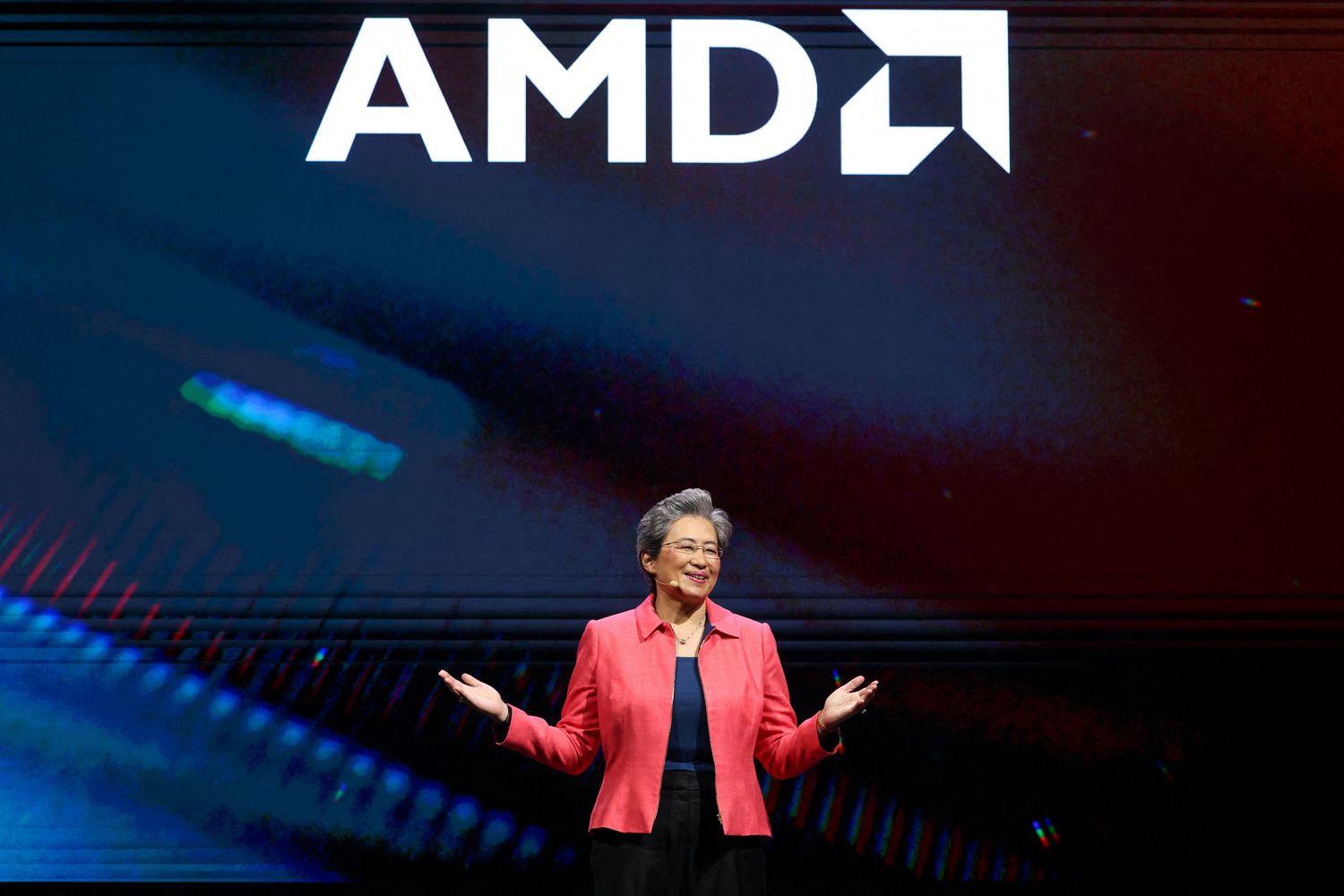
AMD Capitalizes on AI-Driven Data Center Growth

- Significant Revenue Growth: AMD has achieved a remarkable 57% revenue growth in its AI-driven data center business, indicating successful execution of its $120 billion long-term investment strategy, which boosts market confidence.
- Record Profits: The company reported record profits, reflecting its execution capabilities in a high-demand environment, although future margins and execution pace will be critical for maintaining the stock's current valuation.
- Market Performance Analysis: Despite AMD's strong performance, the analyst team has not included it in their list of top investment stocks, indicating a cautious market sentiment regarding its future growth potential.
- Investor Focus: In the current market environment, investors are advised to consider 10 other stocks believed to potentially yield substantial returns in the coming years, highlighting the challenges AMD faces in a competitive landscape.
See More

Nvidia's Stock Fluctuates Amidst Strong Earnings Growth


- Stock Fluctuations: Despite Nvidia's stock falling 17% from its May peak, it has only risen 4% by mid-2026, underperforming the S&P 500's 8% and Nasdaq's 9%, indicating market caution regarding its future growth.
- Significant Earnings Growth: Nvidia reported an 85% year-over-year revenue increase in Q1, reaching $81.6 billion, with adjusted net income soaring 139% to $45.5 billion, and is on track to exceed $200 billion in net income for the year, solidifying its position as the most profitable company globally.
- Attractive Valuation: Although Nvidia's current P/E ratio stands at 33, slightly above the S&P 500's 26, its valuation based on 2029 earnings estimates is just 12 times expected earnings, indicating relative cheapness in a high-growth sector.
- Market Expectation Discrepancies: Wall Street's revenue forecasts for Nvidia have been significantly lower than actual figures, with projections for fiscal 2027 now estimating nearly $400 billion, far exceeding earlier expectations of $250 billion, highlighting a market underestimation of its growth potential.
See More

Nvidia Stock Underperforms Despite Strong Earnings Growth
- Stock Underperformance: As of 2026, Nvidia's stock has only risen 4%, significantly lagging behind the S&P 500's 8% and Nasdaq Composite's 9%, indicating market concerns about its future growth amid uncertainties surrounding an AI bubble.
- Significant Revenue Growth: Nvidia reported an 85% year-over-year revenue increase in Q1, reaching $81.6 billion, with adjusted net income soaring 139% to $45.5 billion, and is projected to exceed $200 billion in net income for the year, solidifying its position as the most profitable company globally.
- Changing Market Expectations: Although analysts expect Nvidia's EPS to nearly double, skepticism about its future growth has led to a price-to-earnings ratio of 33, slightly above the S&P 500's 26, reflecting investor doubts about the sustainability of its profits.
- AI Chip Demand Outlook: Despite memory chip shortages potentially limiting Nvidia's revenue growth, demand for AI chips remains robust, with analysts significantly underestimating Nvidia's future revenue, suggesting the market may be undervaluing its growth potential.
See More

Analysis of AI Chip Market Competition

- Market Share Comparison: Nvidia leads the AI chip market with a staggering $75.2 billion in revenue, reflecting a 92% year-over-year growth, showcasing its dominance in the data center sector, with new architecture expected to further boost growth.
- AMD Performance Analysis: AMD's data center revenue stands at $5.8 billion, growing 57% year-over-year, yet it remains significantly lower than Nvidia's, with slower growth primarily driven by CPU sales.
- Broadcom's Growth Potential: Broadcom's AI semiconductor division generated $10.8 billion, marking a 143% year-over-year increase, with expectations to exceed $100 billion in revenue by 2027, indicating strong growth potential in the custom AI chip market.
- Marvell's Client Base: Marvell's AI chip clients include Microsoft and Amazon, with data center revenue of $1.8 billion and a 27% year-over-year growth, but projected to double by 2028, reflecting strong demand for custom AI chips.
See More

Nvidia vs AMD: AI Stock Showdown
- Nvidia's Market Dominance: Nvidia's stock has surged over 16,320% in the past decade, primarily due to its pivotal role in AI infrastructure, particularly through its widely adopted CUDA software platform, which has established its dominance in training large language models, indicating substantial future growth potential.
- AMD's Technological Advancements: Although AMD lagged in the AI training phase, improvements to its ROCm software platform and the acquisition of memory optimization firm MEXT position it competitively in the inference market, which is expected to surpass the training market, presenting new growth opportunities.
- Market Opportunities and Challenges: AMD's leadership in the data center CPU market and focus on agentic AI could capture a $120 billion market share in the coming decade; despite its 39.5x forward P/E being higher than Nvidia's, its smaller market size offers greater growth potential.
- Investment Outlook Analysis: While Nvidia's market cap stands at $4.8 trillion and its stock remains attractively priced, AMD's dual opportunities in inference and agentic AI may yield higher returns over the next decade, prompting investors to monitor the long-term performance of both companies.
See More

Nvidia Continues to Lead in AI Chip Market
- Market Share Comparison: Nvidia's data center division generated $75.2 billion in Q1, reflecting a 92% year-over-year increase, showcasing its dominant position in the data center market while maintaining robust growth despite fierce competition.
- Competitor Analysis: AMD reported $5.8 billion in data center revenue, up 57% year-over-year, but this pales in comparison to Nvidia's figures and indicates slower growth primarily driven by its CPU sales.
- Broadcom's Growth Potential: Broadcom's AI semiconductor division achieved $10.8 billion in revenue in Q2, marking a 143% year-over-year increase, with expectations to exceed $100 billion by 2027, highlighting strong demand in the custom AI chip market.
- Marvell's Market Outlook: Marvell's AI chip revenue reached $1.8 billion, growing at 27% year-over-year, and while relatively small, it is projected to double by 2028, reflecting significant demand and market potential for custom AI chips.
See More
AMD Capitalizes on AI-Driven Data Center Growth
- Significant Revenue Growth: AMD has achieved a remarkable 57% revenue growth in its AI-driven data center business, indicating successful execution of its $120 billion long-term investment strategy, which boosts market confidence.
- Record Profits: The company reported record profits, reflecting its execution capabilities in a high-demand environment, although future margins and execution pace will be critical for maintaining the stock's current valuation.
- Market Performance Analysis: Despite AMD's strong performance, the analyst team has not included it in their list of top investment stocks, indicating a cautious market sentiment regarding its future growth potential.
- Investor Focus: In the current market environment, investors are advised to consider 10 other stocks believed to potentially yield substantial returns in the coming years, highlighting the challenges AMD faces in a competitive landscape.
See More
Nvidia's Stock Fluctuates Amidst Strong Earnings Growth
- Stock Fluctuations: Despite Nvidia's stock falling 17% from its May peak, it has only risen 4% by mid-2026, underperforming the S&P 500's 8% and Nasdaq's 9%, indicating market caution regarding its future growth.
- Significant Earnings Growth: Nvidia reported an 85% year-over-year revenue increase in Q1, reaching $81.6 billion, with adjusted net income soaring 139% to $45.5 billion, and is on track to exceed $200 billion in net income for the year, solidifying its position as the most profitable company globally.
- Attractive Valuation: Although Nvidia's current P/E ratio stands at 33, slightly above the S&P 500's 26, its valuation based on 2029 earnings estimates is just 12 times expected earnings, indicating relative cheapness in a high-growth sector.
- Market Expectation Discrepancies: Wall Street's revenue forecasts for Nvidia have been significantly lower than actual figures, with projections for fiscal 2027 now estimating nearly $400 billion, far exceeding earlier expectations of $250 billion, highlighting a market underestimation of its growth potential.
See More
Nvidia Stock Underperforms Despite Strong Earnings Growth
- Stock Underperformance: As of 2026, Nvidia's stock has only risen 4%, significantly lagging behind the S&P 500's 8% and Nasdaq Composite's 9%, indicating market concerns about its future growth amid uncertainties surrounding an AI bubble.
- Significant Revenue Growth: Nvidia reported an 85% year-over-year revenue increase in Q1, reaching $81.6 billion, with adjusted net income soaring 139% to $45.5 billion, and is projected to exceed $200 billion in net income for the year, solidifying its position as the most profitable company globally.
- Changing Market Expectations: Although analysts expect Nvidia's EPS to nearly double, skepticism about its future growth has led to a price-to-earnings ratio of 33, slightly above the S&P 500's 26, reflecting investor doubts about the sustainability of its profits.
- AI Chip Demand Outlook: Despite memory chip shortages potentially limiting Nvidia's revenue growth, demand for AI chips remains robust, with analysts significantly underestimating Nvidia's future revenue, suggesting the market may be undervaluing its growth potential.
See More
Analysis of AI Chip Market Competition
- Market Share Comparison: Nvidia leads the AI chip market with a staggering $75.2 billion in revenue, reflecting a 92% year-over-year growth, showcasing its dominance in the data center sector, with new architecture expected to further boost growth.
- AMD Performance Analysis: AMD's data center revenue stands at $5.8 billion, growing 57% year-over-year, yet it remains significantly lower than Nvidia's, with slower growth primarily driven by CPU sales.
- Broadcom's Growth Potential: Broadcom's AI semiconductor division generated $10.8 billion, marking a 143% year-over-year increase, with expectations to exceed $100 billion in revenue by 2027, indicating strong growth potential in the custom AI chip market.
- Marvell's Client Base: Marvell's AI chip clients include Microsoft and Amazon, with data center revenue of $1.8 billion and a 27% year-over-year growth, but projected to double by 2028, reflecting strong demand for custom AI chips.
See More
Nvidia vs AMD: AI Stock Showdown
- Nvidia's Market Dominance: Nvidia's stock has surged over 16,320% in the past decade, primarily due to its pivotal role in AI infrastructure, particularly through its widely adopted CUDA software platform, which has established its dominance in training large language models, indicating substantial future growth potential.
- AMD's Technological Advancements: Although AMD lagged in the AI training phase, improvements to its ROCm software platform and the acquisition of memory optimization firm MEXT position it competitively in the inference market, which is expected to surpass the training market, presenting new growth opportunities.
- Market Opportunities and Challenges: AMD's leadership in the data center CPU market and focus on agentic AI could capture a $120 billion market share in the coming decade; despite its 39.5x forward P/E being higher than Nvidia's, its smaller market size offers greater growth potential.
- Investment Outlook Analysis: While Nvidia's market cap stands at $4.8 trillion and its stock remains attractively priced, AMD's dual opportunities in inference and agentic AI may yield higher returns over the next decade, prompting investors to monitor the long-term performance of both companies.
See More
Nvidia Continues to Lead in AI Chip Market
- Market Share Comparison: Nvidia's data center division generated $75.2 billion in Q1, reflecting a 92% year-over-year increase, showcasing its dominant position in the data center market while maintaining robust growth despite fierce competition.
- Competitor Analysis: AMD reported $5.8 billion in data center revenue, up 57% year-over-year, but this pales in comparison to Nvidia's figures and indicates slower growth primarily driven by its CPU sales.
- Broadcom's Growth Potential: Broadcom's AI semiconductor division achieved $10.8 billion in revenue in Q2, marking a 143% year-over-year increase, with expectations to exceed $100 billion by 2027, highlighting strong demand in the custom AI chip market.
- Marvell's Market Outlook: Marvell's AI chip revenue reached $1.8 billion, growing at 27% year-over-year, and while relatively small, it is projected to double by 2028, reflecting significant demand and market potential for custom AI chips.
See More