IonQ Partners With UAE's TII To Accelerate Quantum Research And Hybrid Algorithm
Written by Emily J. Thompson, Senior Investment Analyst
Updated: Jan 27 2025
0mins


Source: Benzinga
IonQ's Partnership with TII: IonQ has renewed its agreement with Abu Dhabi’s Quantum Research Center to enhance the UAE's position in science and technology, utilizing IonQ’s quantum computing platform for various research applications.
Market Performance: IonQ shares are down 5.64% premarket, trading at $38.46, while the company also recently partnered with Busan, South Korea, to promote quantum computing and talent development.
Trade with 70% Backtested Accuracy
Stop guessing "Should I Buy IONQ?" and start using high-conviction signals backed by rigorous historical data.
Sign up today to access powerful investing tools and make smarter, data-driven decisions.
Analyst Views on IONQ
Wall Street analysts forecast IONQ stock price to rise
12 Analyst Rating
9 Buy
3 Hold
0 Sell
Strong Buy
Current: 58.890

Low
47.00
Averages
75.91
High
100.00
Current: 58.890
Low
47.00
Averages
75.91
High
100.00
About IONQ
IonQ, Inc. is engaged in the quantum computing and networking industry, delivering high-performance systems capable of solving complex commercial and research use cases. Its generation quantum computers, IonQ Forte and IonQ Forte Enterprise, are cutting-edge systems, boasting 36 algorithmic qubits. It sells specialized quantum computing and networking hardware together with related maintenance and support. It also sells access to several quantum computers of various qubit capacities and is in the process of researching and developing technologies for quantum computers with increasing computational capabilities. It makes access to its quantum computers available via three cloud platforms, Amazon Web Services' (AWS) Amazon Braket, Microsoft's Azure Quantum and Google's Cloud Marketplace, and also to select customers via its own cloud service. Its product portfolio also includes quantum key distribution (QKD) systems, quantum random number generators (QRNGs), and single-photon detectors.
About the author

Emily J. Thompson
Emily J. Thompson, a Chartered Financial Analyst (CFA) with 12 years in investment research, graduated with honors from the Wharton School. Specializing in industrial and technology stocks, she provides in-depth analysis for Intellectia’s earnings and market brief reports.

D-Wave Quantum Shares Surge After Record Bookings Growth


- Significant Order Growth: D-Wave's first-quarter bookings surged 1,994% year-over-year to $33.4 million, including a $20 million system sale to Florida Atlantic University, indicating strong demand in the quantum computing market and enhancing future revenue visibility.
- Substantial Performance Obligations Increase: Remaining performance obligations jumped 563% year-over-year to $42.4 million, reflecting increased confidence in future revenue recognition, with a substantial portion expected in the second half of 2026, further solidifying market position.
- Strategic Acquisition Impact: Following the acquisition of Quantum Circuits, D-Wave has positioned itself as the only quantum computing firm with both annealing and gate-model systems, targeting approximately 175 physical qubits by 2028, enhancing its technological competitiveness and market appeal.
- Expansion of Commercial Applications: D-Wave's annealing systems are increasingly applied in AI and blockchain, with a collaboration with Shionogi resulting in a tenfold increase in drug-like molecules, showcasing the technology's potential in real-world applications and boosting investor confidence.
See More

U.S. Government Invests Over $2 Billion in Quantum Computing

- Government Investment Plan: The U.S. government plans to provide over $2 billion in incentives and investments to quantum computing companies under the CHIPS and Science Act, including equity stakes in several firms, highlighting its commitment to boosting domestic chip manufacturing.
- IBM Quantum Foundry: IBM's startup Anderon will receive $1 billion in government incentives, with IBM matching that amount and contributing intellectual property, marking the establishment of the country's first pure-play quantum foundry, which is expected to enhance domestic quantum computing manufacturing capabilities.
- GlobalFoundries Expansion: GlobalFoundries signed a letter of intent to receive $375 million in incentives to expand its Quantum Technology Solutions business, with the government taking about a 1% equity stake, thereby strengthening its competitive position in the quantum manufacturing sector.
- Absence of IonQ: Despite IonQ's strong performance in quantum computing and its acquisition of SkyWater Technology, it was notably excluded from government investments, which may impact its market position, although its technology leads in accuracy with a record 99.99% two-qubit gate fidelity.
See More

U.S. Government to Invest in Quantum Computing Firms
- Investment Overview: The U.S. government plans to allocate over $2 billion in incentives and investments to nine quantum computing companies under the CHIPS and Science Act, with IBM's startup Anderon set to receive $1 billion, matched by IBM's own investment, highlighting the government's commitment to the quantum computing sector.
- Global Manufacturing Expansion: GlobalFoundries has signed a letter of intent to receive $375 million in incentives to support its newly established Quantum Technology Solutions business, which will enhance domestic quantum manufacturing capabilities and bolster U.S. competitiveness in the global semiconductor market.
- Technological Leadership: IonQ boasts a record 99.99% two-qubit gate fidelity, positioning it as a leader in quantum computing technology; despite not receiving government investment, its acquisition of SkyWater Technology will make it the only vertically integrated quantum computing company in the U.S., expected to enhance market responsiveness and scaling advantages.
- Market Opportunities: Although IonQ was overlooked for government investment, its stock still holds potential for appreciation, especially as the surge in government funding for quantum initiatives increases market focus on the best quantum computing companies, potentially providing investors with attractive buying opportunities.
See More

The Future Potential and Challenges of Quantum Computing


- Microsoft's Quantum Progress: Microsoft has made significant strides in quantum computing with the introduction of its Majorana 1 chip, which utilizes topological materials and is expected to address industrial-scale problems in just a few years, enhancing its application in quantum technology.
- IonQ's Milestone: IonQ achieved a remarkable 99.99% two-qubit gate fidelity, becoming the only quantum company to reach this accuracy level, marking a technological breakthrough that suggests it could scale up to millions of qubits by 2030.
- Market Outlook: Although the practical utility of quantum computing may still be years away, the advancements made by Microsoft and IonQ indicate that investors can expect significant commercial applications in the coming years, particularly in solving complex computational challenges.
- Investment Risks and Opportunities: IonQ, as a pure-play quantum computing company, is not yet profitable but its ongoing R&D investments and technological breakthroughs present potential high-return opportunities within a high-risk investment landscape.
See More

Significant Progress in Quantum Computing Led by Microsoft and IonQ
- Microsoft's Quantum Chip Innovation: Microsoft's introduction of the Majorana 1 chip, utilizing topological conductor materials, is expected to address industrial-scale problems in the coming years, with plans to fit one million qubits on a palm-sized chip, showcasing its strong potential in quantum computing.
- IonQ's Quantum System Milestone: IonQ achieved a remarkable 99.99% two-qubit gate fidelity, becoming the only quantum company to reach this accuracy, marking a significant breakthrough in tackling quantum computing error rates, with a goal of scaling up to millions of qubits by 2030.
- Market Investment Appeal: While IonQ is not yet profitable, its focus and technological advancements in quantum computing make it a high-risk, high-reward investment option, whereas Microsoft offers a blend of safety and growth due to its financial strength and innovation.
- Industry Outlook: Although the practical application of quantum computing may still take time, the advancements made by Microsoft and IonQ suggest that this technology could play a crucial role in solving major problems within the next few years, attracting the attention of many growth investors.
See More
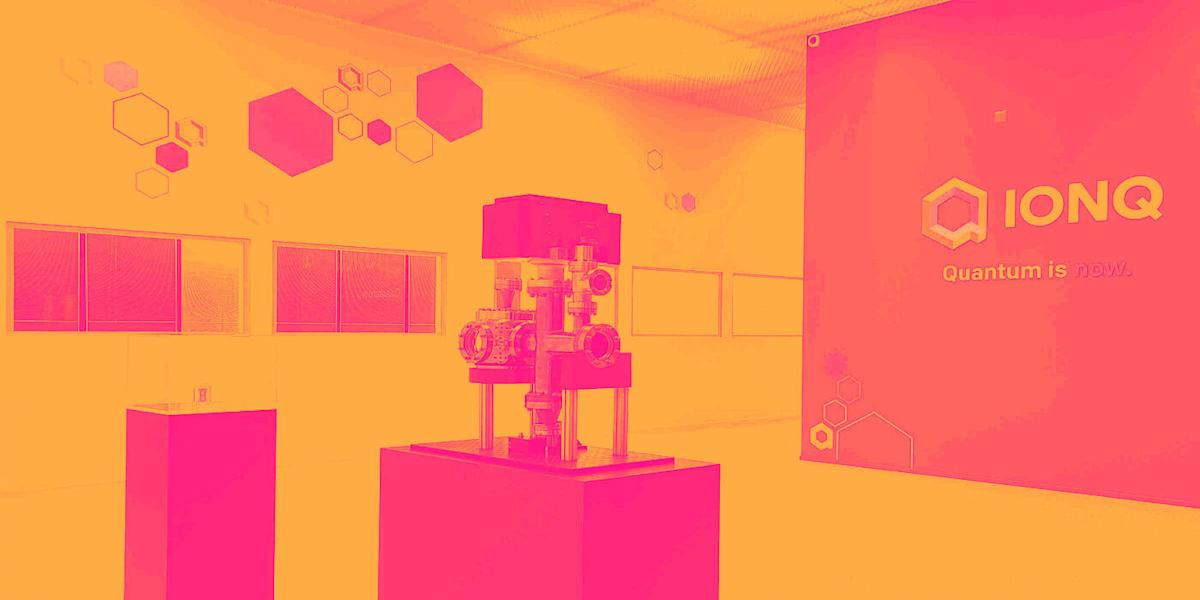
U.S. Government Invests $2 Billion to Boost Quantum Computing Sector
- Industry Investment Boost: The U.S. Commerce Department's announcement of a $2 billion grant to nine quantum computing companies, despite IonQ not being a direct beneficiary, led to a 12.3% stock price increase, reflecting heightened market confidence in the quantum computing sector.
- Market Volatility Insight: IonQ's shares have experienced 82 moves greater than 5% in the past year, with recent news significantly altering market perceptions, indicating increased investor interest in the company's future potential.
- Company Development Updates: IonQ recently opened a 22,000-square-foot quantum R&D and chip-testing lab and secured shareholder approval for an $1.8 billion acquisition of SkyWater Technology, further solidifying its position in the industry.
- Optimistic Performance Outlook: IonQ exceeded revenue estimates by 30% in its latest earnings report and raised its full-year guidance, with remaining performance obligations surging 554% year-over-year to $470 million, as analysts maintain a Strong Buy consensus rating, reflecting confidence in its long-term growth.
See More
D-Wave Quantum Shares Surge After Record Bookings Growth
- Significant Order Growth: D-Wave's first-quarter bookings surged 1,994% year-over-year to $33.4 million, including a $20 million system sale to Florida Atlantic University, indicating strong demand in the quantum computing market and enhancing future revenue visibility.
- Substantial Performance Obligations Increase: Remaining performance obligations jumped 563% year-over-year to $42.4 million, reflecting increased confidence in future revenue recognition, with a substantial portion expected in the second half of 2026, further solidifying market position.
- Strategic Acquisition Impact: Following the acquisition of Quantum Circuits, D-Wave has positioned itself as the only quantum computing firm with both annealing and gate-model systems, targeting approximately 175 physical qubits by 2028, enhancing its technological competitiveness and market appeal.
- Expansion of Commercial Applications: D-Wave's annealing systems are increasingly applied in AI and blockchain, with a collaboration with Shionogi resulting in a tenfold increase in drug-like molecules, showcasing the technology's potential in real-world applications and boosting investor confidence.
See More
U.S. Government Invests Over $2 Billion in Quantum Computing
- Government Investment Plan: The U.S. government plans to provide over $2 billion in incentives and investments to quantum computing companies under the CHIPS and Science Act, including equity stakes in several firms, highlighting its commitment to boosting domestic chip manufacturing.
- IBM Quantum Foundry: IBM's startup Anderon will receive $1 billion in government incentives, with IBM matching that amount and contributing intellectual property, marking the establishment of the country's first pure-play quantum foundry, which is expected to enhance domestic quantum computing manufacturing capabilities.
- GlobalFoundries Expansion: GlobalFoundries signed a letter of intent to receive $375 million in incentives to expand its Quantum Technology Solutions business, with the government taking about a 1% equity stake, thereby strengthening its competitive position in the quantum manufacturing sector.
- Absence of IonQ: Despite IonQ's strong performance in quantum computing and its acquisition of SkyWater Technology, it was notably excluded from government investments, which may impact its market position, although its technology leads in accuracy with a record 99.99% two-qubit gate fidelity.
See More
U.S. Government to Invest in Quantum Computing Firms
- Investment Overview: The U.S. government plans to allocate over $2 billion in incentives and investments to nine quantum computing companies under the CHIPS and Science Act, with IBM's startup Anderon set to receive $1 billion, matched by IBM's own investment, highlighting the government's commitment to the quantum computing sector.
- Global Manufacturing Expansion: GlobalFoundries has signed a letter of intent to receive $375 million in incentives to support its newly established Quantum Technology Solutions business, which will enhance domestic quantum manufacturing capabilities and bolster U.S. competitiveness in the global semiconductor market.
- Technological Leadership: IonQ boasts a record 99.99% two-qubit gate fidelity, positioning it as a leader in quantum computing technology; despite not receiving government investment, its acquisition of SkyWater Technology will make it the only vertically integrated quantum computing company in the U.S., expected to enhance market responsiveness and scaling advantages.
- Market Opportunities: Although IonQ was overlooked for government investment, its stock still holds potential for appreciation, especially as the surge in government funding for quantum initiatives increases market focus on the best quantum computing companies, potentially providing investors with attractive buying opportunities.
See More
The Future Potential and Challenges of Quantum Computing
- Microsoft's Quantum Progress: Microsoft has made significant strides in quantum computing with the introduction of its Majorana 1 chip, which utilizes topological materials and is expected to address industrial-scale problems in just a few years, enhancing its application in quantum technology.
- IonQ's Milestone: IonQ achieved a remarkable 99.99% two-qubit gate fidelity, becoming the only quantum company to reach this accuracy level, marking a technological breakthrough that suggests it could scale up to millions of qubits by 2030.
- Market Outlook: Although the practical utility of quantum computing may still be years away, the advancements made by Microsoft and IonQ indicate that investors can expect significant commercial applications in the coming years, particularly in solving complex computational challenges.
- Investment Risks and Opportunities: IonQ, as a pure-play quantum computing company, is not yet profitable but its ongoing R&D investments and technological breakthroughs present potential high-return opportunities within a high-risk investment landscape.
See More
Significant Progress in Quantum Computing Led by Microsoft and IonQ
- Microsoft's Quantum Chip Innovation: Microsoft's introduction of the Majorana 1 chip, utilizing topological conductor materials, is expected to address industrial-scale problems in the coming years, with plans to fit one million qubits on a palm-sized chip, showcasing its strong potential in quantum computing.
- IonQ's Quantum System Milestone: IonQ achieved a remarkable 99.99% two-qubit gate fidelity, becoming the only quantum company to reach this accuracy, marking a significant breakthrough in tackling quantum computing error rates, with a goal of scaling up to millions of qubits by 2030.
- Market Investment Appeal: While IonQ is not yet profitable, its focus and technological advancements in quantum computing make it a high-risk, high-reward investment option, whereas Microsoft offers a blend of safety and growth due to its financial strength and innovation.
- Industry Outlook: Although the practical application of quantum computing may still take time, the advancements made by Microsoft and IonQ suggest that this technology could play a crucial role in solving major problems within the next few years, attracting the attention of many growth investors.
See More
U.S. Government Invests $2 Billion to Boost Quantum Computing Sector
- Industry Investment Boost: The U.S. Commerce Department's announcement of a $2 billion grant to nine quantum computing companies, despite IonQ not being a direct beneficiary, led to a 12.3% stock price increase, reflecting heightened market confidence in the quantum computing sector.
- Market Volatility Insight: IonQ's shares have experienced 82 moves greater than 5% in the past year, with recent news significantly altering market perceptions, indicating increased investor interest in the company's future potential.
- Company Development Updates: IonQ recently opened a 22,000-square-foot quantum R&D and chip-testing lab and secured shareholder approval for an $1.8 billion acquisition of SkyWater Technology, further solidifying its position in the industry.
- Optimistic Performance Outlook: IonQ exceeded revenue estimates by 30% in its latest earnings report and raised its full-year guidance, with remaining performance obligations surging 554% year-over-year to $470 million, as analysts maintain a Strong Buy consensus rating, reflecting confidence in its long-term growth.
See More