Investment Opportunities in Blue-Chip Stocks Amid AI Craze
Written by Emily J. Thompson, Senior Investment Analyst
Updated: Jun 10 2026
0mins

Source: NASDAQ.COM
- Real Estate Investment Trust: Realty Income (NYSE: O) focuses on retail properties and has increased its dividend for over 30 consecutive years, currently yielding 5.3%, demonstrating stability during economic fluctuations and attracting long-term investors.
- Fast Food Giant: McDonald's (NYSE: MCD) operates over 45,000 locations globally and continues to pay and increase dividends, achieving 49 consecutive years of hikes, positioning it to become a Dividend King and showcasing resilience during economic downturns.
- Household Products Market: Clorox (NYSE: CLX) boasts a 48-year dividend growth streak, and despite facing high costs and cybersecurity issues, it maintains a 5.2% dividend yield, reflecting strong demand for its trusted brands even in economic volatility.
- Healthcare Sector Outlook: Medtronic (NYSE: MDT) is poised for its 50th consecutive dividend increase with a current yield of 3.5%, and its expansion into robotic-assisted surgery and new product launches indicate significant growth potential, making it an attractive option for investors.
Trade with 70% Backtested Accuracy
Stop guessing "Should I Buy O?" and start using high-conviction signals backed by rigorous historical data.
Sign up today to access powerful investing tools and make smarter, data-driven decisions.
Analyst Views on O
Wall Street analysts forecast O stock price to fall
11 Analyst Rating
3 Buy
7 Hold
1 Sell
Hold
Current: 63.120

Low
60.00
Averages
62.59
High
67.50
Current: 63.120
Low
60.00
Averages
62.59
High
67.50
About O
Realty Income Corporation is a real estate investment trust. The Company is engaged in the acquisition, ownership, and management of freestanding commercial properties leased under long‑term net lease agreements to a diversified base of operators, including a blend of investment grade, investment grade equivalent, and other clients. It owns a portfolio of over 15,500 properties in all 50 United States (U.S.) states, the United Kingdom, and eight other countries in Europe. It is engaged in a single business activity, which is the leasing of property to clients, generally on a net basis. That business activity spans various geographic boundaries and includes property types and clients engaged in various industries. Its property types include retail, industrial, gaming, and other. Its industry concentrations include grocery, convenience stores, home improvement, dollar stores, restaurants-quick service, health and fitness, drug stores, automotive service, among others.
About the author

Emily J. Thompson
Emily J. Thompson, a Chartered Financial Analyst (CFA) with 12 years in investment research, graduated with honors from the Wharton School. Specializing in industrial and technology stocks, she provides in-depth analysis for Intellectia’s earnings and market brief reports.

Investment Opportunities with Strong Dividends and Stable Growth

- Defensive Investment Power: Procter & Gamble, with essential brands like Tide and Gillette, achieved a 7% net sales increase to $21 billion despite raw material inflation, showcasing its strong brand equity and stable cash flow, which supports its 136-year dividend history.
- Infrastructure Investment Choice: Enbridge serves as the backbone of North America's energy pipeline, transporting about 30% of crude oil and 20% of natural gas, with 98% of core earnings from long-term contracts, enabling a 31-year streak of cash distribution increases, making it ideal for income investors.
- Stability in Real Estate Investment Trusts: Realty Income pays shareholders over 5% in monthly dividends, relying on a strict triple-net lease structure that shifts all operating costs to tenants, recently celebrating its 135th consecutive monthly dividend increase, demonstrating robust cash flow generation.
- Long-Term Competitive Advantages: These companies have built nearly insurmountable competitive moats over decades, making them ideal long-term investment choices, allowing investors to remain confident amid short-term market fluctuations.
See More
Three Durable Stocks for Long-Term Investment
- Procter & Gamble's Steady Growth: Procter & Gamble (PG) relies on essential brands like Tide and Gillette, recently reporting a 7% increase in net sales to $21 billion in the last quarter, showcasing its strong pricing power and stable cash flow that supports a 60% dividend payout ratio, marking its 70th consecutive year of dividend increases, reflecting robust brand value and market position.
- Enbridge's Stable Income: Enbridge (ENB) serves as the backbone of North America's energy infrastructure, transporting about 30% of crude oil and 20% of natural gas, with a high dividend yield of 5% and a 31-year streak of annual dividend increases, demonstrating its low-risk business model and long-term stable cash flow that has ensured financial guidance achievement for 20 consecutive years.
- Realty Income's Monthly Dividends: Realty Income (O), a real estate investment trust (REIT), pays dividends monthly with a yield exceeding 5%, utilizing a strict triple-net lease model that eliminates variable expenses, recently celebrating its 135th consecutive monthly dividend increase, showcasing strong rental income and investment appeal.
- Attractiveness of Long-Term Investments: These three companies have established strong competitive moats in their respective sectors, making Procter & Gamble, Enbridge, and Realty Income ideal long-term investment choices for investors looking to mitigate risks associated with economic fluctuations through their stable earnings and growth potential.
See More

Three Reliable Dividend Stocks to Hold


- Medical Device Leader: Medtronic boasts a 49-year dividend growth history with a current yield of 3.5%, and despite market fluctuations, its latest report indicates the highest annual revenue growth in a decade, reflecting effective restructuring efforts to enhance profitability.
- Real Estate Investment Trust: Realty Income offers a 5.2% dividend yield and has increased dividends for 31 consecutive years; as the largest net lease REIT, its portfolio spans North America and Europe, maintaining over 96% occupancy during economic downturns, showcasing its stability and reliability.
- Steel Industry Leader: Nucor, recognized as a Dividend King with over 50 consecutive annual hikes, currently has a low yield of 0.9%, yet its modern electric arc steel mills and strong employee relations enable it to perform well amid cyclical fluctuations, making it a solid long-term hold.
- Long-Term Investment Strategy: The author emphasizes a commitment to holding these quality stocks through market volatility, believing that Medtronic, Realty Income, and Nucor are proven successful companies that will continue to grow, making them worthy of attention for long-term investors.
See More

Anticipating a Deep Bear Market Ahead
- Healthcare Giant: Medtronic has maintained a dividend increase streak for 49 years, with a current yield of 3.5%, and despite market downturns, it recently reported its highest annual revenue growth in a decade, indicating a successful restructuring and potential for stable dividend growth even in a bear market.
- Real Estate Investment Trust: Realty Income offers a 5.2% dividend yield and has increased its dividend for 31 consecutive years; while not at historical highs, its absolute yield remains attractive, and its occupancy rate never dropped below 96% during the Great Recession, showcasing its reliability amid market fluctuations.
- Steel Industry Leader: Nucor, known for over 50 consecutive years of dividend increases, currently has a low yield of 0.9%, but has only reported one loss in the last four decades, demonstrating resilience in a cyclical industry, making it a potential quality pick for investors during a bear market.
- Long-Term Holding Strategy: The author intends to hold Medtronic, Realty Income, and Nucor through market volatility, believing that these companies' management capabilities and historical performance will enable continued growth in future market conditions, reflecting the value of long-term investing.
See More

Comparing Federal Realty Investment Trust and Realty Income

- Financial Performance Comparison: Federal Realty Investment Trust achieved $1.3 billion in revenue for FY 2025, a 6.3% increase, with net income of $403 million, demonstrating strong returns from its investment in high-value shopping centers.
- Expansion Strategy: Realty Income reported $5.7 billion in revenue for FY 2025, a 9.1% increase, and is expanding globally, highlighted by its entry into the Mexican market in 2026, showcasing its growth potential.
- Risk Analysis: Federal Realty faces economic volatility risks from its concentration in major coastal markets, while Realty Income must navigate management challenges associated with its aggressive expansion into new verticals like data centers.
- Valuation Comparison: Federal Realty Investment Trust has a forward P/E ratio of 42.9x, which, while lower on a sales multiple basis, indicates high earnings expectations, prompting investors to consider timing before entering the stock.
See More
Comparing Federal Realty Investment Trust and Realty Income for Income Portfolios
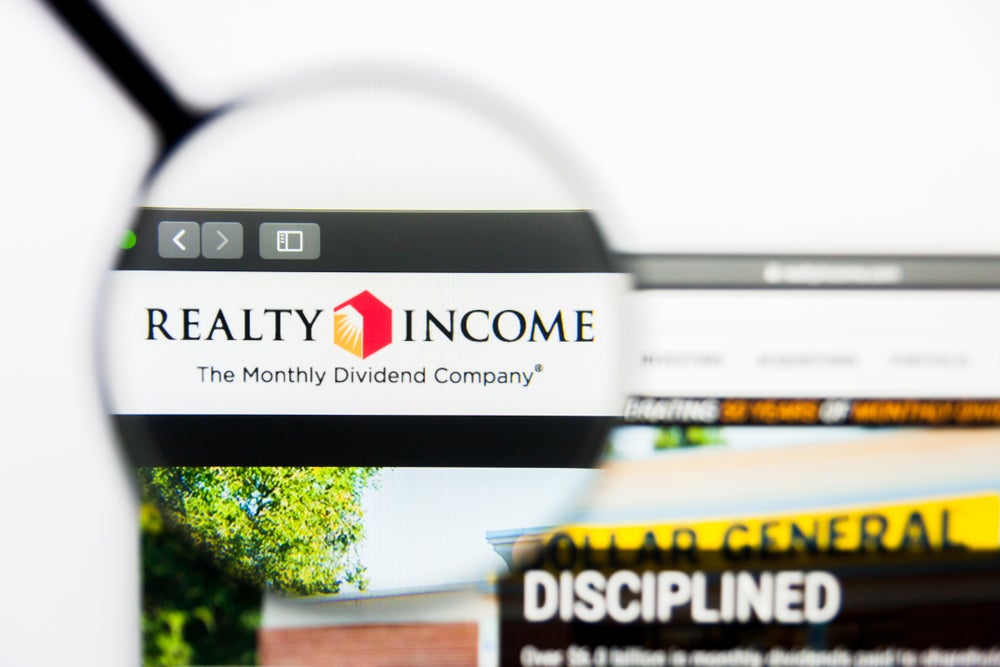
- Financial Performance Comparison: Federal Realty Investment Trust reported $1.3 billion in revenue for FY 2025, a 6.3% increase, with net income of $403 million, indicating robust growth in high-value shopping centers; in contrast, Realty Income's revenue reached $5.7 billion, a 9.1% increase, with net income nearing $1.1 billion, showcasing strong performance across its diversified property portfolio.
- Debt and Equity Position: As of December 2025, Federal Realty's debt-to-equity ratio stood at 1.5x, indicating higher leverage, while Realty Income maintained a lower ratio of 0.8x, suggesting a more stable financial structure, which may influence investor risk assessments of both companies.
- Market Expansion Strategies: Federal Realty focuses on high-value coastal markets, recently acquiring the Congressional North Shopping Center for $72.3 million, reflecting its commitment to premium assets; conversely, Realty Income's aggressive expansion into the Mexican market and acquisition of an Ohio-based Lowe's property highlight its strategy to diversify internationally.
- Shareholder Return Capability: Federal Realty's Q1 EPS surged to $1.81 in 2026, demonstrating significant profitability improvement, while Realty Income's EPS was $0.33, and despite raising dividends for 114 consecutive quarters, its lower earnings may impact its attractiveness to investors.
See More
Investment Opportunities with Strong Dividends and Stable Growth
- Defensive Investment Power: Procter & Gamble, with essential brands like Tide and Gillette, achieved a 7% net sales increase to $21 billion despite raw material inflation, showcasing its strong brand equity and stable cash flow, which supports its 136-year dividend history.
- Infrastructure Investment Choice: Enbridge serves as the backbone of North America's energy pipeline, transporting about 30% of crude oil and 20% of natural gas, with 98% of core earnings from long-term contracts, enabling a 31-year streak of cash distribution increases, making it ideal for income investors.
- Stability in Real Estate Investment Trusts: Realty Income pays shareholders over 5% in monthly dividends, relying on a strict triple-net lease structure that shifts all operating costs to tenants, recently celebrating its 135th consecutive monthly dividend increase, demonstrating robust cash flow generation.
- Long-Term Competitive Advantages: These companies have built nearly insurmountable competitive moats over decades, making them ideal long-term investment choices, allowing investors to remain confident amid short-term market fluctuations.
See More
Three Durable Stocks for Long-Term Investment
- Procter & Gamble's Steady Growth: Procter & Gamble (PG) relies on essential brands like Tide and Gillette, recently reporting a 7% increase in net sales to $21 billion in the last quarter, showcasing its strong pricing power and stable cash flow that supports a 60% dividend payout ratio, marking its 70th consecutive year of dividend increases, reflecting robust brand value and market position.
- Enbridge's Stable Income: Enbridge (ENB) serves as the backbone of North America's energy infrastructure, transporting about 30% of crude oil and 20% of natural gas, with a high dividend yield of 5% and a 31-year streak of annual dividend increases, demonstrating its low-risk business model and long-term stable cash flow that has ensured financial guidance achievement for 20 consecutive years.
- Realty Income's Monthly Dividends: Realty Income (O), a real estate investment trust (REIT), pays dividends monthly with a yield exceeding 5%, utilizing a strict triple-net lease model that eliminates variable expenses, recently celebrating its 135th consecutive monthly dividend increase, showcasing strong rental income and investment appeal.
- Attractiveness of Long-Term Investments: These three companies have established strong competitive moats in their respective sectors, making Procter & Gamble, Enbridge, and Realty Income ideal long-term investment choices for investors looking to mitigate risks associated with economic fluctuations through their stable earnings and growth potential.
See More
Three Reliable Dividend Stocks to Hold
- Medical Device Leader: Medtronic boasts a 49-year dividend growth history with a current yield of 3.5%, and despite market fluctuations, its latest report indicates the highest annual revenue growth in a decade, reflecting effective restructuring efforts to enhance profitability.
- Real Estate Investment Trust: Realty Income offers a 5.2% dividend yield and has increased dividends for 31 consecutive years; as the largest net lease REIT, its portfolio spans North America and Europe, maintaining over 96% occupancy during economic downturns, showcasing its stability and reliability.
- Steel Industry Leader: Nucor, recognized as a Dividend King with over 50 consecutive annual hikes, currently has a low yield of 0.9%, yet its modern electric arc steel mills and strong employee relations enable it to perform well amid cyclical fluctuations, making it a solid long-term hold.
- Long-Term Investment Strategy: The author emphasizes a commitment to holding these quality stocks through market volatility, believing that Medtronic, Realty Income, and Nucor are proven successful companies that will continue to grow, making them worthy of attention for long-term investors.
See More
Anticipating a Deep Bear Market Ahead
- Healthcare Giant: Medtronic has maintained a dividend increase streak for 49 years, with a current yield of 3.5%, and despite market downturns, it recently reported its highest annual revenue growth in a decade, indicating a successful restructuring and potential for stable dividend growth even in a bear market.
- Real Estate Investment Trust: Realty Income offers a 5.2% dividend yield and has increased its dividend for 31 consecutive years; while not at historical highs, its absolute yield remains attractive, and its occupancy rate never dropped below 96% during the Great Recession, showcasing its reliability amid market fluctuations.
- Steel Industry Leader: Nucor, known for over 50 consecutive years of dividend increases, currently has a low yield of 0.9%, but has only reported one loss in the last four decades, demonstrating resilience in a cyclical industry, making it a potential quality pick for investors during a bear market.
- Long-Term Holding Strategy: The author intends to hold Medtronic, Realty Income, and Nucor through market volatility, believing that these companies' management capabilities and historical performance will enable continued growth in future market conditions, reflecting the value of long-term investing.
See More
Comparing Federal Realty Investment Trust and Realty Income
- Financial Performance Comparison: Federal Realty Investment Trust achieved $1.3 billion in revenue for FY 2025, a 6.3% increase, with net income of $403 million, demonstrating strong returns from its investment in high-value shopping centers.
- Expansion Strategy: Realty Income reported $5.7 billion in revenue for FY 2025, a 9.1% increase, and is expanding globally, highlighted by its entry into the Mexican market in 2026, showcasing its growth potential.
- Risk Analysis: Federal Realty faces economic volatility risks from its concentration in major coastal markets, while Realty Income must navigate management challenges associated with its aggressive expansion into new verticals like data centers.
- Valuation Comparison: Federal Realty Investment Trust has a forward P/E ratio of 42.9x, which, while lower on a sales multiple basis, indicates high earnings expectations, prompting investors to consider timing before entering the stock.
See More
Comparing Federal Realty Investment Trust and Realty Income for Income Portfolios
- Financial Performance Comparison: Federal Realty Investment Trust reported $1.3 billion in revenue for FY 2025, a 6.3% increase, with net income of $403 million, indicating robust growth in high-value shopping centers; in contrast, Realty Income's revenue reached $5.7 billion, a 9.1% increase, with net income nearing $1.1 billion, showcasing strong performance across its diversified property portfolio.
- Debt and Equity Position: As of December 2025, Federal Realty's debt-to-equity ratio stood at 1.5x, indicating higher leverage, while Realty Income maintained a lower ratio of 0.8x, suggesting a more stable financial structure, which may influence investor risk assessments of both companies.
- Market Expansion Strategies: Federal Realty focuses on high-value coastal markets, recently acquiring the Congressional North Shopping Center for $72.3 million, reflecting its commitment to premium assets; conversely, Realty Income's aggressive expansion into the Mexican market and acquisition of an Ohio-based Lowe's property highlight its strategy to diversify internationally.
- Shareholder Return Capability: Federal Realty's Q1 EPS surged to $1.81 in 2026, demonstrating significant profitability improvement, while Realty Income's EPS was $0.33, and despite raising dividends for 114 consecutive quarters, its lower earnings may impact its attractiveness to investors.
See More