Investment Bargains in Today's Market
Written by Emily J. Thompson, Senior Investment Analyst
Updated: 1 hour ago
0mins

Should l Buy MSFT?
Source: Fool
- Microsoft's Investment Value: Microsoft (MSFT) is currently trading at a low operating price-to-earnings ratio not seen in a decade, and despite a recent rebound, its stock remains well below historical levels, indicating strong potential in the AI sector, particularly with a $625 billion backlog in its Azure cloud computing platform, suggesting rapid future growth.
- Micron's Market Outlook: Micron Technology (MU) faces a projected surge in memory chip demand, expected to rise from $35 billion to $100 billion by 2028, while current capacity can only meet half to two-thirds of demand, which will drive commodity prices up, making Micron a solid long-term investment choice.
- Nvidia's Growth Potential: Nvidia (NVDA), despite being one of the largest companies globally, is only priced for success in 2026, while AI spending is anticipated to skyrocket through 2030; with cumulative orders reaching $1 trillion, Nvidia shows significant growth potential ahead.
- Timing the Investment: In the current market, Microsoft, Micron, and Nvidia are seen as prime investment opportunities, especially against the backdrop of rapid growth in the AI and memory sectors, prompting investors to seize these undervalued stocks for long-term gains.
Trade with 70% Backtested Accuracy
Stop guessing "Should I Buy MSFT?" and start using high-conviction signals backed by rigorous historical data.
Sign up today to access powerful investing tools and make smarter, data-driven decisions.
Analyst Views on MSFT
Wall Street analysts forecast MSFT stock price to rise
34 Analyst Rating
32 Buy
2 Hold
0 Sell
Strong Buy
Current: 424.620

Low
500.00
Averages
631.36
High
678.00
Current: 424.620
Low
500.00
Averages
631.36
High
678.00
About MSFT
Microsoft Corporation is a technology company. The Company develops and supports software, services, devices, and solutions. The Company’s segments include Productivity and Business Processes, Intelligent Cloud, and More Personal Computing. The Productivity and Business Processes segment consists of products and services in its portfolio of productivity, communication, and information services. This segment primarily comprises: Office Commercial, Office Consumer, LinkedIn, and Dynamics business solutions. The Intelligent Cloud segment consists of server products and cloud services, including Azure and other cloud services, SQL Server, Windows Server, Visual Studio, System Center, and related Client Access Licenses (CALs), and Nuance and GitHub; and Enterprise Services, including enterprise support services, industry solutions and Nuance professional services. The More Personal Computing segment primarily comprises Windows, Devices, Gaming, and search and news advertising.
About the author

Emily J. Thompson
Emily J. Thompson, a Chartered Financial Analyst (CFA) with 12 years in investment research, graduated with honors from the Wharton School. Specializing in industrial and technology stocks, she provides in-depth analysis for Intellectia’s earnings and market brief reports.
Microsoft Earnings Preview: Focus on Cloud and Investment

- Cloud Growth Expectations: Microsoft Azure is expected to achieve a 38% constant currency growth, and despite facing supply shortages, strong demand trends indicate robust market interest in cloud services, potentially driving future revenue growth for the company.
- Increased Capital Expenditure: Analysts have raised Microsoft's 2027 capital expenditure estimate to $180 billion, reflecting the company's ongoing investments in infrastructure and technology aimed at meeting rising market demand and enhancing long-term returns.
- Non-OpenAI Revenue Growth: Microsoft's non-OpenAI revenue RPO figures have surpassed 20%, demonstrating the company's success in diversifying its revenue streams, which further strengthens its market competitiveness and financial stability.
- Investor Focus Areas: As the earnings report approaches, investors will closely monitor the performance of Azure and Copilot, with strong growth in these areas serving as critical indicators for assessing Microsoft's future performance and potentially influencing stock price movements.
See More
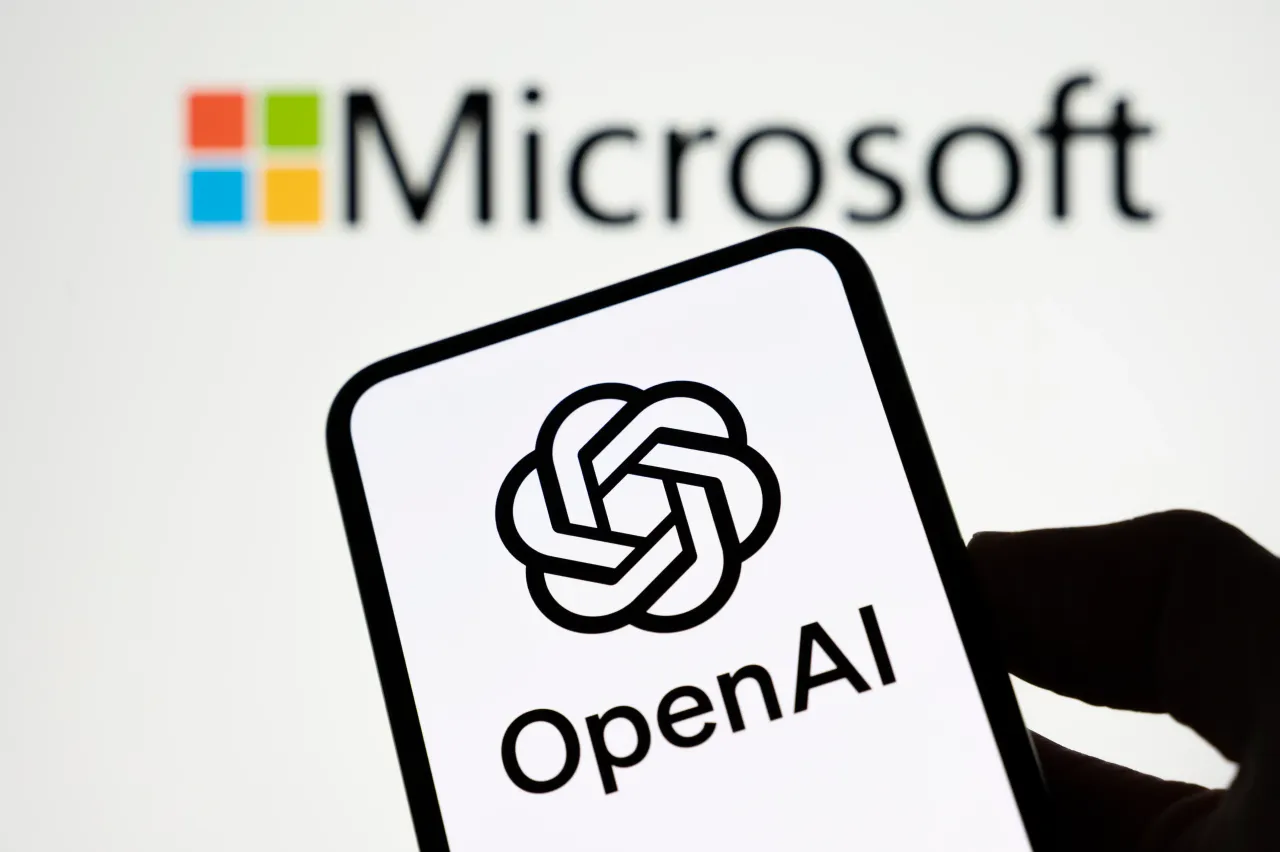
Microsoft and OpenAI Agreement Major Changes
- Revenue Share Adjustment: Microsoft will no longer pay a revenue share to OpenAI, and the revenue share will now be capped, marking a significant shift from the October 2025 agreement, which could impact Microsoft's future earnings outlook.
- Loss of Exclusivity: Microsoft has lost exclusive access to OpenAI's models, allowing OpenAI to license its models to other companies, which may challenge Microsoft's competitive edge in the AI sector and potentially affect its market share.
- Cloud Provider Freedom: OpenAI is now free to choose other cloud providers for its products, although it will continue to launch them first on Azure, indicating potential pressure on Microsoft's dominance in the cloud services market.
- Earnings Outlook: Against the backdrop of these agreement changes, Microsoft is set to report its Q3 earnings, with an expected EPS of $4.06 on revenue of $81.43 billion, raising market attention on its future performance.
See More

Intel's Strong Earnings Propel AI Stocks Higher

- Intel's Earnings Beat: Intel's first-quarter results exceeded expectations and provided strong second-quarter guidance, leading to over a 10% rise in AI-related stocks like AMD and Arm Holdings, indicating robust market confidence in AI chip demand.
- Surge in Semiconductor Demand: Taiwan Semiconductor's stock jumped 5%, reflecting strong chip demand, while the iShares Semiconductor ETF also gained 5%, showcasing investor optimism in the semiconductor sector amid the proliferation of AI technologies.
- Tech Giants Earnings Season: This week will see earnings reports from the 'Magnificent Seven' companies, including Alphabet and Microsoft, which are expected to collectively invest around $700 billion in AI compute and cloud infrastructure, potentially further boosting AI-related stock growth.
- AI Technology Adoption Outlook: While Alphabet's AI technologies may not directly drive financial results, success in Gemini and TPU adoption will be key focal points for investors, while Microsoft needs to demonstrate AI adoption in its Copilot and Azure OpenAI to restore market confidence.
See More

Burry Sees Microsoft’s Revised Deal with OpenAI as Positive Move
- Burry's Investment Move: Noted investor Michael Burry initiated a long position in Microsoft (MSFT) last week and stated that the revised partnership with OpenAI would benefit Microsoft, indicating his confidence in the tech giant's future performance.
- Partnership Agreement Change: The new agreement between Microsoft and OpenAI removes Microsoft's exclusive sales rights to OpenAI's models, allowing OpenAI to pursue deals with cloud competitors like Amazon, which could impact Microsoft's cloud growth strategy.
- Market Performance Pressure: Although Microsoft shares saw a slight increase on Monday, they have dropped 12% year-to-date, making it the worst performer among the
See More

Investment Bargains in Today's Market

- Microsoft's Investment Value: Microsoft (MSFT) is currently trading at a low operating price-to-earnings ratio not seen in a decade, and despite a recent rebound, its stock remains well below historical levels, indicating strong potential in the AI sector, particularly with a $625 billion backlog in its Azure cloud computing platform, suggesting rapid future growth.
- Micron's Market Outlook: Micron Technology (MU) faces a projected surge in memory chip demand, expected to rise from $35 billion to $100 billion by 2028, while current capacity can only meet half to two-thirds of demand, which will drive commodity prices up, making Micron a solid long-term investment choice.
- Nvidia's Growth Potential: Nvidia (NVDA), despite being one of the largest companies globally, is only priced for success in 2026, while AI spending is anticipated to skyrocket through 2030; with cumulative orders reaching $1 trillion, Nvidia shows significant growth potential ahead.
- Timing the Investment: In the current market, Microsoft, Micron, and Nvidia are seen as prime investment opportunities, especially against the backdrop of rapid growth in the AI and memory sectors, prompting investors to seize these undervalued stocks for long-term gains.
See More

Investment Opportunities in Microsoft, Nvidia, and Micron
- Microsoft Valuation Advantage: Microsoft's operating price-to-earnings ratio is at a rare low over the past decade, with its current stock price significantly below historical levels, making it an attractive investment opportunity, especially as it stands to benefit from a $625 billion cloud computing backlog amid rapid AI development.
- Micron Market Outlook: Micron anticipates that the high-bandwidth memory market will grow from $35 billion in 2025 to $100 billion by 2028; despite currently being able to meet only half to two-thirds of demand, it is expected to significantly benefit from rising memory prices as it increases production capacity in the coming years.
- Nvidia's Potential: Although Nvidia is already one of the largest companies globally, the market is only pricing in success for 2026, while AI spending is expected to surge through 2030, with cumulative orders reaching $1 trillion, indicating substantial growth potential ahead.
- Investor Choices: Despite Microsoft not being listed among the top picks by The Motley Fool Stock Advisor, its undervaluation and strong market prospects make it a stock worth considering for investors, particularly in light of the ongoing expansion in the AI sector.
See More
Microsoft Earnings Preview: Focus on Cloud and Investment
- Cloud Growth Expectations: Microsoft Azure is expected to achieve a 38% constant currency growth, and despite facing supply shortages, strong demand trends indicate robust market interest in cloud services, potentially driving future revenue growth for the company.
- Increased Capital Expenditure: Analysts have raised Microsoft's 2027 capital expenditure estimate to $180 billion, reflecting the company's ongoing investments in infrastructure and technology aimed at meeting rising market demand and enhancing long-term returns.
- Non-OpenAI Revenue Growth: Microsoft's non-OpenAI revenue RPO figures have surpassed 20%, demonstrating the company's success in diversifying its revenue streams, which further strengthens its market competitiveness and financial stability.
- Investor Focus Areas: As the earnings report approaches, investors will closely monitor the performance of Azure and Copilot, with strong growth in these areas serving as critical indicators for assessing Microsoft's future performance and potentially influencing stock price movements.
See More
Microsoft and OpenAI Agreement Major Changes
- Revenue Share Adjustment: Microsoft will no longer pay a revenue share to OpenAI, and the revenue share will now be capped, marking a significant shift from the October 2025 agreement, which could impact Microsoft's future earnings outlook.
- Loss of Exclusivity: Microsoft has lost exclusive access to OpenAI's models, allowing OpenAI to license its models to other companies, which may challenge Microsoft's competitive edge in the AI sector and potentially affect its market share.
- Cloud Provider Freedom: OpenAI is now free to choose other cloud providers for its products, although it will continue to launch them first on Azure, indicating potential pressure on Microsoft's dominance in the cloud services market.
- Earnings Outlook: Against the backdrop of these agreement changes, Microsoft is set to report its Q3 earnings, with an expected EPS of $4.06 on revenue of $81.43 billion, raising market attention on its future performance.
See More
Intel's Strong Earnings Propel AI Stocks Higher
- Intel's Earnings Beat: Intel's first-quarter results exceeded expectations and provided strong second-quarter guidance, leading to over a 10% rise in AI-related stocks like AMD and Arm Holdings, indicating robust market confidence in AI chip demand.
- Surge in Semiconductor Demand: Taiwan Semiconductor's stock jumped 5%, reflecting strong chip demand, while the iShares Semiconductor ETF also gained 5%, showcasing investor optimism in the semiconductor sector amid the proliferation of AI technologies.
- Tech Giants Earnings Season: This week will see earnings reports from the 'Magnificent Seven' companies, including Alphabet and Microsoft, which are expected to collectively invest around $700 billion in AI compute and cloud infrastructure, potentially further boosting AI-related stock growth.
- AI Technology Adoption Outlook: While Alphabet's AI technologies may not directly drive financial results, success in Gemini and TPU adoption will be key focal points for investors, while Microsoft needs to demonstrate AI adoption in its Copilot and Azure OpenAI to restore market confidence.
See More
Burry Sees Microsoft’s Revised Deal with OpenAI as Positive Move
- Burry's Investment Move: Noted investor Michael Burry initiated a long position in Microsoft (MSFT) last week and stated that the revised partnership with OpenAI would benefit Microsoft, indicating his confidence in the tech giant's future performance.
- Partnership Agreement Change: The new agreement between Microsoft and OpenAI removes Microsoft's exclusive sales rights to OpenAI's models, allowing OpenAI to pursue deals with cloud competitors like Amazon, which could impact Microsoft's cloud growth strategy.
- Market Performance Pressure: Although Microsoft shares saw a slight increase on Monday, they have dropped 12% year-to-date, making it the worst performer among the
See More
Investment Bargains in Today's Market
- Microsoft's Investment Value: Microsoft (MSFT) is currently trading at a low operating price-to-earnings ratio not seen in a decade, and despite a recent rebound, its stock remains well below historical levels, indicating strong potential in the AI sector, particularly with a $625 billion backlog in its Azure cloud computing platform, suggesting rapid future growth.
- Micron's Market Outlook: Micron Technology (MU) faces a projected surge in memory chip demand, expected to rise from $35 billion to $100 billion by 2028, while current capacity can only meet half to two-thirds of demand, which will drive commodity prices up, making Micron a solid long-term investment choice.
- Nvidia's Growth Potential: Nvidia (NVDA), despite being one of the largest companies globally, is only priced for success in 2026, while AI spending is anticipated to skyrocket through 2030; with cumulative orders reaching $1 trillion, Nvidia shows significant growth potential ahead.
- Timing the Investment: In the current market, Microsoft, Micron, and Nvidia are seen as prime investment opportunities, especially against the backdrop of rapid growth in the AI and memory sectors, prompting investors to seize these undervalued stocks for long-term gains.
See More
Investment Opportunities in Microsoft, Nvidia, and Micron
- Microsoft Valuation Advantage: Microsoft's operating price-to-earnings ratio is at a rare low over the past decade, with its current stock price significantly below historical levels, making it an attractive investment opportunity, especially as it stands to benefit from a $625 billion cloud computing backlog amid rapid AI development.
- Micron Market Outlook: Micron anticipates that the high-bandwidth memory market will grow from $35 billion in 2025 to $100 billion by 2028; despite currently being able to meet only half to two-thirds of demand, it is expected to significantly benefit from rising memory prices as it increases production capacity in the coming years.
- Nvidia's Potential: Although Nvidia is already one of the largest companies globally, the market is only pricing in success for 2026, while AI spending is expected to surge through 2030, with cumulative orders reaching $1 trillion, indicating substantial growth potential ahead.
- Investor Choices: Despite Microsoft not being listed among the top picks by The Motley Fool Stock Advisor, its undervaluation and strong market prospects make it a stock worth considering for investors, particularly in light of the ongoing expansion in the AI sector.
See More