Intensifying Competition in the EV Market
Written by Emily J. Thompson, Senior Investment Analyst
Updated: Mar 24 2026
0mins

Source: NASDAQ.COM
- Rivian-Uber Partnership: Rivian's new deal with Uber, involving a $1.5 billion investment and a commitment to purchase 10,000 R2 SUVs for robotaxi services, not only diversifies Rivian's revenue streams but also enhances its attractiveness to investors looking for growth potential.
- Lucid Revenue Surge: Lucid's fourth-quarter revenue soared 122% year-over-year to $522.7 million, driven by the popularity of the new Lucid Gravity SUV, indicating strong market demand despite ongoing challenges in achieving profitability.
- Market Opportunity Expansion: With Ford shelving its F-150 Lightning plans, Rivian stands to gain significantly in the fully electric truck and SUV market, particularly as competitors face setbacks, positioning Rivian to capture market share through more affordable vehicle offerings.
- Profitability Challenges: While both Rivian and Lucid strive for profitability, Rivian's 35% revenue from its rapidly growing software and services business may provide a clearer path to profitability, whereas Lucid's operating losses increased 45% to $1.06 billion in Q4, highlighting its ongoing struggles.
Trade with 70% Backtested Accuracy
Stop guessing "Should I Buy RIVN?" and start using high-conviction signals backed by rigorous historical data.
Sign up today to access powerful investing tools and make smarter, data-driven decisions.
Analyst Views on RIVN
Wall Street analysts forecast RIVN stock price to rise
18 Analyst Rating
8 Buy
7 Hold
3 Sell
Moderate Buy
Current: 17.290

Low
10.00
Averages
17.78
High
25.00
Current: 17.290
Low
10.00
Averages
17.78
High
25.00
About RIVN
Rivian Automotive, Inc. is an automotive technology company, which is engaged in developing and manufacturing category-defining electric vehicles (EVs) as well as vertically integrated technologies and services. The Company's R1 platform consists of two vehicles: the R1T, a two-row five-passenger pickup truck, and the R1S, a three-row seven-passenger sport utility vehicle (SUV). In the commercial market, the Company offers a Rivian Commercial Vehicle (RCV) platform. The vehicle on this platform is the Electric Delivery Van (EDV), designed and engineered by Rivian in collaboration with Amazon. The Company also offers FleetOS, its proprietary, end-to-end centralized fleet management subscription platform. It also offers a variety of services, including vehicle repair and maintenance, financing, insurance, joint venture, software subscriptions, and vehicle accessories, among others. Its other services include vehicle electrical architecture and software development services, and more.
About the author

Emily J. Thompson
Emily J. Thompson, a Chartered Financial Analyst (CFA) with 12 years in investment research, graduated with honors from the Wharton School. Specializing in industrial and technology stocks, she provides in-depth analysis for Intellectia’s earnings and market brief reports.
Rivian Prepares for R2 SUV Launch

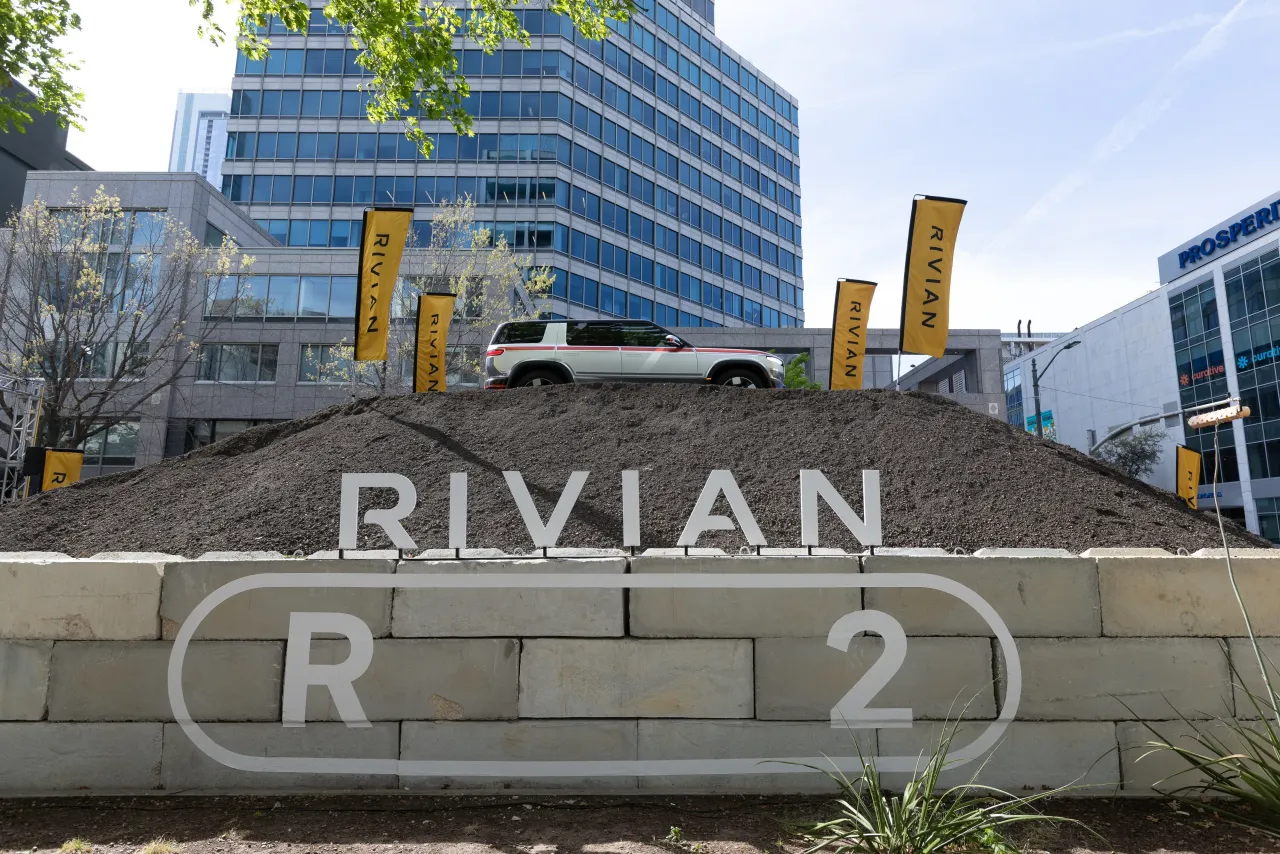
- R2 SUV Delivery Launch: Rivian is set to begin external customer deliveries of its first mid-size R2 SUV on June 9 across U.S. showrooms and service centers, marking a significant step into the mass market that is expected to attract a large number of new customers and enhance market share.
- Enormous Market Potential: CFO Claire McDonough stated that the R2 targets the rapidly growing five-passenger SUV and crossover segment, which is anticipated to draw both loyal customers and first-time EV buyers, thereby solidifying the company's market position.
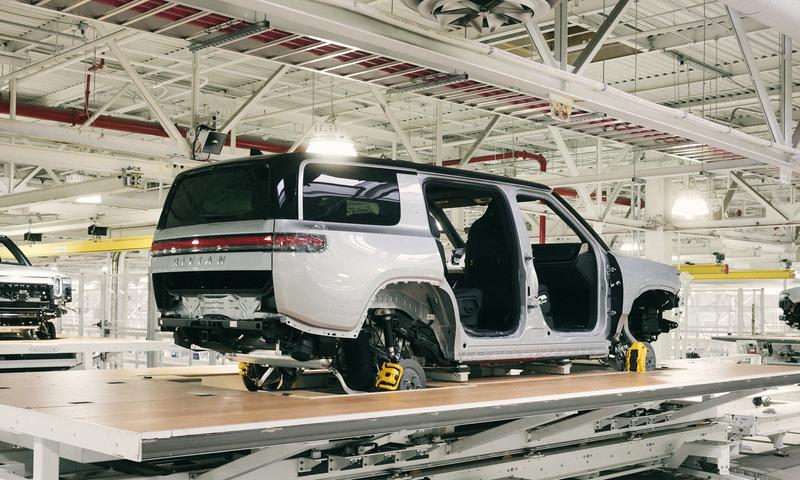
- Production Capacity Boost: Production of the R2 is ramping up at Rivian's Normal, Illinois factory, which has a total annual capacity of 215,000 units, while the new R2 body shop and general assembly lines are engineered for 155,000 units per year, allowing for flexible production alongside R1 and commercial vans.
- Global Expansion Plans: Although the R2 will initially launch in the U.S., McDonough emphasized the company's ambition to make it a global platform, with plans to open stores in Europe, and future models like the R3 crossover and R2-based robotaxi being developed to further expand market reach.
See More

Rivian Automotive Shares Rise 5.67% Driven by Strong R2 SUV Order Interest

- Surge in Order Interest: Rivian Automotive's strong R2 SUV order interest has driven a 5.67% increase in stock price to $18.27, indicating robust market demand for the new model, which could lay the groundwork for future growth.
- Significant Volume Increase: Today's trading volume reached 50.3 million shares, 72% above the three-month average, suggesting heightened investor interest in Rivian, potentially signaling a shift in market sentiment.
- Sales Launch Approaches: Rivian announced that order invitations for the R2 SUV will be sent to reservation holders starting June 9, with the stock rising 23.5% over the past week, reflecting investor optimism about the upcoming sales activity.
- Technology Partnership Expansion: Rivian plans to expand its partnership with AT&T, leveraging the telecom giant's 5G network for software updates and infotainment improvements, which not only enhances user experience but could also generate new revenue streams for the company.
See More

Rivian Automotive Shares Rise 5.67% Amid Strong Demand
- Strong Order Interest: Rivian Automotive's R2 SUV has generated significant order interest, leading to a 5.67% increase in stock price to $18.27 on Wednesday, indicating strong market anticipation that could enhance future sales performance.
- Surge in Trading Volume: Trading volume reached 50.3 million shares on Wednesday, 72% above the three-month average, reflecting increased investor attention on Rivian, which may signal upcoming sales growth and a recovery in market confidence.
- Expansion of Tech Partnership: Rivian plans to expand its existing partnership with AT&T, leveraging its 5G network for seamless software updates and continuous connectivity in infotainment systems, which will enhance user experience and potentially attract more customers.
- Potential Revenue Stream: The company is considering technology licensing deals to integrate its core technology into other brands, which could not only create new revenue streams but also provide analysts with reasons to boost Rivian's stock price estimates.
See More
Rivian R2 SUV Matches Tesla Model Y in Efficiency
- EV Efficiency Comparison: The Rivian R2 Performance AWD achieves an EPA efficiency rating of 105 MPGe and energy consumption of 32 kWh/100 miles, matching Tesla's Model Y, showcasing Rivian's strong competitive edge in electric vehicle efficiency.
- Range Advantage: With a total EPA range of 330 miles, the Rivian R2 surpasses the Tesla Model Y's 306 miles, leveraging a slightly larger battery pack (86.8 kWh vs. 84.0 kWh), providing Rivian with additional market appeal.
- Production Capacity Increase: To meet Uber's demand for 50,000 R2 robotaxis, Rivian plans to boost its Georgia plant's production capacity by 50% to 300,000 units per year, with production expected to start by late 2028, significantly enhancing its market supply capabilities.
- Strategic Partnerships: Rivian's $5.8 billion joint venture with Volkswagen Group will drive the development of next-generation EVs and software, and with its technological advantages and financial backing, Rivian is poised to secure a more favorable position in the electric vehicle market.
See More
Lucid and Rivian: A Comparative Analysis in the EV Market
- Leadership Transition: Lucid recently announced a leadership change and secured approximately $1.05 billion through public offerings and private investments, despite reporting a -364% net income margin for Q1 2026, indicating ongoing challenges in execution and production scaling.
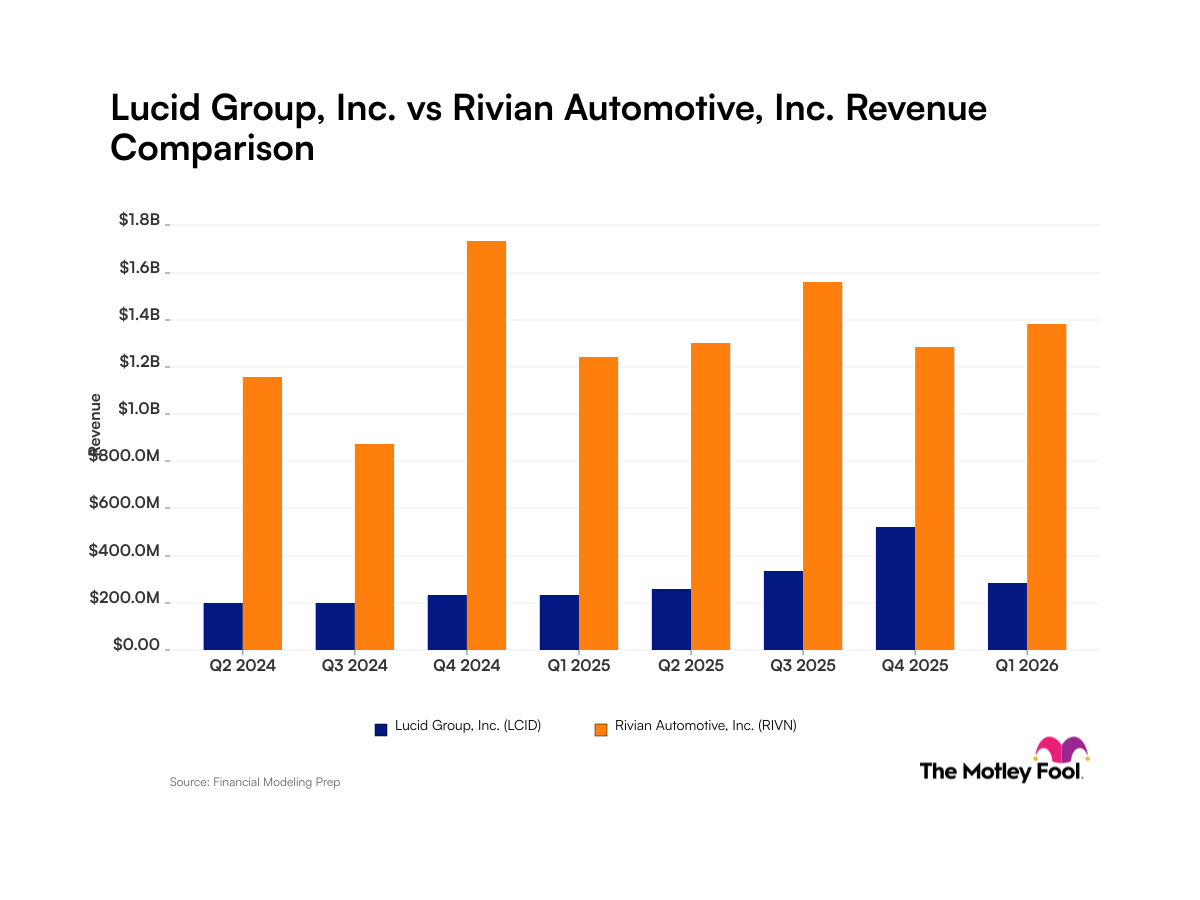
- Revenue Fluctuations: Lucid reported $200.6 million in revenue for Q2 2024, while Rivian achieved $1.2 billion in the same period, highlighting Rivian's strong performance and larger market share in the electric vehicle sector.
- Production Goals: Rivian expects to deliver between 62,000 and 67,000 EVs in 2026, reflecting nearly 50% growth over 2025, whereas Lucid continues to face persistent difficulties in production and delivery, impacting its revenue stability.
- Strategic Partnerships: Rivian's joint venture with Volkswagen provides billions in funding, while its agreement with Uber for 50,000 robotaxis further solidifies its market position, showcasing its competitive advantage in the electric vehicle landscape.
See More

Rivian R2 SUV Deliveries Begin, Stock Rises
- R2 SUV Delivery Launch: Rivian announced that deliveries of its first mass-market model, the R2 SUV, will begin on June 9, which is expected to significantly expand the company's market reach and enhance overall sales potential.
- Pricing and Competition: With a starting price of approximately $45,000, the R2 is designed to compete with vehicles like the Tesla Model Y, and Rivian has received over 100,000 reservations, indicating strong market demand.
- Delivery Expectations Increase: Rivian now expects to deliver between 62,000 and 67,000 vehicles in 2026, a substantial increase from 42,247 vehicles delivered in 2025, reflecting the company's confidence in future growth.
- Market Sentiment Optimistic: RIVN stock has maintained a 'bullish' sentiment over the past 24 hours, with 11 analysts rating it as 'Buy', and a 12-month price target of $18.15, suggesting a potential upside of about 11%.
See More
Rivian Prepares for R2 SUV Launch
- R2 SUV Delivery Launch: Rivian is set to begin external customer deliveries of its first mid-size R2 SUV on June 9 across U.S. showrooms and service centers, marking a significant step into the mass market that is expected to attract a large number of new customers and enhance market share.
- Enormous Market Potential: CFO Claire McDonough stated that the R2 targets the rapidly growing five-passenger SUV and crossover segment, which is anticipated to draw both loyal customers and first-time EV buyers, thereby solidifying the company's market position.
- Production Capacity Boost: Production of the R2 is ramping up at Rivian's Normal, Illinois factory, which has a total annual capacity of 215,000 units, while the new R2 body shop and general assembly lines are engineered for 155,000 units per year, allowing for flexible production alongside R1 and commercial vans.
- Global Expansion Plans: Although the R2 will initially launch in the U.S., McDonough emphasized the company's ambition to make it a global platform, with plans to open stores in Europe, and future models like the R3 crossover and R2-based robotaxi being developed to further expand market reach.
See More
Rivian Automotive Shares Rise 5.67% Driven by Strong R2 SUV Order Interest
- Surge in Order Interest: Rivian Automotive's strong R2 SUV order interest has driven a 5.67% increase in stock price to $18.27, indicating robust market demand for the new model, which could lay the groundwork for future growth.
- Significant Volume Increase: Today's trading volume reached 50.3 million shares, 72% above the three-month average, suggesting heightened investor interest in Rivian, potentially signaling a shift in market sentiment.
- Sales Launch Approaches: Rivian announced that order invitations for the R2 SUV will be sent to reservation holders starting June 9, with the stock rising 23.5% over the past week, reflecting investor optimism about the upcoming sales activity.
- Technology Partnership Expansion: Rivian plans to expand its partnership with AT&T, leveraging the telecom giant's 5G network for software updates and infotainment improvements, which not only enhances user experience but could also generate new revenue streams for the company.
See More
Rivian Automotive Shares Rise 5.67% Amid Strong Demand
- Strong Order Interest: Rivian Automotive's R2 SUV has generated significant order interest, leading to a 5.67% increase in stock price to $18.27 on Wednesday, indicating strong market anticipation that could enhance future sales performance.
- Surge in Trading Volume: Trading volume reached 50.3 million shares on Wednesday, 72% above the three-month average, reflecting increased investor attention on Rivian, which may signal upcoming sales growth and a recovery in market confidence.
- Expansion of Tech Partnership: Rivian plans to expand its existing partnership with AT&T, leveraging its 5G network for seamless software updates and continuous connectivity in infotainment systems, which will enhance user experience and potentially attract more customers.
- Potential Revenue Stream: The company is considering technology licensing deals to integrate its core technology into other brands, which could not only create new revenue streams but also provide analysts with reasons to boost Rivian's stock price estimates.
See More
Rivian R2 SUV Matches Tesla Model Y in Efficiency
- EV Efficiency Comparison: The Rivian R2 Performance AWD achieves an EPA efficiency rating of 105 MPGe and energy consumption of 32 kWh/100 miles, matching Tesla's Model Y, showcasing Rivian's strong competitive edge in electric vehicle efficiency.
- Range Advantage: With a total EPA range of 330 miles, the Rivian R2 surpasses the Tesla Model Y's 306 miles, leveraging a slightly larger battery pack (86.8 kWh vs. 84.0 kWh), providing Rivian with additional market appeal.
- Production Capacity Increase: To meet Uber's demand for 50,000 R2 robotaxis, Rivian plans to boost its Georgia plant's production capacity by 50% to 300,000 units per year, with production expected to start by late 2028, significantly enhancing its market supply capabilities.
- Strategic Partnerships: Rivian's $5.8 billion joint venture with Volkswagen Group will drive the development of next-generation EVs and software, and with its technological advantages and financial backing, Rivian is poised to secure a more favorable position in the electric vehicle market.
See More
Lucid and Rivian: A Comparative Analysis in the EV Market
- Leadership Transition: Lucid recently announced a leadership change and secured approximately $1.05 billion through public offerings and private investments, despite reporting a -364% net income margin for Q1 2026, indicating ongoing challenges in execution and production scaling.
- Revenue Fluctuations: Lucid reported $200.6 million in revenue for Q2 2024, while Rivian achieved $1.2 billion in the same period, highlighting Rivian's strong performance and larger market share in the electric vehicle sector.
- Production Goals: Rivian expects to deliver between 62,000 and 67,000 EVs in 2026, reflecting nearly 50% growth over 2025, whereas Lucid continues to face persistent difficulties in production and delivery, impacting its revenue stability.
- Strategic Partnerships: Rivian's joint venture with Volkswagen provides billions in funding, while its agreement with Uber for 50,000 robotaxis further solidifies its market position, showcasing its competitive advantage in the electric vehicle landscape.
See More
Rivian R2 SUV Deliveries Begin, Stock Rises
- R2 SUV Delivery Launch: Rivian announced that deliveries of its first mass-market model, the R2 SUV, will begin on June 9, which is expected to significantly expand the company's market reach and enhance overall sales potential.
- Pricing and Competition: With a starting price of approximately $45,000, the R2 is designed to compete with vehicles like the Tesla Model Y, and Rivian has received over 100,000 reservations, indicating strong market demand.
- Delivery Expectations Increase: Rivian now expects to deliver between 62,000 and 67,000 vehicles in 2026, a substantial increase from 42,247 vehicles delivered in 2025, reflecting the company's confidence in future growth.
- Market Sentiment Optimistic: RIVN stock has maintained a 'bullish' sentiment over the past 24 hours, with 11 analysts rating it as 'Buy', and a 12-month price target of $18.15, suggesting a potential upside of about 11%.
See More