Intel's Custom Chip Business Surges Amid Market Challenges
Written by Emily J. Thompson, Senior Investment Analyst
Updated: Jan 26 2026
0mins


Should l Buy INTC?
Source: Fool
- Massive Market Opportunity: Intel's custom ASIC business surged over 50% in 2025, with a 26% sequential growth in Q4, exiting the year with an annualized revenue exceeding $1 billion, highlighting its potential in a $100 billion market.
- Clear Competitive Advantage: Unlike competitors Broadcom and Marvell, Intel's ability to offer a combination of custom chip design, proprietary x86 technology, and in-house manufacturing services enhances its market appeal.
- Experienced Leadership: CEO Tan's successful tenure at Cadence Design Systems positions Intel to capture a larger share of the custom ASIC market, despite currently holding less than 1% market share.
- Support for Foundry Business: Winning custom chip customers will provide Intel with a steady flow of external clients for its foundry services, and while facing manufacturing capacity shortages now, the custom chip business is expected to be a key component of the company's recovery in the coming years.
Trade with 70% Backtested Accuracy
Stop guessing "Should I Buy INTC?" and start using high-conviction signals backed by rigorous historical data.
Sign up today to access powerful investing tools and make smarter, data-driven decisions.
Analyst Views on INTC
Wall Street analysts forecast INTC stock price to fall
29 Analyst Rating
5 Buy
19 Hold
5 Sell
Hold
Current: 48.030

Low
20.00
Averages
39.30
High
52.00
Current: 48.030
Low
20.00
Averages
39.30
High
52.00
About INTC
Intel Corporation is a global designer and manufacturer of semiconductor products. The Company operates through three segments: Intel Products, Intel Foundry, and All Other. Its Intel Products segment includes Client Computing Group (CCG), Data Center and AI (DCAI), Network and Edge (NEX). The CCG is bringing together the operating system, system architecture, hardware, and software application integration to enable PC experiences. DCAI delivers workload-optimized solutions to cloud service providers and enterprises, along with silicon devices for communications service providers, network and edge, and HPC customers. NEX helps networks and edge compute systems from fixed-function hardware to general-purpose compute, acceleration, and networking devices running cloud native software on programmable hardware. The Intel Foundry segment comprises technology development, manufacturing and foundry services. All Other segments include Altera, Mobileye, Other.
About the author

Emily J. Thompson
Emily J. Thompson, a Chartered Financial Analyst (CFA) with 12 years in investment research, graduated with honors from the Wharton School. Specializing in industrial and technology stocks, she provides in-depth analysis for Intellectia’s earnings and market brief reports.
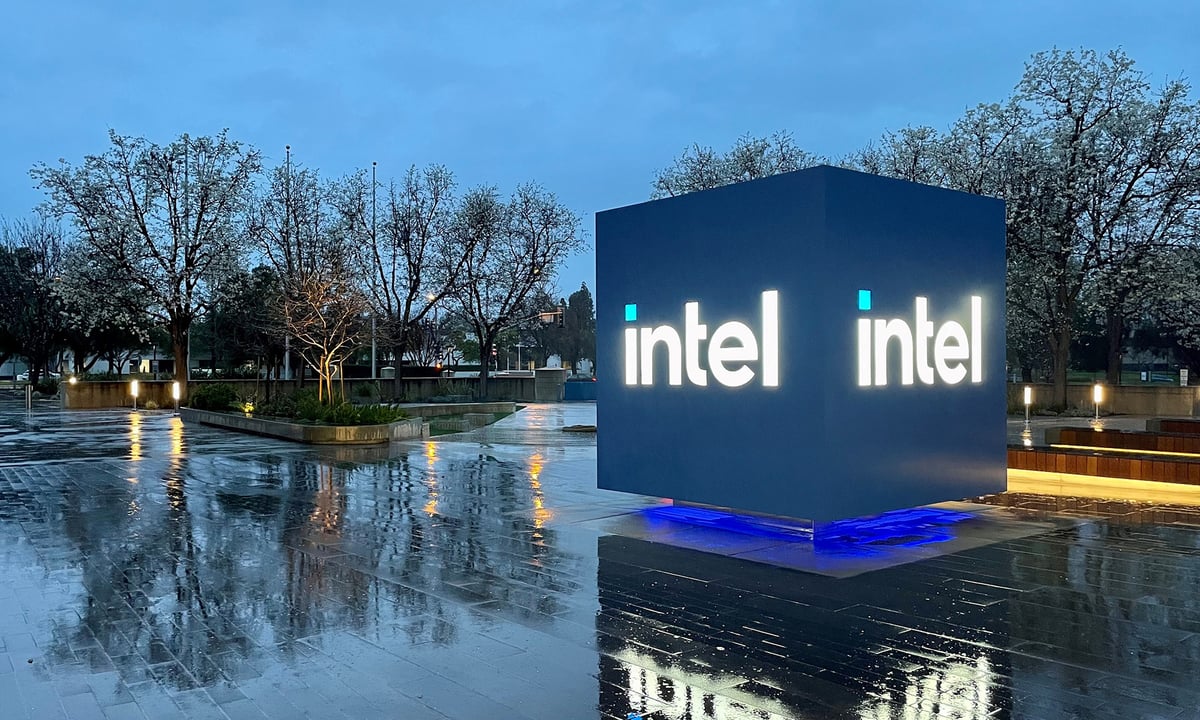
Intel Shows Significant Financial Improvement

- Financial Improvement: Intel's financial position has significantly improved compared to two years ago, reflecting the company's recovery and growth potential in the competitive market, which enhances investor confidence.
- Stock Performance: As of the afternoon of April 1, 2026, Intel's stock price rose by 4.89%, indicating a positive market reaction and optimistic expectations from investors regarding the company's future.
- Strategic Adjustments: This stock price increase is seen as a sign of successful strategic adjustments by Intel, indicating substantial progress in technology innovation and market expansion.
- Restored Market Confidence: The signs of improvement at Intel not only boost shareholder confidence but may also attract more investor attention, further driving the company's stock price upward.
See More

Google Breakthrough Triggers Memory Stock Sell-off


- Significant Memory Demand Reduction: Google's TurboQuant algorithm reduces the memory required for generative AI by six times, leading to a nearly 20% drop in Micron's stock price and shaking confidence across the memory chip sector.
- Overreaction in the Market: Despite the potential for increased demand due to efficiency gains, the market's bearish reaction towards Micron seems excessive, especially as the company projects the high-bandwidth memory market to grow from $35 billion to $100 billion, indicating robust future demand.
- Impact of Jevons Paradox: As memory becomes more efficient, demand may actually rise, suggesting that Micron's market position might not be fundamentally threatened, potentially presenting a buying opportunity for investors.
- Cautious Investor Approach: While the TurboQuant breakthrough is significant, investors should monitor consumer memory prices to assess the risk of falling prices for Micron, remaining vigilant to avoid potential losses.
See More

Goldman Sachs Predicts Bitcoin Bottom Is Near


- Bitcoin Price Decline: Bitcoin has dropped over 45% in the past six months, falling from approximately $66,700 in October to current levels, reflecting a decline in market risk appetite and increased geopolitical tensions.
- Institutional Investor Re-entry: In March, $1.32 billion flowed into spot Bitcoin ETFs, indicating a resurgence of institutional investors in the market, which provides a positive signal for crypto recovery and could drive prices higher.
- Decrease in Liquidations: The number of liquidations in Bitcoin trading decreased in March, suggesting a reduction in leveraged investments, which alleviates the pressure of forced sales on prices and creates a more favorable environment for potential price increases.
- Optimistic Long-term Outlook: While Bitcoin's price may continue to fluctuate in the short term, its nearly 60% market cap share and the U.S. government's strategic reserve of almost 200,000 Bitcoins indicate its long-term investment value, attracting more investor interest.
See More

Google Unveils TurboQuant Algorithm, Significantly Enhancing AI Efficiency
- Algorithm Efficiency Boost: Google's TurboQuant algorithm reduces memory usage by at least 6x and delivers up to 8x speedup with zero accuracy loss, potentially decreasing memory demand by 83%, thereby redefining AI efficiency.
- Market Reaction: Following this announcement, shares of memory chipmakers Micron Technology and Sandisk fell by 10% and 14%, respectively, as investors feared a significant drop in demand, reflecting market panic over Google's AI breakthrough.
- Historical Insight: The Jevons Paradox suggests that increased efficiency in resource use can lower costs and subsequently increase demand; historical examples, such as improved fuel efficiency in cars leading to higher fuel consumption, indicate that current market fears may be overstated.
- Analyst Perspective: Mizuho analyst reiterated outperform ratings on Micron and Sandisk, positing that TurboQuant's performance improvements will drive further AI adoption and strengthen demand for memory chips, despite potential short-term price pressures.
See More

Analysis of SPYM ETF Investment Potential
- Historical Returns: Over the past 50 years, the S&P 500 index has delivered an average annual return of 10%, while the State Street SPDR Portfolio S&P 500 ETF (SPYM) has achieved an impressive 11.01% annual return over the last 20 years, indicating its potential to outperform the market and attract long-term investors.
- Investment Growth Potential: Investing $10,000 in SPYM today could grow to $80,768 in 20 years, $386,966 in 35 years, and potentially exceed $1 million in 45 years, showcasing its robust capability as a wealth-building tool for investors.
- Low Fee Advantage: With an expense ratio of just 0.02%, SPYM represents a low-cost investment option, making it suitable for investors looking to gain exposure to the S&P 500 index while minimizing costs, thereby lowering the investment barrier.
- Tech Stock Concentration: Nine of the top ten holdings in SPYM are major tech companies like Nvidia, Apple, and Microsoft, which not only reflects a high concentration in technology within its portfolio but also indicates potential gains from future technological growth.
See More

SpaceX Confidentially Files for IPO Targeting $2 Trillion Valuation
- IPO Filing: SpaceX confidentially filed for its IPO on Wednesday, aiming for a staggering $2 trillion valuation, which, if successful, would make it the largest IPO in history, surpassing Saudi Aramco's fundraising record.
- Financial Performance: According to Reuters, SpaceX is projected to generate between $15 billion and $16 billion in revenue for 2025, with an EBITDA of around $8 billion, although it remains unclear if the company is profitable on a GAAP basis, with most revenue stemming from Starlink.
- Market Competition: While SpaceX dominates the rocket launch market, its valuation appears weak compared to the
See More
Intel Shows Significant Financial Improvement
- Financial Improvement: Intel's financial position has significantly improved compared to two years ago, reflecting the company's recovery and growth potential in the competitive market, which enhances investor confidence.
- Stock Performance: As of the afternoon of April 1, 2026, Intel's stock price rose by 4.89%, indicating a positive market reaction and optimistic expectations from investors regarding the company's future.
- Strategic Adjustments: This stock price increase is seen as a sign of successful strategic adjustments by Intel, indicating substantial progress in technology innovation and market expansion.
- Restored Market Confidence: The signs of improvement at Intel not only boost shareholder confidence but may also attract more investor attention, further driving the company's stock price upward.
See More
Google Breakthrough Triggers Memory Stock Sell-off
- Significant Memory Demand Reduction: Google's TurboQuant algorithm reduces the memory required for generative AI by six times, leading to a nearly 20% drop in Micron's stock price and shaking confidence across the memory chip sector.
- Overreaction in the Market: Despite the potential for increased demand due to efficiency gains, the market's bearish reaction towards Micron seems excessive, especially as the company projects the high-bandwidth memory market to grow from $35 billion to $100 billion, indicating robust future demand.
- Impact of Jevons Paradox: As memory becomes more efficient, demand may actually rise, suggesting that Micron's market position might not be fundamentally threatened, potentially presenting a buying opportunity for investors.
- Cautious Investor Approach: While the TurboQuant breakthrough is significant, investors should monitor consumer memory prices to assess the risk of falling prices for Micron, remaining vigilant to avoid potential losses.
See More
Goldman Sachs Predicts Bitcoin Bottom Is Near
- Bitcoin Price Decline: Bitcoin has dropped over 45% in the past six months, falling from approximately $66,700 in October to current levels, reflecting a decline in market risk appetite and increased geopolitical tensions.
- Institutional Investor Re-entry: In March, $1.32 billion flowed into spot Bitcoin ETFs, indicating a resurgence of institutional investors in the market, which provides a positive signal for crypto recovery and could drive prices higher.
- Decrease in Liquidations: The number of liquidations in Bitcoin trading decreased in March, suggesting a reduction in leveraged investments, which alleviates the pressure of forced sales on prices and creates a more favorable environment for potential price increases.
- Optimistic Long-term Outlook: While Bitcoin's price may continue to fluctuate in the short term, its nearly 60% market cap share and the U.S. government's strategic reserve of almost 200,000 Bitcoins indicate its long-term investment value, attracting more investor interest.
See More
Google Unveils TurboQuant Algorithm, Significantly Enhancing AI Efficiency
- Algorithm Efficiency Boost: Google's TurboQuant algorithm reduces memory usage by at least 6x and delivers up to 8x speedup with zero accuracy loss, potentially decreasing memory demand by 83%, thereby redefining AI efficiency.
- Market Reaction: Following this announcement, shares of memory chipmakers Micron Technology and Sandisk fell by 10% and 14%, respectively, as investors feared a significant drop in demand, reflecting market panic over Google's AI breakthrough.
- Historical Insight: The Jevons Paradox suggests that increased efficiency in resource use can lower costs and subsequently increase demand; historical examples, such as improved fuel efficiency in cars leading to higher fuel consumption, indicate that current market fears may be overstated.
- Analyst Perspective: Mizuho analyst reiterated outperform ratings on Micron and Sandisk, positing that TurboQuant's performance improvements will drive further AI adoption and strengthen demand for memory chips, despite potential short-term price pressures.
See More
Analysis of SPYM ETF Investment Potential
- Historical Returns: Over the past 50 years, the S&P 500 index has delivered an average annual return of 10%, while the State Street SPDR Portfolio S&P 500 ETF (SPYM) has achieved an impressive 11.01% annual return over the last 20 years, indicating its potential to outperform the market and attract long-term investors.
- Investment Growth Potential: Investing $10,000 in SPYM today could grow to $80,768 in 20 years, $386,966 in 35 years, and potentially exceed $1 million in 45 years, showcasing its robust capability as a wealth-building tool for investors.
- Low Fee Advantage: With an expense ratio of just 0.02%, SPYM represents a low-cost investment option, making it suitable for investors looking to gain exposure to the S&P 500 index while minimizing costs, thereby lowering the investment barrier.
- Tech Stock Concentration: Nine of the top ten holdings in SPYM are major tech companies like Nvidia, Apple, and Microsoft, which not only reflects a high concentration in technology within its portfolio but also indicates potential gains from future technological growth.
See More
SpaceX Confidentially Files for IPO Targeting $2 Trillion Valuation
- IPO Filing: SpaceX confidentially filed for its IPO on Wednesday, aiming for a staggering $2 trillion valuation, which, if successful, would make it the largest IPO in history, surpassing Saudi Aramco's fundraising record.
- Financial Performance: According to Reuters, SpaceX is projected to generate between $15 billion and $16 billion in revenue for 2025, with an EBITDA of around $8 billion, although it remains unclear if the company is profitable on a GAAP basis, with most revenue stemming from Starlink.
- Market Competition: While SpaceX dominates the rocket launch market, its valuation appears weak compared to the
See More