Intel Stock Surges on Major Google AI Chip Order
Written by Emily J. Thompson, Senior Investment Analyst
Updated: 3 days ago
0mins

Source: Fool
- Significant Stock Surge: Intel (INTC) shares rose 11.19% to close at $110.27, primarily driven by Google's order for over 3 million Intel-made tensor processing units, indicating strong demand in the AI chip market.
- Notable Volume Increase: The trading volume reached 135.1 million shares, nearly 9.1% above the three-month average of 123.8 million shares, reflecting heightened investor confidence in Intel's future growth prospects.
- External Customer Reference: Google's order provides a crucial external customer reference for Intel's foundry business, potentially attracting more clients to its 18A process technology and driving future revenue growth.
- Improved Market Sentiment: With increased confidence in Intel's foundry strategy, investors are looking forward to future customer confirmations and production updates to assess whether hyperscaler demand can translate into substantial foundry revenue.
Trade with 70% Backtested Accuracy
Stop guessing "Should I Buy INTC?" and start using high-conviction signals backed by rigorous historical data.
Sign up today to access powerful investing tools and make smarter, data-driven decisions.
Analyst Views on INTC
Wall Street analysts forecast INTC stock price to fall
29 Analyst Rating
5 Buy
19 Hold
5 Sell
Hold
Current: 107.040

Low
20.00
Averages
39.30
High
52.00
Current: 107.040
Low
20.00
Averages
39.30
High
52.00
About INTC
Intel Corporation is a global designer and manufacturer of semiconductor products. The Company's segments include Intel Products, Intel Foundry, and All Other. Its Intel Products comprise Client Computing Group (CCG) and Data Center and AI (DCAI). CCG delivers platforms and processors that power PCs and edge devices, enabling enhanced performance, connectivity and user experience for consumer and commercial markets with capabilities that also support retail, industrial robotics and AI ecosystems at the edge. DCAI delivers workload-optimized solutions based upon its x86 architecture for data centers, including CPUs, AI accelerators, NICs, IPUs and custom ASICs, enabling performance and scalability for cloud, enterprise, telecommunication and HPC environments. The Intel Foundry segment comprises technology development, manufacturing and foundry services, developing new semiconductor process technologies and advanced packaging technologies. All Other segments include Mobileye and Other.
About the author

Emily J. Thompson
Emily J. Thompson, a Chartered Financial Analyst (CFA) with 12 years in investment research, graduated with honors from the Wharton School. Specializing in industrial and technology stocks, she provides in-depth analysis for Intellectia’s earnings and market brief reports.
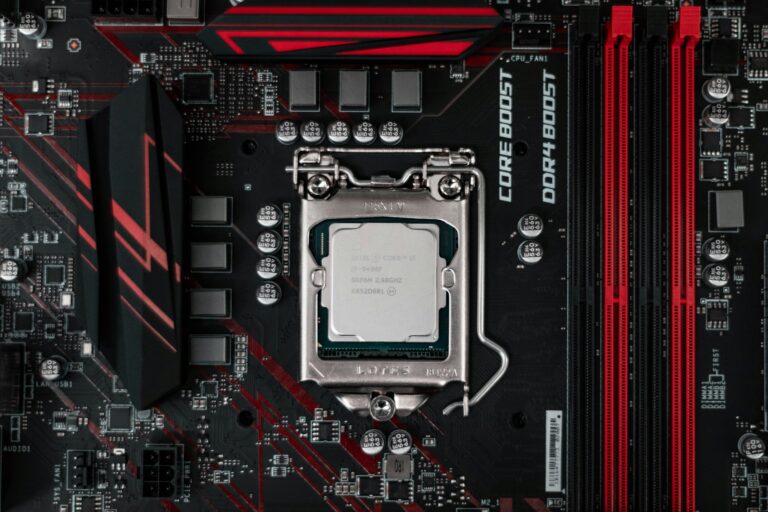
Elan Microelectronics Focuses on Security Market Expansion

- Market Expansion Potential: Elan Microelectronics is focusing on the security market, particularly targeting small and medium businesses, indicating a potential increase in market reach that could enhance overall business growth prospects.
- Strategic Shift: The company is shifting towards more lucrative commercial markets, demonstrating keen insight into market dynamics, which may lead to higher profit margins and increased market share.
- Technological Collaboration: Integration with Intel CPUs and touchscreens indicates significant technological advancements and strong partnerships, which could enhance product competitiveness and drive innovation.
- Innovation Involvement: The mention of RTX Spark service and Surface Laptop Ultra suggests the company's engagement in cutting-edge technology, and while specific financial details are lacking, this involvement may lay the groundwork for future growth.
See More

Intel Shares Surge 6% Amid Calls for Capital Raise to Support Turnaround
- Capital Raise Recommendation: Research firm SemiAnalysis suggests that Intel should consider raising additional capital to support its turnaround and expansion efforts, particularly in light of its partnership on Terafab and the rising costs associated with increased demand for AI CPUs.
- Historical Price Peak: SemiAnalysis notes that Intel's shares have not been this expensive on a trailing 12-month basis since the dot-com bubble, indicating strong market confidence in the company's future prospects.
- Market Capitalization Potential: With a market cap of approximately $498 billion, the firm believes Intel could support a much larger follow-on offering, potentially raising $25 billion, significantly more than Cerebras' $5.55 billion.
- Government and Corporate Support: Recently, Intel has raised funds from the U.S. federal government, Japanese tech giant SoftBank, and Nvidia, demonstrating its strong appeal in the capital markets and potential for strategic partnerships.
See More
Amazon's Investment in Anthropic Could Yield Massive Returns


- Massive Investment: Amazon has invested $13 billion in AI startup Anthropic, with an option for an additional $20 billion contingent on certain milestones, showcasing Amazon's ambition in the AI sector while potentially benefiting its AWS cloud business significantly.
- Cloud Service Collaboration: Anthropic has committed to spending at least $100 billion on AWS cloud services over the next decade, ensuring Amazon secures a vital position in the growing demand for AI infrastructure and further solidifying its partnership with Anthropic.
- Potential Gains: As of March 31, Amazon valued its investment in Anthropic at over $74 billion, and if Anthropic's valuation reaches $965 billion, Amazon's stake could be worth between $145 billion and $193 billion, highlighting the substantial upside of this investment.
- Market Impact: While Amazon's market cap stands at $2.7 trillion, its investment in Anthropic could yield up to $200 billion in returns, which may attract increased investor attention to Amazon's stock performance and further enhance its market value.
See More

SpaceX IPO Sets Record with $75 Billion Raised

- Historic IPO: SpaceX priced its IPO at $135 per share, raising approximately $75 billion by selling 555.6 million shares, making it the largest IPO in U.S. history and significantly boosting the company's valuation to $1.77 trillion.
- Market Rebound: U.S. stock indices surged as hopes for a resolution in the U.S.-Iran conflict led to a 1.8% rise in the S&P 500, a 3.3% increase in the Nasdaq 100, and a 1.9% gain in the Dow Jones, reflecting investor optimism about market prospects.
- Tech Stocks Lead Gains: Technology stocks saw significant gains, with Nvidia, Google, and Amazon all rising, and Micron Technology leading with an 11.6% increase, indicating strong confidence in the tech sector's performance.
- Oil Price Decline Impact: Following Trump's announcement to cancel military strikes against Iran, West Texas Intermediate crude futures fell 2.58%, alleviating inflation concerns and providing support for recovery in other sectors.
See More

US Stocks Surge as Geopolitical Risks Ease


- Market Rebound: The S&P 500 rose 1.75%, the Dow Jones increased by 1.86%, and the Nasdaq 100 surged 3.29% as President Trump canceled military strikes on Iran, indicating a positive market response to easing geopolitical tensions.
- Chip Stocks Lead Gains: AI-related stocks drove chipmakers like Sandisk up over 14% and KLA Corp up over 13%, reflecting ongoing confidence in AI spending, which may further boost growth in the tech sector.
- Airline Stocks Benefit: With WTI crude oil prices falling more than 2%, airline stocks such as Alaska Air Group rose over 11%, and United Airlines and American Airlines increased over 9%, suggesting that lower fuel costs will enhance profitability prospects for these companies.
- Software Stocks Under Pressure: Oracle's stock fell over 8% due to higher-than-expected capital expenditures projected at $70 billion, exceeding market expectations by $20-25 billion, indicating concerns in the software sector that could impact overall tech stock performance.
See More
Nvidia Appoints Veteran Lobbyist to Lead Government Affairs
- Executive Appointment: Nvidia has hired veteran lobbyist Bruce Andrews to lead government affairs in Washington, D.C., a move aimed at strengthening the company's influence in policy-making, particularly as competition in the semiconductor industry intensifies.
- Industry Experience: Andrews previously served as Intel's government affairs chief, bringing extensive industry knowledge and policy experience that can provide strategic guidance for Nvidia in navigating complex regulatory environments.
- Historical Context: Having been a Commerce Department official during the Obama administration, Andrews possesses a deep understanding of government operations, enabling him to effectively advance Nvidia's policy agenda, especially in technology and innovation sectors.
- Market Reaction: Although Nvidia declined to comment on the appointment, this move may be perceived by the market as a signal of the company's intent to seek greater support at the policy level, particularly amid current challenges in the global semiconductor supply chain.
See More
Elan Microelectronics Focuses on Security Market Expansion
- Market Expansion Potential: Elan Microelectronics is focusing on the security market, particularly targeting small and medium businesses, indicating a potential increase in market reach that could enhance overall business growth prospects.
- Strategic Shift: The company is shifting towards more lucrative commercial markets, demonstrating keen insight into market dynamics, which may lead to higher profit margins and increased market share.
- Technological Collaboration: Integration with Intel CPUs and touchscreens indicates significant technological advancements and strong partnerships, which could enhance product competitiveness and drive innovation.
- Innovation Involvement: The mention of RTX Spark service and Surface Laptop Ultra suggests the company's engagement in cutting-edge technology, and while specific financial details are lacking, this involvement may lay the groundwork for future growth.
See More
Intel Shares Surge 6% Amid Calls for Capital Raise to Support Turnaround
- Capital Raise Recommendation: Research firm SemiAnalysis suggests that Intel should consider raising additional capital to support its turnaround and expansion efforts, particularly in light of its partnership on Terafab and the rising costs associated with increased demand for AI CPUs.
- Historical Price Peak: SemiAnalysis notes that Intel's shares have not been this expensive on a trailing 12-month basis since the dot-com bubble, indicating strong market confidence in the company's future prospects.
- Market Capitalization Potential: With a market cap of approximately $498 billion, the firm believes Intel could support a much larger follow-on offering, potentially raising $25 billion, significantly more than Cerebras' $5.55 billion.
- Government and Corporate Support: Recently, Intel has raised funds from the U.S. federal government, Japanese tech giant SoftBank, and Nvidia, demonstrating its strong appeal in the capital markets and potential for strategic partnerships.
See More
Amazon's Investment in Anthropic Could Yield Massive Returns
- Massive Investment: Amazon has invested $13 billion in AI startup Anthropic, with an option for an additional $20 billion contingent on certain milestones, showcasing Amazon's ambition in the AI sector while potentially benefiting its AWS cloud business significantly.
- Cloud Service Collaboration: Anthropic has committed to spending at least $100 billion on AWS cloud services over the next decade, ensuring Amazon secures a vital position in the growing demand for AI infrastructure and further solidifying its partnership with Anthropic.
- Potential Gains: As of March 31, Amazon valued its investment in Anthropic at over $74 billion, and if Anthropic's valuation reaches $965 billion, Amazon's stake could be worth between $145 billion and $193 billion, highlighting the substantial upside of this investment.
- Market Impact: While Amazon's market cap stands at $2.7 trillion, its investment in Anthropic could yield up to $200 billion in returns, which may attract increased investor attention to Amazon's stock performance and further enhance its market value.
See More
SpaceX IPO Sets Record with $75 Billion Raised
- Historic IPO: SpaceX priced its IPO at $135 per share, raising approximately $75 billion by selling 555.6 million shares, making it the largest IPO in U.S. history and significantly boosting the company's valuation to $1.77 trillion.
- Market Rebound: U.S. stock indices surged as hopes for a resolution in the U.S.-Iran conflict led to a 1.8% rise in the S&P 500, a 3.3% increase in the Nasdaq 100, and a 1.9% gain in the Dow Jones, reflecting investor optimism about market prospects.
- Tech Stocks Lead Gains: Technology stocks saw significant gains, with Nvidia, Google, and Amazon all rising, and Micron Technology leading with an 11.6% increase, indicating strong confidence in the tech sector's performance.
- Oil Price Decline Impact: Following Trump's announcement to cancel military strikes against Iran, West Texas Intermediate crude futures fell 2.58%, alleviating inflation concerns and providing support for recovery in other sectors.
See More
US Stocks Surge as Geopolitical Risks Ease
- Market Rebound: The S&P 500 rose 1.75%, the Dow Jones increased by 1.86%, and the Nasdaq 100 surged 3.29% as President Trump canceled military strikes on Iran, indicating a positive market response to easing geopolitical tensions.
- Chip Stocks Lead Gains: AI-related stocks drove chipmakers like Sandisk up over 14% and KLA Corp up over 13%, reflecting ongoing confidence in AI spending, which may further boost growth in the tech sector.
- Airline Stocks Benefit: With WTI crude oil prices falling more than 2%, airline stocks such as Alaska Air Group rose over 11%, and United Airlines and American Airlines increased over 9%, suggesting that lower fuel costs will enhance profitability prospects for these companies.
- Software Stocks Under Pressure: Oracle's stock fell over 8% due to higher-than-expected capital expenditures projected at $70 billion, exceeding market expectations by $20-25 billion, indicating concerns in the software sector that could impact overall tech stock performance.
See More
Nvidia Appoints Veteran Lobbyist to Lead Government Affairs
- Executive Appointment: Nvidia has hired veteran lobbyist Bruce Andrews to lead government affairs in Washington, D.C., a move aimed at strengthening the company's influence in policy-making, particularly as competition in the semiconductor industry intensifies.
- Industry Experience: Andrews previously served as Intel's government affairs chief, bringing extensive industry knowledge and policy experience that can provide strategic guidance for Nvidia in navigating complex regulatory environments.
- Historical Context: Having been a Commerce Department official during the Obama administration, Andrews possesses a deep understanding of government operations, enabling him to effectively advance Nvidia's policy agenda, especially in technology and innovation sectors.
- Market Reaction: Although Nvidia declined to comment on the appointment, this move may be perceived by the market as a signal of the company's intent to seek greater support at the policy level, particularly amid current challenges in the global semiconductor supply chain.
See More