Intel Partners with SambaNova to Boost AI Solutions
Written by Emily J. Thompson, Senior Investment Analyst
Updated: 1 hour ago
0mins

Should l Buy INTC?
Source: Fool
- Stock Surge: Intel's shares rose by 5.5% to $46.16, with a market cap of $218 billion, reflecting a strong recovery in the semiconductor sector, driven by investor optimism regarding AI computing demand.
- Strategic Investment: Intel participated in a $350 million funding round for AI chip startup SambaNova and announced a multi-year strategic partnership aimed at delivering high-performance, cost-efficient AI inference solutions for global AI-native companies, further solidifying its position in the AI market.
- New Product Launch: SambaNova unveiled its SN50 inference chip, claiming it is five times faster than competitive chips and can run AI inference at one-third the cost of GPUs, enhancing Intel's competitiveness in the AI inference space.
- Growing Market Demand: With accelerating demand for AI computing, Intel faces capacity constraints and has raised server CPU prices by 10% to 15%, indicating strong market demand for its products and expected new growth opportunities for the company.
Trade with 70% Backtested Accuracy
Stop guessing "Should I Buy INTC?" and start using high-conviction signals backed by rigorous historical data.
Sign up today to access powerful investing tools and make smarter, data-driven decisions.
Analyst Views on INTC
Wall Street analysts forecast INTC stock price to fall
29 Analyst Rating
5 Buy
19 Hold
5 Sell
Hold
Current: 43.630

Low
20.00
Averages
39.30
High
52.00
Current: 43.630
Low
20.00
Averages
39.30
High
52.00
About INTC
Intel Corporation is a global designer and manufacturer of semiconductor products. The Company operates through three segments: Intel Products, Intel Foundry, and All Other. Its Intel Products segment includes Client Computing Group (CCG), Data Center and AI (DCAI), Network and Edge (NEX). The CCG is bringing together the operating system, system architecture, hardware, and software application integration to enable PC experiences. DCAI delivers workload-optimized solutions to cloud service providers and enterprises, along with silicon devices for communications service providers, network and edge, and HPC customers. NEX helps networks and edge compute systems from fixed-function hardware to general-purpose compute, acceleration, and networking devices running cloud native software on programmable hardware. The Intel Foundry segment comprises technology development, manufacturing and foundry services. All Other segments include Altera, Mobileye, Other.
About the author

Emily J. Thompson
Emily J. Thompson, a Chartered Financial Analyst (CFA) with 12 years in investment research, graduated with honors from the Wharton School. Specializing in industrial and technology stocks, she provides in-depth analysis for Intellectia’s earnings and market brief reports.
Nvidia's Investment Activity Analysis


- Portfolio Adjustment: In Q4 2025, Nvidia actively adjusted its investment portfolio by selling stakes in Applied Digital and ARM Holdings while initiating a new position in a rising chip player whose stock has surged over 7,000% since its IPO, demonstrating Nvidia's strategic flexibility in AI investments.
- ARM Stake Changes: Nvidia's previous attempt to acquire ARM for $40 billion failed due to regulatory issues, but it maintains a 20-year licensing agreement for ARM technology, indicating a long-term reliance on ARM's architecture for developing various CPUs, which is crucial for its strategic positioning.
- Applied Digital Performance: Applied Digital reported a 177% year-over-year revenue growth in its second fiscal quarter of 2026, while narrowing losses from $143 million to $31.4 million; however, its $8.7 billion market cap is considered overvalued, prompting caution among investors.
- Collaboration with Intel: Nvidia announced a $5 billion investment in Intel, with plans to co-develop chips for data centers and computers, while Intel aims to invest over $100 billion in U.S. manufacturing, highlighting Nvidia's proactive role in fostering industry collaboration and technological advancement.
See More
AMD and Meta Strike $60 Billion AI Chip Deal


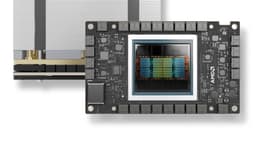
- Strategic Partnership: AMD's agreement with Meta is projected to generate over $60 billion in sales, with Meta committing to purchase 6 gigawatts of GPUs, each gigawatt potentially worth double-digit billions, significantly enhancing AMD's competitive position in the AI market.
- Equity Incentive Structure: The deal allows Meta to acquire nearly 10% of AMD's equity upon meeting certain milestones, which, while potentially dilutive to shareholders, is expected to enhance the company's long-term earnings capacity through increased investment.
- Positive Market Reaction: Following the announcement, AMD's stock surged over 10%, and if this gain holds through year-end, it would turn AMD's annual performance positive, indicating market optimism regarding this strategic collaboration.
- Competitive Landscape Insight: Despite the strong partnership with Meta, analysts highlight that Nvidia continues to dominate in technology and market share, suggesting that AMD's equity dilution strategy may reflect its weaker competitive position in the industry.
See More
Intel Partners with SambaNova to Boost AI Solutions
- Stock Surge: Intel's shares rose by 5.5% to $46.16, with a market cap of $218 billion, reflecting a strong recovery in the semiconductor sector, driven by investor optimism regarding AI computing demand.
- Strategic Investment: Intel participated in a $350 million funding round for AI chip startup SambaNova and announced a multi-year strategic partnership aimed at delivering high-performance, cost-efficient AI inference solutions for global AI-native companies, further solidifying its position in the AI market.
- New Product Launch: SambaNova unveiled its SN50 inference chip, claiming it is five times faster than competitive chips and can run AI inference at one-third the cost of GPUs, enhancing Intel's competitiveness in the AI inference space.
- Growing Market Demand: With accelerating demand for AI computing, Intel faces capacity constraints and has raised server CPU prices by 10% to 15%, indicating strong market demand for its products and expected new growth opportunities for the company.
See More

Trump Plans to Roll Back Steel and Aluminum Tariffs

- Tariff Adjustment Impact: President Trump's potential rollback of tariffs on imported aluminum cans and steel appliances, which were raised from 25% to 50% last June, could alleviate cost pressures on consumer products, fostering a recovery in the consumer goods market.
- Coca-Cola's Challenges: While Coca-Cola is not directly impacted by aluminum tariffs, its bottling partners face rising costs, which may lead to increased wholesale prices, affecting Coca-Cola's global sales and margins, and forcing it to push for more PET bottle usage.
- Constellation Brands' Opportunity: With nearly 40% of its beer shipments from Mexico in aluminum cans, a reduction in tariffs would ease pricing pressures for Constellation Brands, helping it regain market attractiveness amid declining consumption among younger consumers.
- Market Reaction Expectations: Should Trump successfully lower tariffs, both Coca-Cola and Constellation Brands' stocks are expected to benefit, potentially attracting investor interest and enhancing their performance in a competitive consumer goods market.
See More

Apple and Executives Warned of China's Military Threat

- Executive Warnings: In July 2023, Apple CEO Tim Cook, Nvidia CEO Jensen Huang, and AMD CEO Lisa Su met with CIA and Director of National Intelligence Avril Haines in Silicon Valley, where they were warned that China's military spending could lead to action on Taiwan as early as 2027, indicating a heightened awareness of future geopolitical risks.
- Stagnant Chip Orders: Despite the looming threat, companies like Apple, Nvidia, and AMD did not significantly increase chip orders from U.S. factories, reflecting a cautious approach amid uncertainty that could hinder the recovery of the U.S. semiconductor industry.
- Economic Catastrophe Warning: Treasury Secretary Scott Bessent bluntly stated at the Davos meeting that a blockade of Taiwan would result in an “economic apocalypse,” underscoring the critical role of Taiwan's semiconductor industry in the global supply chain.
- New U.S. Manufacturing Direction: Apple announced it will produce the Mac mini at a new Advanced Manufacturing Center in Houston, Texas, with Cook stating they are excited to accelerate work on advanced AI servers, highlighting the company's commitment to U.S. manufacturing and potential to enhance its competitive position in the global market.
See More

Intel Deepens Ties with SambaNova to Compete in AI Market

- Increased Investment: Intel CEO Lip-Bu Tan is overseeing a $350 million funding round for SambaNova, which he first invested in back in 2019, demonstrating Intel's commitment to strengthening its competitive position in the rapidly growing AI market.
- Technological Collaboration: SambaNova has agreed to adopt Intel's server processors and graphics cards as part of a new multiyear collaboration, which will enhance the market competitiveness of its newly launched SN50 chip, further challenging Nvidia's dominance.
- Market Competition: Despite Nvidia's long-standing market leadership with its GPUs, Intel is developing its own graphics cards and seeking partnerships with companies like SambaNova to bolster its competitiveness in the AI chip sector.
- Industry Outlook: Analysts predict that Big Tech spending on AI will reach $550–$600 billion by 2026, driving a 26% growth in the semiconductor industry, which has contributed to a 5.35% increase in Intel's stock price amid this optimistic market environment.
See More
Nvidia's Investment Activity Analysis
- Portfolio Adjustment: In Q4 2025, Nvidia actively adjusted its investment portfolio by selling stakes in Applied Digital and ARM Holdings while initiating a new position in a rising chip player whose stock has surged over 7,000% since its IPO, demonstrating Nvidia's strategic flexibility in AI investments.
- ARM Stake Changes: Nvidia's previous attempt to acquire ARM for $40 billion failed due to regulatory issues, but it maintains a 20-year licensing agreement for ARM technology, indicating a long-term reliance on ARM's architecture for developing various CPUs, which is crucial for its strategic positioning.
- Applied Digital Performance: Applied Digital reported a 177% year-over-year revenue growth in its second fiscal quarter of 2026, while narrowing losses from $143 million to $31.4 million; however, its $8.7 billion market cap is considered overvalued, prompting caution among investors.
- Collaboration with Intel: Nvidia announced a $5 billion investment in Intel, with plans to co-develop chips for data centers and computers, while Intel aims to invest over $100 billion in U.S. manufacturing, highlighting Nvidia's proactive role in fostering industry collaboration and technological advancement.
See More
AMD and Meta Strike $60 Billion AI Chip Deal
- Strategic Partnership: AMD's agreement with Meta is projected to generate over $60 billion in sales, with Meta committing to purchase 6 gigawatts of GPUs, each gigawatt potentially worth double-digit billions, significantly enhancing AMD's competitive position in the AI market.
- Equity Incentive Structure: The deal allows Meta to acquire nearly 10% of AMD's equity upon meeting certain milestones, which, while potentially dilutive to shareholders, is expected to enhance the company's long-term earnings capacity through increased investment.
- Positive Market Reaction: Following the announcement, AMD's stock surged over 10%, and if this gain holds through year-end, it would turn AMD's annual performance positive, indicating market optimism regarding this strategic collaboration.
- Competitive Landscape Insight: Despite the strong partnership with Meta, analysts highlight that Nvidia continues to dominate in technology and market share, suggesting that AMD's equity dilution strategy may reflect its weaker competitive position in the industry.
See More
Intel Partners with SambaNova to Boost AI Solutions
- Stock Surge: Intel's shares rose by 5.5% to $46.16, with a market cap of $218 billion, reflecting a strong recovery in the semiconductor sector, driven by investor optimism regarding AI computing demand.
- Strategic Investment: Intel participated in a $350 million funding round for AI chip startup SambaNova and announced a multi-year strategic partnership aimed at delivering high-performance, cost-efficient AI inference solutions for global AI-native companies, further solidifying its position in the AI market.
- New Product Launch: SambaNova unveiled its SN50 inference chip, claiming it is five times faster than competitive chips and can run AI inference at one-third the cost of GPUs, enhancing Intel's competitiveness in the AI inference space.
- Growing Market Demand: With accelerating demand for AI computing, Intel faces capacity constraints and has raised server CPU prices by 10% to 15%, indicating strong market demand for its products and expected new growth opportunities for the company.
See More
Trump Plans to Roll Back Steel and Aluminum Tariffs
- Tariff Adjustment Impact: President Trump's potential rollback of tariffs on imported aluminum cans and steel appliances, which were raised from 25% to 50% last June, could alleviate cost pressures on consumer products, fostering a recovery in the consumer goods market.
- Coca-Cola's Challenges: While Coca-Cola is not directly impacted by aluminum tariffs, its bottling partners face rising costs, which may lead to increased wholesale prices, affecting Coca-Cola's global sales and margins, and forcing it to push for more PET bottle usage.
- Constellation Brands' Opportunity: With nearly 40% of its beer shipments from Mexico in aluminum cans, a reduction in tariffs would ease pricing pressures for Constellation Brands, helping it regain market attractiveness amid declining consumption among younger consumers.
- Market Reaction Expectations: Should Trump successfully lower tariffs, both Coca-Cola and Constellation Brands' stocks are expected to benefit, potentially attracting investor interest and enhancing their performance in a competitive consumer goods market.
See More
Apple and Executives Warned of China's Military Threat
- Executive Warnings: In July 2023, Apple CEO Tim Cook, Nvidia CEO Jensen Huang, and AMD CEO Lisa Su met with CIA and Director of National Intelligence Avril Haines in Silicon Valley, where they were warned that China's military spending could lead to action on Taiwan as early as 2027, indicating a heightened awareness of future geopolitical risks.
- Stagnant Chip Orders: Despite the looming threat, companies like Apple, Nvidia, and AMD did not significantly increase chip orders from U.S. factories, reflecting a cautious approach amid uncertainty that could hinder the recovery of the U.S. semiconductor industry.
- Economic Catastrophe Warning: Treasury Secretary Scott Bessent bluntly stated at the Davos meeting that a blockade of Taiwan would result in an “economic apocalypse,” underscoring the critical role of Taiwan's semiconductor industry in the global supply chain.
- New U.S. Manufacturing Direction: Apple announced it will produce the Mac mini at a new Advanced Manufacturing Center in Houston, Texas, with Cook stating they are excited to accelerate work on advanced AI servers, highlighting the company's commitment to U.S. manufacturing and potential to enhance its competitive position in the global market.
See More
Intel Deepens Ties with SambaNova to Compete in AI Market
- Increased Investment: Intel CEO Lip-Bu Tan is overseeing a $350 million funding round for SambaNova, which he first invested in back in 2019, demonstrating Intel's commitment to strengthening its competitive position in the rapidly growing AI market.
- Technological Collaboration: SambaNova has agreed to adopt Intel's server processors and graphics cards as part of a new multiyear collaboration, which will enhance the market competitiveness of its newly launched SN50 chip, further challenging Nvidia's dominance.
- Market Competition: Despite Nvidia's long-standing market leadership with its GPUs, Intel is developing its own graphics cards and seeking partnerships with companies like SambaNova to bolster its competitiveness in the AI chip sector.
- Industry Outlook: Analysts predict that Big Tech spending on AI will reach $550–$600 billion by 2026, driving a 26% growth in the semiconductor industry, which has contributed to a 5.35% increase in Intel's stock price amid this optimistic market environment.
See More