IBM's Quantum Computing and AI Strategy Outlook
Written by Emily J. Thompson, Senior Investment Analyst
Updated: Feb 25 2026
0mins
Should l Buy IBM?
Source: Fool
- Quantum Computing Investment: IBM has been investing in quantum computing hardware and software for decades, aiming to achieve 'quantum advantage' by the end of 2026, although it remains a non-major growth driver in the short term.
- Software Revenue Growth: In Q4, IBM's software revenue rose 14% year-over-year to $9 billion, with software now accounting for nearly 46% of total revenue, highlighting the company's shift towards a software-led model that enhances financial stability.
- Strong Free Cash Flow: IBM generated $14.7 billion in free cash flow in fiscal 2025 and expects nearly $15.7 billion in 2026, providing ample financial flexibility to support dividends and acquisitions.
- AI Platform Strategy: IBM's cumulative generative AI business is valued at over $12.5 billion, with management referring to the company as a 'software-led, hybrid cloud and AI platform' firm, indicating strong growth potential in enterprise AI deployments, particularly in hybrid cloud environments.
Trade with 70% Backtested Accuracy
Stop guessing "Should I Buy IBM?" and start using high-conviction signals backed by rigorous historical data.
Sign up today to access powerful investing tools and make smarter, data-driven decisions.
Analyst Views on IBM
Wall Street analysts forecast IBM stock price to rise
16 Analyst Rating
11 Buy
4 Hold
1 Sell
Moderate Buy
Current: 230.980

Low
210.00
Averages
315.80
High
375.00
Current: 230.980
Low
210.00
Averages
315.80
High
375.00
About IBM
International Business Machines Corporation is a provider of global hybrid cloud and artificial intelligence (AI) and consulting expertise. The Company’s segments include Software, Consulting, Infrastructure and Financing. The Software segment includes hybrid cloud and AI platforms, which allow clients to realize their digital and AI transformations across the applications, data, and environments in which they operate. The Consulting segment focuses on integrating skills on strategy, experience, technology and operations by domain and industry. The Infrastructure segment is focused on the hybrid cloud infrastructure market, providing on-premises and cloud-based server and storage solutions. In addition, it offers a portfolio of life-cycle services for hybrid cloud infrastructure deployment. The Financing segment provides client and commercial financing, facilitating its clients’ acquisition of hardware, software and services. It helps clients in more than 175 countries.
About the author

Emily J. Thompson
Emily J. Thompson, a Chartered Financial Analyst (CFA) with 12 years in investment research, graduated with honors from the Wharton School. Specializing in industrial and technology stocks, she provides in-depth analysis for Intellectia’s earnings and market brief reports.

IBM and Ferrari Launch Enhanced App Features for Fan Engagement

- App Feature Upgrade: IBM and Ferrari's collaboration introduces new features like an AI Companion, Predictor, and Game Center in the Scuderia Ferrari app, aimed at enhancing engagement for nearly 400 million global fans, thereby increasing brand loyalty and user retention.
- Significant User Engagement Growth: Since its relaunch in May 2025, the app has seen a 35% increase in cumulative downloads and a 36% rise in monthly active users, with race day active users surging by 56%, indicating that the new features effectively attract more user participation.
- Innovative Interactive Experience: The new Game Center transforms each race weekend into an interactive experience with real-time leaderboards and social media competitions, fostering connections among fans and driving a 62% increase in views and a 35% lift in engaged sessions.
- Technology-Driven Transformation: IBM executives state that integrating AI into the app experience is changing how millions of fans engage with the sport, showcasing how technology can turn data into meaningful experiences and help the brand stand out in a competitive market.
See More
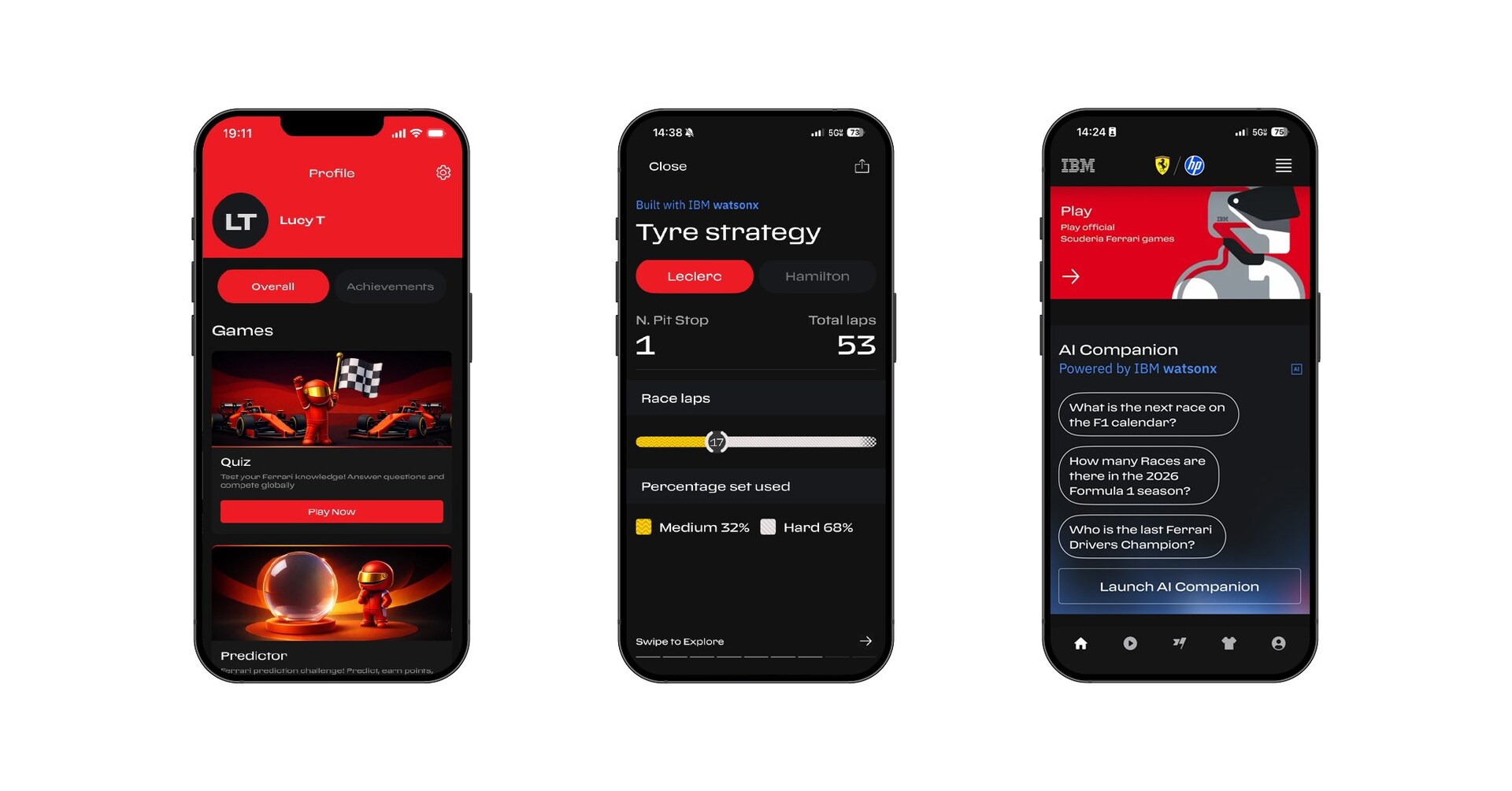
Ferrari and IBM Launch Enhanced App Features for Fan Engagement
- Enhanced Fan Engagement: The newly launched features in the Scuderia Ferrari app, powered by IBM's AI, deepen the connection between nearly 400 million Tifosi and the team, drivers, and cars, significantly boosting brand loyalty.
- Download Growth: Since its relaunch in May 2025, the app has seen a 35% increase in cumulative downloads and a 36% rise in monthly active users, indicating that the new features effectively enhance user engagement and satisfaction.
- Real-Time Data Enhancement: The new Race Center provides detailed session timelines and real-time driver data, allowing fans to gain deeper insights on race day, thereby enhancing the viewing experience and engagement.
- Game Center Innovation: The new Game Center introduces interactive features like race predictors, quizzes, and challenges, increasing social media competition and driving repeat engagement throughout the season, further solidifying Ferrari's brand presence in F1.
See More
IBM UNVEILS AI-ENHANCED FUNCTIONALITIES FOR THE SCUDERIA FERRARI APP

IBM's New AI Features: IBM has introduced new AI-powered features for the Scuderia Ferrari app, enhancing user engagement and experience.
Focus on Fan Interaction: The features aim to improve interaction between fans and the Scuderia Ferrari team, providing personalized content and insights.
See More
Private Equity's AI Moment: The Greatest Value Lever and Its Challenges
- Accelerated AI Strategies: Private equity firms are rapidly formalizing their AI strategies by exploring joint ventures with leading LLM companies to leverage AI as the most powerful value-creation lever in history, enhancing ROI.
- Productivity Gains: IBM has achieved $4.5 billion in productivity gains by analyzing nearly 400 operational workflows and deploying AI solutions, demonstrating the effectiveness of AI, hybrid cloud, and automation while showcasing replicable success stories.
- Reshaping Competitive Advantage: IBM's Enterprise Advantage service enables clients to build and operate tailored internal AI platforms at scale, utilizing digital workers and prebuilt tools to ensure flexibility as technology evolves, determining asset value at exit for private equity.
- Industry-Wide Impact: When private equity-backed companies deploy production-ready AI, they reset competitive expectations across entire industries, forcing competitors to respond, with today's choices defining portfolio performance for the next decade.
See More

Tech Stocks Rise Wednesday Afternoon

- Tech Stock Recovery: On Wednesday afternoon, tech stocks broadly rose, indicating a gradual restoration of market confidence in the tech sector, especially after recent volatility as investors reassess growth potential.
- Strong ETF Performance: The rise of the State Street Technology Select Sector SPDR ETF (XLK) suggests increased investor interest in the tech sector, which could attract more capital inflows and further boost the overall market.
- Improved Market Sentiment: With the rebound in tech stocks, market sentiment has improved, enhancing investor expectations for future economic recovery, which may stimulate more investment activity, particularly in technology innovation.
- Investor Confidence Rebuilding: The rise in tech stocks not only reflects a correction of short-term market fluctuations but may also signal a rebuilding of long-term investor confidence in the tech sector, further driving up valuations of related companies.
See More
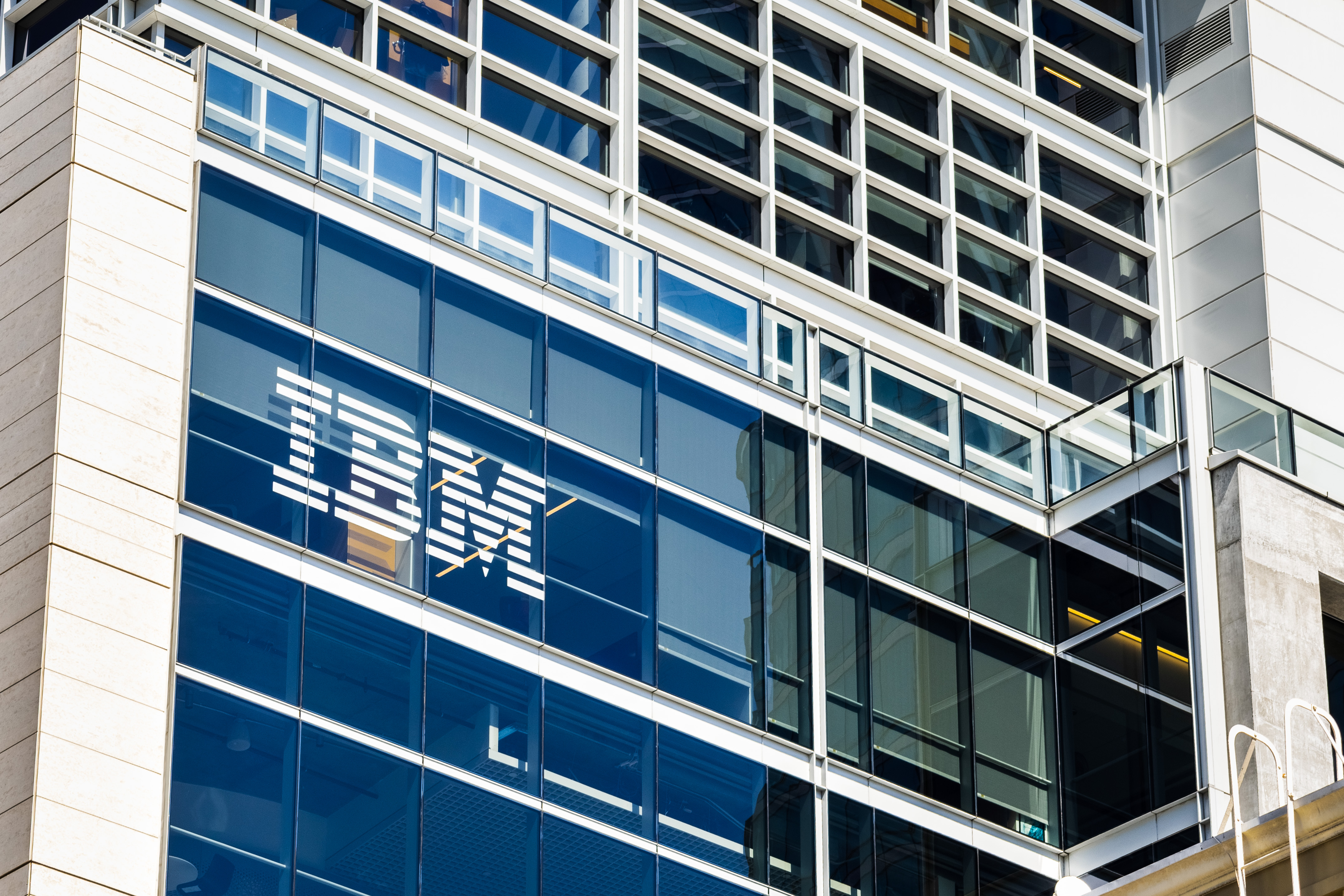
HSBC Upgrades IBM to Hold Amid Improving Margins
- Margin Improvement: IBM's non-GAAP operating margin reached 15.7%, up 195 basis points year-over-year and approximately 85 basis points above expectations, indicating significant progress in cost control and efficiency, which is likely to bolster investor confidence.
- Significant Productivity Savings: Since 2023, IBM has realized $4.5 billion in productivity savings and expects an additional $1 billion by 2026, establishing a solid foundation for future profit growth through ongoing cost optimization strategies.
- Software Business Growth Outlook: IBM anticipates its software business will grow by over 10% in 2026, an upward revision driven by the earlier-than-expected completion of the Confluent acquisition, highlighting the company's competitiveness and strong market demand in the software sector.
- Quantum Computing Prospects: IBM is on track to deliver its first large-scale fault-tolerant quantum computer by 2029, with partners expected to achieve quantum advantage this year, showcasing IBM's leading position and future growth potential in the quantum computing space.
See More
IBM and Ferrari Launch Enhanced App Features for Fan Engagement
- App Feature Upgrade: IBM and Ferrari's collaboration introduces new features like an AI Companion, Predictor, and Game Center in the Scuderia Ferrari app, aimed at enhancing engagement for nearly 400 million global fans, thereby increasing brand loyalty and user retention.
- Significant User Engagement Growth: Since its relaunch in May 2025, the app has seen a 35% increase in cumulative downloads and a 36% rise in monthly active users, with race day active users surging by 56%, indicating that the new features effectively attract more user participation.
- Innovative Interactive Experience: The new Game Center transforms each race weekend into an interactive experience with real-time leaderboards and social media competitions, fostering connections among fans and driving a 62% increase in views and a 35% lift in engaged sessions.
- Technology-Driven Transformation: IBM executives state that integrating AI into the app experience is changing how millions of fans engage with the sport, showcasing how technology can turn data into meaningful experiences and help the brand stand out in a competitive market.
See More
Ferrari and IBM Launch Enhanced App Features for Fan Engagement
- Enhanced Fan Engagement: The newly launched features in the Scuderia Ferrari app, powered by IBM's AI, deepen the connection between nearly 400 million Tifosi and the team, drivers, and cars, significantly boosting brand loyalty.
- Download Growth: Since its relaunch in May 2025, the app has seen a 35% increase in cumulative downloads and a 36% rise in monthly active users, indicating that the new features effectively enhance user engagement and satisfaction.
- Real-Time Data Enhancement: The new Race Center provides detailed session timelines and real-time driver data, allowing fans to gain deeper insights on race day, thereby enhancing the viewing experience and engagement.
- Game Center Innovation: The new Game Center introduces interactive features like race predictors, quizzes, and challenges, increasing social media competition and driving repeat engagement throughout the season, further solidifying Ferrari's brand presence in F1.
See More
IBM UNVEILS AI-ENHANCED FUNCTIONALITIES FOR THE SCUDERIA FERRARI APP
IBM's New AI Features: IBM has introduced new AI-powered features for the Scuderia Ferrari app, enhancing user engagement and experience.
Focus on Fan Interaction: The features aim to improve interaction between fans and the Scuderia Ferrari team, providing personalized content and insights.
See More
Private Equity's AI Moment: The Greatest Value Lever and Its Challenges
- Accelerated AI Strategies: Private equity firms are rapidly formalizing their AI strategies by exploring joint ventures with leading LLM companies to leverage AI as the most powerful value-creation lever in history, enhancing ROI.
- Productivity Gains: IBM has achieved $4.5 billion in productivity gains by analyzing nearly 400 operational workflows and deploying AI solutions, demonstrating the effectiveness of AI, hybrid cloud, and automation while showcasing replicable success stories.
- Reshaping Competitive Advantage: IBM's Enterprise Advantage service enables clients to build and operate tailored internal AI platforms at scale, utilizing digital workers and prebuilt tools to ensure flexibility as technology evolves, determining asset value at exit for private equity.
- Industry-Wide Impact: When private equity-backed companies deploy production-ready AI, they reset competitive expectations across entire industries, forcing competitors to respond, with today's choices defining portfolio performance for the next decade.
See More
Tech Stocks Rise Wednesday Afternoon
- Tech Stock Recovery: On Wednesday afternoon, tech stocks broadly rose, indicating a gradual restoration of market confidence in the tech sector, especially after recent volatility as investors reassess growth potential.
- Strong ETF Performance: The rise of the State Street Technology Select Sector SPDR ETF (XLK) suggests increased investor interest in the tech sector, which could attract more capital inflows and further boost the overall market.
- Improved Market Sentiment: With the rebound in tech stocks, market sentiment has improved, enhancing investor expectations for future economic recovery, which may stimulate more investment activity, particularly in technology innovation.
- Investor Confidence Rebuilding: The rise in tech stocks not only reflects a correction of short-term market fluctuations but may also signal a rebuilding of long-term investor confidence in the tech sector, further driving up valuations of related companies.
See More
HSBC Upgrades IBM to Hold Amid Improving Margins
- Margin Improvement: IBM's non-GAAP operating margin reached 15.7%, up 195 basis points year-over-year and approximately 85 basis points above expectations, indicating significant progress in cost control and efficiency, which is likely to bolster investor confidence.
- Significant Productivity Savings: Since 2023, IBM has realized $4.5 billion in productivity savings and expects an additional $1 billion by 2026, establishing a solid foundation for future profit growth through ongoing cost optimization strategies.
- Software Business Growth Outlook: IBM anticipates its software business will grow by over 10% in 2026, an upward revision driven by the earlier-than-expected completion of the Confluent acquisition, highlighting the company's competitiveness and strong market demand in the software sector.
- Quantum Computing Prospects: IBM is on track to deliver its first large-scale fault-tolerant quantum computer by 2029, with partners expected to achieve quantum advantage this year, showcasing IBM's leading position and future growth potential in the quantum computing space.
See More