

Ford Recalls 255,404 Vehicles Due to Engine Stall Risk
Written by Emily J. Thompson, Senior Investment Analyst
Updated: 1 hour ago
0mins
Source: Newsfilter
- Large Recall Scale: Ford is recalling 255,404 vehicles in the U.S., specifically 2012-2018 Focus models, due to a malfunctioning canister purge valve that may cause the engine to stall unexpectedly, directly impacting driving safety.
- Clear Cause of Failure: The U.S. National Highway Traffic Safety Administration indicated that the recall stems from previous improper repairs, which may lead to illuminated malfunction indicator lights or inaccurate fuel gauge readings, increasing the risk of accidents.
- Free Repair Commitment: Ford will provide free updates to the powertrain control module software for affected vehicle owners to address potential failure issues, demonstrating the company's commitment to consumer safety.
- Regulatory Agency Involvement: This recall is being conducted at the request of the National Highway Traffic Safety Administration, highlighting the active role of regulatory bodies in ensuring automotive safety, while potentially impacting Ford's brand image.
Trade with 70% Backtested Accuracy
Stop guessing "Should I Buy F?" and start using high-conviction signals backed by rigorous historical data.
Sign up today to access powerful investing tools and make smarter, data-driven decisions.
Analyst Views on F
Wall Street analysts forecast F stock price to fall
14 Analyst Rating
3 Buy
10 Hold
1 Sell
Hold
Current: 14.300

Low
11.00
Averages
13.65
High
16.00
Current: 14.300
Low
11.00
Averages
13.65
High
16.00
About F
Ford Motor Company develops and delivers Ford trucks, sport utility vehicles, commercial vans and cars, and Lincoln luxury vehicles, along with connected services, including BlueCruise (ADAS) and security. The Company's segments include Ford Blue, Ford Model e, Ford Pro, and Ford Credit. The Ford Blue segment primarily includes the sale of Ford and Lincoln internal combustion engine (ICE) and hybrid vehicles, service parts, accessories, and digital services for retail customers. The Ford Model e segment primarily includes the sale of its electric vehicles, service parts, accessories, and digital services for retail customers. The Ford Pro segment primarily includes the sale of Ford and Lincoln vehicles, service parts, accessories, and services for commercial, government, and rental customers. The Ford Credit segment consists of the Ford Credit business on a consolidated basis, which is primarily vehicle-related financing and leasing activities. Its vehicle brands are Ford and Lincoln.
About the author

Emily J. Thompson
Emily J. Thompson, a Chartered Financial Analyst (CFA) with 12 years in investment research, graduated with honors from the Wharton School. Specializing in industrial and technology stocks, she provides in-depth analysis for Intellectia’s earnings and market brief reports.

Ford's Return to Sedans Amid Affordability Crisis

- Market Demand Shift: With average new car prices in the U.S. nearing $50,000, Ford is re-entering the sedan market by planning to launch five new vehicles priced below $40,000, addressing consumer demand for more affordable options and enhancing market competitiveness.
- Profitability Goals: Ford aims to achieve an adjusted EBIT margin of 8% by 2029, a significant increase from 3.6% in 2025, indicating the company's strategy to phase out less profitable models while leveraging its Universal EV Platform to reduce costs and improve profitability.
- Product Portfolio Adjustment: Ford plans to introduce a traditional four-door sedan, potentially built on its all-electric platform, which not only lowers production costs but also offers more attractive products in a competitive market, further enhancing brand appeal.
- Strategic Investment Focus: Ford's strategic emphasis is on launching more cost-effective electric vehicle models to adapt to market changes, ensuring long-term profitability and market share while meeting consumer demands.
See More

Ford Recalls 255,404 Vehicles Due to Engine Stall Risk
- Large Recall Scale: Ford is recalling 255,404 vehicles in the U.S., specifically 2012-2018 Focus models, due to a malfunctioning canister purge valve that may cause the engine to stall unexpectedly, directly impacting driving safety.
- Clear Cause of Failure: The U.S. National Highway Traffic Safety Administration indicated that the recall stems from previous improper repairs, which may lead to illuminated malfunction indicator lights or inaccurate fuel gauge readings, increasing the risk of accidents.
- Free Repair Commitment: Ford will provide free updates to the powertrain control module software for affected vehicle owners to address potential failure issues, demonstrating the company's commitment to consumer safety.
- Regulatory Agency Involvement: This recall is being conducted at the request of the National Highway Traffic Safety Administration, highlighting the active role of regulatory bodies in ensuring automotive safety, while potentially impacting Ford's brand image.
See More

Caterpillar and Ford's AI Energy Opportunities

- Surging Energy Storage Demand: As the demand for electricity and energy storage from AI data centers rapidly increases, local power grids are under pressure, creating opportunities for companies like Caterpillar and Ford to expand into new business areas, which are expected to yield higher margins.
- Caterpillar's Technological Transformation: Caterpillar is not only focused on traditional construction and mining machinery but is also opening new revenue streams by selling engines and generators used in AI data centers, contributing to a stock price increase over the past year.
- Ford Energy's Strategic Development: Ford is establishing its wholly-owned subsidiary, Ford Energy, with an initial investment of approximately $2 billion to provide battery energy storage systems, aiming to start deliveries by late 2027, potentially generating $500 million to $600 million in annual earnings.
- Stable Dividend Returns: Both Caterpillar and Ford offer stable dividends, with Caterpillar paying cash dividends every year since its inception and Ford providing a 4% dividend yield, which gives investors a sense of security while attracting attention to their AI and energy market potential.
See More
Caterpillar and Ford Capitalize on AI Energy Market Opportunities
- AI Market Potential: Caterpillar is developing autonomous fleets targeting the AI power generation market, which is expected to provide higher margins and new revenue streams, particularly as demand for energy storage in data centers surges.
- Energy Storage Innovation: Ford Energy plans to invest approximately $2 billion to launch a 20-foot battery energy storage system, with deliveries expected to start by late 2027, potentially generating $500 million to $600 million in annual pre-tax earnings.
- Dividend Safety: Caterpillar has paid cash dividends every year since its inception and has increased its annual dividend for 32 consecutive years, while Ford offers a 4% dividend yield, enhancing investor security amid market volatility.
- Market Growth Expectations: As the AI data center market and global power demand are projected to surge over the next decade, Caterpillar and Ford's energy solutions are poised to generate new revenue streams and higher market valuations, attracting investor interest.
See More
Market Update: Stock Movements and IPO Outlook


- Market Movements: Stock futures are up but have retreated after President Trump's threats against Iran caused oil prices to rise, indicating market sensitivity to geopolitical risks that could affect investor sentiment.
- SpaceX IPO Update: Orders for SpaceX's IPO are in, with underwriters like Goldman Sachs determining allocations; strong demand could push the stock's valuation to $5 trillion, reflecting investor optimism in the space industry.
- Oracle Earnings Impact: Oracle's stock fell post-earnings despite a decent quarter, as the company plans to raise another $20 billion for data center construction, which may lead to shareholder dilution and increased debt, causing cautious reactions from investors.
- Intel Rating Upgrade: Bank of America upgraded Intel from sell to buy, citing increased confidence in its third-party foundry business, emphasizing that execution is key, which suggests a positive outlook on the chipmaker's future profitability.
See More
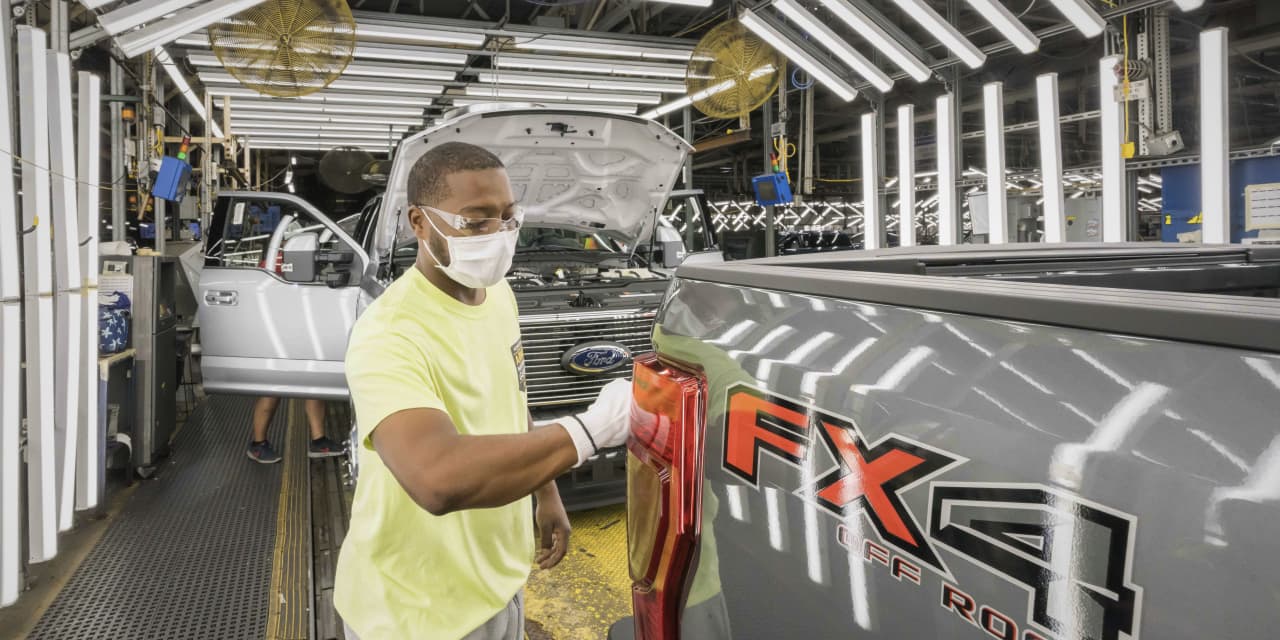
Ford Reenters Sedan Market to Meet Consumer Demand
- Market Demand Shift: With rising consumer demand for more affordable vehicles, Ford plans to launch five new models priced below $40,000, including a traditional four-door sedan, aiming to re-enter the sedan market to align with market trends.
- Electrification Strategy: The new sedan is likely to be developed on Ford's Universal EV Platform, which will significantly reduce production costs and enhance profitability, enabling Ford to achieve better margins in historically challenging price ranges.
- Profitability Improvement Goals: Ford aims to increase its adjusted EBIT margin to 8% by 2029, up from an expected 3.6% in 2025, indicating the company's strategy to improve financial performance by phasing out less profitable models and scaling up EV production.
- Long-term Investment Outlook: Ford's strategic shift not only addresses the market demand for sedans but also enhances competitiveness by lowering structural costs, which is a positive signal for long-term investors, indicating future profit potential.
See More
Ford's Return to Sedans Amid Affordability Crisis
- Market Demand Shift: With average new car prices in the U.S. nearing $50,000, Ford is re-entering the sedan market by planning to launch five new vehicles priced below $40,000, addressing consumer demand for more affordable options and enhancing market competitiveness.
- Profitability Goals: Ford aims to achieve an adjusted EBIT margin of 8% by 2029, a significant increase from 3.6% in 2025, indicating the company's strategy to phase out less profitable models while leveraging its Universal EV Platform to reduce costs and improve profitability.
- Product Portfolio Adjustment: Ford plans to introduce a traditional four-door sedan, potentially built on its all-electric platform, which not only lowers production costs but also offers more attractive products in a competitive market, further enhancing brand appeal.
- Strategic Investment Focus: Ford's strategic emphasis is on launching more cost-effective electric vehicle models to adapt to market changes, ensuring long-term profitability and market share while meeting consumer demands.
See More
Ford Recalls 255,404 Vehicles Due to Engine Stall Risk
- Large Recall Scale: Ford is recalling 255,404 vehicles in the U.S., specifically 2012-2018 Focus models, due to a malfunctioning canister purge valve that may cause the engine to stall unexpectedly, directly impacting driving safety.
- Clear Cause of Failure: The U.S. National Highway Traffic Safety Administration indicated that the recall stems from previous improper repairs, which may lead to illuminated malfunction indicator lights or inaccurate fuel gauge readings, increasing the risk of accidents.
- Free Repair Commitment: Ford will provide free updates to the powertrain control module software for affected vehicle owners to address potential failure issues, demonstrating the company's commitment to consumer safety.
- Regulatory Agency Involvement: This recall is being conducted at the request of the National Highway Traffic Safety Administration, highlighting the active role of regulatory bodies in ensuring automotive safety, while potentially impacting Ford's brand image.
See More
Caterpillar and Ford's AI Energy Opportunities
- Surging Energy Storage Demand: As the demand for electricity and energy storage from AI data centers rapidly increases, local power grids are under pressure, creating opportunities for companies like Caterpillar and Ford to expand into new business areas, which are expected to yield higher margins.
- Caterpillar's Technological Transformation: Caterpillar is not only focused on traditional construction and mining machinery but is also opening new revenue streams by selling engines and generators used in AI data centers, contributing to a stock price increase over the past year.
- Ford Energy's Strategic Development: Ford is establishing its wholly-owned subsidiary, Ford Energy, with an initial investment of approximately $2 billion to provide battery energy storage systems, aiming to start deliveries by late 2027, potentially generating $500 million to $600 million in annual earnings.
- Stable Dividend Returns: Both Caterpillar and Ford offer stable dividends, with Caterpillar paying cash dividends every year since its inception and Ford providing a 4% dividend yield, which gives investors a sense of security while attracting attention to their AI and energy market potential.
See More
Caterpillar and Ford Capitalize on AI Energy Market Opportunities
- AI Market Potential: Caterpillar is developing autonomous fleets targeting the AI power generation market, which is expected to provide higher margins and new revenue streams, particularly as demand for energy storage in data centers surges.
- Energy Storage Innovation: Ford Energy plans to invest approximately $2 billion to launch a 20-foot battery energy storage system, with deliveries expected to start by late 2027, potentially generating $500 million to $600 million in annual pre-tax earnings.
- Dividend Safety: Caterpillar has paid cash dividends every year since its inception and has increased its annual dividend for 32 consecutive years, while Ford offers a 4% dividend yield, enhancing investor security amid market volatility.
- Market Growth Expectations: As the AI data center market and global power demand are projected to surge over the next decade, Caterpillar and Ford's energy solutions are poised to generate new revenue streams and higher market valuations, attracting investor interest.
See More
Market Update: Stock Movements and IPO Outlook
- Market Movements: Stock futures are up but have retreated after President Trump's threats against Iran caused oil prices to rise, indicating market sensitivity to geopolitical risks that could affect investor sentiment.
- SpaceX IPO Update: Orders for SpaceX's IPO are in, with underwriters like Goldman Sachs determining allocations; strong demand could push the stock's valuation to $5 trillion, reflecting investor optimism in the space industry.
- Oracle Earnings Impact: Oracle's stock fell post-earnings despite a decent quarter, as the company plans to raise another $20 billion for data center construction, which may lead to shareholder dilution and increased debt, causing cautious reactions from investors.
- Intel Rating Upgrade: Bank of America upgraded Intel from sell to buy, citing increased confidence in its third-party foundry business, emphasizing that execution is key, which suggests a positive outlook on the chipmaker's future profitability.
See More
Ford Reenters Sedan Market to Meet Consumer Demand
- Market Demand Shift: With rising consumer demand for more affordable vehicles, Ford plans to launch five new models priced below $40,000, including a traditional four-door sedan, aiming to re-enter the sedan market to align with market trends.
- Electrification Strategy: The new sedan is likely to be developed on Ford's Universal EV Platform, which will significantly reduce production costs and enhance profitability, enabling Ford to achieve better margins in historically challenging price ranges.
- Profitability Improvement Goals: Ford aims to increase its adjusted EBIT margin to 8% by 2029, up from an expected 3.6% in 2025, indicating the company's strategy to improve financial performance by phasing out less profitable models and scaling up EV production.
- Long-term Investment Outlook: Ford's strategic shift not only addresses the market demand for sedans but also enhances competitiveness by lowering structural costs, which is a positive signal for long-term investors, indicating future profit potential.
See More




