Ford and Best Buy Rated as Cheap Stocks
Written by Emily J. Thompson, Senior Investment Analyst
Updated: Jun 01 2026
0mins

Source: seekingalpha
- Valuation Rating Analysis: Ford Motor Company (F) and Best Buy (BBY) are highlighted as the cheapest stocks among U.S. consumer discretionary stocks with market caps over $10 billion, with Ford rated B+ and Best Buy rated B, indicating their relative attractiveness among peers.
- Valuation Metrics Combination: The valuation grades are based on a combination of metrics such as P/E, PEG, price to sales, and price to cash flow, using both current and forward estimates, reflecting how attractively these stocks are priced compared to their sector counterparts.
- Other Low Valuation Stocks: Companies like General Motors (GM), Lennar (LEN), and MGM Resorts (MGM) are also noted for their relatively lower valuations with grades ranging from C+ to C-, suggesting they may still attract investor interest despite lower ratings than Ford and Best Buy.
- Market Trend Impact: As market attention on Ford and Best Buy increases, investors may capitalize on these undervalued opportunities, particularly against the backdrop of economic recovery and rising consumer spending, which could drive their stock prices higher.
Trade with 70% Backtested Accuracy
Stop guessing "Should I Buy F?" and start using high-conviction signals backed by rigorous historical data.
Sign up today to access powerful investing tools and make smarter, data-driven decisions.
Analyst Views on F
Wall Street analysts forecast F stock price to fall
14 Analyst Rating
3 Buy
10 Hold
1 Sell
Hold
Current: 14.110

Low
11.00
Averages
13.65
High
16.00
Current: 14.110
Low
11.00
Averages
13.65
High
16.00
About F
Ford Motor Company develops and delivers Ford trucks, sport utility vehicles, commercial vans and cars, and Lincoln luxury vehicles, along with connected services, including BlueCruise (ADAS) and security. The Company's segments include Ford Blue, Ford Model e, Ford Pro, and Ford Credit. The Ford Blue segment primarily includes the sale of Ford and Lincoln internal combustion engine (ICE) and hybrid vehicles, service parts, accessories, and digital services for retail customers. The Ford Model e segment primarily includes the sale of its electric vehicles, service parts, accessories, and digital services for retail customers. The Ford Pro segment primarily includes the sale of Ford and Lincoln vehicles, service parts, accessories, and services for commercial, government, and rental customers. The Ford Credit segment consists of the Ford Credit business on a consolidated basis, which is primarily vehicle-related financing and leasing activities. Its vehicle brands are Ford and Lincoln.
About the author

Emily J. Thompson
Emily J. Thompson, a Chartered Financial Analyst (CFA) with 12 years in investment research, graduated with honors from the Wharton School. Specializing in industrial and technology stocks, she provides in-depth analysis for Intellectia’s earnings and market brief reports.

Ford Motor Company Financial Results Preview

- Stock Performance: Ford Motor Company closed at $13.84, reflecting a 1.14% decline from the previous trading session, which underperformed the S&P 500's 0.1% loss, indicating market concerns about its future performance.
- Earnings Expectations: The company is anticipated to report an EPS of $0.35, representing a 5.41% year-over-year decline, while net sales are projected at $45.44 billion, down 3.21% from the prior year, highlighting revenue pressures.
- Valuation Analysis: Ford's forward P/E ratio stands at 8.55, significantly lower than the industry average of 20.03, suggesting a lack of market confidence in its growth prospects, which may affect investor sentiment.
- Industry Ranking: The Automotive - Domestic industry ranks 164 in the Zacks Industry Rank, placing it in the bottom 33% of all industries, indicating overall poor performance that could negatively impact Ford's stock price.
See More

Ford Unveils New EV Platform and Battery Storage System
- Strong Dividend Yield: Ford's current dividend yield stands at 4.25%, significantly above the S&P 500 average, and the company has a history of issuing special dividends when cash flow is strong, thereby enhancing shareholder returns and demonstrating a commitment to aligning shareholder interests.
- New EV Platform: The upcoming universal EV platform, set to launch in 2027 at a price point of $30,000, utilizes a new assembly process designed to drastically reduce costs, which is expected to significantly enhance Ford's competitiveness in the EV market and help reverse billions in annual EV losses.
- Battery Storage System Potential: Ford Energy aims to deploy approximately 20 gigawatt-hours of battery storage systems annually, with projections indicating $500 million in operating profit by the end of the decade, a strategic initiative that not only generates incremental revenue but also leverages the company's manufacturing expertise to improve overall profitability.
- Optimistic Future Outlook: Despite Ford's lackluster stock performance over the past decade, the company's innovations in EV and energy sectors, along with improved cost efficiencies, suggest a brighter future for investors, with dividends providing a margin of safety and potential for better returns in the next decade.
See More
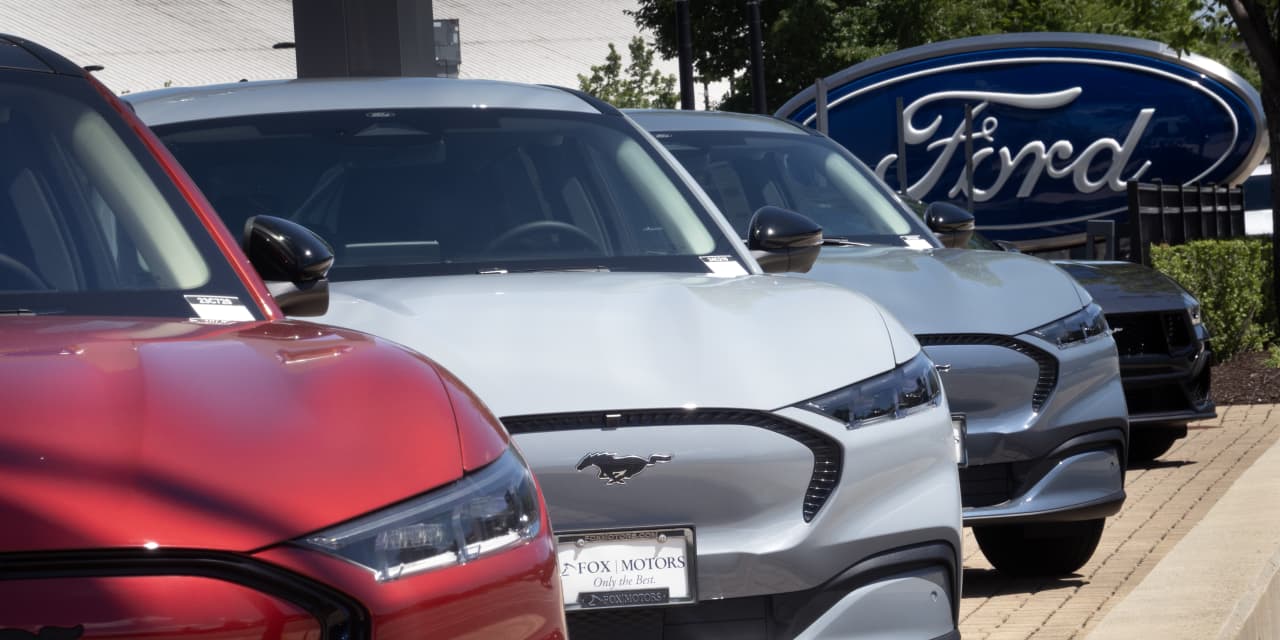
U.S. New Vehicle Sales Expected to Rise 3.6% in June

- Sales Growth Forecast: According to a joint forecast from JD Power and GlobalData, U.S. new vehicle sales are expected to rise 3.6% year-over-year in June to 1,363,800 units, indicating signs of market recovery despite last year's demand pull-forward due to tariffs affecting year-over-year comparability.
- Annual Sales Rate Increase: The seasonally adjusted annualized rate for new vehicle sales is projected to reach 16.5 million units, up 80,000 units from June 2025, reflecting a gradual restoration of consumer confidence in the market, although structural affordability pressures remain.
- Price and Financing Pressures: The average transaction price for a new vehicle has risen to $46,387, a 0.8% increase from a year ago, while average monthly finance payments have climbed 3.4% to $813, marking the highest ever for June, indicating ongoing financial pressures faced by buyers.
- Increased Incentives: To attract buyers, automakers have ramped up average incentive spending per vehicle by nearly 13% year-over-year to $3,217, highlighting intensified market competition as manufacturers strive to maintain sales while increasing promotional efforts.
See More

Volkswagen Plans to Cut Up to 100,000 Jobs Amid Industry Overhaul
- Unprecedented Job Cuts: Volkswagen's plan to shutter four German factories and potentially cut up to 100,000 jobs represents the largest overhaul in the automotive industry, reflecting the company's mounting pressures from Chinese competitors and declining demand in Europe.
- Deteriorating Market Conditions: The company has stated that high tariffs on car imports into the U.S. and weak demand in Europe have rendered its business model unsustainable, highlighting its vulnerable position in the global market.
- Historical Comparisons: This job cut plan is comparable in scale to significant layoffs by other automakers, such as General Motors' 74,000 job cuts in 1991, underscoring the magnitude of challenges currently facing the automotive sector.
- Widespread Industry Impact: Volkswagen's actions could not only affect its own operations and market share but may also trigger a ripple effect throughout the automotive industry, prompting other manufacturers to reassess their production and workforce strategies.
See More

Tesla's 14% Stock Drop: A Buying Opportunity?

- Stock Decline: Tesla's shares have fallen over 14% in 2026, reflecting a cooling demand for EVs in the U.S. and intensified scrutiny of its self-driving technology for safety, yet the market remains cautiously optimistic about its future.
- European Market Recovery: Sales in Europe are rebounding, indicating strong overseas demand for EVs, which is expected to contribute significantly to revenue growth, particularly in the energy storage sector.
- Energy Division Growth: Tesla's energy segment is projected to generate $18.3 billion in revenue this year, with increasing demand for battery storage providing new profit opportunities that could yield substantial returns in the short term.
- Optimistic Market Outlook: Despite cyclical slowdowns in the U.S. market, if Tesla can emulate Ford and GM by focusing on energy storage solutions, it may achieve sustainable long-term growth in the future.
See More

Tesla Stock Down 14% Year-to-Date, But European Sales Rebound
- Stock Decline: Tesla's stock has fallen over 14% year-to-date in 2026, primarily due to cooling demand for electric vehicles in the U.S. and intensified competition, raising investor concerns about its future performance.
- European Market Rebound: Despite challenges in the U.S. market, Tesla's EV sales are rebounding in Europe, indicating strong demand abroad, which provides hope for the company's future growth prospects.
- Energy Division Growth: Tesla's energy segment, particularly in battery storage, is expected to see substantial revenue growth in the coming quarters, with Wall Street consensus estimating $18.3 billion in revenue this year, highlighting the company's potential in renewable energy.
- Optimistic Market Outlook: While the slowdown in the U.S. market may be cyclical, if Tesla focuses more on energy storage solutions like Ford and General Motors, it could achieve significant short- and intermediate-term gains, with sustainable long-term growth potential also in sight.
See More
Ford Motor Company Financial Results Preview
- Stock Performance: Ford Motor Company closed at $13.84, reflecting a 1.14% decline from the previous trading session, which underperformed the S&P 500's 0.1% loss, indicating market concerns about its future performance.
- Earnings Expectations: The company is anticipated to report an EPS of $0.35, representing a 5.41% year-over-year decline, while net sales are projected at $45.44 billion, down 3.21% from the prior year, highlighting revenue pressures.
- Valuation Analysis: Ford's forward P/E ratio stands at 8.55, significantly lower than the industry average of 20.03, suggesting a lack of market confidence in its growth prospects, which may affect investor sentiment.
- Industry Ranking: The Automotive - Domestic industry ranks 164 in the Zacks Industry Rank, placing it in the bottom 33% of all industries, indicating overall poor performance that could negatively impact Ford's stock price.
See More
Ford Unveils New EV Platform and Battery Storage System
- Strong Dividend Yield: Ford's current dividend yield stands at 4.25%, significantly above the S&P 500 average, and the company has a history of issuing special dividends when cash flow is strong, thereby enhancing shareholder returns and demonstrating a commitment to aligning shareholder interests.
- New EV Platform: The upcoming universal EV platform, set to launch in 2027 at a price point of $30,000, utilizes a new assembly process designed to drastically reduce costs, which is expected to significantly enhance Ford's competitiveness in the EV market and help reverse billions in annual EV losses.
- Battery Storage System Potential: Ford Energy aims to deploy approximately 20 gigawatt-hours of battery storage systems annually, with projections indicating $500 million in operating profit by the end of the decade, a strategic initiative that not only generates incremental revenue but also leverages the company's manufacturing expertise to improve overall profitability.
- Optimistic Future Outlook: Despite Ford's lackluster stock performance over the past decade, the company's innovations in EV and energy sectors, along with improved cost efficiencies, suggest a brighter future for investors, with dividends providing a margin of safety and potential for better returns in the next decade.
See More
U.S. New Vehicle Sales Expected to Rise 3.6% in June
- Sales Growth Forecast: According to a joint forecast from JD Power and GlobalData, U.S. new vehicle sales are expected to rise 3.6% year-over-year in June to 1,363,800 units, indicating signs of market recovery despite last year's demand pull-forward due to tariffs affecting year-over-year comparability.
- Annual Sales Rate Increase: The seasonally adjusted annualized rate for new vehicle sales is projected to reach 16.5 million units, up 80,000 units from June 2025, reflecting a gradual restoration of consumer confidence in the market, although structural affordability pressures remain.
- Price and Financing Pressures: The average transaction price for a new vehicle has risen to $46,387, a 0.8% increase from a year ago, while average monthly finance payments have climbed 3.4% to $813, marking the highest ever for June, indicating ongoing financial pressures faced by buyers.
- Increased Incentives: To attract buyers, automakers have ramped up average incentive spending per vehicle by nearly 13% year-over-year to $3,217, highlighting intensified market competition as manufacturers strive to maintain sales while increasing promotional efforts.
See More
Volkswagen Plans to Cut Up to 100,000 Jobs Amid Industry Overhaul
- Unprecedented Job Cuts: Volkswagen's plan to shutter four German factories and potentially cut up to 100,000 jobs represents the largest overhaul in the automotive industry, reflecting the company's mounting pressures from Chinese competitors and declining demand in Europe.
- Deteriorating Market Conditions: The company has stated that high tariffs on car imports into the U.S. and weak demand in Europe have rendered its business model unsustainable, highlighting its vulnerable position in the global market.
- Historical Comparisons: This job cut plan is comparable in scale to significant layoffs by other automakers, such as General Motors' 74,000 job cuts in 1991, underscoring the magnitude of challenges currently facing the automotive sector.
- Widespread Industry Impact: Volkswagen's actions could not only affect its own operations and market share but may also trigger a ripple effect throughout the automotive industry, prompting other manufacturers to reassess their production and workforce strategies.
See More
Tesla's 14% Stock Drop: A Buying Opportunity?
- Stock Decline: Tesla's shares have fallen over 14% in 2026, reflecting a cooling demand for EVs in the U.S. and intensified scrutiny of its self-driving technology for safety, yet the market remains cautiously optimistic about its future.
- European Market Recovery: Sales in Europe are rebounding, indicating strong overseas demand for EVs, which is expected to contribute significantly to revenue growth, particularly in the energy storage sector.
- Energy Division Growth: Tesla's energy segment is projected to generate $18.3 billion in revenue this year, with increasing demand for battery storage providing new profit opportunities that could yield substantial returns in the short term.
- Optimistic Market Outlook: Despite cyclical slowdowns in the U.S. market, if Tesla can emulate Ford and GM by focusing on energy storage solutions, it may achieve sustainable long-term growth in the future.
See More
Tesla Stock Down 14% Year-to-Date, But European Sales Rebound
- Stock Decline: Tesla's stock has fallen over 14% year-to-date in 2026, primarily due to cooling demand for electric vehicles in the U.S. and intensified competition, raising investor concerns about its future performance.
- European Market Rebound: Despite challenges in the U.S. market, Tesla's EV sales are rebounding in Europe, indicating strong demand abroad, which provides hope for the company's future growth prospects.
- Energy Division Growth: Tesla's energy segment, particularly in battery storage, is expected to see substantial revenue growth in the coming quarters, with Wall Street consensus estimating $18.3 billion in revenue this year, highlighting the company's potential in renewable energy.
- Optimistic Market Outlook: While the slowdown in the U.S. market may be cyclical, if Tesla focuses more on energy storage solutions like Ford and General Motors, it could achieve significant short- and intermediate-term gains, with sustainable long-term growth potential also in sight.
See More