Firefly Aerospace Faces Class Action Lawsuit Over Alleged Securities Fraud
Written by Emily J. Thompson, Senior Investment Analyst
Updated: Jan 04 2026
0mins
Should l Buy FLY?
Source: Globenewswire
- Class Action Initiated: Kessler Topaz Meltzer & Check, LLP has filed a securities class action lawsuit against Firefly Aerospace, targeting shares purchased during and after the August 7, 2025 IPO, reflecting significant investor dissatisfaction with the company's transparency.
- Allegations of Misrepresentation: The lawsuit alleges that Firefly overstated the demand and growth prospects for its Spacecraft Solutions in the Offering Documents, leading to a severe erosion of investor confidence in the company's future, which could adversely affect its stock price.
- Issues with Alpha Rocket Program: The complaint highlights that Firefly's Alpha rocket program fell short of its claimed operational readiness and commercial viability, further intensifying investor skepticism regarding the company's operational capabilities and potentially exacerbating investor losses.
- Investor Action Deadline: Investors must seek to be appointed as lead plaintiffs by January 12, 2026, indicating their willingness to participate in the future litigation, and this deadline may significantly influence investor decisions and actions.
Trade with 70% Backtested Accuracy
Stop guessing "Should I Buy FLY?" and start using high-conviction signals backed by rigorous historical data.
Sign up today to access powerful investing tools and make smarter, data-driven decisions.
Analyst Views on FLY
Wall Street analysts forecast FLY stock price to rise
7 Analyst Rating
4 Buy
3 Hold
0 Sell
Moderate Buy
Current: 29.760

Low
27.00
Averages
34.83
High
65.00
Current: 29.760
Low
27.00
Averages
34.83
High
65.00
About FLY
Firefly Aerospace Inc. is a space and defense technology company. The Company provides comprehensive mission solutions to national security, government, and commercial customers. It has designed, developed, and deployed its vehicles and dynamic spacecraft solutions to support critical customer missions across the space domain. It has a differentiated and scalable platform of Launch and Spacecraft Solutions with flight heritage. Within Launch, it has two offerings built on common technologies: Alpha and Eclipse. Alpha is a United States-based orbital rocket in the 1,000 kilograms class to successfully reach orbit, with four launches completed. Eclipse, a reusable and scaled up version of Alpha. Its Spacecraft Solutions include Blue Ghost lander (Blue Ghost) and Elytra offerings, highlight the heritage of common technologies from its launch vehicles. Blue Ghost Lander and Elytra are highly maneuverable spacecraft enabled by high-performance rocket engine technology.
About the author

Emily J. Thompson
Emily J. Thompson, a Chartered Financial Analyst (CFA) with 12 years in investment research, graduated with honors from the Wharton School. Specializing in industrial and technology stocks, she provides in-depth analysis for Intellectia’s earnings and market brief reports.
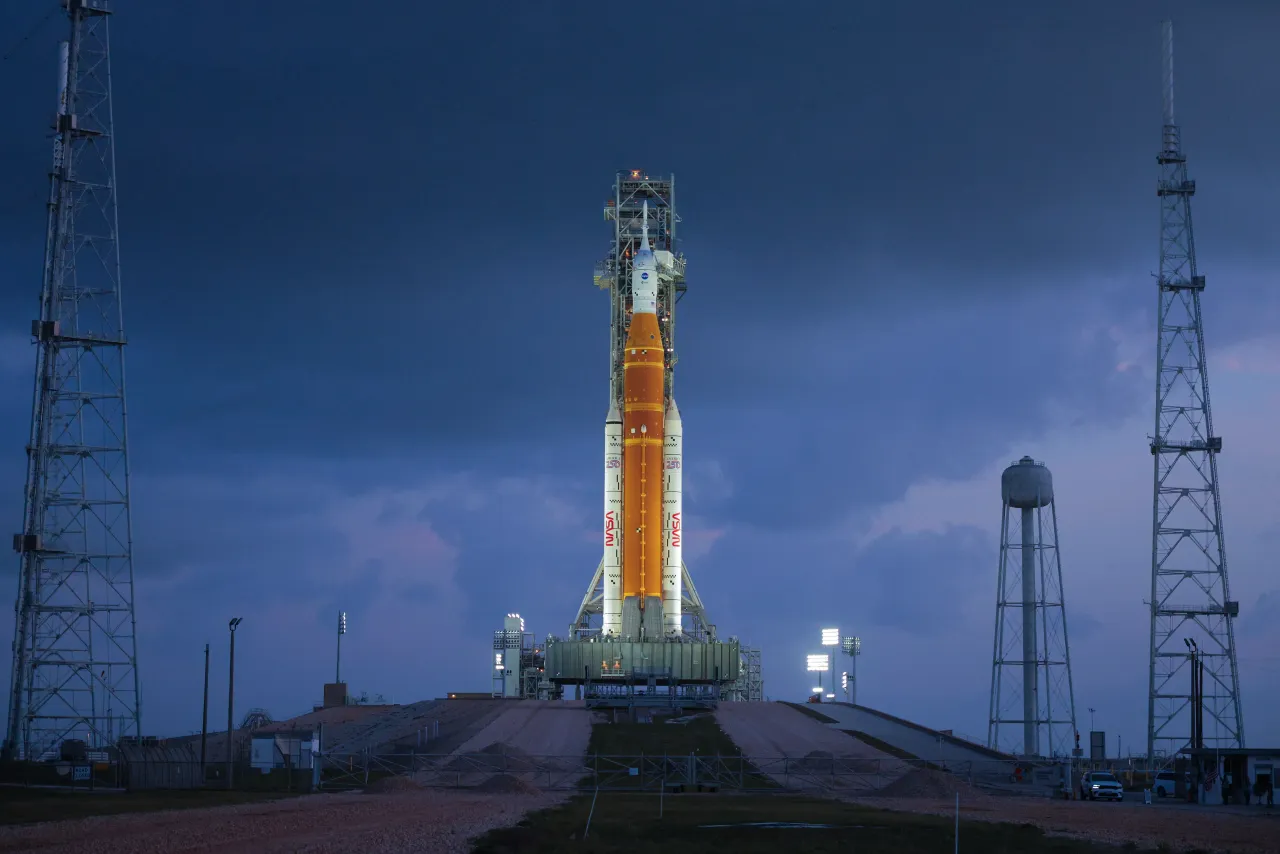
NASA's Artemis II Mission Approaches Launch

- Space Stocks Surge: Ahead of NASA's Artemis II mission launch, shares of Rocket Lab (RKLB), Intuitive Machines (LUNR), and AST SpaceMobile (ASTS) rose approximately 2%, while Firefly Aerospace (FLY) gained 3%, indicating a positive market sentiment towards the space sector.
- Countdown Underway: The Artemis II mission is scheduled for liftoff at 6:24 PM ET on June 24, marking NASA's first crewed deep-space flight since 1972, which is expected to pave the way for future lunar landing missions.
- SpaceX IPO Expectations Boost Market: Anticipation of a potential $75 billion IPO for SpaceX has further propelled space stock prices, with projections indicating the company could achieve around $20 billion in revenue by 2026, primarily from its Starlink satellite network and launch operations.
- Investor Sentiment Analysis: On Stocktwits, retail sentiment towards RKLB is deemed 'bullish', while ASTS and FLY are rated 'neutral', and LUNR shows a 'bearish' sentiment, reflecting varying investor perspectives on different space companies.
See More
NASA ETF Debuts Strongly with SpaceX Exposure
- Strong Trading Debut: The NASA ETF opened at $24 on the NYSE and surged over 7% after-hours, indicating robust investor interest in the first ETF providing direct exposure to SpaceX, reflecting optimistic market sentiment towards the space industry.
- SpaceX Exposure: The ETF offers a 10% allocation to SpaceX through a special purpose vehicle provided by Charles Schwab's Forge unit, aiming to provide investors with a transparent and actively managed vehicle to access the rapidly growing space economy, likely attracting more investor attention.
- Retail Investment Plans: SpaceX is expected to allocate up to 30% of its IPO to retail investors, significantly higher than typical IPO levels, a strategy designed to enhance ordinary investors' participation and boost market enthusiasm for the offering.
- Nasdaq Listing Rules: New Nasdaq rules will allow newly listed mega-cap companies to become eligible for inclusion in the Nasdaq-100 Index within 15 days of trading, a faster timeline that will provide quicker market recognition for companies like SpaceX, further driving their stock performance.
See More

SpaceX IPO Rumors Cause Stock Volatility


- Market Reaction: Rumors of a SpaceX IPO led to significant stock price increases for York Space Systems and Firefly Aerospace, with gains of 5.1% and 16% on Wednesday, but these gains were quickly reversed, indicating market volatility.
- Profitability Comparison: SpaceX is estimated to generate $16 billion in annual revenue with about $3 billion in profit, while York and Firefly report revenues of $386 million and just under $160 million, respectively, both operating at a loss, highlighting SpaceX's competitive edge in the industry.
- Investor Sentiment Shift: Despite SpaceX not filing for an IPO yet, investor anticipation may lead to selling pressure on York and Firefly, suggesting a preference for larger, profitable companies in the short term, which could negatively impact the smaller firms' stock performance.
- Analyst Insights: Analysts generally believe that the potential SpaceX IPO could divert investor attention away from York and Firefly, weakening their market positions, as investors may prefer to hold SpaceX shares over those of smaller competitors.
See More
SpaceX IPO Rumors Ignite Volatility in Space Stocks
- Space Stock Reaction: Rumors of a SpaceX IPO led to York Space Systems and Firefly Aerospace shares rising by 5.1% and 16%, respectively, indicating strong market enthusiasm for space investments; however, York quickly gave back its gains, reflecting fragile investor sentiment.
- York's Financial Woes: With a market cap of $2.7 billion and an annual profit of only $386 million, York is losing $84.5 million annually and burning $130 million in negative free cash flow, positioning it unfavorably against larger competitors like SpaceX.
- Firefly's Challenges: Firefly, valued at $3.7 billion, has revenue just under $160 million but reported losses exceeding $334 million last year, with negative free cash flow of $238 million, raising concerns about its business sustainability, especially with the impending SpaceX IPO.
- Intensifying Market Competition: Analysts estimate SpaceX could generate $16 billion in annual revenue and $3 billion in profit, suggesting that its IPO will attract significant investor interest, potentially putting downward pressure on York and Firefly as investors may prefer to invest in SpaceX over smaller space companies.
See More

NASA Plans 30 Lunar Missions Over Three Years


- Successful Landing: On February 22, 2024, Intuitive Machines achieved the first uncrewed lunar landing in 50 years, despite the lander tipping over, marking a significant milestone in commercial space exploration and attracting investor interest.
- NASA's New Initiative: NASA plans to conduct 30 lunar missions starting in 2027, aiming for monthly launches to supply a future lunar base and conduct scientific experiments, demonstrating strong support for commercial space endeavors.
- Beneficiary Companies: Companies like Intuitive Machines, Firefly Aerospace, and Astrobotic are included in NASA's Commercial Lunar Payload Services program, positioning them to benefit significantly, especially in the development and operation of small lunar landers.
- Long-term Strategic Framework: NASA's plan unfolds in three phases, beginning with the Artemis II mission, followed by establishing a semi-permanent lunar base in 2029, and achieving crew presence by 2032, providing long-term commercial opportunities for involved companies.
See More

NASA Plans Monthly Moon Missions Starting 2027
- Moon Base Construction Plan: NASA plans to launch lunar missions monthly starting in 2027, aiming for 30 landings over three years to establish a semi-permanent Moon base by 2029, showcasing its long-term strategic vision in space exploration.
- Commercial Contract Opportunities: NASA's Commercial Lunar Payload Services (CPLS) program will provide contract opportunities for at least six space companies, including Intuitive Machines and Firefly Aerospace, which could yield significant commercial benefits for these firms in upcoming lunar missions.
- Investment Potential Emerges: With NASA's lunar mission plan expected to cost $10 billion, investors should pay attention to companies involved, such as Lockheed Martin and Astrobotic, which may benefit from this initiative and drive their stock prices higher.
- Technological Development Trends: NASA's plan is divided into three phases, with Phase 1 initiating the Artemis II crewed mission, followed by larger-scale lunar infrastructure development, indicating that future space exploration will increasingly rely on larger crewed vehicles, potentially reshaping the market landscape.
See More
NASA's Artemis II Mission Approaches Launch
- Space Stocks Surge: Ahead of NASA's Artemis II mission launch, shares of Rocket Lab (RKLB), Intuitive Machines (LUNR), and AST SpaceMobile (ASTS) rose approximately 2%, while Firefly Aerospace (FLY) gained 3%, indicating a positive market sentiment towards the space sector.
- Countdown Underway: The Artemis II mission is scheduled for liftoff at 6:24 PM ET on June 24, marking NASA's first crewed deep-space flight since 1972, which is expected to pave the way for future lunar landing missions.
- SpaceX IPO Expectations Boost Market: Anticipation of a potential $75 billion IPO for SpaceX has further propelled space stock prices, with projections indicating the company could achieve around $20 billion in revenue by 2026, primarily from its Starlink satellite network and launch operations.
- Investor Sentiment Analysis: On Stocktwits, retail sentiment towards RKLB is deemed 'bullish', while ASTS and FLY are rated 'neutral', and LUNR shows a 'bearish' sentiment, reflecting varying investor perspectives on different space companies.
See More
NASA ETF Debuts Strongly with SpaceX Exposure
- Strong Trading Debut: The NASA ETF opened at $24 on the NYSE and surged over 7% after-hours, indicating robust investor interest in the first ETF providing direct exposure to SpaceX, reflecting optimistic market sentiment towards the space industry.
- SpaceX Exposure: The ETF offers a 10% allocation to SpaceX through a special purpose vehicle provided by Charles Schwab's Forge unit, aiming to provide investors with a transparent and actively managed vehicle to access the rapidly growing space economy, likely attracting more investor attention.
- Retail Investment Plans: SpaceX is expected to allocate up to 30% of its IPO to retail investors, significantly higher than typical IPO levels, a strategy designed to enhance ordinary investors' participation and boost market enthusiasm for the offering.
- Nasdaq Listing Rules: New Nasdaq rules will allow newly listed mega-cap companies to become eligible for inclusion in the Nasdaq-100 Index within 15 days of trading, a faster timeline that will provide quicker market recognition for companies like SpaceX, further driving their stock performance.
See More
SpaceX IPO Rumors Cause Stock Volatility
- Market Reaction: Rumors of a SpaceX IPO led to significant stock price increases for York Space Systems and Firefly Aerospace, with gains of 5.1% and 16% on Wednesday, but these gains were quickly reversed, indicating market volatility.
- Profitability Comparison: SpaceX is estimated to generate $16 billion in annual revenue with about $3 billion in profit, while York and Firefly report revenues of $386 million and just under $160 million, respectively, both operating at a loss, highlighting SpaceX's competitive edge in the industry.
- Investor Sentiment Shift: Despite SpaceX not filing for an IPO yet, investor anticipation may lead to selling pressure on York and Firefly, suggesting a preference for larger, profitable companies in the short term, which could negatively impact the smaller firms' stock performance.
- Analyst Insights: Analysts generally believe that the potential SpaceX IPO could divert investor attention away from York and Firefly, weakening their market positions, as investors may prefer to hold SpaceX shares over those of smaller competitors.
See More
SpaceX IPO Rumors Ignite Volatility in Space Stocks
- Space Stock Reaction: Rumors of a SpaceX IPO led to York Space Systems and Firefly Aerospace shares rising by 5.1% and 16%, respectively, indicating strong market enthusiasm for space investments; however, York quickly gave back its gains, reflecting fragile investor sentiment.
- York's Financial Woes: With a market cap of $2.7 billion and an annual profit of only $386 million, York is losing $84.5 million annually and burning $130 million in negative free cash flow, positioning it unfavorably against larger competitors like SpaceX.
- Firefly's Challenges: Firefly, valued at $3.7 billion, has revenue just under $160 million but reported losses exceeding $334 million last year, with negative free cash flow of $238 million, raising concerns about its business sustainability, especially with the impending SpaceX IPO.
- Intensifying Market Competition: Analysts estimate SpaceX could generate $16 billion in annual revenue and $3 billion in profit, suggesting that its IPO will attract significant investor interest, potentially putting downward pressure on York and Firefly as investors may prefer to invest in SpaceX over smaller space companies.
See More
NASA Plans 30 Lunar Missions Over Three Years
- Successful Landing: On February 22, 2024, Intuitive Machines achieved the first uncrewed lunar landing in 50 years, despite the lander tipping over, marking a significant milestone in commercial space exploration and attracting investor interest.
- NASA's New Initiative: NASA plans to conduct 30 lunar missions starting in 2027, aiming for monthly launches to supply a future lunar base and conduct scientific experiments, demonstrating strong support for commercial space endeavors.
- Beneficiary Companies: Companies like Intuitive Machines, Firefly Aerospace, and Astrobotic are included in NASA's Commercial Lunar Payload Services program, positioning them to benefit significantly, especially in the development and operation of small lunar landers.
- Long-term Strategic Framework: NASA's plan unfolds in three phases, beginning with the Artemis II mission, followed by establishing a semi-permanent lunar base in 2029, and achieving crew presence by 2032, providing long-term commercial opportunities for involved companies.
See More
NASA Plans Monthly Moon Missions Starting 2027
- Moon Base Construction Plan: NASA plans to launch lunar missions monthly starting in 2027, aiming for 30 landings over three years to establish a semi-permanent Moon base by 2029, showcasing its long-term strategic vision in space exploration.
- Commercial Contract Opportunities: NASA's Commercial Lunar Payload Services (CPLS) program will provide contract opportunities for at least six space companies, including Intuitive Machines and Firefly Aerospace, which could yield significant commercial benefits for these firms in upcoming lunar missions.
- Investment Potential Emerges: With NASA's lunar mission plan expected to cost $10 billion, investors should pay attention to companies involved, such as Lockheed Martin and Astrobotic, which may benefit from this initiative and drive their stock prices higher.
- Technological Development Trends: NASA's plan is divided into three phases, with Phase 1 initiating the Artemis II crewed mission, followed by larger-scale lunar infrastructure development, indicating that future space exploration will increasingly rely on larger crewed vehicles, potentially reshaping the market landscape.
See More