FedEx Freight's Strategic Independence Boosts Growth Potential
Written by Emily J. Thompson, Senior Investment Analyst
Updated: 2 hours ago
0mins

Source: CNBC
- Strategic Independence: FedEx Freight officially separated from FedEx on Monday, becoming the largest less-than-truckload carrier in North America, and is expected to enhance competitiveness through targeted capital investments in the LTL market, thereby accelerating growth.
- Revenue and Goals: Previously generating about $9 billion in revenue within FedEx, the independent company aims to increase its operating margin from 12% to 15% by 2029, highlighting its focus on profitability.
- Market Share and Economic Sensitivity: Despite potential economic slowdowns, CEO John Smith expressed confidence in FedEx Freight's ability to grow by gaining market share and improving margins, indicating resilience amid economic fluctuations.
- Technology and Sales Expansion: The company plans to invest heavily in customer-facing technology and expand its dedicated sales force to enhance customer experience and market competitiveness, further solidifying its leadership position in the LTL shipping market.
Trade with 70% Backtested Accuracy
Stop guessing "Should I Buy XPO?" and start using high-conviction signals backed by rigorous historical data.
Sign up today to access powerful investing tools and make smarter, data-driven decisions.
Analyst Views on XPO
Wall Street analysts forecast XPO stock price to fall
19 Analyst Rating
15 Buy
3 Hold
1 Sell
Moderate Buy
Current: 214.250

Low
90.00
Averages
155.22
High
171.00
Current: 214.250
Low
90.00
Averages
155.22
High
171.00
About XPO
XPO, Inc. is a provider of freight transportation services. The Company uses its proprietary technology to move goods through its customers supply chains in North America and Europe. It operates through two segments: North American Less-Than-Truckload (LTL), and European Transportation. The North American LTL segment provides shippers with geographic density and day-definite domestic and cross-border services to the United States (U.S.), as well as Mexico, Canada, and the Caribbean. It also includes trailer manufacturing operations. The European Transportation segment offers a range of services, such as truckload, LTL, full truckload brokerage, warehousing, managed transportation, last mile, freight forwarding, and multimodal solutions. It serves a base of customers in consumer, trade, and industrial markets. The Company offers XPO Smart, its proprietary suite of intelligent tools and analytics that self-adjusts site by site to drive productivity across LTL service center operations.
About the author

Emily J. Thompson
Emily J. Thompson, a Chartered Financial Analyst (CFA) with 12 years in investment research, graduated with honors from the Wharton School. Specializing in industrial and technology stocks, she provides in-depth analysis for Intellectia’s earnings and market brief reports.

FedEx Freight to Accelerate Growth Post-Separation


- Operational Independence: FedEx Freight CEO John Smith stated that the company's separation from FedEx will enable it to invest more aggressively in growth initiatives specifically tailored to the less-than-truckload market, thereby enhancing its competitive edge.
- Profitability Goals: FedEx Freight aims to achieve a 15% operating margin by 2029, up from approximately 12% currently, with Smith suggesting that this target is not a ceiling, reflecting the company's confidence in future growth.
- Investment in Technology and Sales: As an independent entity, FedEx Freight plans to heavily invest in customer-facing technology and expand its dedicated sales force to improve profitability and customer experience, positioning itself advantageously in the competitive landscape.
- Economic Sensitivity and Market Opportunities: Smith emphasized that despite potential economic slowdowns, FedEx Freight is confident in its ability to grow by gaining market share and improving margins, indicating the company's resilience and strategic foresight in challenging economic conditions.
See More
FedEx Freight's Strategic Independence Boosts Growth Potential
- Strategic Independence: FedEx Freight officially separated from FedEx on Monday, becoming the largest less-than-truckload carrier in North America, and is expected to enhance competitiveness through targeted capital investments in the LTL market, thereby accelerating growth.
- Revenue and Goals: Previously generating about $9 billion in revenue within FedEx, the independent company aims to increase its operating margin from 12% to 15% by 2029, highlighting its focus on profitability.
- Market Share and Economic Sensitivity: Despite potential economic slowdowns, CEO John Smith expressed confidence in FedEx Freight's ability to grow by gaining market share and improving margins, indicating resilience amid economic fluctuations.
- Technology and Sales Expansion: The company plans to invest heavily in customer-facing technology and expand its dedicated sales force to enhance customer experience and market competitiveness, further solidifying its leadership position in the LTL shipping market.
See More
FedEx Freight Spins Off and Begins Trading as Independent Entity

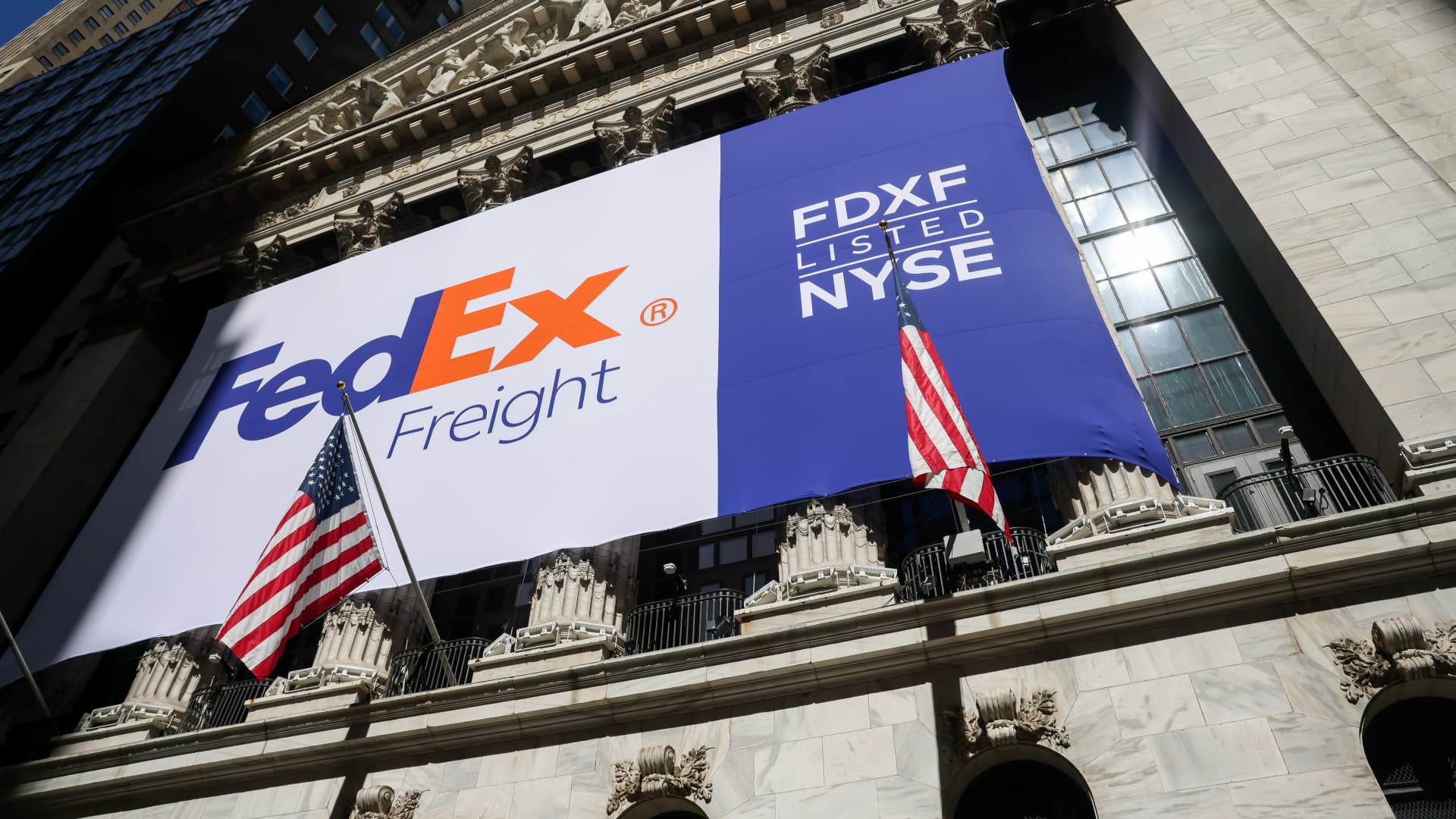
- Spin-Off Launch: FedEx Freight will complete its spinoff from FedEx Corp on Monday, starting to trade on the New York Stock Exchange under the symbol 'FDXF', marking its operation as the largest less-than-truckload service provider in the U.S. as an independent entity.
- Market Recovery: This debut occurs as freight rates may be emerging from a four-year slump, partly due to several operators exiting the market due to financial losses and federal regulators pushing to restrict commercial driver licenses to U.S. citizens only, creating market opportunities for the new company.
- Profit Potential: BMO Capital Markets analyst Fadi Chamoun noted that as a newly separated entity, FedEx Freight has significant margin improvement opportunities, though this is highly dependent on management's execution, particularly in enhancing service quality and revenue per shipment.
- Medium-Term Growth Outlook: CFO Marshall Witt stated that the company expects average revenue growth of 4% to 6% and core profit growth of 10% to 12% in the medium term, although short-term profits will be dampened by modernization investments and spinoff costs, long-term margin strength is anticipated through cost controls and automation.
See More
Tech Rally Lifts S&P 500 to Record Highs


- Tech Stock Performance: The S&P 500 reached new highs due to a tech rally, although Snowflake and Salesforce underperformed investor expectations, with gains of 2.6% and losses of 10% over the past three months, indicating a divergence in market sentiment towards tech stocks.
- Analyst Expectations: The majority of the 46 analysts covering Snowflake maintain buy or overweight ratings with a target price of $231.38, while 40 analysts for Salesforce share a similar outlook with a target of $254.43, suggesting ongoing confidence in both companies' future performance.
- Airline Stock Recovery: Airline stocks have performed well over the past month, with Delta Air Lines up about 16% and American Airlines up 22%, reflecting optimistic market sentiment ahead of the summer travel season, despite overall stock prices remaining below January highs.
- Impact of FedEx Spin-off: The upcoming listing of FedEx Freight marks increased Wall Street interest in less-than-truckload companies, with FedEx shares surging 45% over the past six months, indicating market recognition of its growth potential.
See More

Old Dominion Shares Rise as Oil Prices Drop, Boosting Margins
- Oil Price Impact: Old Dominion's shares rose 2.8% in the afternoon session as WTI crude oil fell 4.7% to $92.94, providing direct margin relief to trucking, rail, and logistics companies that heavily rely on fuel costs.
- Cost Improvement: The significant drop in diesel prices typically enhances operating margins for LTL trucking, while rail, which also uses large volumes of diesel, experiences a similar but slightly smaller benefit, alleviating operational pressures in a cost-sensitive environment.
- Market Volatility: Old Dominion's stock has seen 12 moves greater than 5% over the past year, and today's increase indicates that the market considers this news significant, although it does not fundamentally alter perceptions of the business, highlighting sensitivity to oil price fluctuations.
- Long-Term Investment Returns: With a 36.2% increase since the beginning of the year, Old Dominion's shares are currently priced at $216.79, close to the 52-week high of $224.42, demonstrating strong performance in long-term investments, as a $1,000 investment five years ago would now be worth $1,651.
See More

Transport Stocks Surge: CSX and Others in Focus


- Transport Sector Recovery: Transport stocks have surged 43% over the past year, significantly outperforming the S&P 500's 29%, indicating a robust recovery in the sector, particularly after the 'liberation day' tariff threats boosted market sentiment.
- CSX Stock Performance: CSX has risen 25% since last December, reaching an all-time high near $47 earlier this month, reflecting a technical breakout and strong investor confidence in its future growth, which is expected to continue attracting attention.
- Merger Dynamics: The merger between Norfolk Southern Corp. (NSC) and Union Pacific Corp. (UNP) is anticipated to receive regulatory approval by 2027, potentially controlling about 39% of the rail freight market share, which could have profound implications for the industry landscape.
- XPO's AI Optimization: XPO has implemented AI-driven route optimization tools across half its fleet, achieving a 4% productivity improvement in Q1, with expectations of 6%-8% annual revenue growth, demonstrating the company's ongoing commitment to enhancing operational efficiency.
See More
FedEx Freight to Accelerate Growth Post-Separation
- Operational Independence: FedEx Freight CEO John Smith stated that the company's separation from FedEx will enable it to invest more aggressively in growth initiatives specifically tailored to the less-than-truckload market, thereby enhancing its competitive edge.
- Profitability Goals: FedEx Freight aims to achieve a 15% operating margin by 2029, up from approximately 12% currently, with Smith suggesting that this target is not a ceiling, reflecting the company's confidence in future growth.
- Investment in Technology and Sales: As an independent entity, FedEx Freight plans to heavily invest in customer-facing technology and expand its dedicated sales force to improve profitability and customer experience, positioning itself advantageously in the competitive landscape.
- Economic Sensitivity and Market Opportunities: Smith emphasized that despite potential economic slowdowns, FedEx Freight is confident in its ability to grow by gaining market share and improving margins, indicating the company's resilience and strategic foresight in challenging economic conditions.
See More
FedEx Freight's Strategic Independence Boosts Growth Potential
- Strategic Independence: FedEx Freight officially separated from FedEx on Monday, becoming the largest less-than-truckload carrier in North America, and is expected to enhance competitiveness through targeted capital investments in the LTL market, thereby accelerating growth.
- Revenue and Goals: Previously generating about $9 billion in revenue within FedEx, the independent company aims to increase its operating margin from 12% to 15% by 2029, highlighting its focus on profitability.
- Market Share and Economic Sensitivity: Despite potential economic slowdowns, CEO John Smith expressed confidence in FedEx Freight's ability to grow by gaining market share and improving margins, indicating resilience amid economic fluctuations.
- Technology and Sales Expansion: The company plans to invest heavily in customer-facing technology and expand its dedicated sales force to enhance customer experience and market competitiveness, further solidifying its leadership position in the LTL shipping market.
See More
FedEx Freight Spins Off and Begins Trading as Independent Entity
- Spin-Off Launch: FedEx Freight will complete its spinoff from FedEx Corp on Monday, starting to trade on the New York Stock Exchange under the symbol 'FDXF', marking its operation as the largest less-than-truckload service provider in the U.S. as an independent entity.
- Market Recovery: This debut occurs as freight rates may be emerging from a four-year slump, partly due to several operators exiting the market due to financial losses and federal regulators pushing to restrict commercial driver licenses to U.S. citizens only, creating market opportunities for the new company.
- Profit Potential: BMO Capital Markets analyst Fadi Chamoun noted that as a newly separated entity, FedEx Freight has significant margin improvement opportunities, though this is highly dependent on management's execution, particularly in enhancing service quality and revenue per shipment.
- Medium-Term Growth Outlook: CFO Marshall Witt stated that the company expects average revenue growth of 4% to 6% and core profit growth of 10% to 12% in the medium term, although short-term profits will be dampened by modernization investments and spinoff costs, long-term margin strength is anticipated through cost controls and automation.
See More
Tech Rally Lifts S&P 500 to Record Highs
- Tech Stock Performance: The S&P 500 reached new highs due to a tech rally, although Snowflake and Salesforce underperformed investor expectations, with gains of 2.6% and losses of 10% over the past three months, indicating a divergence in market sentiment towards tech stocks.
- Analyst Expectations: The majority of the 46 analysts covering Snowflake maintain buy or overweight ratings with a target price of $231.38, while 40 analysts for Salesforce share a similar outlook with a target of $254.43, suggesting ongoing confidence in both companies' future performance.
- Airline Stock Recovery: Airline stocks have performed well over the past month, with Delta Air Lines up about 16% and American Airlines up 22%, reflecting optimistic market sentiment ahead of the summer travel season, despite overall stock prices remaining below January highs.
- Impact of FedEx Spin-off: The upcoming listing of FedEx Freight marks increased Wall Street interest in less-than-truckload companies, with FedEx shares surging 45% over the past six months, indicating market recognition of its growth potential.
See More
Old Dominion Shares Rise as Oil Prices Drop, Boosting Margins
- Oil Price Impact: Old Dominion's shares rose 2.8% in the afternoon session as WTI crude oil fell 4.7% to $92.94, providing direct margin relief to trucking, rail, and logistics companies that heavily rely on fuel costs.
- Cost Improvement: The significant drop in diesel prices typically enhances operating margins for LTL trucking, while rail, which also uses large volumes of diesel, experiences a similar but slightly smaller benefit, alleviating operational pressures in a cost-sensitive environment.
- Market Volatility: Old Dominion's stock has seen 12 moves greater than 5% over the past year, and today's increase indicates that the market considers this news significant, although it does not fundamentally alter perceptions of the business, highlighting sensitivity to oil price fluctuations.
- Long-Term Investment Returns: With a 36.2% increase since the beginning of the year, Old Dominion's shares are currently priced at $216.79, close to the 52-week high of $224.42, demonstrating strong performance in long-term investments, as a $1,000 investment five years ago would now be worth $1,651.
See More
Transport Stocks Surge: CSX and Others in Focus
- Transport Sector Recovery: Transport stocks have surged 43% over the past year, significantly outperforming the S&P 500's 29%, indicating a robust recovery in the sector, particularly after the 'liberation day' tariff threats boosted market sentiment.
- CSX Stock Performance: CSX has risen 25% since last December, reaching an all-time high near $47 earlier this month, reflecting a technical breakout and strong investor confidence in its future growth, which is expected to continue attracting attention.
- Merger Dynamics: The merger between Norfolk Southern Corp. (NSC) and Union Pacific Corp. (UNP) is anticipated to receive regulatory approval by 2027, potentially controlling about 39% of the rail freight market share, which could have profound implications for the industry landscape.
- XPO's AI Optimization: XPO has implemented AI-driven route optimization tools across half its fleet, achieving a 4% productivity improvement in Q1, with expectations of 6%-8% annual revenue growth, demonstrating the company's ongoing commitment to enhancing operational efficiency.
See More