Exxon Mobil to Release Q1 Earnings on May 1
Written by Emily J. Thompson, Senior Investment Analyst
Updated: 1 hour ago
0mins
Should l Buy XOM?
Source: Newsfilter
- Earnings Release Date: Exxon Mobil is set to release its Q1 earnings on May 1, with the market anticipating that the financial results will provide crucial performance guidance for investors.
- EPS Expectations: Analysts estimate the company’s Q1 earnings per share (EPS) to be $1.01, reflecting the company's profitability amid fluctuations in the oil and gas market.
- Revenue Projections: The expected revenue for Exxon Mobil in Q1 is $85.29 billion, indicating strong performance against the backdrop of recovering global energy demand.
- Mixed Analyst Ratings: Despite the upcoming earnings report, analysts have mixed ratings on the company, highlighting market uncertainties regarding future oil prices and operational strategies.
Trade with 70% Backtested Accuracy
Stop guessing "Should I Buy XOM?" and start using high-conviction signals backed by rigorous historical data.
Sign up today to access powerful investing tools and make smarter, data-driven decisions.
Analyst Views on XOM
Wall Street analysts forecast XOM stock price to fall
19 Analyst Rating
12 Buy
7 Hold
0 Sell
Moderate Buy
Current: 154.670

Low
114.00
Averages
132.17
High
158.00
Current: 154.670
Low
114.00
Averages
132.17
High
158.00
About XOM
Exxon Mobil Corporation is an energy provider and chemical manufacturer. The Company’s principal business involves exploration for, and production of, crude oil and natural gas; the manufacture, trade, transport and sale of crude oil, natural gas, petroleum products, petrochemicals and a wide variety of specialty products; and pursuit of lower-emission and other new business opportunities, including carbon capture and storage, hydrogen, lower-emission fuels, Proxxima systems, carbon materials, and lithium. Its Upstream segment explores for and produces crude oil and natural gas. The Energy Products, Chemical Products, and Specialty Products segments manufacture and sell petroleum products and petrochemicals. Energy Products segment includes fuels, aromatics, and catalysts and licensing. Chemical Products segment consists of olefins, polyolefins, and intermediates. Specialty Products segment includes finished lubricants, basestocks and waxes, synthetics, and elastomers and resins.
About the author

Emily J. Thompson
Emily J. Thompson, a Chartered Financial Analyst (CFA) with 12 years in investment research, graduated with honors from the Wharton School. Specializing in industrial and technology stocks, she provides in-depth analysis for Intellectia’s earnings and market brief reports.

Exxon Mobil to Release Q1 Earnings on May 1

- Earnings Release Date: Exxon Mobil is set to release its Q1 earnings on May 1, with the market anticipating that the financial results will provide crucial performance guidance for investors.
- EPS Expectations: Analysts estimate the company’s Q1 earnings per share (EPS) to be $1.01, reflecting the company's profitability amid fluctuations in the oil and gas market.
- Revenue Projections: The expected revenue for Exxon Mobil in Q1 is $85.29 billion, indicating strong performance against the backdrop of recovering global energy demand.
- Mixed Analyst Ratings: Despite the upcoming earnings report, analysts have mixed ratings on the company, highlighting market uncertainties regarding future oil prices and operational strategies.
See More

Escalating European Energy Crisis Impacts Corporations
- Surging Energy Costs: The closure of the Strait of Hormuz has nearly doubled European natural gas benchmark prices, forcing U.S. multinationals to face significantly higher energy costs, which will directly compress their manufacturing margins and impact stock performance.
- Consumer Goods Companies Strained: Procter & Gamble has lowered its fiscal 2026 EPS growth forecast to a range of 1% to 6% due to declining consumer purchasing power, and rising energy costs will further exacerbate this demand-side weakness.
- Food Industry Pressure: Mondelez International derives 39% of its revenue from Europe, and its manufacturing operations are highly sensitive to energy costs; the current energy crisis could significantly erode its margins, especially as food prices rise due to fertilizer shortages.
- Energy Companies Benefiting: Despite some Middle Eastern production capacity being offline, companies like ExxonMobil and Chevron may benefit from the global LNG market premiums, particularly as European buyers pay higher prices, boosting their upstream business growth.
See More

European Energy Crisis Intensifies Impact on U.S. Companies
- Rising Energy Costs: The conflict with Iran has led to a near doubling of European natural gas benchmark prices by mid-March, resulting in significantly higher energy costs for U.S. companies operating in Europe, which could compress their margins and negatively impact stock prices.
- Manufacturing Squeeze: Companies like Procter & Gamble (PG) and Mondelez International (MDLZ), which have substantial manufacturing operations in Europe, are facing dual pressures from rising energy costs and declining consumer purchasing power, leading to further downward revisions in their fiscal 2026 earnings-per-share growth forecasts.
- Tight Market Dynamics: Europe must urgently refill its gas reserves over the summer, with global buyers competing for limited liquefied natural gas (LNG) supplies, exacerbating operational challenges for U.S. multinationals in Europe and potentially impacting their profitability.
- Energy Producers Benefit: Despite some Middle Eastern production constraints, companies like ExxonMobil (XOM) and Chevron (CVX) may benefit from rising crude oil prices and high premiums in the European market, illustrating the divergent impacts of the energy crisis on various sectors.
See More

Apple Beats Earnings Estimates, Shares Rise Over 3%

- Apple's Strong Performance: Apple exceeded earnings expectations in its latest report, with both revenue and profit growth driving shares up over 3% in after-hours trading, despite iPhone sales falling short, indicating strong demand for its services segment.
- Energy Stocks Surge: Following the outbreak of the Iran war, Chevron and Exxon Mobil saw their shares rise by 9.3% and 9.1%, respectively, reflecting market confidence in the energy sector amid heightened global energy tensions.
- Berkshire Hathaway's Decline: Berkshire Hathaway's A shares have dropped over 5% year-to-date and 11% over the year, raising concerns among investors about its long-term growth prospects, with the current share price at $711,900.
- Weakness in Auto Sector: Major automakers have experienced significant stock declines over the past three months, with Toyota, Ford, and General Motors down 15%, 13%, and 8.5%, respectively, reflecting a pessimistic outlook for recovery in the automotive industry.
See More

Four Tech Giants Boost Capital Expenditure Amid AI Race


- Market Performance: On the last day of April, the S&P 500 index surpassed 7,200 for the first time, achieving an all-time high with a more than 10% increase for the month, reflecting optimistic market sentiment regarding economic recovery.
- Significant Capex Increase: The four tech giants—Alphabet, Amazon, Microsoft, and Meta—are projected to spend a total of $695 billion in capital expenditures this year, marking a more than 14% increase from the previous estimate of $608 billion, highlighting their fierce competition in the AI sector.
- Divergent Stock Reactions: Despite all four companies increasing their spending, Alphabet's stock surged nearly 10% to a new high, while Meta's stock fell almost 8%, indicating differing market perceptions regarding their cloud business strategies.
- Apple's Upcoming Earnings Report: Apple is set to release its earnings report following CEO Tim Cook's announcement of his resignation in September, with market focus on new CEO John Ternus's strategic direction and its potential impact on product pricing and supply chain issues.
See More
Exxon Mobil and Chevron Revenue Analysis
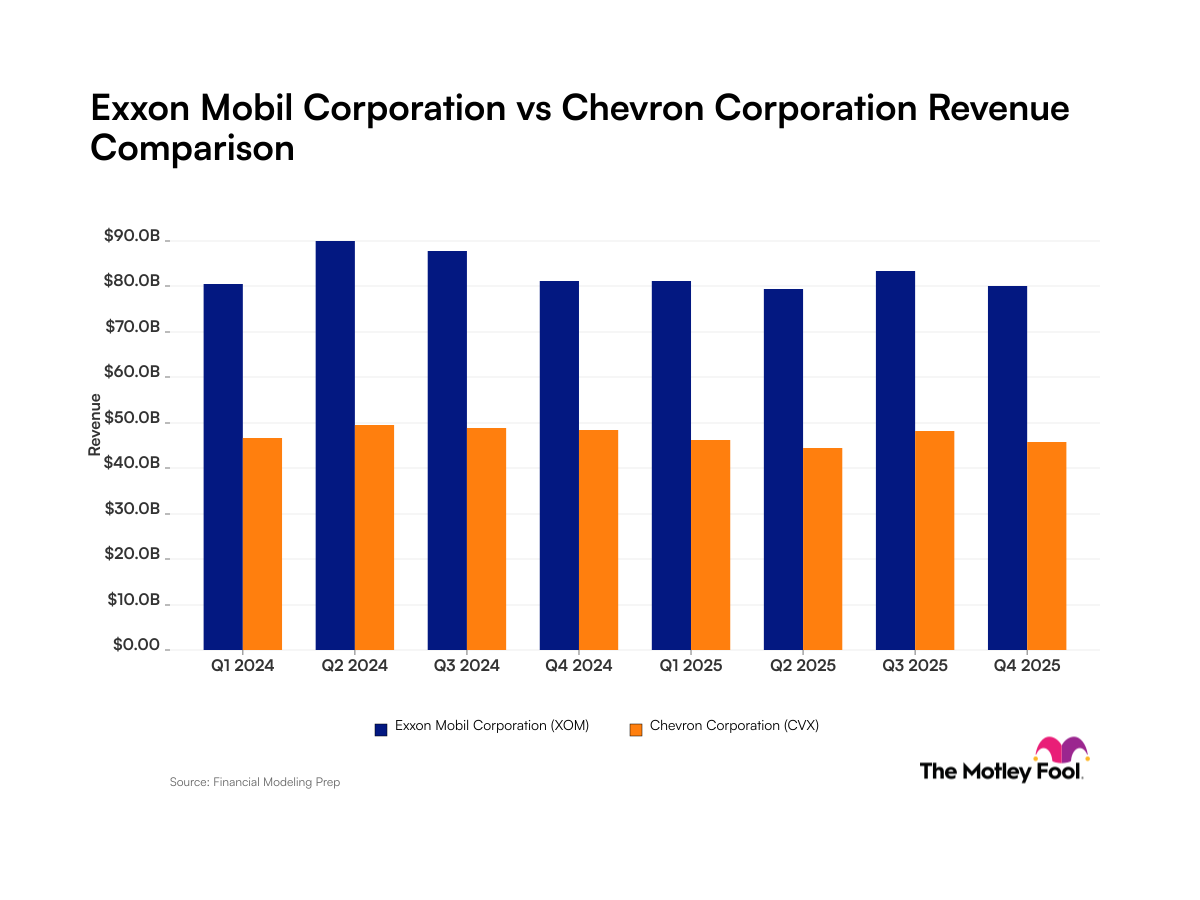
- Revenue Comparison: Exxon Mobil reported $80 billion in revenue for Q4 2025, down approximately 0.5% from Q1 2024, yet its average quarterly revenue of $82.9 billion significantly surpasses Chevron's $47.3 billion, highlighting its strong competitive position in the energy market.
- Net Margin Analysis: With a net income margin of about 8% in Q4 2025 compared to Chevron's 6%, Exxon demonstrates superior cost control and profitability, potentially attracting more investor interest in its financial health.
- Strategic Asset Swap: Chevron's completion of a strategic asset swap with state-owned entities in Venezuela and a procedural victory in the U.S. Supreme Court not only strengthens its position in the Latin American market but also lays a foundation for future growth opportunities.
- Investor Focus: As both companies prepare to release Q1 2026 results on May 1, investors should pay attention to operating margins, free cash flow, and overall balance sheet health to make more informed investment decisions.
See More
Exxon Mobil to Release Q1 Earnings on May 1
- Earnings Release Date: Exxon Mobil is set to release its Q1 earnings on May 1, with the market anticipating that the financial results will provide crucial performance guidance for investors.
- EPS Expectations: Analysts estimate the company’s Q1 earnings per share (EPS) to be $1.01, reflecting the company's profitability amid fluctuations in the oil and gas market.
- Revenue Projections: The expected revenue for Exxon Mobil in Q1 is $85.29 billion, indicating strong performance against the backdrop of recovering global energy demand.
- Mixed Analyst Ratings: Despite the upcoming earnings report, analysts have mixed ratings on the company, highlighting market uncertainties regarding future oil prices and operational strategies.
See More
Escalating European Energy Crisis Impacts Corporations
- Surging Energy Costs: The closure of the Strait of Hormuz has nearly doubled European natural gas benchmark prices, forcing U.S. multinationals to face significantly higher energy costs, which will directly compress their manufacturing margins and impact stock performance.
- Consumer Goods Companies Strained: Procter & Gamble has lowered its fiscal 2026 EPS growth forecast to a range of 1% to 6% due to declining consumer purchasing power, and rising energy costs will further exacerbate this demand-side weakness.
- Food Industry Pressure: Mondelez International derives 39% of its revenue from Europe, and its manufacturing operations are highly sensitive to energy costs; the current energy crisis could significantly erode its margins, especially as food prices rise due to fertilizer shortages.
- Energy Companies Benefiting: Despite some Middle Eastern production capacity being offline, companies like ExxonMobil and Chevron may benefit from the global LNG market premiums, particularly as European buyers pay higher prices, boosting their upstream business growth.
See More
European Energy Crisis Intensifies Impact on U.S. Companies
- Rising Energy Costs: The conflict with Iran has led to a near doubling of European natural gas benchmark prices by mid-March, resulting in significantly higher energy costs for U.S. companies operating in Europe, which could compress their margins and negatively impact stock prices.
- Manufacturing Squeeze: Companies like Procter & Gamble (PG) and Mondelez International (MDLZ), which have substantial manufacturing operations in Europe, are facing dual pressures from rising energy costs and declining consumer purchasing power, leading to further downward revisions in their fiscal 2026 earnings-per-share growth forecasts.
- Tight Market Dynamics: Europe must urgently refill its gas reserves over the summer, with global buyers competing for limited liquefied natural gas (LNG) supplies, exacerbating operational challenges for U.S. multinationals in Europe and potentially impacting their profitability.
- Energy Producers Benefit: Despite some Middle Eastern production constraints, companies like ExxonMobil (XOM) and Chevron (CVX) may benefit from rising crude oil prices and high premiums in the European market, illustrating the divergent impacts of the energy crisis on various sectors.
See More
Apple Beats Earnings Estimates, Shares Rise Over 3%
- Apple's Strong Performance: Apple exceeded earnings expectations in its latest report, with both revenue and profit growth driving shares up over 3% in after-hours trading, despite iPhone sales falling short, indicating strong demand for its services segment.
- Energy Stocks Surge: Following the outbreak of the Iran war, Chevron and Exxon Mobil saw their shares rise by 9.3% and 9.1%, respectively, reflecting market confidence in the energy sector amid heightened global energy tensions.
- Berkshire Hathaway's Decline: Berkshire Hathaway's A shares have dropped over 5% year-to-date and 11% over the year, raising concerns among investors about its long-term growth prospects, with the current share price at $711,900.
- Weakness in Auto Sector: Major automakers have experienced significant stock declines over the past three months, with Toyota, Ford, and General Motors down 15%, 13%, and 8.5%, respectively, reflecting a pessimistic outlook for recovery in the automotive industry.
See More
Four Tech Giants Boost Capital Expenditure Amid AI Race
- Market Performance: On the last day of April, the S&P 500 index surpassed 7,200 for the first time, achieving an all-time high with a more than 10% increase for the month, reflecting optimistic market sentiment regarding economic recovery.
- Significant Capex Increase: The four tech giants—Alphabet, Amazon, Microsoft, and Meta—are projected to spend a total of $695 billion in capital expenditures this year, marking a more than 14% increase from the previous estimate of $608 billion, highlighting their fierce competition in the AI sector.
- Divergent Stock Reactions: Despite all four companies increasing their spending, Alphabet's stock surged nearly 10% to a new high, while Meta's stock fell almost 8%, indicating differing market perceptions regarding their cloud business strategies.
- Apple's Upcoming Earnings Report: Apple is set to release its earnings report following CEO Tim Cook's announcement of his resignation in September, with market focus on new CEO John Ternus's strategic direction and its potential impact on product pricing and supply chain issues.
See More
Exxon Mobil and Chevron Revenue Analysis
- Revenue Comparison: Exxon Mobil reported $80 billion in revenue for Q4 2025, down approximately 0.5% from Q1 2024, yet its average quarterly revenue of $82.9 billion significantly surpasses Chevron's $47.3 billion, highlighting its strong competitive position in the energy market.
- Net Margin Analysis: With a net income margin of about 8% in Q4 2025 compared to Chevron's 6%, Exxon demonstrates superior cost control and profitability, potentially attracting more investor interest in its financial health.
- Strategic Asset Swap: Chevron's completion of a strategic asset swap with state-owned entities in Venezuela and a procedural victory in the U.S. Supreme Court not only strengthens its position in the Latin American market but also lays a foundation for future growth opportunities.
- Investor Focus: As both companies prepare to release Q1 2026 results on May 1, investors should pay attention to operating margins, free cash flow, and overall balance sheet health to make more informed investment decisions.
See More