Escalating Geopolitical Risks: Iran Threatens US Universities
Written by Emily J. Thompson, Senior Investment Analyst
Updated: 11 hours ago
0mins

Source: Yahoo Finance
- Iran's Escalating Threat: The IRGC has issued a direct threat against U.S. universities in neighboring countries, demanding that students and staff maintain a distance of at least one kilometer, categorizing these institutions as legitimate military targets, which poses significant risks to American educational investments in the region.
- U.S. Military Deployment: Specialized U.S. Marine Expeditionary Units have arrived in the Middle East, marking a significant shift in military posture, with the White House describing this deployment as a contingency measure to secure energy corridors and critical infrastructure, raising concerns about the potential for prolonged ground operations.
- Pakistani Vessels Granted Passage: Iran has agreed to allow 20 additional Pakistani-flagged ships to transit the Strait of Hormuz, with two ships permitted daily, providing crucial logistical support for Pakistani maritime trade amid ongoing regional tensions and showcasing a diplomatic breakthrough.
- Houthi Attacks on Israel: The Houthi group launched drone and missile strikes against Israel, exacerbating regional tensions and highlighting the ongoing volatility of the security landscape, which poses challenges for international efforts to prevent a broader conflict.
Trade with 70% Backtested Accuracy
Stop guessing "Should I Buy LMT?" and start using high-conviction signals backed by rigorous historical data.
Sign up today to access powerful investing tools and make smarter, data-driven decisions.
Analyst Views on LMT
Wall Street analysts forecast LMT stock price to fall
12 Analyst Rating
4 Buy
7 Hold
1 Sell
Hold
Current: 627.330

Low
430.00
Averages
535.50
High
605.00
Current: 627.330
Low
430.00
Averages
535.50
High
605.00
About LMT
Lockheed Martin Corporation is a global aerospace and defense company. The Company is engaged in the research, design, development, manufacture, integration and sustainment of advanced technology systems, products and services. Its segments include Aeronautics, Missiles and Fire Control (MFC), Rotary and Mission Systems (RMS) and Space. Aeronautics segment is engaged in the research, design, development, manufacture, integration, sustainment, support and upgrade of advanced military aircraft. MFC segment provides air and missile defense systems, manned and unmanned ground vehicles, energy management solutions, and others. RMS segment designs, manufactures, services and supports various military and commercial helicopters, surface ships, sea and land-based missile defense systems, and others. Its Space segment is engaged in the research and design, development, engineering and production of satellites, space transportation systems, and strategic, advanced strike, and defensive systems.
About the author

Emily J. Thompson
Emily J. Thompson, a Chartered Financial Analyst (CFA) with 12 years in investment research, graduated with honors from the Wharton School. Specializing in industrial and technology stocks, she provides in-depth analysis for Intellectia’s earnings and market brief reports.

Lockheed Martin's Optimistic Outlook for 2026

- Strong Sales Growth: Lockheed Martin reported a 6% sales growth in Q4 2025 and anticipates similar growth in 2026, indicating robust performance amid market volatility and uncertainty.
- Massive Backlog: The company has a backlog of $194 billion, reflecting strong market demand that is expected to support future revenue growth, particularly with the anticipated increase in defense spending.
- Stable Dividend Yield: Lockheed's dividend yield stands at 2.2%, appealing to investors seeking stable growth and income, even though the recent rise in stock price has made shares more expensive.
- Valuation Risks Emerging: Despite the optimistic outlook, the stock's P/E ratio nearing 30 and market capitalization increasing from $104 billion to $144 billion suggest potential overvaluation risks, necessitating careful evaluation by investors.
See More

Artemis II Astronauts Arrive in Florida for Historic Moon Mission

- Mission Readiness: Four astronauts arrived in Florida on Friday, preparing for the Artemis II mission, marking a significant milestone in humanity's return to lunar exploration.
- Launch Schedule: The astronauts are set to launch on April 1 aboard the Orion spacecraft, with the mission expected to last about 10 days, showcasing advancements in human spaceflight technology as they loop around the moon and return to Earth.
- Historic Achievements: This mission will see Victor Glover become the first Black astronaut to reach deep space, Christina Koch the first woman, and Jeremy Hansen the first Canadian astronaut, highlighting diversity and inclusion in space exploration.
- Significance of Artemis Program: Artemis II is a crucial step in the Artemis program, aimed at laying the groundwork for returning astronauts to the moon later this decade and establishing a sustained human presence there.
See More

Defense Stocks Performance Amid Geopolitical Conflict
- Strong Defense Stock Performance: Since Russia's invasion of Ukraine in 2022, defense stocks have outperformed the S&P 500, primarily driven by backlogs resulting from the Ukraine conflict, NATO rearmament, and soaring U.S. defense budgets.
- Growing Backlogs: Recent framework agreements between the U.S. government and Lockheed Martin, BAE Systems, and Honeywell to accelerate missile technology production, particularly Precision Strike Missiles for Iran, have further boosted revenue expectations in the defense sector.
- Margin Pressure: Despite Lockheed Martin's 46% EBIT growth over the past decade, the annual growth rate is only 3.9%, indicating structural challenges in profit growth for defense companies, particularly due to negotiating pressures on fixed-price contracts.
- Investor Caution Advised: While expectations for increased defense budgets due to the Iran conflict rise, investors should be wary of whether current valuations are justified, especially if profit growth remains limited to single digits in the industry.
See More

Defense Sector Faces Profit Pressure Amid Growth Opportunities
- Defense Contract Growth: As geopolitical tensions escalate, the U.S. government is leveraging its negotiating power to push companies like Lockheed Martin, BAE Systems, and Honeywell to accelerate production of Precision Strike Missiles, indicating a sustained demand for defense contracts.
- Profitability Challenges: Despite the growing backlog of orders, defense companies have struggled with profit growth rates averaging low single digits over the past decade, highlighting structural pressures on profitability, particularly under fixed-price contracts.
- Market Outperformance: Since Russia's invasion of Ukraine in 2022, defense stocks have outperformed the S&P 500, primarily driven by the need to replenish equipment used in Ukraine and NATO's rearmament efforts.
- Investor Caution: While revenue expectations have risen due to conflicts with Iran, if margin pressures prove to be lasting, investors may need to carefully assess whether current valuations are justified, especially as the industry faces challenges in profit growth.
See More

NASA Revamps Space Exploration Plans Under Jared Isaacman
- Artemis Program Relaunch: NASA is set to implement the Artemis program over the next five years, with phase one costing $10 billion and involving at least 30 robotic lunar missions, culminating in a crewed moon landing in 2028, marking a significant return to lunar exploration for the U.S.
- Private Space Station Development: NASA plans to support private companies in building commercial space stations, with a government-owned core module to be attached to the existing International Space Station, ensuring safety before allowing independent operations, thus advancing the commercialization of low Earth orbit.
- Nuclear Spacecraft Initiative: NASA aims to launch the first nuclear-powered interplanetary spacecraft, Space Reactor-1 Freedom, in 2028, equipped with a 25-kilowatt nuclear reactor to explore Mars, showcasing NASA's innovative direction in space technology.
- International Collaboration and Infrastructure: In phases two and three of the Artemis program, NASA will collaborate with international partners to build lunar infrastructure, with total costs projected to reach $20 billion, laying a solid foundation for future lunar exploration.
See More
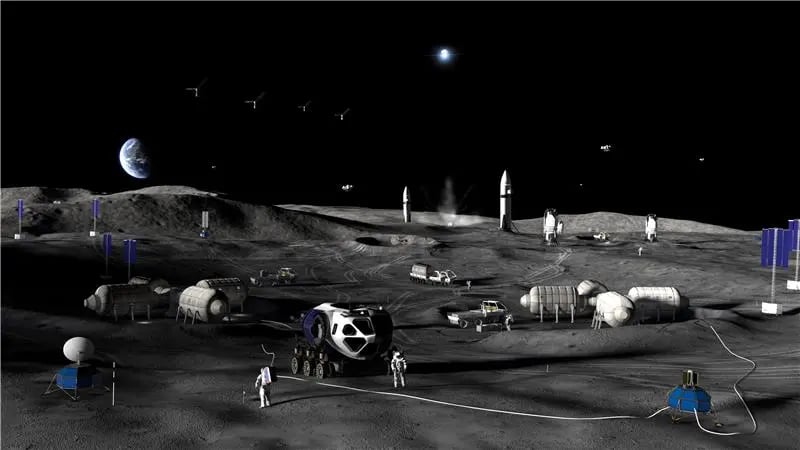
NASA's New Plans: Returning to the Moon and Exploring Mars
- Artemis Program Relaunch: NASA's new Artemis project is divided into three phases, with the first phase aiming to land two astronauts on the moon by 2028 at an estimated total cost of $20 billion, marking a significant return for the U.S. in space exploration.
- Robotic Mission Expansion: In phase one, NASA will conduct at least 30 robotic missions, utilizing Intuitive Machines' Nova-D lander for cargo delivery and equipment testing, supporting future lunar base construction and further advancing commercial space endeavors.
- International Space Station Plans: NASA will continue to support the construction of private commercial space stations, planning to attach a government-owned core module to the existing ISS to ensure safety and facilitate the formation of independent space stations, demonstrating ongoing commitment to low Earth orbit.
- Mars Exploration New Power: NASA plans to launch the first nuclear-powered interplanetary spacecraft, Space Reactor-1 Freedom, in 2028, carrying a 25-kilowatt nuclear reactor to Mars to deliver multiple drones for exploration, representing a significant advancement in space exploration technology.
See More
Lockheed Martin's Optimistic Outlook for 2026
- Strong Sales Growth: Lockheed Martin reported a 6% sales growth in Q4 2025 and anticipates similar growth in 2026, indicating robust performance amid market volatility and uncertainty.
- Massive Backlog: The company has a backlog of $194 billion, reflecting strong market demand that is expected to support future revenue growth, particularly with the anticipated increase in defense spending.
- Stable Dividend Yield: Lockheed's dividend yield stands at 2.2%, appealing to investors seeking stable growth and income, even though the recent rise in stock price has made shares more expensive.
- Valuation Risks Emerging: Despite the optimistic outlook, the stock's P/E ratio nearing 30 and market capitalization increasing from $104 billion to $144 billion suggest potential overvaluation risks, necessitating careful evaluation by investors.
See More
Artemis II Astronauts Arrive in Florida for Historic Moon Mission
- Mission Readiness: Four astronauts arrived in Florida on Friday, preparing for the Artemis II mission, marking a significant milestone in humanity's return to lunar exploration.
- Launch Schedule: The astronauts are set to launch on April 1 aboard the Orion spacecraft, with the mission expected to last about 10 days, showcasing advancements in human spaceflight technology as they loop around the moon and return to Earth.
- Historic Achievements: This mission will see Victor Glover become the first Black astronaut to reach deep space, Christina Koch the first woman, and Jeremy Hansen the first Canadian astronaut, highlighting diversity and inclusion in space exploration.
- Significance of Artemis Program: Artemis II is a crucial step in the Artemis program, aimed at laying the groundwork for returning astronauts to the moon later this decade and establishing a sustained human presence there.
See More
Defense Stocks Performance Amid Geopolitical Conflict
- Strong Defense Stock Performance: Since Russia's invasion of Ukraine in 2022, defense stocks have outperformed the S&P 500, primarily driven by backlogs resulting from the Ukraine conflict, NATO rearmament, and soaring U.S. defense budgets.
- Growing Backlogs: Recent framework agreements between the U.S. government and Lockheed Martin, BAE Systems, and Honeywell to accelerate missile technology production, particularly Precision Strike Missiles for Iran, have further boosted revenue expectations in the defense sector.
- Margin Pressure: Despite Lockheed Martin's 46% EBIT growth over the past decade, the annual growth rate is only 3.9%, indicating structural challenges in profit growth for defense companies, particularly due to negotiating pressures on fixed-price contracts.
- Investor Caution Advised: While expectations for increased defense budgets due to the Iran conflict rise, investors should be wary of whether current valuations are justified, especially if profit growth remains limited to single digits in the industry.
See More
Defense Sector Faces Profit Pressure Amid Growth Opportunities
- Defense Contract Growth: As geopolitical tensions escalate, the U.S. government is leveraging its negotiating power to push companies like Lockheed Martin, BAE Systems, and Honeywell to accelerate production of Precision Strike Missiles, indicating a sustained demand for defense contracts.
- Profitability Challenges: Despite the growing backlog of orders, defense companies have struggled with profit growth rates averaging low single digits over the past decade, highlighting structural pressures on profitability, particularly under fixed-price contracts.
- Market Outperformance: Since Russia's invasion of Ukraine in 2022, defense stocks have outperformed the S&P 500, primarily driven by the need to replenish equipment used in Ukraine and NATO's rearmament efforts.
- Investor Caution: While revenue expectations have risen due to conflicts with Iran, if margin pressures prove to be lasting, investors may need to carefully assess whether current valuations are justified, especially as the industry faces challenges in profit growth.
See More
NASA Revamps Space Exploration Plans Under Jared Isaacman
- Artemis Program Relaunch: NASA is set to implement the Artemis program over the next five years, with phase one costing $10 billion and involving at least 30 robotic lunar missions, culminating in a crewed moon landing in 2028, marking a significant return to lunar exploration for the U.S.
- Private Space Station Development: NASA plans to support private companies in building commercial space stations, with a government-owned core module to be attached to the existing International Space Station, ensuring safety before allowing independent operations, thus advancing the commercialization of low Earth orbit.
- Nuclear Spacecraft Initiative: NASA aims to launch the first nuclear-powered interplanetary spacecraft, Space Reactor-1 Freedom, in 2028, equipped with a 25-kilowatt nuclear reactor to explore Mars, showcasing NASA's innovative direction in space technology.
- International Collaboration and Infrastructure: In phases two and three of the Artemis program, NASA will collaborate with international partners to build lunar infrastructure, with total costs projected to reach $20 billion, laying a solid foundation for future lunar exploration.
See More
NASA's New Plans: Returning to the Moon and Exploring Mars
- Artemis Program Relaunch: NASA's new Artemis project is divided into three phases, with the first phase aiming to land two astronauts on the moon by 2028 at an estimated total cost of $20 billion, marking a significant return for the U.S. in space exploration.
- Robotic Mission Expansion: In phase one, NASA will conduct at least 30 robotic missions, utilizing Intuitive Machines' Nova-D lander for cargo delivery and equipment testing, supporting future lunar base construction and further advancing commercial space endeavors.
- International Space Station Plans: NASA will continue to support the construction of private commercial space stations, planning to attach a government-owned core module to the existing ISS to ensure safety and facilitate the formation of independent space stations, demonstrating ongoing commitment to low Earth orbit.
- Mars Exploration New Power: NASA plans to launch the first nuclear-powered interplanetary spacecraft, Space Reactor-1 Freedom, in 2028, carrying a 25-kilowatt nuclear reactor to Mars to deliver multiple drones for exploration, representing a significant advancement in space exploration technology.
See More