

Energy Transfer Expands Nederland NGL Export Terminal by 240,000 Barrels per Day
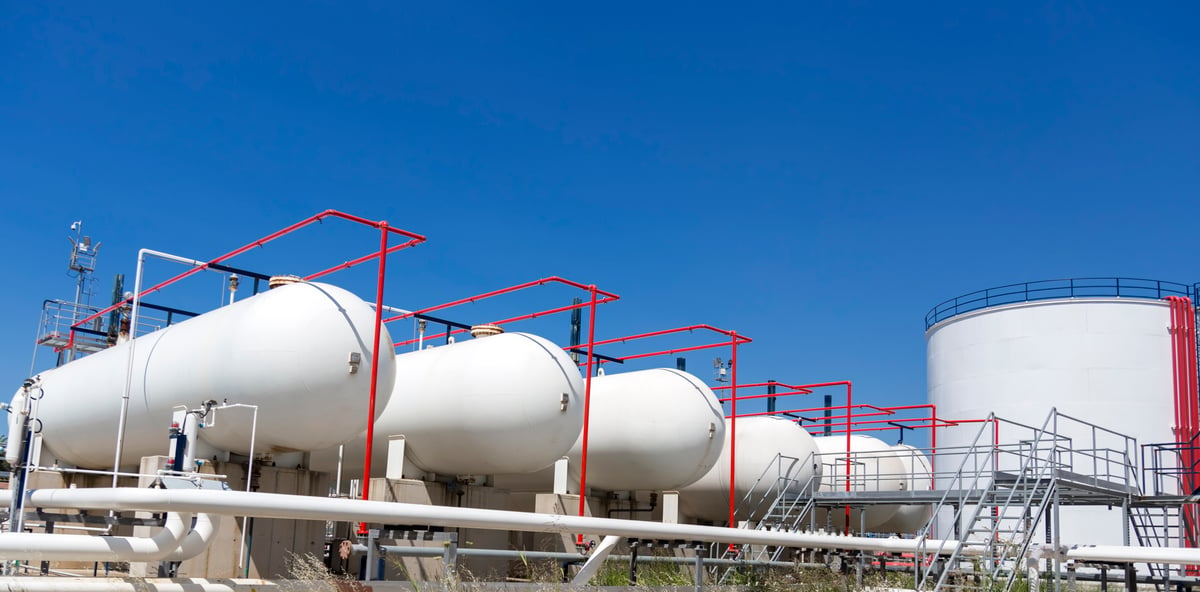
Energy Transfer announced an expansion of the Nederland NGL Export Terminal to meet additional customer demand. The project will increase ethane export capacity at Nederland by 240,000 barrels per day, along with 55,000 bpd of additional LPG capacity. One hundred percent of the ethane export capacity has been committed in long-term agreements running into the 2040's. Since Energy Transfer began exporting ethane out of Nederland in 2021, the company has exported over 430 million barrels. This project demonstrates that the continued growth in global NGL demand supports expansion of Energy Transfer's Nederland assets, which partnered with the company's wellhead-to-water system platform, creates a best-in-class franchise to provide North American energy to the rest of the world. As part of these transactions, Energy Transfer will also expand its Mont Belvieu to Nederland NGL export pipeline capacity to service the increased refrigeration capacity and construct two additional NGL ship docks. The company expects its previously announced expansion of the Nederland refrigerated propane and butane storage tanks to 1.2 million barrels and 0.8 million barrels, respectively, to be available in the first half of 2027. These assets, along with Energy Transfer's existing 1.3 million barrel refrigerated ethane tank, provide the largest refrigerated storage capacity for each of these products of any export complex on the U.S. Gulf Coast. The expansion project is expected to be placed into service in stages beginning in 2028. Following the anticipated completion of the additional docks in mid-2029, the refrigerated NGL export capacity at Nederland will be greater than 1.25 million bpd. Combined with the Marcus Hook NGL Export Facility capacity of 420,000 bpd, Energy Transfer's total NGL refrigerated export capacity will be approximately 1.7 million bpd.
Trade with 70% Backtested Accuracy
Analyst Views on ET

About ET
About the author


Energy Transfer LP Prices $1.75 Billion Junior Subordinated Notes Offering

- Bond Offering Size: Energy Transfer LP successfully priced a $1.75 billion offering of junior subordinated notes, which includes $650 million of 6.550% Series 2026A notes and $1.1 billion of 6.700% Series 2026B notes, both priced at 100% of face value, indicating strong market confidence in its financing needs.
- Clear Use of Proceeds: The offering is expected to close on July 20, with anticipated net proceeds of approximately $1.7325 billion primarily aimed at redeeming all outstanding 6.500% Series H preferred units, refinancing existing debt, and general partnership purposes, thereby optimizing its capital structure.
- Redemption Plan: The company plans to redeem the Series H preferred units starting August 15, with a formal redemption notice to be issued separately, which will further alleviate financial burdens and improve cash flow.
- Market Reaction: On the New York Stock Exchange, Energy Transfer closed down 0.41% at $19.25 on Monday, with after-hours trading showing a slight increase of 0.28% to $19.30, reflecting a cautious market sentiment regarding its debt management strategy.
Surge in LNG Demand Boosts Energy Stocks Outlook

- Demand Growth Forecast: According to Shell's LNG Outlook 2026, global liquefied natural gas demand is expected to increase by 700 million tons by 2050, representing a 65% surge from 2025 levels, which will enhance the long-term investment value of related energy stocks.
- U.S. LNG Dominance: The U.S. has emerged as the world's largest LNG exporter, with significant growth in LNG exports over the past decade, bolstering investor confidence in LNG stocks, particularly in the context of energy independence.
- ExxonMobil's Expansion Plans: ExxonMobil is undertaking four large-scale LNG projects, expecting to double its LNG capacity by 2030, adding 40 million metric tons annually, demonstrating strong bullish sentiment towards the LNG market's future.
- Long-Term Investment Opportunities: Cheniere Energy is set to complete three expansion projects in the coming years, with projected distributable cash flow reaching $4.75 billion to $5.25 billion by 2026, further solidifying its leadership position in the LNG sector.

Surging LNG Demand Creates Investment Opportunities
- Demand Growth Forecast: According to Shell's LNG Outlook 2026, global LNG demand is expected to increase by 700 million tons by 2050, representing a 65% surge from 2025 levels, which presents significant market opportunities for related companies.
- ExxonMobil's Investments: ExxonMobil is undertaking four large-scale LNG projects, expecting to double its LNG portfolio by 2030 from 2020 levels, which could increase its annual output by 40 million metric tons, demonstrating strong confidence in the LNG market.
- Cheniere Energy's Expansion: Cheniere Energy is working on three expansion projects, with one expected to be fully operational this year and the other two coming online in 2028 and 2029, projecting distributable cash flow of $4.75 billion to $5.25 billion by 2026, showcasing its stable cash flow capabilities.
- Energy Transfer's Growth: Energy Transfer reported $185 million in EBITDA growth in its natural gas liquids and refining business in the first quarter, indicating strong growth momentum in the North American midstream market while actively investing to meet energy demands from data centers.

Energy Transfer LP Prices $1.75B Dual-Tranche Subordinated Notes Offering
- Debt Issuance Size: Energy Transfer LP announced a dual-tranche subordinated notes offering priced at 100% of face value, raising a total of $1.75 billion, with the 2026A notes at an annual interest rate of 6.550% and the 2026B notes at 6.700%, indicating strong market support for its financing needs.
- Capital Allocation Plan: The company expects to generate approximately $1.73 billion in net proceeds before offering expenses, intending to use these funds to redeem all outstanding 6.500% Series H Preferred Units during the redemption window starting August 15, 2026, thereby optimizing its capital structure.
- Debt Restructuring Strategy: Remaining proceeds will be allocated to refinance existing indebtedness, including the repayment of commercial paper and outstanding borrowings under its revolving credit facility, aimed at reducing financial costs and enhancing liquidity to improve overall financial health.
- Positive Market Response: The successful pricing of this debt issuance reflects a rebound in investor confidence towards Energy Transfer, particularly following the company's $392 million judgment win in the Texas winter storm dispute, further solidifying its market position.

Energy Transfer LP Prices $1.65 Billion Junior Subordinated Notes Offering

- Bond Offering Size: Energy Transfer LP announced the pricing of $650 million in Series 2026A junior subordinated notes and $1.1 billion in Series 2026B junior subordinated notes, both priced at 100% of face value, indicating strong market recognition of its financing needs.
- Interest Rate Setting: The Series 2026A notes will bear an annual interest rate of 6.550%, while the Series 2026B notes will have a rate of 6.700%, providing the company with a stable funding source to support future capital expenditures and operations.
- Clear Use of Proceeds: The approximately $1.7325 billion in net proceeds from this bond offering is expected to be used to redeem all outstanding 6.500% Series H Preferred Units and to repay commercial paper and borrowings under its revolving credit facility, thereby optimizing the company's capital structure.
- Positive Market Response: The bond offering is being managed by prominent financial institutions including Citigroup and J.P. Morgan, reflecting strong market confidence in Energy Transfer LP, which is expected to enhance its competitiveness in the energy sector.

MPLX LP: A Robust Choice for High-Yield Stocks


- Stable Dividend Yield: MPLX LP boasts a 7.3% dividend yield, supported by long-term contracts with Marathon Petroleum that ensure predictable cash flows, providing a stable return for income investors and enhancing its appeal in the energy sector.
- Strategic Acquisition Focus: Last year, MPLX made three acquisitions while divesting its Rocky Mountain business, honing its focus on the Marcellus and Permian shale regions, which not only optimizes its business structure but also strengthens its competitive position in the natural gas liquids market, projected to grow at 7.1% by 2035.
- Dividend Growth Potential: MPLX announced a 12.5% dividend increase last year, raising the annual distribution to $4.31 per share, with nearly a tenfold growth over the past 11 years, and is targeting a continued 12.5% growth rate through 2027, indicating strong long-term growth potential.
- Financial Stability: With a debt-to-equity ratio of 1.8 and $5 billion in liquidity, MPLX can fund nearly two years of spending, while generating $549 million in free cash flow in Q1, leading to a distribution coverage ratio of 1.3, ensuring the safety and sustainability of its dividends.
Energy Transfer LP Prices $1.75 Billion Junior Subordinated Notes Offering
- Bond Offering Size: Energy Transfer LP successfully priced a $1.75 billion offering of junior subordinated notes, which includes $650 million of 6.550% Series 2026A notes and $1.1 billion of 6.700% Series 2026B notes, both priced at 100% of face value, indicating strong market confidence in its financing needs.
- Clear Use of Proceeds: The offering is expected to close on July 20, with anticipated net proceeds of approximately $1.7325 billion primarily aimed at redeeming all outstanding 6.500% Series H preferred units, refinancing existing debt, and general partnership purposes, thereby optimizing its capital structure.
- Redemption Plan: The company plans to redeem the Series H preferred units starting August 15, with a formal redemption notice to be issued separately, which will further alleviate financial burdens and improve cash flow.
- Market Reaction: On the New York Stock Exchange, Energy Transfer closed down 0.41% at $19.25 on Monday, with after-hours trading showing a slight increase of 0.28% to $19.30, reflecting a cautious market sentiment regarding its debt management strategy.
Surge in LNG Demand Boosts Energy Stocks Outlook
- Demand Growth Forecast: According to Shell's LNG Outlook 2026, global liquefied natural gas demand is expected to increase by 700 million tons by 2050, representing a 65% surge from 2025 levels, which will enhance the long-term investment value of related energy stocks.
- U.S. LNG Dominance: The U.S. has emerged as the world's largest LNG exporter, with significant growth in LNG exports over the past decade, bolstering investor confidence in LNG stocks, particularly in the context of energy independence.
- ExxonMobil's Expansion Plans: ExxonMobil is undertaking four large-scale LNG projects, expecting to double its LNG capacity by 2030, adding 40 million metric tons annually, demonstrating strong bullish sentiment towards the LNG market's future.
- Long-Term Investment Opportunities: Cheniere Energy is set to complete three expansion projects in the coming years, with projected distributable cash flow reaching $4.75 billion to $5.25 billion by 2026, further solidifying its leadership position in the LNG sector.
Surging LNG Demand Creates Investment Opportunities
- Demand Growth Forecast: According to Shell's LNG Outlook 2026, global LNG demand is expected to increase by 700 million tons by 2050, representing a 65% surge from 2025 levels, which presents significant market opportunities for related companies.
- ExxonMobil's Investments: ExxonMobil is undertaking four large-scale LNG projects, expecting to double its LNG portfolio by 2030 from 2020 levels, which could increase its annual output by 40 million metric tons, demonstrating strong confidence in the LNG market.
- Cheniere Energy's Expansion: Cheniere Energy is working on three expansion projects, with one expected to be fully operational this year and the other two coming online in 2028 and 2029, projecting distributable cash flow of $4.75 billion to $5.25 billion by 2026, showcasing its stable cash flow capabilities.
- Energy Transfer's Growth: Energy Transfer reported $185 million in EBITDA growth in its natural gas liquids and refining business in the first quarter, indicating strong growth momentum in the North American midstream market while actively investing to meet energy demands from data centers.
Energy Transfer LP Prices $1.75B Dual-Tranche Subordinated Notes Offering
- Debt Issuance Size: Energy Transfer LP announced a dual-tranche subordinated notes offering priced at 100% of face value, raising a total of $1.75 billion, with the 2026A notes at an annual interest rate of 6.550% and the 2026B notes at 6.700%, indicating strong market support for its financing needs.
- Capital Allocation Plan: The company expects to generate approximately $1.73 billion in net proceeds before offering expenses, intending to use these funds to redeem all outstanding 6.500% Series H Preferred Units during the redemption window starting August 15, 2026, thereby optimizing its capital structure.
- Debt Restructuring Strategy: Remaining proceeds will be allocated to refinance existing indebtedness, including the repayment of commercial paper and outstanding borrowings under its revolving credit facility, aimed at reducing financial costs and enhancing liquidity to improve overall financial health.
- Positive Market Response: The successful pricing of this debt issuance reflects a rebound in investor confidence towards Energy Transfer, particularly following the company's $392 million judgment win in the Texas winter storm dispute, further solidifying its market position.
Energy Transfer LP Prices $1.65 Billion Junior Subordinated Notes Offering
- Bond Offering Size: Energy Transfer LP announced the pricing of $650 million in Series 2026A junior subordinated notes and $1.1 billion in Series 2026B junior subordinated notes, both priced at 100% of face value, indicating strong market recognition of its financing needs.
- Interest Rate Setting: The Series 2026A notes will bear an annual interest rate of 6.550%, while the Series 2026B notes will have a rate of 6.700%, providing the company with a stable funding source to support future capital expenditures and operations.
- Clear Use of Proceeds: The approximately $1.7325 billion in net proceeds from this bond offering is expected to be used to redeem all outstanding 6.500% Series H Preferred Units and to repay commercial paper and borrowings under its revolving credit facility, thereby optimizing the company's capital structure.
- Positive Market Response: The bond offering is being managed by prominent financial institutions including Citigroup and J.P. Morgan, reflecting strong market confidence in Energy Transfer LP, which is expected to enhance its competitiveness in the energy sector.
MPLX LP: A Robust Choice for High-Yield Stocks
- Stable Dividend Yield: MPLX LP boasts a 7.3% dividend yield, supported by long-term contracts with Marathon Petroleum that ensure predictable cash flows, providing a stable return for income investors and enhancing its appeal in the energy sector.
- Strategic Acquisition Focus: Last year, MPLX made three acquisitions while divesting its Rocky Mountain business, honing its focus on the Marcellus and Permian shale regions, which not only optimizes its business structure but also strengthens its competitive position in the natural gas liquids market, projected to grow at 7.1% by 2035.
- Dividend Growth Potential: MPLX announced a 12.5% dividend increase last year, raising the annual distribution to $4.31 per share, with nearly a tenfold growth over the past 11 years, and is targeting a continued 12.5% growth rate through 2027, indicating strong long-term growth potential.
- Financial Stability: With a debt-to-equity ratio of 1.8 and $5 billion in liquidity, MPLX can fund nearly two years of spending, while generating $549 million in free cash flow in Q1, leading to a distribution coverage ratio of 1.3, ensuring the safety and sustainability of its dividends.





