EHang's Future: Settlement Achieved, Ongoing Volatility, and a Focus on Long-Term Growth
Market Growth and EHang's Position: The global Urban Air Mobility market is projected to grow from $4.6 billion in 2024 to $41.5 billion by 2035, with EHang Holdings leading the way as the first company to receive full certification for its EH216-S autonomous air taxi in late 2023.
Financial Performance and Stock Volatility: EHang's stock has seen significant volatility, trading at approximately $14.02 after a peak of $29.76, with a recent Q3 2025 earnings report showing a revenue dip but maintaining a strong gross margin of 60.8%.
Legal Settlement and Strategic Focus: EHang agreed to a $1.985 million settlement for a class action lawsuit alleging misleading statements about its business, allowing the company to focus on operations and growth rather than legal battles.
Analyst Outlook and Future Potential: Analysts maintain a "Strong Buy" rating for EHang, with an average price target of $24.98, indicating a potential upside of nearly 78% as the company aims for mass commercialization of its VT35 aircraft in 2026.
Trade with 70% Backtested Accuracy
Analyst Views on EH

About EH
About the author


Intensifying Competition in eVTOL Market


- Market Competition Landscape: The eVTOL market is highly competitive, with Joby Aviation and Archer Aviation emerging as strong contenders for FAA certification, drawing significant attention while other companies like Vertical Aerospace and Embraer's Eve Air Mobility are also actively developing their business models.
- Business Model Differences: Joby and Wisk are adopting a Transportation-as-a-Service (TaaS) model focused on in-house development of core technologies, while Vertical and Archer rely on traditional equipment manufacturers (OEM), potentially giving the latter an edge in the certification process.
- Financial Impact Analysis: Archer is expected to generate earnings and cash flow sooner due to upfront revenue from eVTOL sales, whereas Joby must rely on partnerships with Uber and Delta to establish its transportation service, facing higher upfront investment risks.
- Technological Collaboration and Future Development: Joby is collaborating with Nvidia to develop autonomous flight capabilities and has acquired Xwing's autonomy division to enhance its competitiveness in the future eVTOL industry, demonstrating a forward-looking strategy in market positioning.

Joby and Wisk Compete in the eVTOL Market
- Market Competition: Joby and Wisk face unique risks and opportunities in the electric vertical takeoff and landing (eVTOL) market, with Joby focusing on a transportation-as-a-service (TaaS) model while Wisk develops autonomous flight technology, potentially impacting their market shares.
- Certification Process Comparison: Although Joby is slightly ahead of Archer in the FAA certification race, its need to establish a comprehensive transportation service may slow its revenue growth compared to Archer, which relies on OEM sales, thus affecting its short-term financial performance.
- Technological Collaboration and Investment: Joby's partnership with Nvidia aims to develop autonomous capabilities, and its acquisition of Xwing's autonomy division indicates a desire to remain relevant in the future eVTOL industry, despite requiring higher upfront investments.
- Long-term Market Outlook: Joby's first-mover advantage may allow it to gain commercial acceptance in the TaaS market, but Wisk's autonomous eVTOL service could enter the market at a lower cost in the coming years, posing a threat to Joby and prompting it to accelerate technological innovation and market positioning.

Rapid Growth in Drone-as-a-Service Industry


- Market Expansion: The global Drone-as-a-Service market is currently valued at approximately $12-13 billion and is expected to grow to $34 billion by 2032, indicating a steady growth trend that encourages active companies to enhance operations and capture market share.
- Wide Technology Applications: Drones are increasingly utilized across various industries such as agriculture, construction, energy, and logistics, aiding in crop monitoring, infrastructure inspections, and delivery services, which further drives rapid market demand growth.
- Strengthened Acquisition Strategy: ZenaTech has completed its 21st acquisition by acquiring Andy Paris & Associates, enhancing its market presence in the Pacific Northwest and boosting capabilities in drone-enabled inspections and surveys, facilitating the company's expansion in the region.
- Innovative Service Model: ZenaTech's Drone-as-a-Service platform offers subscription-based rapid drone services to business and government clients, reducing ownership costs while enhancing service efficiency and data analytics capabilities through AI integration.

Rapid Growth in Drone-as-a-Service Industry


- Market Expansion: The global Drone-as-a-Service (DaaS) market is currently valued at approximately $12-13 billion and is projected to grow to $34 billion by 2032, indicating a steady growth trend that encourages active companies to enhance operations and capture market share.
- Wide Technology Applications: Drones are proving essential across various industries such as agriculture, construction, energy, and logistics, aiding in crop monitoring, infrastructure inspections, and supporting delivery services, which significantly drives rapid market demand.
- ZenaTech Acquisition: ZenaTech has completed its 21st acquisition by purchasing Andy Paris & Associates, a land surveying firm in Oregon, which strengthens its market presence in the Pacific Northwest and enhances its capabilities in drone-enabled inspections and surveys, facilitating business expansion.
- Service Platform Innovation: ZenaTech's DaaS platform establishes a scalable AI drone automation system that offers subscription-based rapid services, reducing capital costs and operational burdens for clients, thereby driving the digital transformation of the industry.
Surge in Demand for Drone Service Platforms in Defense Operations
- Market Demand Surge: The global drone services market is projected to reach approximately $29–30 billion by 2025, with analysts expecting significant growth to over $100 billion by 2030, indicating substantial potential for drone services in defense operations.
- Shift to Service Model: Military organizations are increasingly adopting the Drone-as-a-Service (DaaS) model, collaborating with specialized providers to rapidly deploy drone capabilities for surveillance, reconnaissance, and tactical support, thereby reducing procurement cycles and maintenance costs.
- Patent Application Progress: ZenaTech has filed a provisional patent for its maritime defense system, combining the ZenaDrone 2000 interceptor drone and IQ Glider marine launch station, aimed at countering drone swarm threats at a fraction of the cost of traditional missile systems, marking innovation in drone defense technology.
- Technology Development Updates: The ZenaDrone 2000 and IQ Glider are currently in active development, with prototype testing expected by year-end, which will establish a foundation for the company's long-term strategy in the drone defense market and enhance operational capabilities in complex environments.
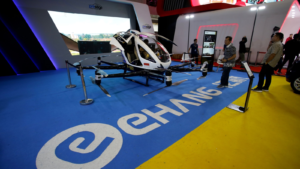
EHang Q4 Earnings Exceed Expectations
- Earnings Beat: EHang reported a Q4 GAAP EPS of $0.02, surpassing expectations by $0.12, indicating a significant improvement in profitability and reflecting strong performance in the eVTOL market.
- Significant Revenue Growth: The company achieved Q4 revenue of $34.9 million, a 48.4% year-over-year increase, exceeding market expectations by $6.86 million, highlighting EHang's robust growth in market demand and product delivery, thereby enhancing its competitive position.
- Record Deliveries: EHang delivered a record-high of 100 eVTOL aircraft in Q4, including 95 units of the EH216 series and 5 units of the VT35, a notable increase from 78 units in the same quarter last year, demonstrating success in product delivery and market acceptance.
- Quarter-over-Quarter Growth: Compared to $9.25 million in Q3 2025, Q4 revenue saw a remarkable 163.6% quarter-over-quarter increase, showcasing the company's rapid growth potential in the short term and further solidifying its leadership in the electric aviation sector.
Intensifying Competition in eVTOL Market
- Market Competition Landscape: The eVTOL market is highly competitive, with Joby Aviation and Archer Aviation emerging as strong contenders for FAA certification, drawing significant attention while other companies like Vertical Aerospace and Embraer's Eve Air Mobility are also actively developing their business models.
- Business Model Differences: Joby and Wisk are adopting a Transportation-as-a-Service (TaaS) model focused on in-house development of core technologies, while Vertical and Archer rely on traditional equipment manufacturers (OEM), potentially giving the latter an edge in the certification process.
- Financial Impact Analysis: Archer is expected to generate earnings and cash flow sooner due to upfront revenue from eVTOL sales, whereas Joby must rely on partnerships with Uber and Delta to establish its transportation service, facing higher upfront investment risks.
- Technological Collaboration and Future Development: Joby is collaborating with Nvidia to develop autonomous flight capabilities and has acquired Xwing's autonomy division to enhance its competitiveness in the future eVTOL industry, demonstrating a forward-looking strategy in market positioning.
Joby and Wisk Compete in the eVTOL Market
- Market Competition: Joby and Wisk face unique risks and opportunities in the electric vertical takeoff and landing (eVTOL) market, with Joby focusing on a transportation-as-a-service (TaaS) model while Wisk develops autonomous flight technology, potentially impacting their market shares.
- Certification Process Comparison: Although Joby is slightly ahead of Archer in the FAA certification race, its need to establish a comprehensive transportation service may slow its revenue growth compared to Archer, which relies on OEM sales, thus affecting its short-term financial performance.
- Technological Collaboration and Investment: Joby's partnership with Nvidia aims to develop autonomous capabilities, and its acquisition of Xwing's autonomy division indicates a desire to remain relevant in the future eVTOL industry, despite requiring higher upfront investments.
- Long-term Market Outlook: Joby's first-mover advantage may allow it to gain commercial acceptance in the TaaS market, but Wisk's autonomous eVTOL service could enter the market at a lower cost in the coming years, posing a threat to Joby and prompting it to accelerate technological innovation and market positioning.
Rapid Growth in Drone-as-a-Service Industry
- Market Expansion: The global Drone-as-a-Service market is currently valued at approximately $12-13 billion and is expected to grow to $34 billion by 2032, indicating a steady growth trend that encourages active companies to enhance operations and capture market share.
- Wide Technology Applications: Drones are increasingly utilized across various industries such as agriculture, construction, energy, and logistics, aiding in crop monitoring, infrastructure inspections, and delivery services, which further drives rapid market demand growth.
- Strengthened Acquisition Strategy: ZenaTech has completed its 21st acquisition by acquiring Andy Paris & Associates, enhancing its market presence in the Pacific Northwest and boosting capabilities in drone-enabled inspections and surveys, facilitating the company's expansion in the region.
- Innovative Service Model: ZenaTech's Drone-as-a-Service platform offers subscription-based rapid drone services to business and government clients, reducing ownership costs while enhancing service efficiency and data analytics capabilities through AI integration.
Rapid Growth in Drone-as-a-Service Industry
- Market Expansion: The global Drone-as-a-Service (DaaS) market is currently valued at approximately $12-13 billion and is projected to grow to $34 billion by 2032, indicating a steady growth trend that encourages active companies to enhance operations and capture market share.
- Wide Technology Applications: Drones are proving essential across various industries such as agriculture, construction, energy, and logistics, aiding in crop monitoring, infrastructure inspections, and supporting delivery services, which significantly drives rapid market demand.
- ZenaTech Acquisition: ZenaTech has completed its 21st acquisition by purchasing Andy Paris & Associates, a land surveying firm in Oregon, which strengthens its market presence in the Pacific Northwest and enhances its capabilities in drone-enabled inspections and surveys, facilitating business expansion.
- Service Platform Innovation: ZenaTech's DaaS platform establishes a scalable AI drone automation system that offers subscription-based rapid services, reducing capital costs and operational burdens for clients, thereby driving the digital transformation of the industry.
Surge in Demand for Drone Service Platforms in Defense Operations
- Market Demand Surge: The global drone services market is projected to reach approximately $29–30 billion by 2025, with analysts expecting significant growth to over $100 billion by 2030, indicating substantial potential for drone services in defense operations.
- Shift to Service Model: Military organizations are increasingly adopting the Drone-as-a-Service (DaaS) model, collaborating with specialized providers to rapidly deploy drone capabilities for surveillance, reconnaissance, and tactical support, thereby reducing procurement cycles and maintenance costs.
- Patent Application Progress: ZenaTech has filed a provisional patent for its maritime defense system, combining the ZenaDrone 2000 interceptor drone and IQ Glider marine launch station, aimed at countering drone swarm threats at a fraction of the cost of traditional missile systems, marking innovation in drone defense technology.
- Technology Development Updates: The ZenaDrone 2000 and IQ Glider are currently in active development, with prototype testing expected by year-end, which will establish a foundation for the company's long-term strategy in the drone defense market and enhance operational capabilities in complex environments.
EHang Q4 Earnings Exceed Expectations
- Earnings Beat: EHang reported a Q4 GAAP EPS of $0.02, surpassing expectations by $0.12, indicating a significant improvement in profitability and reflecting strong performance in the eVTOL market.
- Significant Revenue Growth: The company achieved Q4 revenue of $34.9 million, a 48.4% year-over-year increase, exceeding market expectations by $6.86 million, highlighting EHang's robust growth in market demand and product delivery, thereby enhancing its competitive position.
- Record Deliveries: EHang delivered a record-high of 100 eVTOL aircraft in Q4, including 95 units of the EH216 series and 5 units of the VT35, a notable increase from 78 units in the same quarter last year, demonstrating success in product delivery and market acceptance.
- Quarter-over-Quarter Growth: Compared to $9.25 million in Q3 2025, Q4 revenue saw a remarkable 163.6% quarter-over-quarter increase, showcasing the company's rapid growth potential in the short term and further solidifying its leadership in the electric aviation sector.