Comparison of VGT and FTEC ETFs for Investors
Written by Emily J. Thompson, Senior Investment Analyst
Updated: 58 minutes ago
0mins

Should l Buy NVDA?
Source: Fool
- Expense Ratio Comparison: FTEC's expense ratio stands at 0.08%, slightly lower than VGT's 0.09%, making FTEC more appealing for long-term holders, potentially attracting more investors looking to minimize costs.
- Yield Differences: As of May 2026, FTEC's one-year return is 56.3%, marginally higher than VGT's 55.9%, indicating FTEC's better performance over the past year, which may influence investor decisions.
- Portfolio Structure Analysis: VGT holds 317 positions with Nvidia at 18.5% and Apple at 15.8%, while FTEC has 286 positions with Nvidia at 18.8% and Apple at 14.3%, showcasing similarities in major tech stocks that bolster investor confidence in both ETFs.
- Historical Performance Comparison: Over the past five years, FTEC has turned a $1,000 investment into $2,456, compared to VGT's $2,432, and while both performances are close, FTEC's slight edge may attract investors seeking higher returns.
Trade with 70% Backtested Accuracy
Stop guessing "Should I Buy NVDA?" and start using high-conviction signals backed by rigorous historical data.
Sign up today to access powerful investing tools and make smarter, data-driven decisions.
Analyst Views on NVDA
Wall Street analysts forecast NVDA stock price to rise
41 Analyst Rating
39 Buy
1 Hold
1 Sell
Strong Buy
Current: 211.500

Low
200.00
Averages
264.97
High
352.00
Current: 211.500
Low
200.00
Averages
264.97
High
352.00
About NVDA
NVIDIA Corporation is an artificial intelligence (AI) infrastructure company. The Company is engaged in accelerated computing to help solve the challenging computational problems. Its segments include Compute & Networking and Graphics. The Compute & Networking segment includes its Data Center accelerated computing and networking platforms and AI solutions and software, and automotive platforms and autonomous and electric vehicle solutions, including software. The Graphics segment includes GeForce GPUs for gaming and personal computers (PCs), and Quadro/NVIDIA RTX GPUs for enterprise workstation graphics. Its technology stack includes the foundational NVIDIA CUDA development platform that runs on all NVIDIA GPUs, as well as hundreds of domain-specific software libraries, frameworks, algorithms, software development kits (SDKs), and application programming interfaces (APIs). Its platforms address four markets, which include Data Center, Gaming, Professional Visualization, and Automotive.
About the author

Emily J. Thompson
Emily J. Thompson, a Chartered Financial Analyst (CFA) with 12 years in investment research, graduated with honors from the Wharton School. Specializing in industrial and technology stocks, she provides in-depth analysis for Intellectia’s earnings and market brief reports.
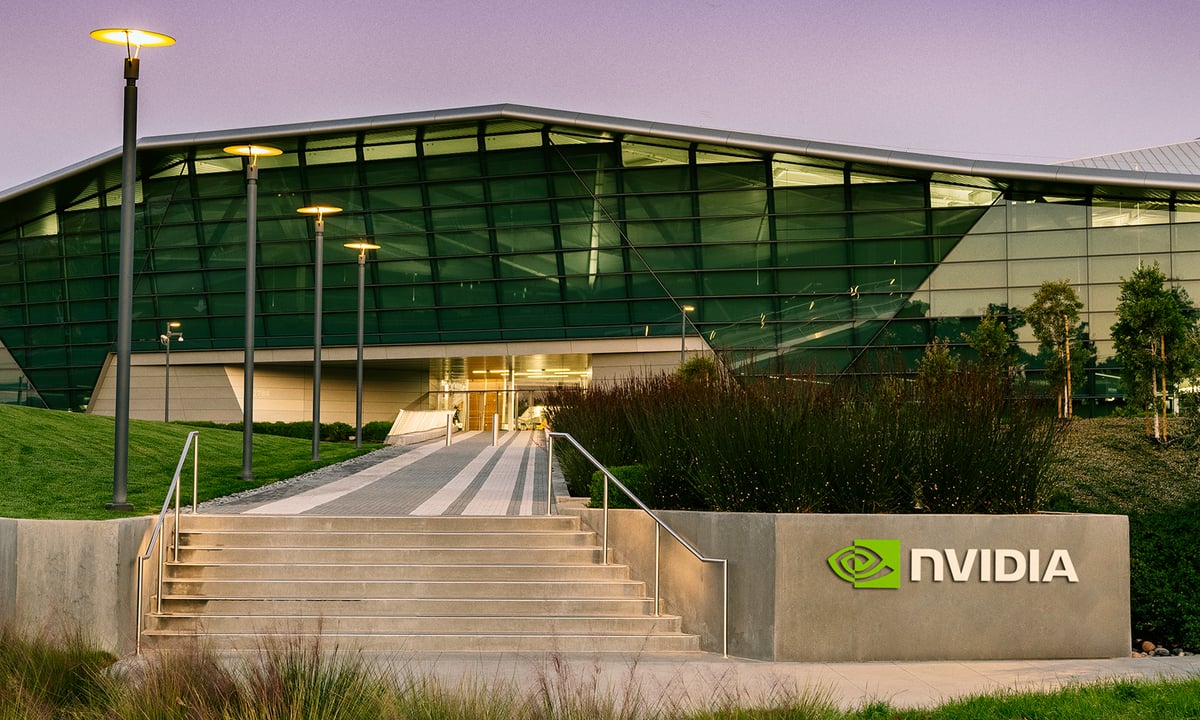
AI Drives Nvidia's Earnings Growth Amid Market Concerns

- Significant Earnings Growth: Nvidia achieved a remarkable 65% revenue growth in fiscal 2026, primarily driven by artificial intelligence, although concerns about future growth slowing persist in the market.
- Market Share Risks: While Nvidia maintains its leadership in the AI chip market, other semiconductor companies are actively developing their own AI chips, which could impact its market share, although this is unlikely to threaten its leadership position in the short term.
- Valuation Pressure: With a market cap of approximately $4.8 trillion, Nvidia's strong revenue growth is tempered by a P/E ratio of 40, and if the stock were to decline by 25% over the next 12 months, its P/E could drop to 18, potentially entering value stock territory.
- Investor Strategy: Despite the potential for AI growth to slow, investors are advised to hold Nvidia shares, as current performance remains robust and valuations may adjust downward in the future, thereby limiting potential downside risks.
See More

SoftBank Plans Local AI Server Development
- Local AI Server Development: SoftBank plans to start designing and assembling local AI servers by the end of the decade to meet the growing demand for sovereign AI services, which is expected to significantly enhance its competitive edge in the AI market.
- Partnership Formation: SoftBank has initiated discussions with Nvidia and Foxconn to leverage Nvidia's GPU certification program and Foxconn's manufacturing capabilities, thereby strengthening its technological prowess and market position in high-performance server development.
- Manufacturing System Establishment: SoftBank aims to build a production base at a former Sharp plant, transitioning from assembling externally sourced components to eventually controlling the entire server production process, which will help improve production efficiency and reduce costs.
- AI Infrastructure Integration: The new servers will not only be used in SoftBank's data centers but will also support its AI-RAN integrated infrastructure, designed to handle communication and AI processing simultaneously, further advancing its strategic positioning in the AI sector.
See More
AI Surge Drives Soaring Demand for CPUs

- CPU Market Revival: As AI shifts from chatbots to agents, the data center CPU market is projected to grow from $27 billion in 2025 to $60 billion by 2030, indicating strong growth potential and new opportunities for companies like AMD and Intel.
- Memory Market Boom: Micron's market capitalization surpassed $800 billion for the first time, with its stock price soaring over 750% in the past year, reflecting a global memory shortage that has driven prices up and solidified its leadership in the semiconductor market.
- Intel's Resurgence: After years of market decline, Intel is experiencing a revival due to significant U.S. government investment, with its stock achieving record performance in April and rising 33% in early May, showcasing a strong comeback in the CPU market.
- Optical Technology Partnership: Corning signed a $3.2 billion deal with Nvidia focused on developing optical technologies, marking a significant step in Nvidia's transition to fiber-optic cables, while also contributing to Corning's sustained stock price increase over recent months.
See More
Comparison of VGT and FTEC ETFs for Investors

- Expense Ratio Comparison: FTEC's expense ratio stands at 0.08%, slightly lower than VGT's 0.09%, making FTEC more appealing for long-term holders, potentially attracting more investors looking to minimize costs.
- Yield Differences: As of May 2026, FTEC's one-year return is 56.3%, marginally higher than VGT's 55.9%, indicating FTEC's better performance over the past year, which may influence investor decisions.
- Portfolio Structure Analysis: VGT holds 317 positions with Nvidia at 18.5% and Apple at 15.8%, while FTEC has 286 positions with Nvidia at 18.8% and Apple at 14.3%, showcasing similarities in major tech stocks that bolster investor confidence in both ETFs.
- Historical Performance Comparison: Over the past five years, FTEC has turned a $1,000 investment into $2,456, compared to VGT's $2,432, and while both performances are close, FTEC's slight edge may attract investors seeking higher returns.
See More

Comparison of Fidelity and Vanguard Technology ETFs
- Expense Ratio Advantage: The Fidelity MSCI Information Technology Index ETF has an expense ratio of 0.08%, slightly lower than Vanguard's 0.09%, providing a marginal cost advantage for long-term holders, thereby enhancing net returns on investments.
- Dividend Yield Comparison: Fidelity's ETF offers a trailing 12-month dividend yield of 0.35%, surpassing Vanguard's 0.34%, which provides investors with a higher cash flow return, increasing its attractiveness in the competitive ETF market.
- Similar Holdings Structure: Both funds focus almost exclusively on technology, with top holdings like Nvidia, Apple, and Microsoft being nearly identical, which presents investors with minimal differences, complicating their decision-making process.
- Historical Performance Analysis: Over the past five years, Fidelity's ETF has turned a $1,000 investment into $2,456, slightly outperforming Vanguard's $2,432, and while past performance is not indicative of future results, this advantage may influence investor choices.
See More

Nebius Group Stock Hits All-Time High Amid AI Demand Surge

- Accelerating AI Demand: As demand for artificial intelligence computing accelerates, investors are flocking to companies like Nebius Group, a cloud computing infrastructure provider, which saw its stock hit an all-time high this week with a 16% increase.
- Partnership with Nvidia: Nebius deepened its partnership with Nvidia, which invested $2 billion in March to support Nebius's cloud infrastructure, fulfilling Nvidia's need for high-performance computing while enabling Nebius to advance across the full AI technology stack.
- Positive Market Reaction: Nvidia's investment and collaboration have driven the entire cloud computing sector higher, with Nebius's stock continuing to rise under Nvidia's support, reflecting strong market confidence despite a slight pullback from peak levels.
- Profitability Growth Challenge: While Nebius's stock approaches historical highs, convincing investors of its future profitability remains a challenge, especially with the upcoming earnings report on May 13, which will be critical for assessing its growth potential.
See More
AI Drives Nvidia's Earnings Growth Amid Market Concerns
- Significant Earnings Growth: Nvidia achieved a remarkable 65% revenue growth in fiscal 2026, primarily driven by artificial intelligence, although concerns about future growth slowing persist in the market.
- Market Share Risks: While Nvidia maintains its leadership in the AI chip market, other semiconductor companies are actively developing their own AI chips, which could impact its market share, although this is unlikely to threaten its leadership position in the short term.
- Valuation Pressure: With a market cap of approximately $4.8 trillion, Nvidia's strong revenue growth is tempered by a P/E ratio of 40, and if the stock were to decline by 25% over the next 12 months, its P/E could drop to 18, potentially entering value stock territory.
- Investor Strategy: Despite the potential for AI growth to slow, investors are advised to hold Nvidia shares, as current performance remains robust and valuations may adjust downward in the future, thereby limiting potential downside risks.
See More
SoftBank Plans Local AI Server Development
- Local AI Server Development: SoftBank plans to start designing and assembling local AI servers by the end of the decade to meet the growing demand for sovereign AI services, which is expected to significantly enhance its competitive edge in the AI market.
- Partnership Formation: SoftBank has initiated discussions with Nvidia and Foxconn to leverage Nvidia's GPU certification program and Foxconn's manufacturing capabilities, thereby strengthening its technological prowess and market position in high-performance server development.
- Manufacturing System Establishment: SoftBank aims to build a production base at a former Sharp plant, transitioning from assembling externally sourced components to eventually controlling the entire server production process, which will help improve production efficiency and reduce costs.
- AI Infrastructure Integration: The new servers will not only be used in SoftBank's data centers but will also support its AI-RAN integrated infrastructure, designed to handle communication and AI processing simultaneously, further advancing its strategic positioning in the AI sector.
See More
AI Surge Drives Soaring Demand for CPUs
- CPU Market Revival: As AI shifts from chatbots to agents, the data center CPU market is projected to grow from $27 billion in 2025 to $60 billion by 2030, indicating strong growth potential and new opportunities for companies like AMD and Intel.
- Memory Market Boom: Micron's market capitalization surpassed $800 billion for the first time, with its stock price soaring over 750% in the past year, reflecting a global memory shortage that has driven prices up and solidified its leadership in the semiconductor market.
- Intel's Resurgence: After years of market decline, Intel is experiencing a revival due to significant U.S. government investment, with its stock achieving record performance in April and rising 33% in early May, showcasing a strong comeback in the CPU market.
- Optical Technology Partnership: Corning signed a $3.2 billion deal with Nvidia focused on developing optical technologies, marking a significant step in Nvidia's transition to fiber-optic cables, while also contributing to Corning's sustained stock price increase over recent months.
See More
Comparison of VGT and FTEC ETFs for Investors
- Expense Ratio Comparison: FTEC's expense ratio stands at 0.08%, slightly lower than VGT's 0.09%, making FTEC more appealing for long-term holders, potentially attracting more investors looking to minimize costs.
- Yield Differences: As of May 2026, FTEC's one-year return is 56.3%, marginally higher than VGT's 55.9%, indicating FTEC's better performance over the past year, which may influence investor decisions.
- Portfolio Structure Analysis: VGT holds 317 positions with Nvidia at 18.5% and Apple at 15.8%, while FTEC has 286 positions with Nvidia at 18.8% and Apple at 14.3%, showcasing similarities in major tech stocks that bolster investor confidence in both ETFs.
- Historical Performance Comparison: Over the past five years, FTEC has turned a $1,000 investment into $2,456, compared to VGT's $2,432, and while both performances are close, FTEC's slight edge may attract investors seeking higher returns.
See More
Comparison of Fidelity and Vanguard Technology ETFs
- Expense Ratio Advantage: The Fidelity MSCI Information Technology Index ETF has an expense ratio of 0.08%, slightly lower than Vanguard's 0.09%, providing a marginal cost advantage for long-term holders, thereby enhancing net returns on investments.
- Dividend Yield Comparison: Fidelity's ETF offers a trailing 12-month dividend yield of 0.35%, surpassing Vanguard's 0.34%, which provides investors with a higher cash flow return, increasing its attractiveness in the competitive ETF market.
- Similar Holdings Structure: Both funds focus almost exclusively on technology, with top holdings like Nvidia, Apple, and Microsoft being nearly identical, which presents investors with minimal differences, complicating their decision-making process.
- Historical Performance Analysis: Over the past five years, Fidelity's ETF has turned a $1,000 investment into $2,456, slightly outperforming Vanguard's $2,432, and while past performance is not indicative of future results, this advantage may influence investor choices.
See More
Nebius Group Stock Hits All-Time High Amid AI Demand Surge
- Accelerating AI Demand: As demand for artificial intelligence computing accelerates, investors are flocking to companies like Nebius Group, a cloud computing infrastructure provider, which saw its stock hit an all-time high this week with a 16% increase.
- Partnership with Nvidia: Nebius deepened its partnership with Nvidia, which invested $2 billion in March to support Nebius's cloud infrastructure, fulfilling Nvidia's need for high-performance computing while enabling Nebius to advance across the full AI technology stack.
- Positive Market Reaction: Nvidia's investment and collaboration have driven the entire cloud computing sector higher, with Nebius's stock continuing to rise under Nvidia's support, reflecting strong market confidence despite a slight pullback from peak levels.
- Profitability Growth Challenge: While Nebius's stock approaches historical highs, convincing investors of its future profitability remains a challenge, especially with the upcoming earnings report on May 13, which will be critical for assessing its growth potential.
See More