Coinbase and Crypto ISAC Expand Security Collaboration
Written by Emily J. Thompson, Senior Investment Analyst
Updated: Jan 28 2026
0mins

Should l Buy COIN?
Source: Benzinga
- Security Collaboration Expansion: Coinbase and Crypto ISAC are expanding their automated threat intelligence sharing initiative to accelerate the distribution of high-confidence threat intelligence across the crypto ecosystem, thereby enhancing overall industry security.
- Intelligent Sharing Mechanism: Coinbase will automatically share attack indicators and techniques derived from internal monitoring, allowing Crypto ISAC members to identify and respond to threats more quickly, significantly improving response efficiency.
- Compliance Assurance: Crypto ISAC's threat intelligence platform is FedRAMP-ready, SOC 2 Type 2, and ISO 27001 certified, supporting automated sharing formats including STIX/TAXII and custom APIs, ensuring information security and compliance.
- Need for Collective Defense: As crypto exchanges become increasingly interconnected with traditional finance, Coinbase's Chief Information Security Officer Jeff Lunglhofer emphasizes the growing importance of collective defense to respond swiftly to complex cyber threats and protect customers and critical infrastructure.
Trade with 70% Backtested Accuracy
Stop guessing "Should I Buy COIN?" and start using high-conviction signals backed by rigorous historical data.
Sign up today to access powerful investing tools and make smarter, data-driven decisions.
Analyst Views on COIN
Wall Street analysts forecast COIN stock price to rise
25 Analyst Rating
17 Buy
7 Hold
1 Sell
Moderate Buy
Current: 195.900

Low
230.00
Averages
361.63
High
440.00
Current: 195.900
Low
230.00
Averages
361.63
High
440.00
About COIN
Coinbase Global, Inc. is a holding company of Coinbase, Inc. and other subsidiaries. The Company provides a platform that serves as a compliant on-ramp to the onchain economy and enables users to engage in a variety of activities with their crypto assets in both proprietary and third-party product experiences enabled by access to decentralized applications. It offers consumers their primary financial account for the onchain economy; institutions a full-service prime brokerage platform with access to deep pools of liquidity across the crypto marketplace, and developers a suite of products granting access to build onchain. The Company offers products and services to various customer groups: consumers, businesses, institutions, and developers. Its transaction products consist of consumer trading, prime trading, markets, base protocol and Coinbase wallet. The Company also provides market infrastructure in the form of exchanges for customers to trade spots and derivatives.
About the author

Emily J. Thompson
Emily J. Thompson, a Chartered Financial Analyst (CFA) with 12 years in investment research, graduated with honors from the Wharton School. Specializing in industrial and technology stocks, she provides in-depth analysis for Intellectia’s earnings and market brief reports.

Coinbase to Release Q1 2026 Financial Results on May 7

- Earnings Release Schedule: Coinbase announced it will release its Q1 2026 financial results on May 7, 2026, after market close, reflecting the company's commitment to transparency and investor confidence.
- Live Webcast Meeting: The company will hold a webcast at 2:30 PM PT on the same day to discuss its financial results, providing real-time interaction opportunities that enhance communication with investors and improve information transparency.
- Disclosure Channels: Coinbase employs various channels, including its Investor Relations website, blog, press releases, and social media, to ensure compliance with regulatory requirements and timely disclosure of material information, thereby strengthening corporate governance.
- Mission and Vision: Coinbase aims to enhance economic freedom by providing a trusted platform for over 1 billion people to engage in economic activities, showcasing its leadership and social responsibility in the cryptocurrency space.
See More
Schwab Launches Crypto Trading Service for Clients

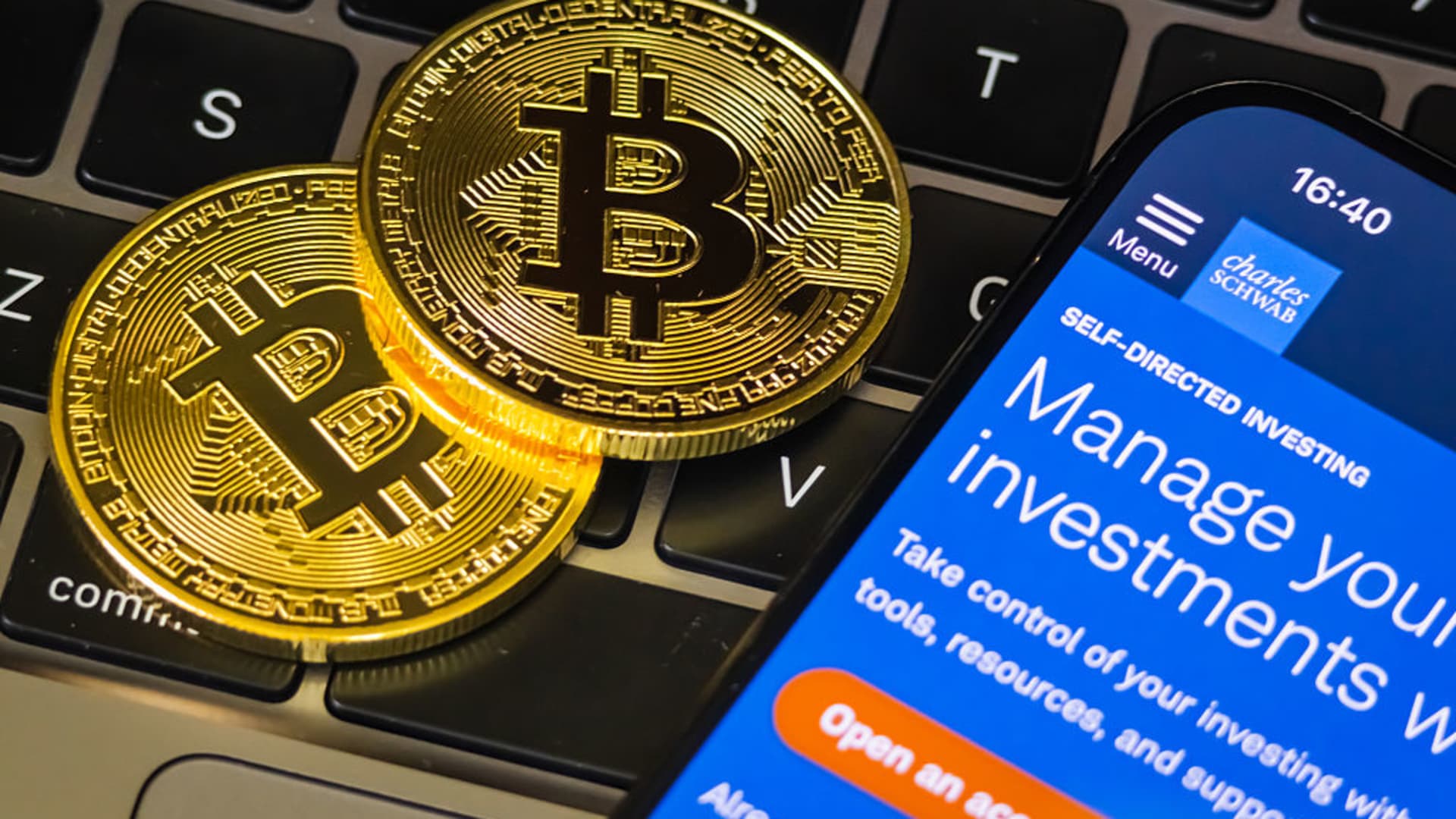
- Service Launch: Schwab has announced the rollout of a new division called Schwab Crypto, enabling clients to buy Bitcoin and Ether directly, which is expected to launch in the coming weeks to meet strong client demand for crypto investments.
- Increased Market Competition: This move places Schwab in direct competition with rivals like Robinhood, which primarily attracts a younger clientele, as Schwab aims to draw in more customers and enhance its market share through crypto trading offerings.
- Fee Structure: Schwab will charge a 0.75% fee on each trade, which may impact its appeal among younger investors compared to Robinhood's commission-free trading model, potentially affecting Schwab's competitive positioning.
- Partnership for Security: Schwab is partnering with Paxos for custody services, ensuring that crypto assets are held in a separate Schwab account distinct from brokerage accounts, which not only enhances security but also builds client trust in Schwab's crypto services.
See More
Comparison of Revenue Performance: Coinbase vs PayPal

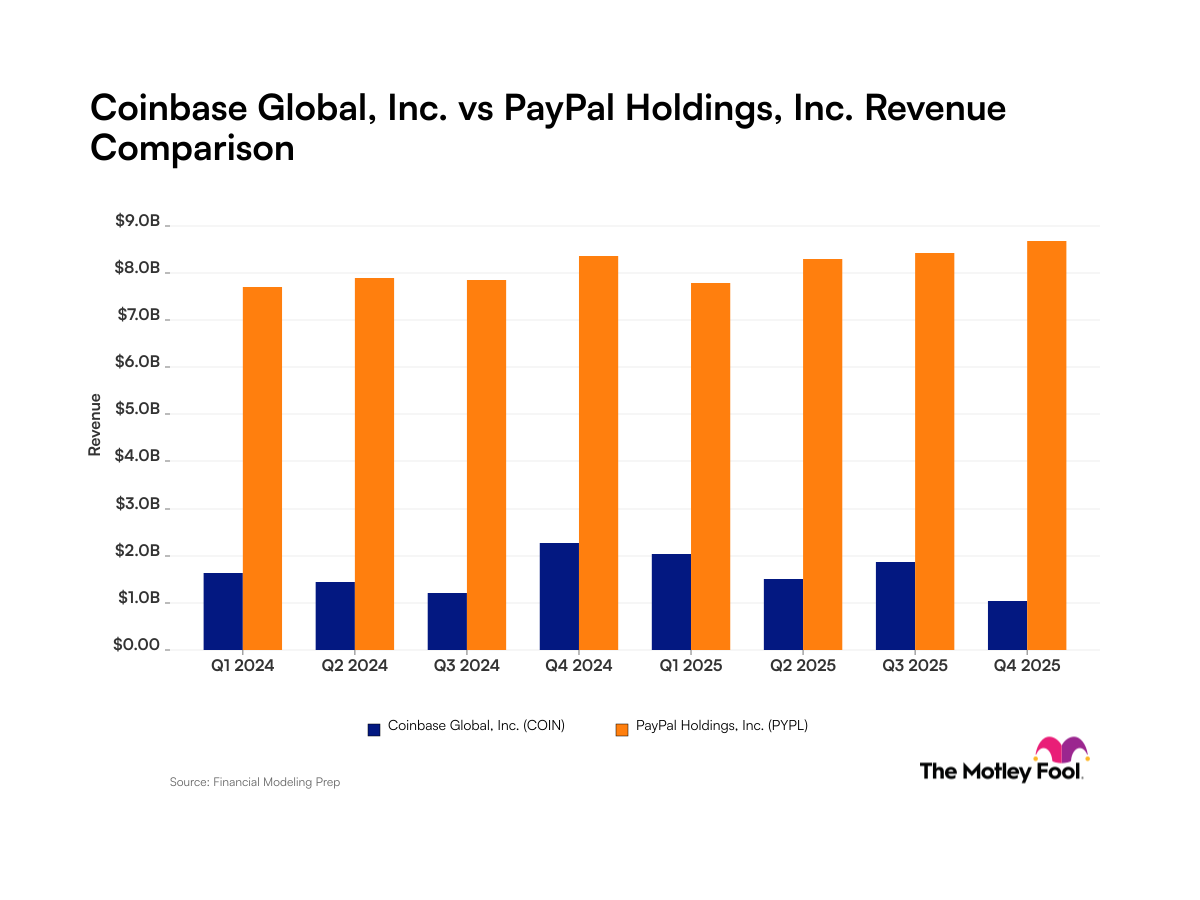
- Coinbase Revenue Volatility: Coinbase reported $1.6 billion in revenue for Q1 2024, with a rebound to $1.8 billion in 2025, yet its net income margin of -37% highlights its heavy reliance on trading activity, revealing vulnerabilities during market fluctuations.
- PayPal Steady Growth: PayPal's revenue reached $7.7 billion in Q1 2024, maintaining a net income margin of approximately 17% despite CEO transitions and weaker forward guidance, indicating relative stability and profitability in the digital payments sector.
- Market Competition Pressure: While Coinbase's stock has risen 12% since 2023, PayPal's has declined by 19%, suggesting that PayPal faces challenges in achieving significant growth amidst fierce competition in the digital payments market, potentially impacting its future market position.
- Future Growth Potential: Coinbase aims to expand into other asset classes like stocks and commodities, and anticipates the passage of the CLARITY Act, which would provide greater regulatory certainty for cryptocurrencies, potentially driving institutional demand and enhancing future revenue growth.
See More

Analysis of Revenue Comparison Between Coinbase and PayPal
- Revenue Volatility Comparison: Coinbase has shown significant revenue fluctuations over the past eight quarters, while PayPal maintains a more stable revenue base, indicating Coinbase's high reliance on trading activity, which may threaten its future profitability.
- Profitability Discrepancy: As of December 31, 2025, Coinbase reported a net income margin of approximately -37%, contrasting with PayPal's 17% net income margin, highlighting PayPal's profitability advantage, although its lack of growth may face competitive pressures.
- Market Performance Analysis: Since 2023, Coinbase's stock has risen by 12%, while PayPal has declined by 19%, indicating that Coinbase has performed relatively better in the current market environment, but its future growth potential remains to be seen.
- Strategic Development Opportunities: Coinbase is expanding its European futures offerings and has received regulatory approval to operate as a national trust company, which could provide new growth momentum, while PayPal needs to find ways to accelerate growth under its new CEO's leadership.
See More

Warning on Cryptocurrency Risks
- Centralization Risks: Despite being marketed as 'decentralized', cryptocurrencies rely on centralized platforms like exchanges and custodians, exposing investors to potential asset loss risks, especially if these platforms fail.
- Historical Lessons: Bitcoin has experienced 70%-80% peak-to-trough declines during the crypto crashes of 2017-2018 and 2021-2022, highlighting that market volatility is a significant risk investors must contend with.
- Platform Collapse Cases: The failures of platforms like FTX, BlockFi, and Celsius Network turned investors into unsecured creditors, resulting in substantial losses and underscoring the importance of choosing secure platforms.
- Safety Recommendations: To mitigate risks, investors should diversify their assets across multiple platforms, utilize hardware wallets for cryptocurrency storage, and avoid high-yield staking products that seem too good to be true.
See More

Analysis of Risks in Cryptocurrency Investment
- Volatility Risk: One of the biggest risks in cryptocurrency investment is volatility, as Bitcoin experienced a peak-to-trough decline of 70%-80% during the crashes of 2017-2018 and 2021-2022, exposing investors to significant financial loss risks.
- Counterparty Risk: Although cryptocurrencies are marketed as 'decentralized', they actually rely on centralized platforms such as exchanges and custodians, meaning that if these platforms fail, investors could lose access to their tokens even if they continue trading normally on other exchanges.
- Platform Collapse Cases: The collapse of platforms like FTX, BlockFi, and Celsius Network left investors unable to access their tokens, as these platforms diverted customer funds into other risky investments, resulting in customers becoming unsecured creditors and facing substantial financial losses.
- Risk Mitigation Strategies: To mitigate risks, investors should store their tokens in hardware wallets, diversify their assets across multiple platforms, and avoid high-yield staking products that seem too good to be true, thereby protecting their investments.
See More
Coinbase to Release Q1 2026 Financial Results on May 7
- Earnings Release Schedule: Coinbase announced it will release its Q1 2026 financial results on May 7, 2026, after market close, reflecting the company's commitment to transparency and investor confidence.
- Live Webcast Meeting: The company will hold a webcast at 2:30 PM PT on the same day to discuss its financial results, providing real-time interaction opportunities that enhance communication with investors and improve information transparency.
- Disclosure Channels: Coinbase employs various channels, including its Investor Relations website, blog, press releases, and social media, to ensure compliance with regulatory requirements and timely disclosure of material information, thereby strengthening corporate governance.
- Mission and Vision: Coinbase aims to enhance economic freedom by providing a trusted platform for over 1 billion people to engage in economic activities, showcasing its leadership and social responsibility in the cryptocurrency space.
See More
Schwab Launches Crypto Trading Service for Clients
- Service Launch: Schwab has announced the rollout of a new division called Schwab Crypto, enabling clients to buy Bitcoin and Ether directly, which is expected to launch in the coming weeks to meet strong client demand for crypto investments.
- Increased Market Competition: This move places Schwab in direct competition with rivals like Robinhood, which primarily attracts a younger clientele, as Schwab aims to draw in more customers and enhance its market share through crypto trading offerings.
- Fee Structure: Schwab will charge a 0.75% fee on each trade, which may impact its appeal among younger investors compared to Robinhood's commission-free trading model, potentially affecting Schwab's competitive positioning.
- Partnership for Security: Schwab is partnering with Paxos for custody services, ensuring that crypto assets are held in a separate Schwab account distinct from brokerage accounts, which not only enhances security but also builds client trust in Schwab's crypto services.
See More
Comparison of Revenue Performance: Coinbase vs PayPal
- Coinbase Revenue Volatility: Coinbase reported $1.6 billion in revenue for Q1 2024, with a rebound to $1.8 billion in 2025, yet its net income margin of -37% highlights its heavy reliance on trading activity, revealing vulnerabilities during market fluctuations.
- PayPal Steady Growth: PayPal's revenue reached $7.7 billion in Q1 2024, maintaining a net income margin of approximately 17% despite CEO transitions and weaker forward guidance, indicating relative stability and profitability in the digital payments sector.
- Market Competition Pressure: While Coinbase's stock has risen 12% since 2023, PayPal's has declined by 19%, suggesting that PayPal faces challenges in achieving significant growth amidst fierce competition in the digital payments market, potentially impacting its future market position.
- Future Growth Potential: Coinbase aims to expand into other asset classes like stocks and commodities, and anticipates the passage of the CLARITY Act, which would provide greater regulatory certainty for cryptocurrencies, potentially driving institutional demand and enhancing future revenue growth.
See More
Analysis of Revenue Comparison Between Coinbase and PayPal
- Revenue Volatility Comparison: Coinbase has shown significant revenue fluctuations over the past eight quarters, while PayPal maintains a more stable revenue base, indicating Coinbase's high reliance on trading activity, which may threaten its future profitability.
- Profitability Discrepancy: As of December 31, 2025, Coinbase reported a net income margin of approximately -37%, contrasting with PayPal's 17% net income margin, highlighting PayPal's profitability advantage, although its lack of growth may face competitive pressures.
- Market Performance Analysis: Since 2023, Coinbase's stock has risen by 12%, while PayPal has declined by 19%, indicating that Coinbase has performed relatively better in the current market environment, but its future growth potential remains to be seen.
- Strategic Development Opportunities: Coinbase is expanding its European futures offerings and has received regulatory approval to operate as a national trust company, which could provide new growth momentum, while PayPal needs to find ways to accelerate growth under its new CEO's leadership.
See More
Warning on Cryptocurrency Risks
- Centralization Risks: Despite being marketed as 'decentralized', cryptocurrencies rely on centralized platforms like exchanges and custodians, exposing investors to potential asset loss risks, especially if these platforms fail.
- Historical Lessons: Bitcoin has experienced 70%-80% peak-to-trough declines during the crypto crashes of 2017-2018 and 2021-2022, highlighting that market volatility is a significant risk investors must contend with.
- Platform Collapse Cases: The failures of platforms like FTX, BlockFi, and Celsius Network turned investors into unsecured creditors, resulting in substantial losses and underscoring the importance of choosing secure platforms.
- Safety Recommendations: To mitigate risks, investors should diversify their assets across multiple platforms, utilize hardware wallets for cryptocurrency storage, and avoid high-yield staking products that seem too good to be true.
See More
Analysis of Risks in Cryptocurrency Investment
- Volatility Risk: One of the biggest risks in cryptocurrency investment is volatility, as Bitcoin experienced a peak-to-trough decline of 70%-80% during the crashes of 2017-2018 and 2021-2022, exposing investors to significant financial loss risks.
- Counterparty Risk: Although cryptocurrencies are marketed as 'decentralized', they actually rely on centralized platforms such as exchanges and custodians, meaning that if these platforms fail, investors could lose access to their tokens even if they continue trading normally on other exchanges.
- Platform Collapse Cases: The collapse of platforms like FTX, BlockFi, and Celsius Network left investors unable to access their tokens, as these platforms diverted customer funds into other risky investments, resulting in customers becoming unsecured creditors and facing substantial financial losses.
- Risk Mitigation Strategies: To mitigate risks, investors should store their tokens in hardware wallets, diversify their assets across multiple platforms, and avoid high-yield staking products that seem too good to be true, thereby protecting their investments.
See More