Citi raises Nvidia price target ahead of AI giant's earnings announcement
Citi's Outlook on Nvidia: Citi maintains a buy rating for Nvidia, raising its target price to $220 per share, indicating a potential 17% upside ahead of the third-quarter report on November 19.
Sales Expectations: Analyst Atif Malik anticipates Nvidia's sales to reach $56.8 billion, surpassing Wall Street's forecast of $54.6 billion, driven by strong AI investments.
Market Forecast Revision: Malik has revised his forecast for the 2028 data center semiconductor market, now estimating it to be $654 billion, which is 16% higher than his previous expectation.
Earnings Predictions: Heading into earnings, Malik expects Nvidia to exceed expectations with projected sales of $57 billion for the October quarter and a guidance of $62 billion for January, while noting the stock's attractive P/E ratio compared to AI peers.
Trade with 70% Backtested Accuracy
Analyst Views on NVDA

About NVDA
About the author


NVIDIA Reports Strong Q1 Earnings Driven by AI Demand

- Significant Revenue Growth: NVIDIA's Q1 revenues surged 85% year-over-year to $81.6 billion, exceeding market expectations of $78.4 billion, demonstrating the company's robust performance amid soaring AI demand and solidifying its market leadership.
- Strong Data Center Performance: Data Center revenues rose 92% year-over-year to $75.2 billion, primarily driven by Blackwell adoption, indicating rapid expansion of demand for NVIDIA's AI infrastructure, particularly in edge computing and enterprise deployments.
- New Market Platform Strategy: NVIDIA is restructuring its market into Data Center and Edge Computing, with further segmentation of Data Center revenues into Hyperscale and ACIE, reflecting a deeper understanding of AI applications across diverse environments and strategic adjustments that are expected to drive future growth.
- Cash Flow and Shareholder Returns: Free cash flow reached a record $48.6 billion, with NVIDIA returning approximately $20 billion to shareholders in the quarter and raising its quarterly dividend from $0.01 to $0.25, showcasing the company's strong cash generation capabilities and commitment to shareholders.
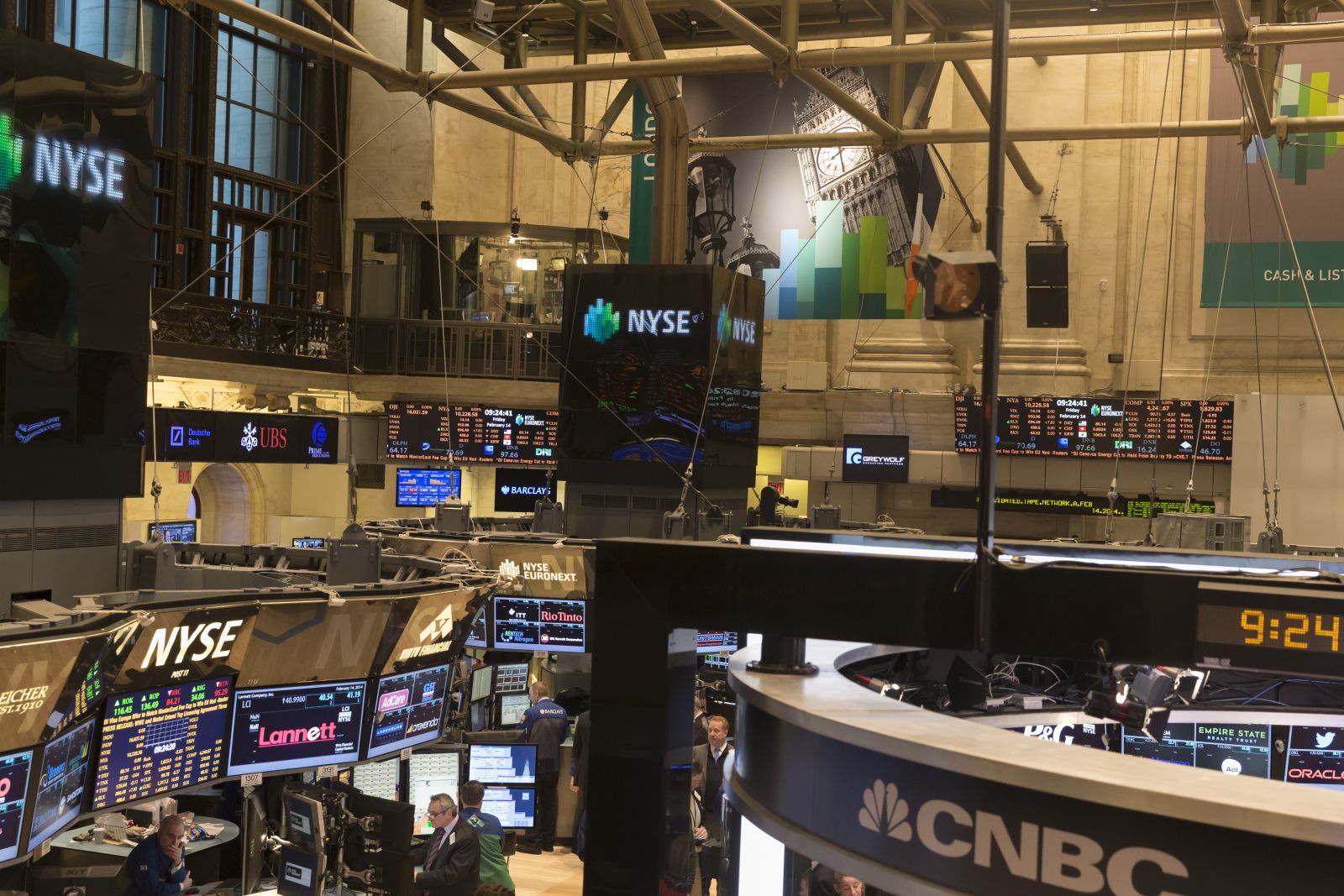
US Stock Market Pressured by Rising Oil Prices Amid Iran Tensions

- Oil Price Surge Impacts Market: The S&P 500 index fell 0.35%, the Dow Jones Industrial Average dropped 0.11%, and the Nasdaq 100 index decreased 0.51% as crude oil prices rose over 2% due to tensions between the US and Iran, indicating market concerns over potential energy supply disruptions.
- Mixed Economic Data: Initial US weekly unemployment claims fell by 3,000 to 209,000, close to expectations, while the May Philadelphia Fed business outlook survey unexpectedly dropped to -0.4, reflecting uncertainty in economic recovery that could affect investor confidence.
- Weak Performance in Tech Stocks: Nvidia's earnings beat expectations but its stock fell over 1% amid rising competition, and Intuit plummeted more than 19% due to revenue falling short of forecasts, highlighting challenges within the tech sector.
- International Market Volatility: Overseas markets showed mixed results, with the Euro Stoxx 50 down 0.02%, China's Shanghai Composite falling 2.04%, while Japan's Nikkei index rose 3.14%, reflecting global economic uncertainty and divergent investor sentiment.

CHAT ETF Outperforms Nasdaq Since Inception

- Market Growth Potential: According to Grand View Research, the generative AI market is projected to grow at a 40.8% CAGR from 2026 to 2033, indicating ample investment opportunities as more industries adopt these tools.
- Asset Management Scale: Since its launch in May 2023, the CHAT ETF has amassed $1.75 billion in assets under management and holds 43 stocks, with Nvidia comprising 7.06% of its portfolio, highlighting its significance in AI infrastructure investments.
- Investment Returns: The CHAT ETF has surged nearly 240% since inception, significantly outperforming the S&P 500's 76% and Nasdaq's 106% gains, reflecting its successful investment strategy in AI chipmakers.
- Fee Structure Comparison: CHAT's expense ratio is 0.75%, which is 0.57% higher than the passively managed Invesco QQQ ETF; nevertheless, CHAT is still viewed as a straightforward way to profit from the ongoing expansion of the AI market.

BlackRock, Thermo Fisher, and Others Declare Dividends


- BlackRock Dividend Announcement: BlackRock's Board of Directors declared a quarterly cash dividend of $5.73 per share, payable on June 23, 2026, to shareholders of record as of June 5, 2026, indicating the company's ongoing cash flow and shareholder return strategy.
- Thermo Fisher Dividend: Thermo Fisher's Board authorized a quarterly cash dividend of $0.47 per share, payable on July 15, 2026, to shareholders of record as of June 15, 2026, reflecting its robust financial performance in the science services sector.
- Franklin Resources Dividend: Franklin Resources announced a quarterly cash dividend of $0.33 per share, payable on July 10, 2026, to stockholders of record as of June 29, 2026, maintaining the same dividend as the previous quarter while representing a 3.1% increase from the same quarter last year, showcasing the company's stable profitability.
- McDonald's Dividend: McDonald's Board declared a quarterly cash dividend of $1.86 per share, payable on June 16, 2026, to shareholders of record as of June 2, 2026, demonstrating its ongoing profitability and commitment to shareholders.

Quantum Computing Stocks Surge on $2 Billion Grants Report


- Quantum Stock Surge: Shares of quantum computing companies soared following a Wall Street Journal report that the government plans to award $2 billion in grants to nine firms, with Rigetti Computing jumping over 30%, D-Wave Quantum rising 22%, and Quantum Computing increasing 13%, indicating strong market confidence in the future of quantum technology.
- Rare Earth Rebound: Rare earth stocks extended their rebound amid concerns over export restrictions from China, with USA Rare Earth rising 7% after securing $19.3 million in funding from the Department of Energy for rare earth separation development, and Critical Metals gaining 3% after signing a 15-year offtake agreement with Greenland's Tanbreez, reflecting robust demand for rare earth resources.
- Spotify's Strong Outlook: Spotify provided a strong growth forecast at its first investor day since 2022, expecting revenue to grow at a compound annual growth rate in the mid-teens and aiming for 1 billion subscribers, leading to a 14% rise in shares, showcasing optimistic market sentiment regarding its long-term growth potential.
- Walmart's Disappointing Outlook: Walmart's shares fell nearly 7% after issuing a disappointing outlook, expecting adjusted earnings per share between $2.75 and $2.85, below the $2.91 expected by the market, despite meeting first-quarter adjusted EPS expectations, which may undermine investor confidence.

Nvidia's Quarterly Report Sparks Market Skepticism


- Sustained Demand: CEO Jensen Huang stated that demand for Nvidia's products has gone parabolic, yet the muted market reaction to the quarterly report indicates investor skepticism about future growth, which could negatively impact stock performance.
- Data Center Business Segmentation: Nvidia has introduced a new reporting framework that segments its data center business into hyperscale and non-hyperscale customers, including AI clouds and industrial enterprises, suggesting that this segment could become a significant driver of future growth and alter market dynamics.
- Market Share Advantage: Huang emphasized that Nvidia holds nearly a 100% share in the AI cloud and industrial enterprise markets, particularly in inference computing, where rapid growth is expected to further solidify its market leadership and enhance long-term profitability.
- Valuation Appeal: Despite Nvidia's strong stock performance over the past year, its current price-to-earnings ratio of about 23 is significantly lower than AMD's 47, highlighting its potential as a value stock, suggesting that investors should consider increasing their positions amid the current market pessimism.
NVIDIA Reports Strong Q1 Earnings Driven by AI Demand
- Significant Revenue Growth: NVIDIA's Q1 revenues surged 85% year-over-year to $81.6 billion, exceeding market expectations of $78.4 billion, demonstrating the company's robust performance amid soaring AI demand and solidifying its market leadership.
- Strong Data Center Performance: Data Center revenues rose 92% year-over-year to $75.2 billion, primarily driven by Blackwell adoption, indicating rapid expansion of demand for NVIDIA's AI infrastructure, particularly in edge computing and enterprise deployments.
- New Market Platform Strategy: NVIDIA is restructuring its market into Data Center and Edge Computing, with further segmentation of Data Center revenues into Hyperscale and ACIE, reflecting a deeper understanding of AI applications across diverse environments and strategic adjustments that are expected to drive future growth.
- Cash Flow and Shareholder Returns: Free cash flow reached a record $48.6 billion, with NVIDIA returning approximately $20 billion to shareholders in the quarter and raising its quarterly dividend from $0.01 to $0.25, showcasing the company's strong cash generation capabilities and commitment to shareholders.
US Stock Market Pressured by Rising Oil Prices Amid Iran Tensions
- Oil Price Surge Impacts Market: The S&P 500 index fell 0.35%, the Dow Jones Industrial Average dropped 0.11%, and the Nasdaq 100 index decreased 0.51% as crude oil prices rose over 2% due to tensions between the US and Iran, indicating market concerns over potential energy supply disruptions.
- Mixed Economic Data: Initial US weekly unemployment claims fell by 3,000 to 209,000, close to expectations, while the May Philadelphia Fed business outlook survey unexpectedly dropped to -0.4, reflecting uncertainty in economic recovery that could affect investor confidence.
- Weak Performance in Tech Stocks: Nvidia's earnings beat expectations but its stock fell over 1% amid rising competition, and Intuit plummeted more than 19% due to revenue falling short of forecasts, highlighting challenges within the tech sector.
- International Market Volatility: Overseas markets showed mixed results, with the Euro Stoxx 50 down 0.02%, China's Shanghai Composite falling 2.04%, while Japan's Nikkei index rose 3.14%, reflecting global economic uncertainty and divergent investor sentiment.
CHAT ETF Outperforms Nasdaq Since Inception
- Market Growth Potential: According to Grand View Research, the generative AI market is projected to grow at a 40.8% CAGR from 2026 to 2033, indicating ample investment opportunities as more industries adopt these tools.
- Asset Management Scale: Since its launch in May 2023, the CHAT ETF has amassed $1.75 billion in assets under management and holds 43 stocks, with Nvidia comprising 7.06% of its portfolio, highlighting its significance in AI infrastructure investments.
- Investment Returns: The CHAT ETF has surged nearly 240% since inception, significantly outperforming the S&P 500's 76% and Nasdaq's 106% gains, reflecting its successful investment strategy in AI chipmakers.
- Fee Structure Comparison: CHAT's expense ratio is 0.75%, which is 0.57% higher than the passively managed Invesco QQQ ETF; nevertheless, CHAT is still viewed as a straightforward way to profit from the ongoing expansion of the AI market.
BlackRock, Thermo Fisher, and Others Declare Dividends
- BlackRock Dividend Announcement: BlackRock's Board of Directors declared a quarterly cash dividend of $5.73 per share, payable on June 23, 2026, to shareholders of record as of June 5, 2026, indicating the company's ongoing cash flow and shareholder return strategy.
- Thermo Fisher Dividend: Thermo Fisher's Board authorized a quarterly cash dividend of $0.47 per share, payable on July 15, 2026, to shareholders of record as of June 15, 2026, reflecting its robust financial performance in the science services sector.
- Franklin Resources Dividend: Franklin Resources announced a quarterly cash dividend of $0.33 per share, payable on July 10, 2026, to stockholders of record as of June 29, 2026, maintaining the same dividend as the previous quarter while representing a 3.1% increase from the same quarter last year, showcasing the company's stable profitability.
- McDonald's Dividend: McDonald's Board declared a quarterly cash dividend of $1.86 per share, payable on June 16, 2026, to shareholders of record as of June 2, 2026, demonstrating its ongoing profitability and commitment to shareholders.
Quantum Computing Stocks Surge on $2 Billion Grants Report
- Quantum Stock Surge: Shares of quantum computing companies soared following a Wall Street Journal report that the government plans to award $2 billion in grants to nine firms, with Rigetti Computing jumping over 30%, D-Wave Quantum rising 22%, and Quantum Computing increasing 13%, indicating strong market confidence in the future of quantum technology.
- Rare Earth Rebound: Rare earth stocks extended their rebound amid concerns over export restrictions from China, with USA Rare Earth rising 7% after securing $19.3 million in funding from the Department of Energy for rare earth separation development, and Critical Metals gaining 3% after signing a 15-year offtake agreement with Greenland's Tanbreez, reflecting robust demand for rare earth resources.
- Spotify's Strong Outlook: Spotify provided a strong growth forecast at its first investor day since 2022, expecting revenue to grow at a compound annual growth rate in the mid-teens and aiming for 1 billion subscribers, leading to a 14% rise in shares, showcasing optimistic market sentiment regarding its long-term growth potential.
- Walmart's Disappointing Outlook: Walmart's shares fell nearly 7% after issuing a disappointing outlook, expecting adjusted earnings per share between $2.75 and $2.85, below the $2.91 expected by the market, despite meeting first-quarter adjusted EPS expectations, which may undermine investor confidence.
Nvidia's Quarterly Report Sparks Market Skepticism
- Sustained Demand: CEO Jensen Huang stated that demand for Nvidia's products has gone parabolic, yet the muted market reaction to the quarterly report indicates investor skepticism about future growth, which could negatively impact stock performance.
- Data Center Business Segmentation: Nvidia has introduced a new reporting framework that segments its data center business into hyperscale and non-hyperscale customers, including AI clouds and industrial enterprises, suggesting that this segment could become a significant driver of future growth and alter market dynamics.
- Market Share Advantage: Huang emphasized that Nvidia holds nearly a 100% share in the AI cloud and industrial enterprise markets, particularly in inference computing, where rapid growth is expected to further solidify its market leadership and enhance long-term profitability.
- Valuation Appeal: Despite Nvidia's strong stock performance over the past year, its current price-to-earnings ratio of about 23 is significantly lower than AMD's 47, highlighting its potential as a value stock, suggesting that investors should consider increasing their positions amid the current market pessimism.