Buying Opportunities Amid Tech Stock Pullback
Written by Emily J. Thompson, Senior Investment Analyst
Updated: 1 hour ago
0mins

Source: Fool
- Nvidia's Attractive Valuation: Despite being affected by the recent tech pullback, Nvidia (NVDA) now trades at a forward P/E ratio below 16 times fiscal 2028 estimates, coupled with an impressive 85% revenue growth last quarter, making it an ideal buying opportunity for investors looking at AI infrastructure.
- Alphabet's Complete AI Ecosystem: Alphabet's stock is near two-month lows, and despite losing some AI talent, its comprehensive AI ecosystem, including the world-class Gemini model and TPU chips, ensures long-term growth potential, particularly with Google Cloud's revenue surging 63% in Q1.
- Amazon's Operational Leverage: Amazon (AMZN) has seen its stock price drop back to levels from two months ago, with a forward P/E of just 27 times, yet its e-commerce business has achieved a 43% increase in operating profit due to investments in robotics and AI, showcasing strong operational efficiency and cost savings.
- Cloud and Chip Advantages: Amazon's AWS cloud unit continues to accelerate growth, and its chip business provides a cost advantage, while partnerships with Anthropic and OpenAI suggest significant future growth potential, making the current low valuation a great opportunity for long-term investment.
Trade with 70% Backtested Accuracy
Stop guessing "Should I Buy NVDA?" and start using high-conviction signals backed by rigorous historical data.
Sign up today to access powerful investing tools and make smarter, data-driven decisions.
Analyst Views on NVDA
Wall Street analysts forecast NVDA stock price to rise
41 Analyst Rating
39 Buy
1 Hold
1 Sell
Strong Buy
Current: 195.740

Low
200.00
Averages
264.97
High
352.00
Current: 195.740
Low
200.00
Averages
264.97
High
352.00
About NVDA
NVIDIA Corporation is an artificial intelligence (AI) infrastructure company. The Company is engaged in accelerated computing to help solve the challenging computational problems. Its segments include Compute & Networking and Graphics. The Compute & Networking segment includes its Data Center accelerated computing and networking platforms and AI solutions and software, and automotive platforms and autonomous and electric vehicle solutions, including software. The Graphics segment includes GeForce GPUs for gaming and personal computers (PCs), and Quadro/NVIDIA RTX GPUs for enterprise workstation graphics. Its technology stack includes the foundational NVIDIA CUDA development platform that runs on all NVIDIA GPUs, as well as hundreds of domain-specific software libraries, frameworks, algorithms, software development kits (SDKs), and application programming interfaces (APIs). Its platforms address four markets, which include Data Center, Gaming, Professional Visualization, and Automotive.
About the author

Emily J. Thompson
Emily J. Thompson, a Chartered Financial Analyst (CFA) with 12 years in investment research, graduated with honors from the Wharton School. Specializing in industrial and technology stocks, she provides in-depth analysis for Intellectia’s earnings and market brief reports.

Nvidia's Future Growth Potential Looks Promising

- Growth Drivers Analysis: Nvidia is projected to see $650 billion in data center capital expenditures by 2026, and with the upcoming launch of the Rubin chip architecture, significant revenue and profit growth is anticipated, reflecting strong market demand and technological advantages.
- Impact of Technological Upgrade: The Rubin chip architecture offers a 10-fold reduction in AI inference costs and a 4-fold reduction in training costs, and although it costs 25% more than Blackwell, it enables AI hyperscalers to achieve substantial performance gains at the same cost, further solidifying Nvidia's market position.
- Optimistic Financial Forecast: Analysts estimate Nvidia will achieve 81% revenue growth in FY 2027 and 41% in FY 2028, indicating strong growth potential in the rapidly expanding AI market, despite the market's underestimation of future growth.
- Investment Value Assessment: Despite an obviously strong upcoming year, Nvidia's stock price has not fully reflected its future growth potential, indicating that investing in Nvidia now could be a wise choice with low opportunity costs.
See More

Nvidia's Market Share in China Drops to Zero
- Market Share Loss: Nvidia's CEO Jensen Huang revealed that due to export restrictions, the company's chip market share in China has dropped to zero, with revenue from China plummeting from nearly $20 billion last year to approximately $4.5 billion in the first fiscal quarter, indicating a continued downward trend.
- New Product Opportunities: Despite challenges, Nvidia's new Vera central processing unit (CPU) is expected to open up a $200 billion market, with nearly $20 billion in CPU revenue anticipated this year, fully compensating for last year's revenue loss in China, showcasing the company's strong potential in new markets.
- Data Center Business Growth: Nvidia's data center business nearly doubled in the first quarter, reaching $75 billion in revenue, driven by innovations in response to surging AI demand, particularly through the integration of Vera CPUs with networking and accelerated computing systems.
- Optimistic Future Outlook: Analysts expect Nvidia's full-year revenue to increase by 81% year-over-year to $391 billion, with a consensus earnings estimate of $8.96 per share; despite uncertainties in the Chinese market, the growth opportunities from Vera CPUs remain unpriced in the stock's valuation.
See More
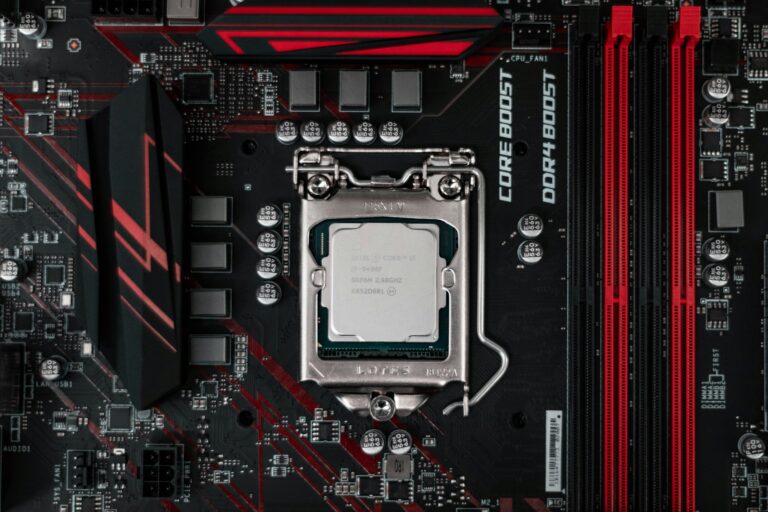
SpaceX's AI Infrastructure Expansion Benefits Nvidia and Intel

- AI Infrastructure Expansion: SpaceX is expanding its computing capacity and developing a new cloud business model, which is expected to require substantial data center buildouts by 2028, providing growth opportunities for companies like Nvidia and Intel.
- Partnerships: SpaceX's agreements with Anthropic and Google indicate a focus on monetizing AI computing resources, which will drive market demand for related technology companies.
- Nvidia's Outlook: GF Securities projects that SpaceX could deploy millions of Blackwell-equivalent GPUs over the next several years to support its cloud computing services, positioning Nvidia as a primary beneficiary of this expansion.
- Intel's Role: GF Securities highlights Intel's manufacturing capabilities as potentially crucial in future AI infrastructure projects, particularly in supplying advanced semiconductor capacity, further solidifying its market position.
See More

Significant Divergence in U.S. Equity Markets

- Market Performance Divergence: While the Dow Jones Industrial Average reaches all-time highs, the tech-heavy Nasdaq 100 (QQQ) has experienced significant volatility with 13 down days in June, indicating extreme instability in market sentiment.
- Pressure on S&P 500: The S&P 500 (SPY) logged 15 down days in June, suffering the most from the 'rotation' effect among the three major benchmarks, particularly as multi-day declines in mega-caps like Microsoft, Nvidia, and Apple disrupted its daily momentum.
- Volatility and Options Trading: The swift pullback in the Nasdaq has pushed QQQ's implied volatility (IV) rank above 91%, meaning options have been this expensive less than 10% of the time in the past 52 weeks, presenting significant trading opportunities for option sellers.
- Options Strategy Implementation: By selling the QQQ $690 put and buying the $670 put, investors can collect $5.50, but face a risk of $14.50 if QQQ closes below $670 on July 17, 2026, highlighting the high-risk nature of the current market environment.
See More

Buying Opportunities Amid Tech Stock Pullback

- Nvidia's Attractive Valuation: Despite being affected by the recent tech pullback, Nvidia (NVDA) now trades at a forward P/E ratio below 16 times fiscal 2028 estimates, coupled with an impressive 85% revenue growth last quarter, making it an ideal buying opportunity for investors looking at AI infrastructure.
- Alphabet's Complete AI Ecosystem: Alphabet's stock is near two-month lows, and despite losing some AI talent, its comprehensive AI ecosystem, including the world-class Gemini model and TPU chips, ensures long-term growth potential, particularly with Google Cloud's revenue surging 63% in Q1.
- Amazon's Operational Leverage: Amazon (AMZN) has seen its stock price drop back to levels from two months ago, with a forward P/E of just 27 times, yet its e-commerce business has achieved a 43% increase in operating profit due to investments in robotics and AI, showcasing strong operational efficiency and cost savings.
- Cloud and Chip Advantages: Amazon's AWS cloud unit continues to accelerate growth, and its chip business provides a cost advantage, while partnerships with Anthropic and OpenAI suggest significant future growth potential, making the current low valuation a great opportunity for long-term investment.
See More

Top Tech Stocks for Portfolio Building

- Alphabet's Diversified Strategy: Alphabet's integration of AI into Google Search has successfully attracted billions of users, and its cloud computing division is growing faster than all major providers in Q1, with a market cap of $4.2 trillion, showcasing its strong potential in the AI sector.
- Microsoft's Partnership Model: Microsoft's collaboration with OpenAI positions it significantly in the AI space, and despite its stock being down over 30% from all-time highs, the neutrality of its Azure cloud platform and the integration of Copilot suggest strong growth potential ahead, with a market cap of $2.6 trillion.
- Nvidia's Market Outlook: While market sentiment is cautious about Nvidia's short-term prospects, the ongoing demand for computing units in data centers and its trading at a mere 22.3 times forward earnings indicate its long-term investment value as a core player in the AI industry, with a market cap in the billions.
- Long-Term Investment Opportunities in AI: With continuous advancements in AI technology, Alphabet, Microsoft, and Nvidia all demonstrate strong competitive positions, allowing investors to build a robust tech stock portfolio to capitalize on growth opportunities over the next decade.
See More
Nvidia's Future Growth Potential Looks Promising
- Growth Drivers Analysis: Nvidia is projected to see $650 billion in data center capital expenditures by 2026, and with the upcoming launch of the Rubin chip architecture, significant revenue and profit growth is anticipated, reflecting strong market demand and technological advantages.
- Impact of Technological Upgrade: The Rubin chip architecture offers a 10-fold reduction in AI inference costs and a 4-fold reduction in training costs, and although it costs 25% more than Blackwell, it enables AI hyperscalers to achieve substantial performance gains at the same cost, further solidifying Nvidia's market position.
- Optimistic Financial Forecast: Analysts estimate Nvidia will achieve 81% revenue growth in FY 2027 and 41% in FY 2028, indicating strong growth potential in the rapidly expanding AI market, despite the market's underestimation of future growth.
- Investment Value Assessment: Despite an obviously strong upcoming year, Nvidia's stock price has not fully reflected its future growth potential, indicating that investing in Nvidia now could be a wise choice with low opportunity costs.
See More
Nvidia's Market Share in China Drops to Zero
- Market Share Loss: Nvidia's CEO Jensen Huang revealed that due to export restrictions, the company's chip market share in China has dropped to zero, with revenue from China plummeting from nearly $20 billion last year to approximately $4.5 billion in the first fiscal quarter, indicating a continued downward trend.
- New Product Opportunities: Despite challenges, Nvidia's new Vera central processing unit (CPU) is expected to open up a $200 billion market, with nearly $20 billion in CPU revenue anticipated this year, fully compensating for last year's revenue loss in China, showcasing the company's strong potential in new markets.
- Data Center Business Growth: Nvidia's data center business nearly doubled in the first quarter, reaching $75 billion in revenue, driven by innovations in response to surging AI demand, particularly through the integration of Vera CPUs with networking and accelerated computing systems.
- Optimistic Future Outlook: Analysts expect Nvidia's full-year revenue to increase by 81% year-over-year to $391 billion, with a consensus earnings estimate of $8.96 per share; despite uncertainties in the Chinese market, the growth opportunities from Vera CPUs remain unpriced in the stock's valuation.
See More
SpaceX's AI Infrastructure Expansion Benefits Nvidia and Intel
- AI Infrastructure Expansion: SpaceX is expanding its computing capacity and developing a new cloud business model, which is expected to require substantial data center buildouts by 2028, providing growth opportunities for companies like Nvidia and Intel.
- Partnerships: SpaceX's agreements with Anthropic and Google indicate a focus on monetizing AI computing resources, which will drive market demand for related technology companies.
- Nvidia's Outlook: GF Securities projects that SpaceX could deploy millions of Blackwell-equivalent GPUs over the next several years to support its cloud computing services, positioning Nvidia as a primary beneficiary of this expansion.
- Intel's Role: GF Securities highlights Intel's manufacturing capabilities as potentially crucial in future AI infrastructure projects, particularly in supplying advanced semiconductor capacity, further solidifying its market position.
See More
Significant Divergence in U.S. Equity Markets
- Market Performance Divergence: While the Dow Jones Industrial Average reaches all-time highs, the tech-heavy Nasdaq 100 (QQQ) has experienced significant volatility with 13 down days in June, indicating extreme instability in market sentiment.
- Pressure on S&P 500: The S&P 500 (SPY) logged 15 down days in June, suffering the most from the 'rotation' effect among the three major benchmarks, particularly as multi-day declines in mega-caps like Microsoft, Nvidia, and Apple disrupted its daily momentum.
- Volatility and Options Trading: The swift pullback in the Nasdaq has pushed QQQ's implied volatility (IV) rank above 91%, meaning options have been this expensive less than 10% of the time in the past 52 weeks, presenting significant trading opportunities for option sellers.
- Options Strategy Implementation: By selling the QQQ $690 put and buying the $670 put, investors can collect $5.50, but face a risk of $14.50 if QQQ closes below $670 on July 17, 2026, highlighting the high-risk nature of the current market environment.
See More
Buying Opportunities Amid Tech Stock Pullback
- Nvidia's Attractive Valuation: Despite being affected by the recent tech pullback, Nvidia (NVDA) now trades at a forward P/E ratio below 16 times fiscal 2028 estimates, coupled with an impressive 85% revenue growth last quarter, making it an ideal buying opportunity for investors looking at AI infrastructure.
- Alphabet's Complete AI Ecosystem: Alphabet's stock is near two-month lows, and despite losing some AI talent, its comprehensive AI ecosystem, including the world-class Gemini model and TPU chips, ensures long-term growth potential, particularly with Google Cloud's revenue surging 63% in Q1.
- Amazon's Operational Leverage: Amazon (AMZN) has seen its stock price drop back to levels from two months ago, with a forward P/E of just 27 times, yet its e-commerce business has achieved a 43% increase in operating profit due to investments in robotics and AI, showcasing strong operational efficiency and cost savings.
- Cloud and Chip Advantages: Amazon's AWS cloud unit continues to accelerate growth, and its chip business provides a cost advantage, while partnerships with Anthropic and OpenAI suggest significant future growth potential, making the current low valuation a great opportunity for long-term investment.
See More
Top Tech Stocks for Portfolio Building
- Alphabet's Diversified Strategy: Alphabet's integration of AI into Google Search has successfully attracted billions of users, and its cloud computing division is growing faster than all major providers in Q1, with a market cap of $4.2 trillion, showcasing its strong potential in the AI sector.
- Microsoft's Partnership Model: Microsoft's collaboration with OpenAI positions it significantly in the AI space, and despite its stock being down over 30% from all-time highs, the neutrality of its Azure cloud platform and the integration of Copilot suggest strong growth potential ahead, with a market cap of $2.6 trillion.
- Nvidia's Market Outlook: While market sentiment is cautious about Nvidia's short-term prospects, the ongoing demand for computing units in data centers and its trading at a mere 22.3 times forward earnings indicate its long-term investment value as a core player in the AI industry, with a market cap in the billions.
- Long-Term Investment Opportunities in AI: With continuous advancements in AI technology, Alphabet, Microsoft, and Nvidia all demonstrate strong competitive positions, allowing investors to build a robust tech stock portfolio to capitalize on growth opportunities over the next decade.
See More