

Buffett vs. Musk: The Debate on Competitive Moats
Written by Emily J. Thompson, Senior Investment Analyst
Updated: 6 days ago
0mins

Source: CNBC
- Definition of Moats: Warren Buffett has long used the term 'moat' to describe a company's enduring competitive advantage, while Elon Musk argues that moats are outdated, emphasizing that the pace of innovation is the fundamental determinant of competitiveness.
- Tesla's Open Strategy: During Tesla's earnings call, Musk expressed willingness to open the Supercharger network to competitors, a strategy that could impact Tesla's competitive position in the EV market, although Buffett remains skeptical about this approach.
- Candy Market Challenge: Musk announced plans to enter the candy industry, claiming he would build a moat to fend off competition, while Buffett pointed out that established brands like Snickers and M&M's have strong moats, presenting significant challenges for Musk.
- GEICO's Branding Strategy: Buffett cited GEICO's Gecko as an example of effective branding that creates a moat, highlighting that a strong brand image can generate competitive advantages, with GEICO's recent partnership with a WNBA player further enhancing its investment in women's sports.
Trade with 70% Backtested Accuracy
Stop guessing "Should I Buy GOOGL?" and start using high-conviction signals backed by rigorous historical data.
Sign up today to access powerful investing tools and make smarter, data-driven decisions.
Analyst Views on GOOGL
Wall Street analysts forecast GOOGL stock price to rise
33 Analyst Rating
26 Buy
7 Hold
0 Sell
Strong Buy
Current: 363.790

Low
305.00
Averages
374.25
High
400.00
Current: 363.790
Low
305.00
Averages
374.25
High
400.00
About GOOGL
Alphabet Inc. is a holding company. The Company's segments include Google Services, Google Cloud, and Other Bets. The Google Services segment includes products and services such as ads, Android, Chrome, devices, Google Maps, Google Play, Search, and YouTube. The Google Cloud segment includes infrastructure and platform services, collaboration tools, and other services for enterprise customers. Its Other Bets segment is engaged in the sale of healthcare-related services and Internet services. Its Google Cloud provides enterprise-ready cloud services, including Google Cloud Platform and Google Workspace. Google Cloud Platform provides access to solutions such as artificial intelligence (AI) offerings, including its AI infrastructure, Vertex AI platform, and Gemini for Google Cloud; cybersecurity, and data and analytics. Google Workspace includes cloud-based communication and collaboration tools for enterprises, such as Calendar, Gmail, Docs, Drive, and Meet.
About the author

Emily J. Thompson
Emily J. Thompson, a Chartered Financial Analyst (CFA) with 12 years in investment research, graduated with honors from the Wharton School. Specializing in industrial and technology stocks, she provides in-depth analysis for Intellectia’s earnings and market brief reports.

U.S.-Iran Deal: Economic Benefits Tied to Compliance

- Clear Conditions: Vice President Vance emphasized that Iran's economic benefits are contingent upon full compliance with the agreement, a stance aimed at countering criticisms that the Trump administration has made excessive concessions to Iran, reflecting a tough negotiating position from the U.S.
- Impact of Sanction Lifting: Vance noted that lifting sanctions does not represent a major concession since Iran has been selling oil despite sanctions, and this move is expected to enhance U.S. visibility into Iran's financial activities, thereby increasing strategic transparency for the U.S.
- Potential Middle East Relations: Vance stated that if Iran alters its behavior, it could lead to a transformative relationship with the Middle East, indicating the strategic significance of the agreement in reshaping regional geopolitics.
- Congressional Briefing Plans: Vance revealed that the Trump administration plans to provide a formal briefing to Congress soon, indicating confidence in executing the agreement, even suggesting that some sanctions could be temporarily lifted without congressional approval, showcasing the administration's assertive approach.
See More
Broadcom's Rapid Growth in the AI Market


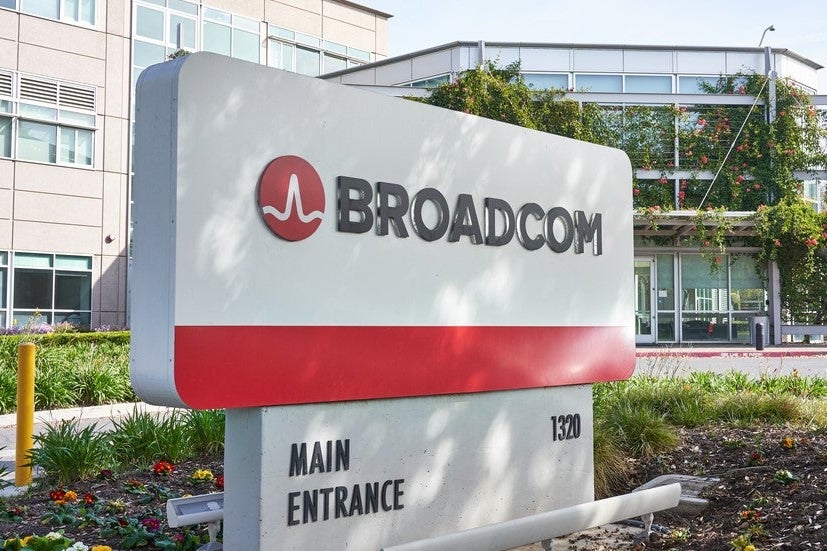
- Surge in AI Chip Sales: In fiscal 2025, Broadcom's AI chip sales soared by 65% to $20 billion, accounting for 31% of its total revenue, with projections indicating this could rise to at least $100 billion by fiscal 2027, representing over 58% of revenue, highlighting its robust growth potential in the AI sector.
- Rising Customer Demand: As the AI market expands, Broadcom's hyperscale customers are expected to ramp up chip purchases, enabling them to reduce infrastructure costs by installing more custom ASICs, thereby decreasing long-term dependence on Nvidia and enhancing competitive positioning.
- Diverse Product Portfolio: Broadcom also offers a wide range of non-AI chips across mobile, data center, and networking sectors; while these segments are not growing as rapidly, bundling products can lock in customers and widen its competitive moat across various markets.
- Attractive Investment Value: Analysts forecast Broadcom's revenue and EPS to grow at CAGRs of 53% and 66% from fiscal 2025 to 2028, yet it trades at just 25 times next year's earnings, indicating a compelling investment opportunity relative to its growth rate in the booming AI market.
See More

Broadcom's AI Chip Sales Surge
- Significant Sales Growth: In fiscal 2025, Broadcom's AI chip sales surged 65% to $20 billion, accounting for 31% of total revenue, with projections to reach at least $100 billion by fiscal 2027, representing over 58% of revenue, indicating strong market demand and growth potential.
- Increased Customer Demand: As the AI market expands, Broadcom's hyperscale customers are expected to ramp up chip purchases, reducing infrastructure costs and long-term dependence on Nvidia by installing more custom ASICs, thereby further solidifying their market position.
- Relative Valuation Advantage: Despite the rapid growth of Broadcom's AI chip business, it trades at just 25 times next year's earnings, making it relatively cheap compared to Nvidia's 16 times, attracting long-term investors' attention.
- Diverse Product Portfolio: Broadcom also sells a wide range of non-AI chips and infrastructure software, which, although growing slower, allows the company to bundle products, lock in customers, and expand competitive advantages across multiple markets, enhancing its market moat.
See More

Google DeepMind Scientist John Jumper Joins Anthropic

- Executive Departure: Senior research scientist John Jumper announced his departure from Google DeepMind to join AI startup Anthropic, marking another high-profile exit that could impact Google's talent pool and innovation capabilities in AI research.
- Technological Impact: Jumper is renowned for co-creating AlphaFold, which has predicted over 200 million protein structures, significantly reducing timelines in biological and medical research, thereby showcasing AI's immense potential in scientific advancement.
- Intensifying Talent War: Jumper's exit intensifies the ongoing talent war among tech giants like Google and Meta, as well as AI startups such as Anthropic and OpenAI, which may lead to further differentiation in technology and innovation across the industry.
- Future Commitment: In his departure statement, Jumper referred to Google DeepMind as a
See More

Federal Reserve Policy Impacts Market Performance


- Fed Policy Impact: Fed Chairman Kevin Warsh indicated a potential interest rate hike to combat stubborn inflation, leading to a 1.2% drop in the S&P 500 on the first 'Fed day', reflecting investor anxiety over monetary policy.
- Market Recovery: Despite the sell-off, the S&P 500 rose 0.9% over a shortened four-session trading week, marking its 11th weekly gain in the past 12 weeks, demonstrating market resilience and a recovery in investor confidence.
- Chip Stocks Surge: Intel's stock jumped 10.6% on Thursday after Trump announced a partnership with Apple, bringing its weekly gain to 7.6%, while Nvidia and Broadcom also saw increases of 2.9% and 4.7%, highlighting the strength of the semiconductor sector.
- Oil Price Decline Impact: The signing of a ceasefire agreement between the U.S. and Iran led to a nearly 10% drop in crude oil prices this week, benefiting consumer banks like Capital One, which saw its stock rise, reflecting positive market sentiment towards lower oil prices.
See More

SpaceX Achieves Record IPO, Valuation Reaches $2.8 Trillion

- Record IPO Performance: SpaceX completed the largest IPO in history last Friday, opening at around $150 per share, which implied a market cap of $2.1 trillion; following a 44% surge in share price, the company is now valued at $2.8 trillion, making it the fifth most valuable company globally.
- Significant Revenue Potential: The AI infrastructure agreements with Anthropic and Alphabet are projected to generate up to $26 billion in recurring revenue annually, with total deal values nearing $45 billion, significantly enhancing the company's revenue outlook and market valuation.
- Profitability Shift: Collaborations with Anthropic and Google allow SpaceX to leverage existing GPU clusters, reducing operational costs and positioning the company for a transition to consistent profitability while decreasing future capital needs and improving financial health.
- Valuation Rationalization: Despite SpaceX's $2.8 trillion market cap, the forward price-to-sales ratio could drop to 62 when accounting for the long-term benefits of new contracts, indicating that the market is beginning to recognize the company's evolution from a pure-play space operator to a diversified technology infrastructure leader.
See More
U.S.-Iran Deal: Economic Benefits Tied to Compliance
- Clear Conditions: Vice President Vance emphasized that Iran's economic benefits are contingent upon full compliance with the agreement, a stance aimed at countering criticisms that the Trump administration has made excessive concessions to Iran, reflecting a tough negotiating position from the U.S.
- Impact of Sanction Lifting: Vance noted that lifting sanctions does not represent a major concession since Iran has been selling oil despite sanctions, and this move is expected to enhance U.S. visibility into Iran's financial activities, thereby increasing strategic transparency for the U.S.
- Potential Middle East Relations: Vance stated that if Iran alters its behavior, it could lead to a transformative relationship with the Middle East, indicating the strategic significance of the agreement in reshaping regional geopolitics.
- Congressional Briefing Plans: Vance revealed that the Trump administration plans to provide a formal briefing to Congress soon, indicating confidence in executing the agreement, even suggesting that some sanctions could be temporarily lifted without congressional approval, showcasing the administration's assertive approach.
See More
Broadcom's Rapid Growth in the AI Market
- Surge in AI Chip Sales: In fiscal 2025, Broadcom's AI chip sales soared by 65% to $20 billion, accounting for 31% of its total revenue, with projections indicating this could rise to at least $100 billion by fiscal 2027, representing over 58% of revenue, highlighting its robust growth potential in the AI sector.
- Rising Customer Demand: As the AI market expands, Broadcom's hyperscale customers are expected to ramp up chip purchases, enabling them to reduce infrastructure costs by installing more custom ASICs, thereby decreasing long-term dependence on Nvidia and enhancing competitive positioning.
- Diverse Product Portfolio: Broadcom also offers a wide range of non-AI chips across mobile, data center, and networking sectors; while these segments are not growing as rapidly, bundling products can lock in customers and widen its competitive moat across various markets.
- Attractive Investment Value: Analysts forecast Broadcom's revenue and EPS to grow at CAGRs of 53% and 66% from fiscal 2025 to 2028, yet it trades at just 25 times next year's earnings, indicating a compelling investment opportunity relative to its growth rate in the booming AI market.
See More
Broadcom's AI Chip Sales Surge
- Significant Sales Growth: In fiscal 2025, Broadcom's AI chip sales surged 65% to $20 billion, accounting for 31% of total revenue, with projections to reach at least $100 billion by fiscal 2027, representing over 58% of revenue, indicating strong market demand and growth potential.
- Increased Customer Demand: As the AI market expands, Broadcom's hyperscale customers are expected to ramp up chip purchases, reducing infrastructure costs and long-term dependence on Nvidia by installing more custom ASICs, thereby further solidifying their market position.
- Relative Valuation Advantage: Despite the rapid growth of Broadcom's AI chip business, it trades at just 25 times next year's earnings, making it relatively cheap compared to Nvidia's 16 times, attracting long-term investors' attention.
- Diverse Product Portfolio: Broadcom also sells a wide range of non-AI chips and infrastructure software, which, although growing slower, allows the company to bundle products, lock in customers, and expand competitive advantages across multiple markets, enhancing its market moat.
See More
Google DeepMind Scientist John Jumper Joins Anthropic
- Executive Departure: Senior research scientist John Jumper announced his departure from Google DeepMind to join AI startup Anthropic, marking another high-profile exit that could impact Google's talent pool and innovation capabilities in AI research.
- Technological Impact: Jumper is renowned for co-creating AlphaFold, which has predicted over 200 million protein structures, significantly reducing timelines in biological and medical research, thereby showcasing AI's immense potential in scientific advancement.
- Intensifying Talent War: Jumper's exit intensifies the ongoing talent war among tech giants like Google and Meta, as well as AI startups such as Anthropic and OpenAI, which may lead to further differentiation in technology and innovation across the industry.
- Future Commitment: In his departure statement, Jumper referred to Google DeepMind as a
See More
Federal Reserve Policy Impacts Market Performance
- Fed Policy Impact: Fed Chairman Kevin Warsh indicated a potential interest rate hike to combat stubborn inflation, leading to a 1.2% drop in the S&P 500 on the first 'Fed day', reflecting investor anxiety over monetary policy.
- Market Recovery: Despite the sell-off, the S&P 500 rose 0.9% over a shortened four-session trading week, marking its 11th weekly gain in the past 12 weeks, demonstrating market resilience and a recovery in investor confidence.
- Chip Stocks Surge: Intel's stock jumped 10.6% on Thursday after Trump announced a partnership with Apple, bringing its weekly gain to 7.6%, while Nvidia and Broadcom also saw increases of 2.9% and 4.7%, highlighting the strength of the semiconductor sector.
- Oil Price Decline Impact: The signing of a ceasefire agreement between the U.S. and Iran led to a nearly 10% drop in crude oil prices this week, benefiting consumer banks like Capital One, which saw its stock rise, reflecting positive market sentiment towards lower oil prices.
See More
SpaceX Achieves Record IPO, Valuation Reaches $2.8 Trillion
- Record IPO Performance: SpaceX completed the largest IPO in history last Friday, opening at around $150 per share, which implied a market cap of $2.1 trillion; following a 44% surge in share price, the company is now valued at $2.8 trillion, making it the fifth most valuable company globally.
- Significant Revenue Potential: The AI infrastructure agreements with Anthropic and Alphabet are projected to generate up to $26 billion in recurring revenue annually, with total deal values nearing $45 billion, significantly enhancing the company's revenue outlook and market valuation.
- Profitability Shift: Collaborations with Anthropic and Google allow SpaceX to leverage existing GPU clusters, reducing operational costs and positioning the company for a transition to consistent profitability while decreasing future capital needs and improving financial health.
- Valuation Rationalization: Despite SpaceX's $2.8 trillion market cap, the forward price-to-sales ratio could drop to 62 when accounting for the long-term benefits of new contracts, indicating that the market is beginning to recognize the company's evolution from a pure-play space operator to a diversified technology infrastructure leader.
See More




