Broadcom Partners with Google for AI Chip Production
Written by Emily J. Thompson, Senior Investment Analyst
Updated: Apr 06 2026
0mins


Source: Newsfilter
- AI Chip Production Agreement: Broadcom announced its agreement to produce future versions of AI chips for Google, a move that not only addresses the surging demand for AI infrastructure but also potentially enhances Broadcom's competitiveness in the high-tech market.
- Expanded Collaboration with Anthropic: Broadcom's expanded deal with AI startup Anthropic provides approximately 3.5 gigawatts of computing capacity utilizing Google's AI processors, significantly boosting Anthropic's computational resources and supporting the further development of its AI applications.
- Positive Market Reaction: Broadcom's shares rose 3% in extended trading, reflecting investor optimism regarding its partnerships with Google and Anthropic, while Alphabet's stock remained unchanged, indicating the market's keen interest in the AI sector.
- Future Demand Expectations: Broadcom CEO Hock Tan indicated that demand for computing power from Anthropic is expected to exceed 3 gigawatts by 2027, a forecast that not only highlights the rapid growth of the AI market but also supports Broadcom's long-term strategic development.
Trade with 70% Backtested Accuracy
Stop guessing "Should I Buy AMD?" and start using high-conviction signals backed by rigorous historical data.
Sign up today to access powerful investing tools and make smarter, data-driven decisions.
Analyst Views on AMD
Wall Street analysts forecast AMD stock price to fall
33 Analyst Rating
25 Buy
8 Hold
0 Sell
Strong Buy
Current: 512.480

Low
210.00
Averages
289.13
High
377.00
Current: 512.480
Low
210.00
Averages
289.13
High
377.00
About AMD
Advanced Micro Devices, Inc. is a global semiconductor company. The Company is focused on high-performance computing and artificial intelligence (AI). Its segments include Data Center, Client and Gaming, and Embedded. Data Center segment includes AI accelerators, microprocessors (CPUs) for servers, graphics processing units (GPUs), accelerated processing units (APUs), data processing units (DPUs), Field Programmable Gate Arrays (FPGAs), and Adaptive system-on-Chip (SoC) products for data centers. Client and Gaming segment includes CPUs, APUs, chipsets for desktops and notebooks, discrete GPUs, and semi-custom SoC products and development services. Embedded segment includes embedded CPUs, APUs, FPGAs, system on modules (SOMs), and Adaptive SoC products. It markets and sells its products under the AMD trademark. Its products include AMD EPYC, AMD Ryzen, AMD Ryzen PRO, Virtex UltraScale+, among others.
About the author

Emily J. Thompson
Emily J. Thompson, a Chartered Financial Analyst (CFA) with 12 years in investment research, graduated with honors from the Wharton School. Specializing in industrial and technology stocks, she provides in-depth analysis for Intellectia’s earnings and market brief reports.

AMD Stock Soars with Promising AI Market Outlook

- Significant Revenue Growth: In Q1 2026, AMD reported $10.3 billion in revenue, a 38% year-over-year increase, with data center revenue reaching $5.8 billion, up 57%, highlighting strong demand and an enhanced market position in high-performance computing.
- Optimistic Future Outlook: Management guided for Q2 2026 revenue of approximately $11.2 billion, representing 46% year-over-year growth, with CEO Lisa Su noting that customer engagement around the new MI450 AI GPUs is strengthening, exceeding initial forecasts and indicating sustained market confidence in AMD's offerings.
- AI Market Share Expansion: The upcoming launch of MI450 AI chips has secured large-scale deployment commitments from major clients like OpenAI and Meta, further solidifying AMD's competitive position in the rapidly growing AI data center market, which is expected to drive future revenue growth.
- Valuation Reasonableness Analysis: Despite a 351% stock price increase over the past year, AMD's non-GAAP price-to-earnings-to-growth (PEG) ratio of 1.32 is below peers, suggesting the market remains cautious about its growth narrative, making recent pullbacks a potential buying opportunity for long-term investors.
See More
AMD Acquires MEXT to Enhance AI Infrastructure
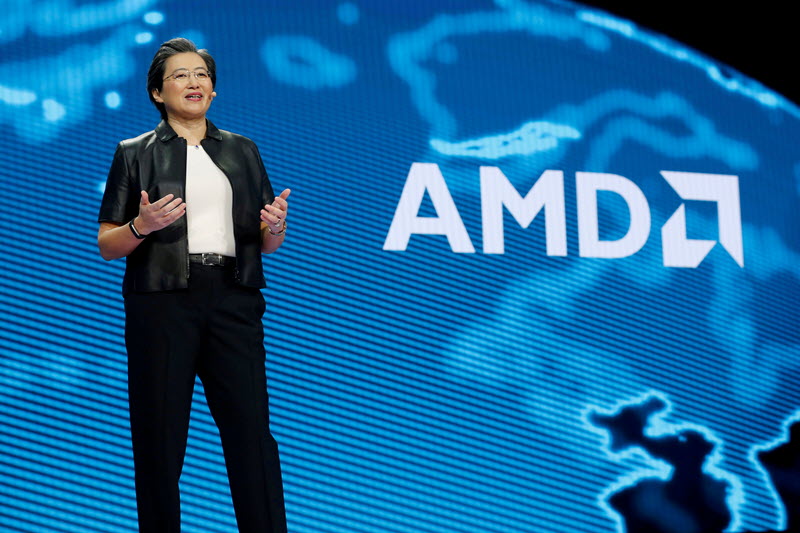
- Acquisition Fuels Growth: AMD's announcement to acquire MEXT, which has developed AI-driven memory optimization technology that allows NAND flash to function as dynamic random access memory (DRAM), is set to further propel AMD's growth in the market.
- Significant Cost Benefits: MEXT's technology can expand a system's DRAM capacity by 2 to 4 times while halving costs, which is crucial given that DRAM is approximately 50 times more expensive than flash memory, thus saving customers substantial amounts.
- Optimized Market Positioning: By integrating MEXT's technology, AMD will enhance the attractiveness of its data center product line, solidifying its position in the inference market, particularly in memory-constrained environments.
- Accelerated Strategic Transformation: This acquisition signifies AMD's shift from being merely a chipmaker to a more comprehensive AI infrastructure provider, strengthening its competitiveness in the rapidly growing inference and agentic AI markets.
See More

US Stocks Surge as Chipmakers Lead Gains Amid Positive Economic News


- Market Rally: Following President Trump's signing of a preliminary US-Iran ceasefire agreement, the S&P 500 rose by 0.73%, the Dow Jones by 0.53%, and the Nasdaq 100 by 1.62%, reflecting a risk-on sentiment in asset markets.
- Chipmaker Surge: Intel's stock jumped 8% after Trump announced a partnership with Apple to design and produce semiconductors domestically, leading the semiconductor sector higher, with the iShares Semiconductor ETF up over 4%.
- Supportive Economic Data: Weekly initial unemployment claims fell by 4,000 to 226,000, close to the expected 225,000, while the Philadelphia Fed business outlook survey rose by 10.7 to 10.3, exceeding expectations and bolstering market confidence.
- Oil Price Decline Impact: WTI crude oil prices dropped over 2% to a new 3.5-month low, potentially releasing over 100 oil-laden tankers stuck in the Persian Gulf, which could increase market supply and influence future oil price trends.
See More

AMD vs. Arm: Competing in the AI CPU Market

- AMD's Market Performance: In Q1, AMD's revenue rose 38% year-over-year to $10.3 billion, with data center revenue jumping 57% to $5.8 billion, indicating strong demand for EPYC server CPUs, and the server CPU market is expected to exceed $120 billion by 2030, growing at over 35% annually.
- Advantages of EPYC Processors: AMD's 6th Gen EPYC processors are ramping up on TSMC's advanced 2-nanometer process, expected to meet the demand for high performance and low power consumption, particularly in AI data centers, positioning the company favorably in a rapidly growing market.
- Arm's Growth Potential: Arm's revenue for fiscal 2026 increased 23% year-over-year to $4.92 billion, primarily from licensing and royalty revenue, and as more cloud providers adopt Arm architecture, its market share is expected to further increase.
- Investment Choice Analysis: While both AMD and Arm offer investment opportunities in AI CPUs, AMD is more attractive due to its direct infrastructure exposure and lower execution risk, whereas Arm is suited for investors willing to pay a premium for a long-term platform story.
See More
AMD and Arm Compete in the AI CPU Market
- Rising Market Demand: AMD's EPYC CPUs are experiencing increased demand across cloud, enterprise, and agentic AI sectors, with Q1 revenue rising 38% year-over-year to $10.3 billion and data center revenue jumping 57% to $5.8 billion, indicating strong market potential.
- Technological Advancements: AMD's 6th Gen EPYC processor, Venice, has begun ramping on TSMC's advanced 2-nanometer process, expected to enhance computing performance while reducing power consumption, addressing the urgent needs of AI data centers for efficiency.
- Arm's Market Strategy: Arm Holdings reported a 23% year-over-year revenue increase to $4.92 billion for fiscal 2026, leveraging its licensing and royalty revenue, with demand for its AGI CPU in AI data centers exceeding $2 billion, showcasing strong market appeal.
- Investment Attractiveness Comparison: AMD is more attractive for investors seeking direct AI infrastructure exposure and lower execution risk, while Arm appeals to those willing to pay a premium for a long-term platform story, despite both companies offering unique opportunities in the AI CPU space.
See More
AMD's Major Development Could Shift AI Investment Landscape

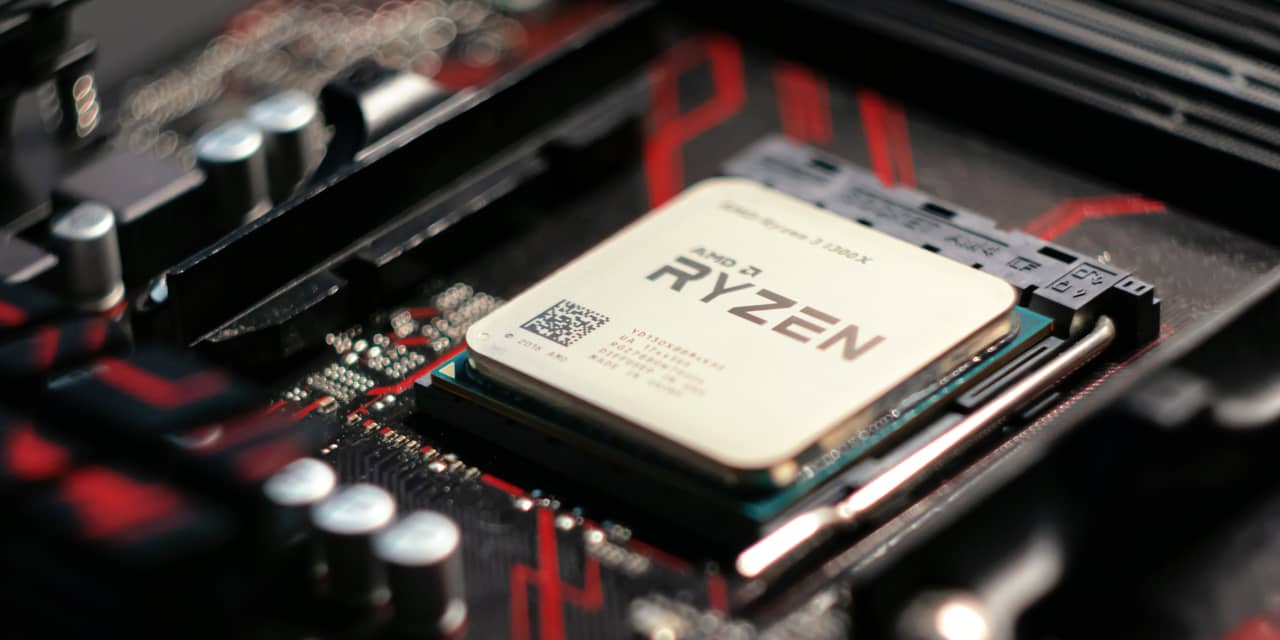
- AI Investment Outlook: AMD's recent major development could have profound implications for the entire AI investment landscape, particularly against the backdrop of growing technological innovation and market demand, prompting investors to closely monitor subsequent developments.
- Market Reaction: Although the stock price data mentioned in the video is from June 16, 2026, AMD's latest developments may influence its future market performance, leading investors to consider portfolio adjustments in response to potential changes.
- Technological Innovation: AMD's breakthroughs in the AI sector could attract increased investor attention, potentially driving the company's stock price higher and further solidifying its leadership position in the semiconductor industry.
- Investment Strategy Reevaluation: As AMD progresses in the AI field, investors may need to reassess their investment strategies to better capitalize on future market opportunities and risks.
See More
AMD Stock Soars with Promising AI Market Outlook
- Significant Revenue Growth: In Q1 2026, AMD reported $10.3 billion in revenue, a 38% year-over-year increase, with data center revenue reaching $5.8 billion, up 57%, highlighting strong demand and an enhanced market position in high-performance computing.
- Optimistic Future Outlook: Management guided for Q2 2026 revenue of approximately $11.2 billion, representing 46% year-over-year growth, with CEO Lisa Su noting that customer engagement around the new MI450 AI GPUs is strengthening, exceeding initial forecasts and indicating sustained market confidence in AMD's offerings.
- AI Market Share Expansion: The upcoming launch of MI450 AI chips has secured large-scale deployment commitments from major clients like OpenAI and Meta, further solidifying AMD's competitive position in the rapidly growing AI data center market, which is expected to drive future revenue growth.
- Valuation Reasonableness Analysis: Despite a 351% stock price increase over the past year, AMD's non-GAAP price-to-earnings-to-growth (PEG) ratio of 1.32 is below peers, suggesting the market remains cautious about its growth narrative, making recent pullbacks a potential buying opportunity for long-term investors.
See More
AMD Acquires MEXT to Enhance AI Infrastructure
- Acquisition Fuels Growth: AMD's announcement to acquire MEXT, which has developed AI-driven memory optimization technology that allows NAND flash to function as dynamic random access memory (DRAM), is set to further propel AMD's growth in the market.
- Significant Cost Benefits: MEXT's technology can expand a system's DRAM capacity by 2 to 4 times while halving costs, which is crucial given that DRAM is approximately 50 times more expensive than flash memory, thus saving customers substantial amounts.
- Optimized Market Positioning: By integrating MEXT's technology, AMD will enhance the attractiveness of its data center product line, solidifying its position in the inference market, particularly in memory-constrained environments.
- Accelerated Strategic Transformation: This acquisition signifies AMD's shift from being merely a chipmaker to a more comprehensive AI infrastructure provider, strengthening its competitiveness in the rapidly growing inference and agentic AI markets.
See More
US Stocks Surge as Chipmakers Lead Gains Amid Positive Economic News
- Market Rally: Following President Trump's signing of a preliminary US-Iran ceasefire agreement, the S&P 500 rose by 0.73%, the Dow Jones by 0.53%, and the Nasdaq 100 by 1.62%, reflecting a risk-on sentiment in asset markets.
- Chipmaker Surge: Intel's stock jumped 8% after Trump announced a partnership with Apple to design and produce semiconductors domestically, leading the semiconductor sector higher, with the iShares Semiconductor ETF up over 4%.
- Supportive Economic Data: Weekly initial unemployment claims fell by 4,000 to 226,000, close to the expected 225,000, while the Philadelphia Fed business outlook survey rose by 10.7 to 10.3, exceeding expectations and bolstering market confidence.
- Oil Price Decline Impact: WTI crude oil prices dropped over 2% to a new 3.5-month low, potentially releasing over 100 oil-laden tankers stuck in the Persian Gulf, which could increase market supply and influence future oil price trends.
See More
AMD vs. Arm: Competing in the AI CPU Market
- AMD's Market Performance: In Q1, AMD's revenue rose 38% year-over-year to $10.3 billion, with data center revenue jumping 57% to $5.8 billion, indicating strong demand for EPYC server CPUs, and the server CPU market is expected to exceed $120 billion by 2030, growing at over 35% annually.
- Advantages of EPYC Processors: AMD's 6th Gen EPYC processors are ramping up on TSMC's advanced 2-nanometer process, expected to meet the demand for high performance and low power consumption, particularly in AI data centers, positioning the company favorably in a rapidly growing market.
- Arm's Growth Potential: Arm's revenue for fiscal 2026 increased 23% year-over-year to $4.92 billion, primarily from licensing and royalty revenue, and as more cloud providers adopt Arm architecture, its market share is expected to further increase.
- Investment Choice Analysis: While both AMD and Arm offer investment opportunities in AI CPUs, AMD is more attractive due to its direct infrastructure exposure and lower execution risk, whereas Arm is suited for investors willing to pay a premium for a long-term platform story.
See More
AMD and Arm Compete in the AI CPU Market
- Rising Market Demand: AMD's EPYC CPUs are experiencing increased demand across cloud, enterprise, and agentic AI sectors, with Q1 revenue rising 38% year-over-year to $10.3 billion and data center revenue jumping 57% to $5.8 billion, indicating strong market potential.
- Technological Advancements: AMD's 6th Gen EPYC processor, Venice, has begun ramping on TSMC's advanced 2-nanometer process, expected to enhance computing performance while reducing power consumption, addressing the urgent needs of AI data centers for efficiency.
- Arm's Market Strategy: Arm Holdings reported a 23% year-over-year revenue increase to $4.92 billion for fiscal 2026, leveraging its licensing and royalty revenue, with demand for its AGI CPU in AI data centers exceeding $2 billion, showcasing strong market appeal.
- Investment Attractiveness Comparison: AMD is more attractive for investors seeking direct AI infrastructure exposure and lower execution risk, while Arm appeals to those willing to pay a premium for a long-term platform story, despite both companies offering unique opportunities in the AI CPU space.
See More
AMD's Major Development Could Shift AI Investment Landscape
- AI Investment Outlook: AMD's recent major development could have profound implications for the entire AI investment landscape, particularly against the backdrop of growing technological innovation and market demand, prompting investors to closely monitor subsequent developments.
- Market Reaction: Although the stock price data mentioned in the video is from June 16, 2026, AMD's latest developments may influence its future market performance, leading investors to consider portfolio adjustments in response to potential changes.
- Technological Innovation: AMD's breakthroughs in the AI sector could attract increased investor attention, potentially driving the company's stock price higher and further solidifying its leadership position in the semiconductor industry.
- Investment Strategy Reevaluation: As AMD progresses in the AI field, investors may need to reassess their investment strategies to better capitalize on future market opportunities and risks.
See More