BP and ConocoPhillips Tighten Spending to Boost Margins
Written by Emily J. Thompson, Senior Investment Analyst
Updated: 1 day ago
0mins
Source: NASDAQ.COM
- Spending Tightening Strategy: BP and ConocoPhillips have set capital expenditure limits of $13.5 billion and $1 billion for 2026, respectively, aiming to enhance structural efficiency and ensure shareholder returns, thereby maintaining profitability in an environment where oil prices are below $70.
- Dividend Appeal: With BP's dividend yield at 5.3% and ConocoPhillips at 3.1%, both companies offer above-average dividends, attracting long-term investors to buy during price dips, which enhances their market appeal.
- Strong Cash Flow: ConocoPhillips commits to returning 45% of its cash flow to shareholders through a mix of base dividends, variable cash returns, and share repurchases, ensuring stable shareholder returns, while BP strengthens its shareholder value by completing a $500 million share buyback program.
- Market Recovery Potential: As major economies plan to rebuild strategic petroleum reserves, BP and ConocoPhillips, with their stable production capabilities in North America and Europe, are poised to benefit from future oil price rebounds, showcasing strong market recovery potential.
Trade with 70% Backtested Accuracy
Stop guessing "Should I Buy BP?" and start using high-conviction signals backed by rigorous historical data.
Sign up today to access powerful investing tools and make smarter, data-driven decisions.
Analyst Views on BP
Wall Street analysts forecast BP stock price to rise
11 Analyst Rating
5 Buy
5 Hold
1 Sell
Moderate Buy
Current: 37.720

Low
6.38
Averages
84.26
High
503.69
Current: 37.720
Low
6.38
Averages
84.26
High
503.69
About BP
BP p.l.c. is a United Kingdom-based integrated energy company. Its segments include Gas & low carbon energy, Oil production & operations, Customers & products, and Other businesses & corporate. The gas & low carbon energy comprises regions with upstream businesses that predominantly produce natural gas, gas marketing and trading activities and its solar, wind and hydrogen businesses. The oil production & operations segment comprises regions with upstream activities that predominantly produce crude oil, including bpx energy. The customers & products segment comprises its customer-focused businesses, which include convenience and retail fuels, electric vehicle (EV) charging, as well as Castrol, aviation and business-to-business (B2B) and midstream. It also includes its products businesses, refining and oil trading, as well as its bioenergy businesses. The other businesses and corporate also comprises the Company's shipping and treasury functions, and corporate activities worldwide.
About the author

Emily J. Thompson
Emily J. Thompson, a Chartered Financial Analyst (CFA) with 12 years in investment research, graduated with honors from the Wharton School. Specializing in industrial and technology stocks, she provides in-depth analysis for Intellectia’s earnings and market brief reports.

Investment Opportunities in ConocoPhillips and BP Amid Falling Oil Prices

- Ultra-Low Breakeven Costs: ConocoPhillips has significantly reduced its structural supply costs following its acquisition of Marathon Oil, allowing it to remain profitable even with oil prices below $40, while most of its production is based in the U.S., mitigating impacts from Middle Eastern unrest.
- Aggressive Cost-Cutting Strategies: ConocoPhillips is executing a $1 billion capital and operating cost reduction program by 2026, while BP caps its annual capital expenditures between $13 billion and $13.5 billion, prioritizing high-margin upstream developments over low-margin projects.
- Solid Shareholder Returns: ConocoPhillips commits to returning 45% of its cash flow to shareholders, while BP has completed a $500 million share buyback program, maintaining a 5.3% dividend yield, with BP stock returning over 93% in the past decade.
- Valuation Discounts and Sector Diversification: Both ConocoPhillips and BP are trading below 11 times and 8 times forward earnings respectively, allowing investors to capture complementary business models at a discount, particularly as ConocoPhillips offers efficient operating leverage for a rebound in crude prices.
See More

BP and ConocoPhillips Tighten Spending to Boost Margins
- Spending Tightening Strategy: BP and ConocoPhillips have set capital expenditure limits of $13.5 billion and $1 billion for 2026, respectively, aiming to enhance structural efficiency and ensure shareholder returns, thereby maintaining profitability in an environment where oil prices are below $70.
- Dividend Appeal: With BP's dividend yield at 5.3% and ConocoPhillips at 3.1%, both companies offer above-average dividends, attracting long-term investors to buy during price dips, which enhances their market appeal.
- Strong Cash Flow: ConocoPhillips commits to returning 45% of its cash flow to shareholders through a mix of base dividends, variable cash returns, and share repurchases, ensuring stable shareholder returns, while BP strengthens its shareholder value by completing a $500 million share buyback program.
- Market Recovery Potential: As major economies plan to rebuild strategic petroleum reserves, BP and ConocoPhillips, with their stable production capabilities in North America and Europe, are poised to benefit from future oil price rebounds, showcasing strong market recovery potential.
See More
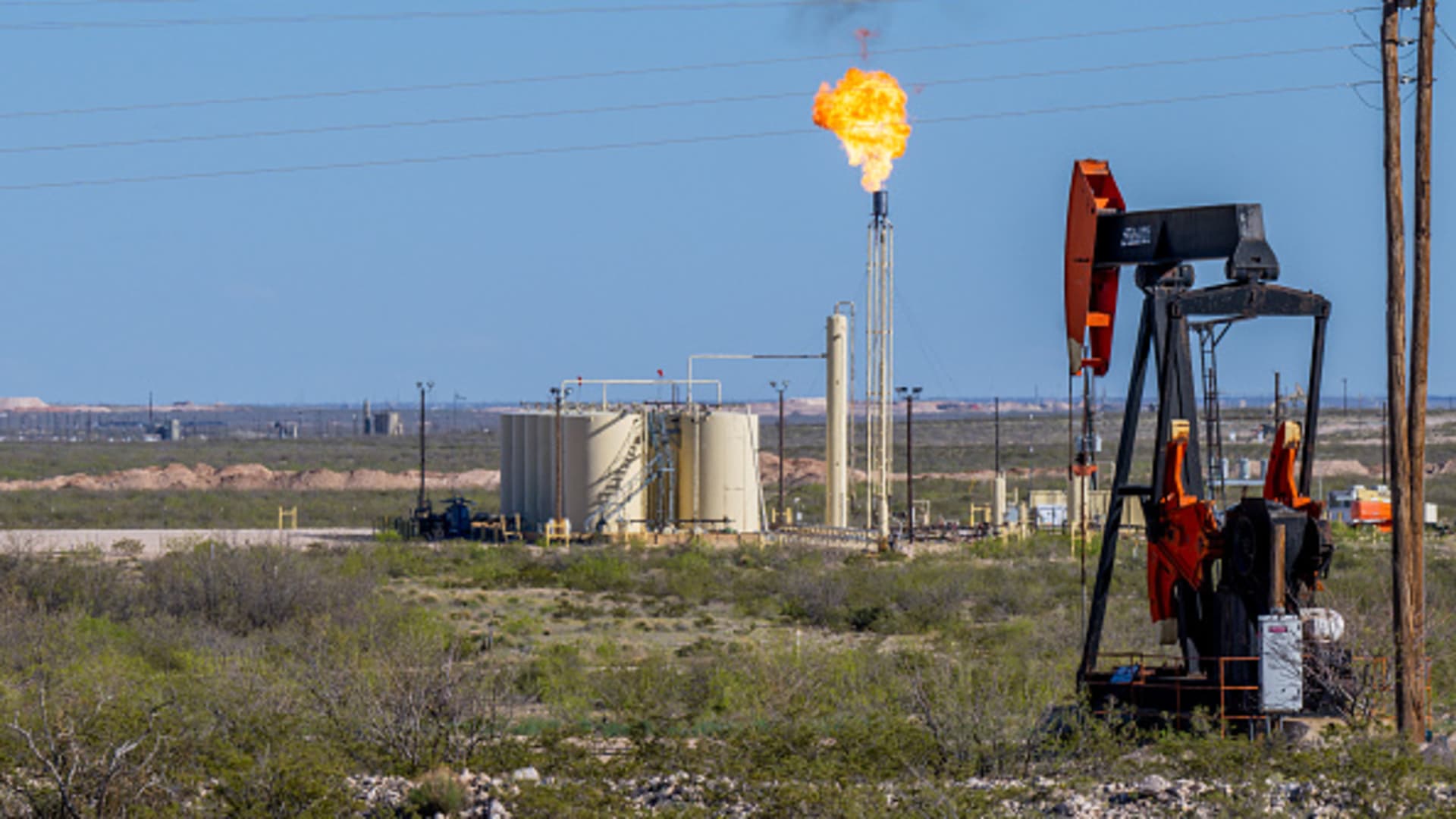
Investment Opportunities in ConocoPhillips and BP Amid Falling Oil Prices

- Low Breakeven Costs: ConocoPhillips has significantly reduced its structural supply costs following its acquisition of Marathon Oil, maintaining supply costs below $40 per barrel in key regions for decades, thus ensuring profitability even in a sub-$70 oil price environment.
- Aggressive Cost-Cutting Measures: ConocoPhillips is executing a $1 billion capital and operating cost reduction plan by 2026, while BP aims for $6.5 billion to $7.5 billion in structural cost savings by 2027, ensuring operational sustainability in a low-price environment.
- Solid Shareholder Returns: ConocoPhillips commits to returning 45% of its cash flow to shareholders, while BP offers a 5.3% dividend yield and a targeted share buyback program, expected to generate $20 billion by 2027 through asset divestments, ensuring stable returns for investors.
- Valuation Discounts and Diversification: Both ConocoPhillips and BP are trading below 11 times and 8 times forward earnings, respectively, allowing investors to capture complementary business models at a discount, particularly as ConocoPhillips offers efficient operating leverage for a rebound in crude prices.
See More

Chevron Expects U.S. Gas Prices to Fall Amid Middle East Normalization

- Price Decline Anticipation: Chevron's CFO Eimear Bonner stated that U.S. gasoline prices are expected to fall as the Middle East situation normalizes, despite President Trump's accusations of Big Oil not lowering prices in line with crude price declines, emphasizing the company's commitment to resolving the issue.
- Production Growth Strategy: Bonner revealed that Chevron plans to grow production by 7% to 10% this year, optimizing resources to meet global energy demands while facing external pressures, thus ensuring product availability for consumers.
- Trump's Investigation Directive: Trump has ordered the Department of Justice to investigate Big Oil, asserting that fuel prices should be at $2.25 per gallon; Chevron responded by noting that price reductions take time due to lag effects in the market.
- Consumer Concerns Addressed: Bonner expressed empathy for consumer concerns, highlighting Chevron's efforts to lower fuel prices through operational optimization, although this process requires time to reflect in retail pricing.
See More
BP Acquires 10% Stake in UAE's Bab Gas Cap Project
- Acquisition Details: BP has successfully acquired a 10% stake in the UAE's Bab Gas Cap project through a concession agreement with ADNOC and its partners, indicating a strategic investment in the Middle East.
- Gas Production Forecast: The project is expected to produce up to 1.5 billion cubic feet of natural gas per day, which will not only enhance BP's production capacity but also strengthen its competitive position in the global energy market.
- Equity Structure: ADNOC will hold a 60% interest in the concession, with other partners including TotalEnergies, CNPC International, INPEX, China ZhenHua Oil, and GS Energy, creating a robust collaborative network.
- Asset Management Role: BP will serve as the asset lead for the Bab Oil Field, allowing the company to optimize resource allocation and improve overall operational efficiency of the project.
See More
Murphy Oil Announces Major Oil Discovery Offshore Côte d'Ivoire
- Oil Discovery: Murphy Oil's Bubale-1X exploration well in Block CI-709 encountered 100 feet of net oil pay, with preliminary assessments indicating high-quality light oil, significantly enhancing the company's existing proved reserve base of 730 million barrels of oil equivalents.
- Investment Plans: The company plans to drill another well in the second half of 2026 to evaluate the reservoir's size, with exploration expenses projected between $220 million and $300 million, further driving exploration activities and replenishing production volumes.
- Market Outlook: With global oil demand expected to rise to 107.86 million barrels per day by 2027, Murphy Oil's light oil discovery positions it competitively in the market, especially since light crude typically commands higher prices.
- Production Forecast: Murphy Oil anticipates total production of 167,000 to 175,000 barrels of oil equivalent per day in 2026, providing robust support for the company's future financial performance.
See More
Investment Opportunities in ConocoPhillips and BP Amid Falling Oil Prices
- Ultra-Low Breakeven Costs: ConocoPhillips has significantly reduced its structural supply costs following its acquisition of Marathon Oil, allowing it to remain profitable even with oil prices below $40, while most of its production is based in the U.S., mitigating impacts from Middle Eastern unrest.
- Aggressive Cost-Cutting Strategies: ConocoPhillips is executing a $1 billion capital and operating cost reduction program by 2026, while BP caps its annual capital expenditures between $13 billion and $13.5 billion, prioritizing high-margin upstream developments over low-margin projects.
- Solid Shareholder Returns: ConocoPhillips commits to returning 45% of its cash flow to shareholders, while BP has completed a $500 million share buyback program, maintaining a 5.3% dividend yield, with BP stock returning over 93% in the past decade.
- Valuation Discounts and Sector Diversification: Both ConocoPhillips and BP are trading below 11 times and 8 times forward earnings respectively, allowing investors to capture complementary business models at a discount, particularly as ConocoPhillips offers efficient operating leverage for a rebound in crude prices.
See More
BP and ConocoPhillips Tighten Spending to Boost Margins
- Spending Tightening Strategy: BP and ConocoPhillips have set capital expenditure limits of $13.5 billion and $1 billion for 2026, respectively, aiming to enhance structural efficiency and ensure shareholder returns, thereby maintaining profitability in an environment where oil prices are below $70.
- Dividend Appeal: With BP's dividend yield at 5.3% and ConocoPhillips at 3.1%, both companies offer above-average dividends, attracting long-term investors to buy during price dips, which enhances their market appeal.
- Strong Cash Flow: ConocoPhillips commits to returning 45% of its cash flow to shareholders through a mix of base dividends, variable cash returns, and share repurchases, ensuring stable shareholder returns, while BP strengthens its shareholder value by completing a $500 million share buyback program.
- Market Recovery Potential: As major economies plan to rebuild strategic petroleum reserves, BP and ConocoPhillips, with their stable production capabilities in North America and Europe, are poised to benefit from future oil price rebounds, showcasing strong market recovery potential.
See More
Investment Opportunities in ConocoPhillips and BP Amid Falling Oil Prices
- Low Breakeven Costs: ConocoPhillips has significantly reduced its structural supply costs following its acquisition of Marathon Oil, maintaining supply costs below $40 per barrel in key regions for decades, thus ensuring profitability even in a sub-$70 oil price environment.
- Aggressive Cost-Cutting Measures: ConocoPhillips is executing a $1 billion capital and operating cost reduction plan by 2026, while BP aims for $6.5 billion to $7.5 billion in structural cost savings by 2027, ensuring operational sustainability in a low-price environment.
- Solid Shareholder Returns: ConocoPhillips commits to returning 45% of its cash flow to shareholders, while BP offers a 5.3% dividend yield and a targeted share buyback program, expected to generate $20 billion by 2027 through asset divestments, ensuring stable returns for investors.
- Valuation Discounts and Diversification: Both ConocoPhillips and BP are trading below 11 times and 8 times forward earnings, respectively, allowing investors to capture complementary business models at a discount, particularly as ConocoPhillips offers efficient operating leverage for a rebound in crude prices.
See More
Chevron Expects U.S. Gas Prices to Fall Amid Middle East Normalization
- Price Decline Anticipation: Chevron's CFO Eimear Bonner stated that U.S. gasoline prices are expected to fall as the Middle East situation normalizes, despite President Trump's accusations of Big Oil not lowering prices in line with crude price declines, emphasizing the company's commitment to resolving the issue.
- Production Growth Strategy: Bonner revealed that Chevron plans to grow production by 7% to 10% this year, optimizing resources to meet global energy demands while facing external pressures, thus ensuring product availability for consumers.
- Trump's Investigation Directive: Trump has ordered the Department of Justice to investigate Big Oil, asserting that fuel prices should be at $2.25 per gallon; Chevron responded by noting that price reductions take time due to lag effects in the market.
- Consumer Concerns Addressed: Bonner expressed empathy for consumer concerns, highlighting Chevron's efforts to lower fuel prices through operational optimization, although this process requires time to reflect in retail pricing.
See More
BP Acquires 10% Stake in UAE's Bab Gas Cap Project
- Acquisition Details: BP has successfully acquired a 10% stake in the UAE's Bab Gas Cap project through a concession agreement with ADNOC and its partners, indicating a strategic investment in the Middle East.
- Gas Production Forecast: The project is expected to produce up to 1.5 billion cubic feet of natural gas per day, which will not only enhance BP's production capacity but also strengthen its competitive position in the global energy market.
- Equity Structure: ADNOC will hold a 60% interest in the concession, with other partners including TotalEnergies, CNPC International, INPEX, China ZhenHua Oil, and GS Energy, creating a robust collaborative network.
- Asset Management Role: BP will serve as the asset lead for the Bab Oil Field, allowing the company to optimize resource allocation and improve overall operational efficiency of the project.
See More
Murphy Oil Announces Major Oil Discovery Offshore Côte d'Ivoire
- Oil Discovery: Murphy Oil's Bubale-1X exploration well in Block CI-709 encountered 100 feet of net oil pay, with preliminary assessments indicating high-quality light oil, significantly enhancing the company's existing proved reserve base of 730 million barrels of oil equivalents.
- Investment Plans: The company plans to drill another well in the second half of 2026 to evaluate the reservoir's size, with exploration expenses projected between $220 million and $300 million, further driving exploration activities and replenishing production volumes.
- Market Outlook: With global oil demand expected to rise to 107.86 million barrels per day by 2027, Murphy Oil's light oil discovery positions it competitively in the market, especially since light crude typically commands higher prices.
- Production Forecast: Murphy Oil anticipates total production of 167,000 to 175,000 barrels of oil equivalent per day in 2026, providing robust support for the company's future financial performance.
See More