Bill Ackman's Investment Moves Analyzed
Written by Emily J. Thompson, Senior Investment Analyst
Updated: 8 hours ago
0mins
Source: NASDAQ.COM
- Portfolio Adjustment: Bill Ackman purchased 5,654,078 shares of Microsoft in Q1, making it his fund's fourth-largest position, while also acquiring 1,844,157 shares of Amazon, now the second-largest holding, indicating strong confidence in tech stocks.
- Google Stock Sell-off: Ackman reduced his stake in Alphabet by 95%, selling 5,852,145 Class A shares and 645,921 Class C shares, yet he remains optimistic about Alphabet's long-term prospects, citing current valuations as less attractive.
- Market Timing Strategy: Ackman capitalized on Microsoft's forward P/E ratio of 21 times, viewing it as below the stock's historical average, which reflects his strategy of seeking investment opportunities amid market fluctuations.
- Cloud Computing Growth Potential: Following the integration of generative AI solutions, Amazon's cloud service sales surged by 63%, indicating that Ackman's investment decisions are based not only on current performance but also on future growth potential.
Trade with 70% Backtested Accuracy
Stop guessing "Should I Buy GOOGL?" and start using high-conviction signals backed by rigorous historical data.
Sign up today to access powerful investing tools and make smarter, data-driven decisions.
Analyst Views on GOOGL
Wall Street analysts forecast GOOGL stock price to fall
33 Analyst Rating
26 Buy
7 Hold
0 Sell
Strong Buy
Current: 388.910

Low
305.00
Averages
374.25
High
400.00
Current: 388.910
Low
305.00
Averages
374.25
High
400.00
About GOOGL
Alphabet Inc. is a holding company. The Company's segments include Google Services, Google Cloud, and Other Bets. The Google Services segment includes products and services such as ads, Android, Chrome, devices, Google Maps, Google Play, Search, and YouTube. The Google Cloud segment includes infrastructure and platform services, collaboration tools, and other services for enterprise customers. Its Other Bets segment is engaged in the sale of healthcare-related services and Internet services. Its Google Cloud provides enterprise-ready cloud services, including Google Cloud Platform and Google Workspace. Google Cloud Platform provides access to solutions such as artificial intelligence (AI) offerings, including its AI infrastructure, Vertex AI platform, and Gemini for Google Cloud; cybersecurity, and data and analytics. Google Workspace includes cloud-based communication and collaboration tools for enterprises, such as Calendar, Gmail, Docs, Drive, and Meet.
About the author

Emily J. Thompson
Emily J. Thompson, a Chartered Financial Analyst (CFA) with 12 years in investment research, graduated with honors from the Wharton School. Specializing in industrial and technology stocks, she provides in-depth analysis for Intellectia’s earnings and market brief reports.

Trump Delays Signing of AI Executive Order


- Ceremony Postponed: President Trump announced the delay of the AI executive order signing ceremony originally scheduled for Thursday afternoon, citing dissatisfaction with certain aspects, indicating a strong focus on policy details.
- U.S. Leading Position: Trump emphasized that the U.S. is ahead of China and other nations in AI, stating he does not want any measures to hinder this lead, reflecting a commitment to national competitiveness.
- Policy Implications: The executive order aims to empower the government to pre-evaluate AI models for security vulnerabilities, indicating a growing concern over potential risks associated with AI technology, which may influence future industry regulations.
- Market Reaction: Despite global economic challenges due to geopolitical tensions like the Iran war, massive investments by tech giants in the AI sector continue to drive stock market gains, demonstrating strong market confidence in AI technology.
See More
Nvidia Unveils Next-Gen AI Data Center Platform


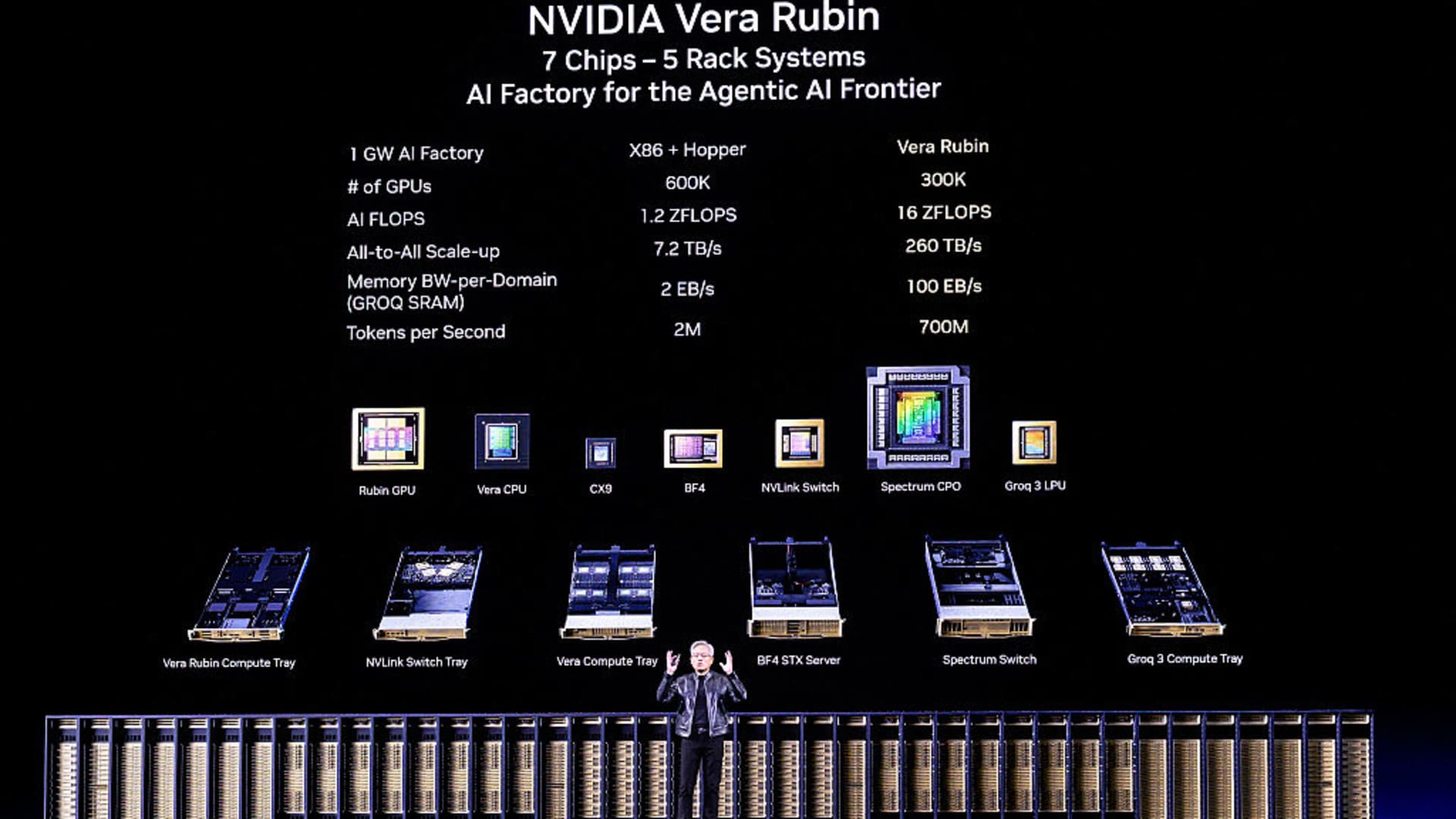
- AI Capital Expenditure Forecast: Nvidia CEO Jensen Huang predicts AI capital expenditures could reach $3 to $4 trillion, significantly exceeding Wall Street estimates, indicating strong confidence in AI infrastructure demand that may drive future revenue growth for the company.
- Hyperscale Capex Surge: CFO Colette Kress highlights that hyperscale capital expenditures are expected to exceed $1 trillion by 2027, suggesting an acceleration in AI infrastructure investment that further solidifies Nvidia's dominant position in the AI chip market.
- Cloud Revenue Growth: Quarterly revenues from Alphabet, AWS, and Microsoft surpassed expectations, growing 63%, 28%, and 40% respectively, indicating robust performance in the cloud computing market that will support Nvidia's business and expand its market share.
- Productivity Consensus Missing: Despite the potential for substantial returns on AI investments, economists remain cautious about AI's long-term profitability and productivity impact, with JPMorgan estimating a need for $650 billion in annual revenue by 2030, reflecting market concerns over the actual benefits of AI.
See More

Rapid Growth of Generative AI Market Drives Tech Stocks
- Market Growth Potential: According to Grand View Research, the generative AI market is projected to expand at a 40.8% CAGR from 2026 to 2033, indicating a strong trend of widespread industry adoption that attracts investor interest.
- ETF Investment Opportunity: The Roundhill Generative AI & Technology ETF (CHAT) has reached $1.75 billion in assets under management since its May 2023 launch, holding 43 stocks and providing a convenient option for investing in the generative AI space, especially with its nearly 240% rise since inception.
- Portfolio Performance: CHAT's top six holdings include Nvidia (7.06%), Alphabet (6.56%), and AMD (5.70%), outperforming the S&P 500's 76% and Nasdaq's 106% gains, highlighting its significance in the AI ecosystem.
- Cost vs. Returns Comparison: Although CHAT's management fee is 0.57% higher than the passively managed Invesco QQQ ETF, its growth rate since inception remains substantial, indicating that investors can achieve higher return potential through CHAT amid the AI market expansion.
See More

CHAT ETF Outperforms Nasdaq Since Inception
- Market Growth Potential: According to Grand View Research, the generative AI market is projected to grow at a 40.8% CAGR from 2026 to 2033, indicating ample investment opportunities as more industries adopt these tools.
- Asset Management Scale: Since its launch in May 2023, the CHAT ETF has amassed $1.75 billion in assets under management and holds 43 stocks, with Nvidia comprising 7.06% of its portfolio, highlighting its significance in AI infrastructure investments.
- Investment Returns: The CHAT ETF has surged nearly 240% since inception, significantly outperforming the S&P 500's 76% and Nasdaq's 106% gains, reflecting its successful investment strategy in AI chipmakers.
- Fee Structure Comparison: CHAT's expense ratio is 0.75%, which is 0.57% higher than the passively managed Invesco QQQ ETF; nevertheless, CHAT is still viewed as a straightforward way to profit from the ongoing expansion of the AI market.
See More
Nvidia's Quarterly Report Sparks Market Skepticism


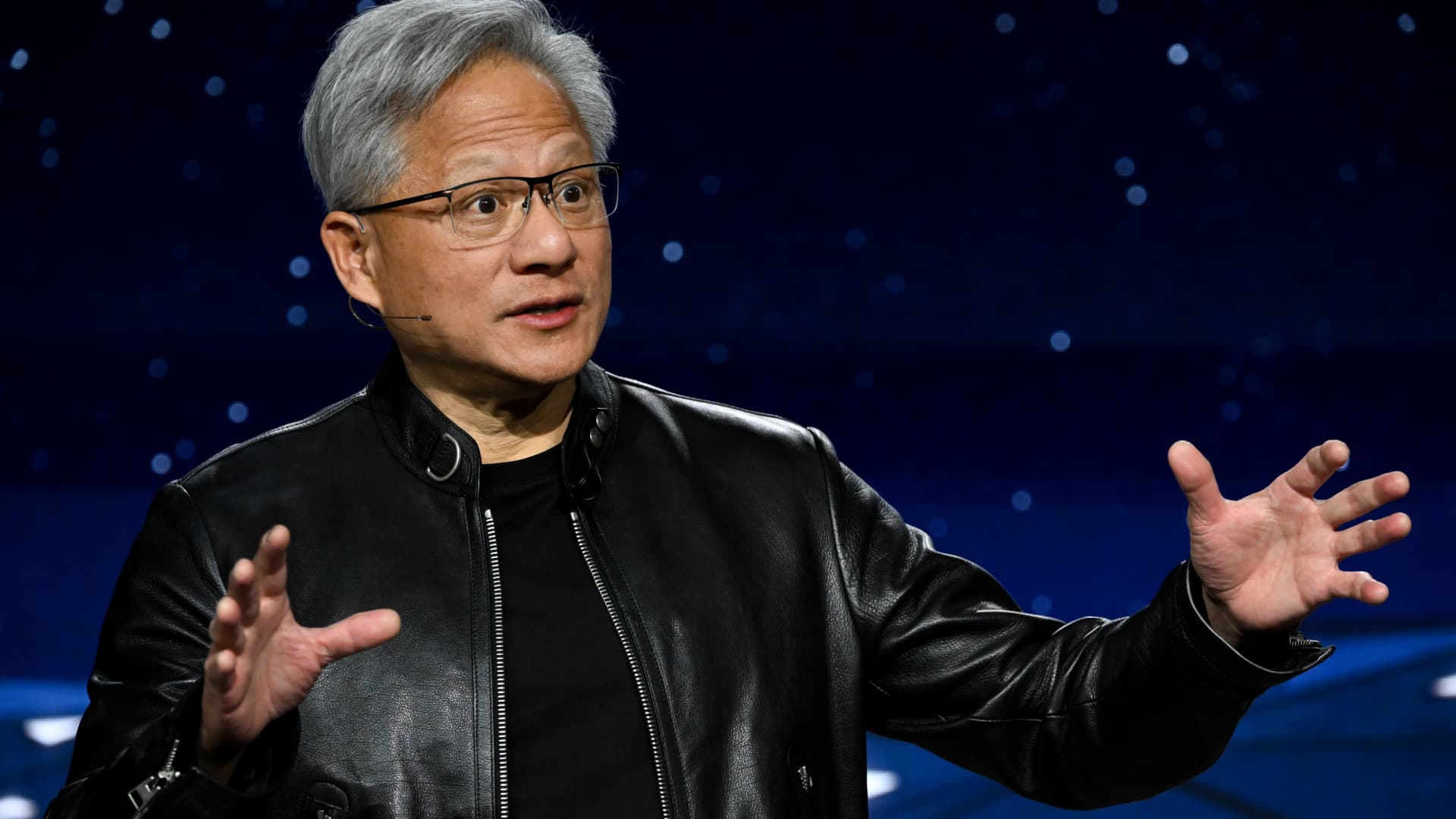
- Sustained Demand: CEO Jensen Huang stated that demand for Nvidia's products has gone parabolic, yet the muted market reaction to the quarterly report indicates investor skepticism about future growth, which could negatively impact stock performance.
- Data Center Business Segmentation: Nvidia has introduced a new reporting framework that segments its data center business into hyperscale and non-hyperscale customers, including AI clouds and industrial enterprises, suggesting that this segment could become a significant driver of future growth and alter market dynamics.
- Market Share Advantage: Huang emphasized that Nvidia holds nearly a 100% share in the AI cloud and industrial enterprise markets, particularly in inference computing, where rapid growth is expected to further solidify its market leadership and enhance long-term profitability.
- Valuation Appeal: Despite Nvidia's strong stock performance over the past year, its current price-to-earnings ratio of about 23 is significantly lower than AMD's 47, highlighting its potential as a value stock, suggesting that investors should consider increasing their positions amid the current market pessimism.
See More

Microsoft's Maia Chips Enhance AI Infrastructure Amid Nvidia Dependency Reduction

- Chip Development Strategy: Microsoft is collaborating with Google and Amazon to develop Maia chips aimed at reducing dependence on Nvidia semiconductors, although discussions are still in early stages and may not lead to a final agreement.
- Maia 200 Chip Performance: Launched in January 2026, the Maia 200 chip utilizes TSMC's 3-nanometer process, with Microsoft claiming a 30% improvement in performance per dollar compared to existing systems, and higher memory bandwidth than Amazon and Google's counterparts.
- Collaboration with Anthropic: Anthropic is reportedly in talks with Microsoft to rent custom AI server chips to expand its computing capacity to meet rising demand for AI services, although discussions are still in preliminary stages.
- Market Sentiment Analysis: According to Stocktwits, retail sentiment for Microsoft has shifted from neutral to bullish, despite MSFT stock falling about 14% year-to-date, currently trading at $417, indicating potential market confidence in the Maia chips.
See More
Trump Delays Signing of AI Executive Order
- Ceremony Postponed: President Trump announced the delay of the AI executive order signing ceremony originally scheduled for Thursday afternoon, citing dissatisfaction with certain aspects, indicating a strong focus on policy details.
- U.S. Leading Position: Trump emphasized that the U.S. is ahead of China and other nations in AI, stating he does not want any measures to hinder this lead, reflecting a commitment to national competitiveness.
- Policy Implications: The executive order aims to empower the government to pre-evaluate AI models for security vulnerabilities, indicating a growing concern over potential risks associated with AI technology, which may influence future industry regulations.
- Market Reaction: Despite global economic challenges due to geopolitical tensions like the Iran war, massive investments by tech giants in the AI sector continue to drive stock market gains, demonstrating strong market confidence in AI technology.
See More
Nvidia Unveils Next-Gen AI Data Center Platform
- AI Capital Expenditure Forecast: Nvidia CEO Jensen Huang predicts AI capital expenditures could reach $3 to $4 trillion, significantly exceeding Wall Street estimates, indicating strong confidence in AI infrastructure demand that may drive future revenue growth for the company.
- Hyperscale Capex Surge: CFO Colette Kress highlights that hyperscale capital expenditures are expected to exceed $1 trillion by 2027, suggesting an acceleration in AI infrastructure investment that further solidifies Nvidia's dominant position in the AI chip market.
- Cloud Revenue Growth: Quarterly revenues from Alphabet, AWS, and Microsoft surpassed expectations, growing 63%, 28%, and 40% respectively, indicating robust performance in the cloud computing market that will support Nvidia's business and expand its market share.
- Productivity Consensus Missing: Despite the potential for substantial returns on AI investments, economists remain cautious about AI's long-term profitability and productivity impact, with JPMorgan estimating a need for $650 billion in annual revenue by 2030, reflecting market concerns over the actual benefits of AI.
See More
Rapid Growth of Generative AI Market Drives Tech Stocks
- Market Growth Potential: According to Grand View Research, the generative AI market is projected to expand at a 40.8% CAGR from 2026 to 2033, indicating a strong trend of widespread industry adoption that attracts investor interest.
- ETF Investment Opportunity: The Roundhill Generative AI & Technology ETF (CHAT) has reached $1.75 billion in assets under management since its May 2023 launch, holding 43 stocks and providing a convenient option for investing in the generative AI space, especially with its nearly 240% rise since inception.
- Portfolio Performance: CHAT's top six holdings include Nvidia (7.06%), Alphabet (6.56%), and AMD (5.70%), outperforming the S&P 500's 76% and Nasdaq's 106% gains, highlighting its significance in the AI ecosystem.
- Cost vs. Returns Comparison: Although CHAT's management fee is 0.57% higher than the passively managed Invesco QQQ ETF, its growth rate since inception remains substantial, indicating that investors can achieve higher return potential through CHAT amid the AI market expansion.
See More
CHAT ETF Outperforms Nasdaq Since Inception
- Market Growth Potential: According to Grand View Research, the generative AI market is projected to grow at a 40.8% CAGR from 2026 to 2033, indicating ample investment opportunities as more industries adopt these tools.
- Asset Management Scale: Since its launch in May 2023, the CHAT ETF has amassed $1.75 billion in assets under management and holds 43 stocks, with Nvidia comprising 7.06% of its portfolio, highlighting its significance in AI infrastructure investments.
- Investment Returns: The CHAT ETF has surged nearly 240% since inception, significantly outperforming the S&P 500's 76% and Nasdaq's 106% gains, reflecting its successful investment strategy in AI chipmakers.
- Fee Structure Comparison: CHAT's expense ratio is 0.75%, which is 0.57% higher than the passively managed Invesco QQQ ETF; nevertheless, CHAT is still viewed as a straightforward way to profit from the ongoing expansion of the AI market.
See More
Nvidia's Quarterly Report Sparks Market Skepticism
- Sustained Demand: CEO Jensen Huang stated that demand for Nvidia's products has gone parabolic, yet the muted market reaction to the quarterly report indicates investor skepticism about future growth, which could negatively impact stock performance.
- Data Center Business Segmentation: Nvidia has introduced a new reporting framework that segments its data center business into hyperscale and non-hyperscale customers, including AI clouds and industrial enterprises, suggesting that this segment could become a significant driver of future growth and alter market dynamics.
- Market Share Advantage: Huang emphasized that Nvidia holds nearly a 100% share in the AI cloud and industrial enterprise markets, particularly in inference computing, where rapid growth is expected to further solidify its market leadership and enhance long-term profitability.
- Valuation Appeal: Despite Nvidia's strong stock performance over the past year, its current price-to-earnings ratio of about 23 is significantly lower than AMD's 47, highlighting its potential as a value stock, suggesting that investors should consider increasing their positions amid the current market pessimism.
See More
Microsoft's Maia Chips Enhance AI Infrastructure Amid Nvidia Dependency Reduction
- Chip Development Strategy: Microsoft is collaborating with Google and Amazon to develop Maia chips aimed at reducing dependence on Nvidia semiconductors, although discussions are still in early stages and may not lead to a final agreement.
- Maia 200 Chip Performance: Launched in January 2026, the Maia 200 chip utilizes TSMC's 3-nanometer process, with Microsoft claiming a 30% improvement in performance per dollar compared to existing systems, and higher memory bandwidth than Amazon and Google's counterparts.
- Collaboration with Anthropic: Anthropic is reportedly in talks with Microsoft to rent custom AI server chips to expand its computing capacity to meet rising demand for AI services, although discussions are still in preliminary stages.
- Market Sentiment Analysis: According to Stocktwits, retail sentiment for Microsoft has shifted from neutral to bullish, despite MSFT stock falling about 14% year-to-date, currently trading at $417, indicating potential market confidence in the Maia chips.
See More