Bank and Brokerage Shares Plummet Due to AI Worries
Written by Emily J. Thompson, Senior Investment Analyst
Updated: Feb 27 2026
0mins


Source: Barron's
- Market Reaction: Bank, brokerage, and wealth management stocks experienced a decline on Friday.
- Investor Concerns: Investors are worried about the potential disruptions caused by artificial intelligence.
- Inflation Fears: There are growing concerns regarding the implications of resurgent inflation.
- Overall Sentiment: The combination of these factors has led to a negative sentiment in the financial sector.
Trade with 70% Backtested Accuracy
Stop guessing "Should I Buy IBKR?" and start using high-conviction signals backed by rigorous historical data.
Sign up today to access powerful investing tools and make smarter, data-driven decisions.
Analyst Views on IBKR
Wall Street analysts forecast IBKR stock price to fall
7 Analyst Rating
6 Buy
1 Hold
0 Sell
Strong Buy
Current: 93.250

Low
75.00
Averages
81.43
High
91.00
Current: 93.250
Low
75.00
Averages
81.43
High
91.00
About IBKR
Interactive Brokers Group, Inc. is an automated global electronic broker. The Company custodies and services account for hedge and mutual funds, exchange-traded funds (ETFs), registered investment advisors, proprietary trading groups, introducing brokers and individual investors. It specializes in routing orders and executing and processing trades in stocks, options, futures, foreign exchange instruments (forex), bonds, mutual funds, ETFs, precious metals, and forecast contracts on more than 170 electronic exchanges and market centers in 40 countries and 29 currencies around the world. In addition, its customers can use its trading platform to trade certain cryptocurrencies through third-party cryptocurrency service providers that execute, clear and custody the cryptocurrencies. Its trading platforms include IBKR Desktop, IBKR Trader Workstation, IBKR Mobile, IBKR Client Portal and others. Its key product offerings include IBKR Pro, IBKR Lite, and IBKR Universal Account.
About the author

Emily J. Thompson
Emily J. Thompson, a Chartered Financial Analyst (CFA) with 12 years in investment research, graduated with honors from the Wharton School. Specializing in industrial and technology stocks, she provides in-depth analysis for Intellectia’s earnings and market brief reports.

SEC Investigates Insider Trading Claims of $100M Profits


- Investigation Launched: The SEC is investigating claims by Susquehanna International Group regarding insider trading, alleging that unidentified traders made $100 million in profits from options bets before Chinese authorities cracked down on cross-border brokerages, highlighting the urgency of market regulation.
- Lawsuit Insights: In a lawsuit filed on Monday, Susquehanna reported losses exceeding $70 million as a counterparty to most of the alleged insider trades, indicating that the high-risk, high-reward nature of these options could only be plausibly attributed to insider trading, reflecting market opacity.
- Account Freezing: A federal judge has granted Susquehanna's request to freeze accounts at Interactive Brokers, Futu Holdings, and Up Fintech Holdings, which were allegedly used for insider trading, demonstrating regulators' commitment to addressing market manipulation.
- Market Reactions: While Interactive Brokers' stock rose 0.6% in Thursday morning trading, shares of Futu and Up Fintech fell by 0.7%, indicating investor uncertainty regarding the future of these companies and the volatility of market sentiment.
See More
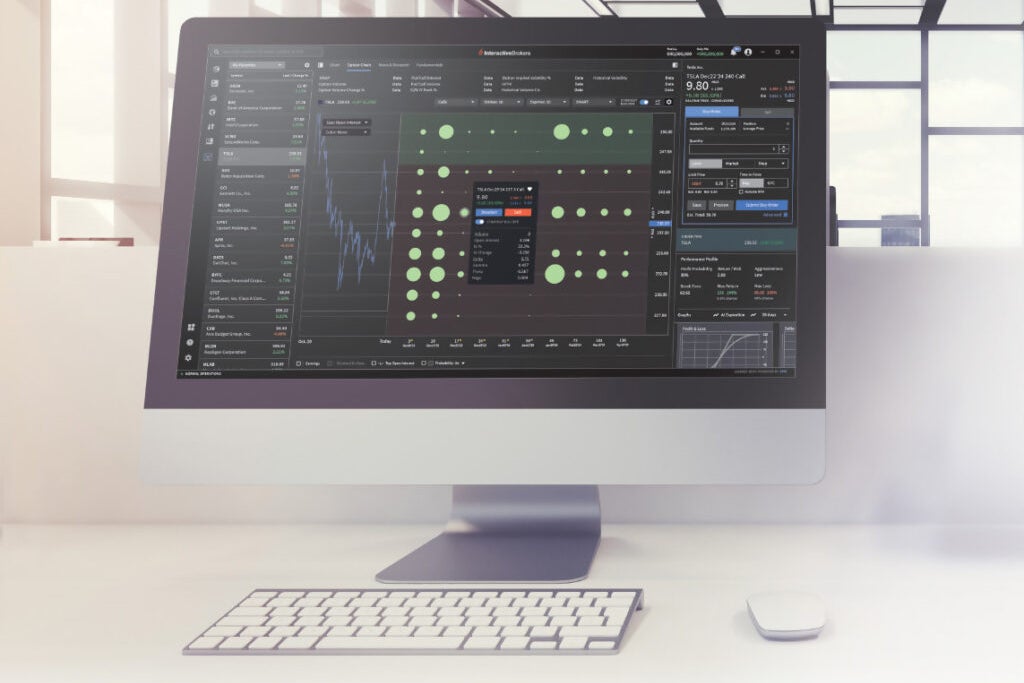
Interactive Brokers Stock Soars Over 7% on Strong Growth Metrics
- Significant Trading Volume Growth: Interactive Brokers' daily average revenue trades (DARTs) surged by 53% year-over-year and 6% month-over-month in June, reaching nearly 5.27 million, demonstrating the company's strong ability to attract active clients and enhancing its competitive edge in the market.
- Client Equity Continues to Rise: As of the end of June, client equity exceeded $930 billion, reflecting a 40% increase compared to June 2025, although slightly down 1% from May, indicating increased client trust and solidifying market share.
- Surge in Customer Accounts: The total number of customer accounts at Interactive rose by 34% year-over-year and 4% month-over-month to nearly 5.19 million, showcasing the company's successful strategies in client acquisition and retention, further strengthening its market position.
- Steady Increase in Credit Balances: Client credit balances grew by 27% year-over-year and 1% month-over-month to over $182 billion, indicating an increased reliance on the company's services by clients and suggesting potential revenue growth in the future.
See More

Interactive Brokers Group Reports Strong Operational Metrics Growth
- Significant Trading Volume Growth: In June, Interactive Brokers' daily average revenue trades (DARTs) surged by 53% year-over-year and 6% month-over-month to nearly 5.27 million, demonstrating its strong capability in attracting active clients and solidifying its market position.
- Customer Accounts Surge: By the end of June, total customer accounts increased by 34% year-over-year and 4% month-over-month to nearly 5.19 million, indicating the company's success in client acquisition and retention, which enhances its future revenue potential.
- Client Equity Improvement: Client equity surpassed $930 billion at the end of June, reflecting a 40% increase from June 2025, although it dipped slightly by 1% from May, yet the overall performance remains robust, showcasing clients' trust and reliance on its services.
- Rising Credit Balances: Client credit balances rose by 27% year-over-year and 1% month-over-month to over $182 billion, indicating a sustained demand for financing services among clients, which further boosts the company's profitability.
See More

Interactive Brokers Reports 53% Increase in Daily Average Revenue Trades
- Trading Volume Surge: Interactive Brokers reported a June daily average revenue trades of 5.269 million, reflecting a 53% year-over-year increase and a 6% month-over-month rise, indicating a significant uptick in client activity that strengthens its market position.
- Client Account Growth: The number of client accounts rose by 34% from 2025 to 5.185 million, with a 4% increase from May, showcasing the company's success in attracting new clients and enhancing its future revenue potential.
- Client Equity Increase: Ending client equity stood at $930.3 billion, up 40% year-over-year but down 1% from May, reflecting strong growth that indicates client confidence and willingness to invest in the market.
- Credit Balance Growth: Client credit balances reached $182.4 billion, a 27% increase from 2025 and a 1% rise from May, suggesting heightened client activity in leveraging investments, which could drive the company's future profitability.
See More

Interactive Brokers Reports Significant Growth in June Metrics
- Volume Growth: Interactive Brokers reported 5.269 million Daily Average Revenue Trades (DARTs) in June, a 53% increase year-over-year, indicating a significant rise in client activity that reinforces the company's leadership in the electronic trading market.
- Client Equity Increase: Ending client equity reached $930.3 billion by the end of June, up 40% from the previous year, although slightly down 1% month-over-month, reflecting enhanced client confidence and driving expansion in the company's asset management business.
- Margin Loan Balances Rise: Client margin loan balances surged to $108.5 billion, a 67% increase year-over-year, which not only indicates growing demand for leveraged trading but also has the potential to generate higher interest income, thereby enhancing profitability.
- Client Accounts Growth: The total number of client accounts reached 5.185 million, a 34% increase from the previous year, demonstrating the company's success in attracting new clients, further expanding market share and enhancing brand influence.
See More
IBKR Launches Korean Equities Trading via Nextrade
- Market Access Expansion: Interactive Brokers launches Korean equities trading via Nextrade, becoming the first major US broker to provide direct access to Korean stocks, further solidifying its leadership position in global markets.
- Increased Trading Flexibility: Nextrade offers access to approximately 650 KOSPI and KOSDAQ securities with extended trading hours of 12 hours, allowing clients to seize market opportunities outside traditional trading hours, enhancing their trading strategies.
- Smart Routing System: IB SmartRouting℠ automatically routes orders between KRX and Nextrade, ensuring clients achieve best execution prices, thereby improving trading efficiency and client satisfaction.
- Global Investment Strategy: With Korea's equity market being significant on a global scale, IBKR's initiative not only provides clients with diversified investment options but also demonstrates its long-term commitment and strategic positioning in the Asian market.
See More
SEC Investigates Insider Trading Claims of $100M Profits
- Investigation Launched: The SEC is investigating claims by Susquehanna International Group regarding insider trading, alleging that unidentified traders made $100 million in profits from options bets before Chinese authorities cracked down on cross-border brokerages, highlighting the urgency of market regulation.
- Lawsuit Insights: In a lawsuit filed on Monday, Susquehanna reported losses exceeding $70 million as a counterparty to most of the alleged insider trades, indicating that the high-risk, high-reward nature of these options could only be plausibly attributed to insider trading, reflecting market opacity.
- Account Freezing: A federal judge has granted Susquehanna's request to freeze accounts at Interactive Brokers, Futu Holdings, and Up Fintech Holdings, which were allegedly used for insider trading, demonstrating regulators' commitment to addressing market manipulation.
- Market Reactions: While Interactive Brokers' stock rose 0.6% in Thursday morning trading, shares of Futu and Up Fintech fell by 0.7%, indicating investor uncertainty regarding the future of these companies and the volatility of market sentiment.
See More
Interactive Brokers Stock Soars Over 7% on Strong Growth Metrics
- Significant Trading Volume Growth: Interactive Brokers' daily average revenue trades (DARTs) surged by 53% year-over-year and 6% month-over-month in June, reaching nearly 5.27 million, demonstrating the company's strong ability to attract active clients and enhancing its competitive edge in the market.
- Client Equity Continues to Rise: As of the end of June, client equity exceeded $930 billion, reflecting a 40% increase compared to June 2025, although slightly down 1% from May, indicating increased client trust and solidifying market share.
- Surge in Customer Accounts: The total number of customer accounts at Interactive rose by 34% year-over-year and 4% month-over-month to nearly 5.19 million, showcasing the company's successful strategies in client acquisition and retention, further strengthening its market position.
- Steady Increase in Credit Balances: Client credit balances grew by 27% year-over-year and 1% month-over-month to over $182 billion, indicating an increased reliance on the company's services by clients and suggesting potential revenue growth in the future.
See More
Interactive Brokers Group Reports Strong Operational Metrics Growth
- Significant Trading Volume Growth: In June, Interactive Brokers' daily average revenue trades (DARTs) surged by 53% year-over-year and 6% month-over-month to nearly 5.27 million, demonstrating its strong capability in attracting active clients and solidifying its market position.
- Customer Accounts Surge: By the end of June, total customer accounts increased by 34% year-over-year and 4% month-over-month to nearly 5.19 million, indicating the company's success in client acquisition and retention, which enhances its future revenue potential.
- Client Equity Improvement: Client equity surpassed $930 billion at the end of June, reflecting a 40% increase from June 2025, although it dipped slightly by 1% from May, yet the overall performance remains robust, showcasing clients' trust and reliance on its services.
- Rising Credit Balances: Client credit balances rose by 27% year-over-year and 1% month-over-month to over $182 billion, indicating a sustained demand for financing services among clients, which further boosts the company's profitability.
See More
Interactive Brokers Reports 53% Increase in Daily Average Revenue Trades
- Trading Volume Surge: Interactive Brokers reported a June daily average revenue trades of 5.269 million, reflecting a 53% year-over-year increase and a 6% month-over-month rise, indicating a significant uptick in client activity that strengthens its market position.
- Client Account Growth: The number of client accounts rose by 34% from 2025 to 5.185 million, with a 4% increase from May, showcasing the company's success in attracting new clients and enhancing its future revenue potential.
- Client Equity Increase: Ending client equity stood at $930.3 billion, up 40% year-over-year but down 1% from May, reflecting strong growth that indicates client confidence and willingness to invest in the market.
- Credit Balance Growth: Client credit balances reached $182.4 billion, a 27% increase from 2025 and a 1% rise from May, suggesting heightened client activity in leveraging investments, which could drive the company's future profitability.
See More
Interactive Brokers Reports Significant Growth in June Metrics
- Volume Growth: Interactive Brokers reported 5.269 million Daily Average Revenue Trades (DARTs) in June, a 53% increase year-over-year, indicating a significant rise in client activity that reinforces the company's leadership in the electronic trading market.
- Client Equity Increase: Ending client equity reached $930.3 billion by the end of June, up 40% from the previous year, although slightly down 1% month-over-month, reflecting enhanced client confidence and driving expansion in the company's asset management business.
- Margin Loan Balances Rise: Client margin loan balances surged to $108.5 billion, a 67% increase year-over-year, which not only indicates growing demand for leveraged trading but also has the potential to generate higher interest income, thereby enhancing profitability.
- Client Accounts Growth: The total number of client accounts reached 5.185 million, a 34% increase from the previous year, demonstrating the company's success in attracting new clients, further expanding market share and enhancing brand influence.
See More
IBKR Launches Korean Equities Trading via Nextrade
- Market Access Expansion: Interactive Brokers launches Korean equities trading via Nextrade, becoming the first major US broker to provide direct access to Korean stocks, further solidifying its leadership position in global markets.
- Increased Trading Flexibility: Nextrade offers access to approximately 650 KOSPI and KOSDAQ securities with extended trading hours of 12 hours, allowing clients to seize market opportunities outside traditional trading hours, enhancing their trading strategies.
- Smart Routing System: IB SmartRouting℠ automatically routes orders between KRX and Nextrade, ensuring clients achieve best execution prices, thereby improving trading efficiency and client satisfaction.
- Global Investment Strategy: With Korea's equity market being significant on a global scale, IBKR's initiative not only provides clients with diversified investment options but also demonstrates its long-term commitment and strategic positioning in the Asian market.
See More