AT&T Reiterates 2026 Financial Guidance and $45B Capital Return Plan
AT&T reiterates all full-year 2026 and multi-year financial guidance and capital return plans provided with its fourth-quarter 2025 earnings report, including its outlook for improved growth in adjusted EBITDA and adjusted EPS and higher free cash flow through 2028, as well as plans to return $45B+ to shareholders during 2026-2028 through dividends and share repurchases. AT&T expects that its net debt-to-adjusted EBITDA ratio will increase to approximately 3.2x following its transaction with EchoStar - which the company expects to close in early 2026 - and to decline to approximately 3x by the end of 2026. AT&T continues to expect net leverage will return to a level consistent with its target in the 2.5x range within approximately three years following the closing of this acquisition. The company expects to maintain a consistent approach to capital returns while reducing net leverage to its target range.
Trade with 70% Backtested Accuracy
Analyst Views on T

About T
About the author

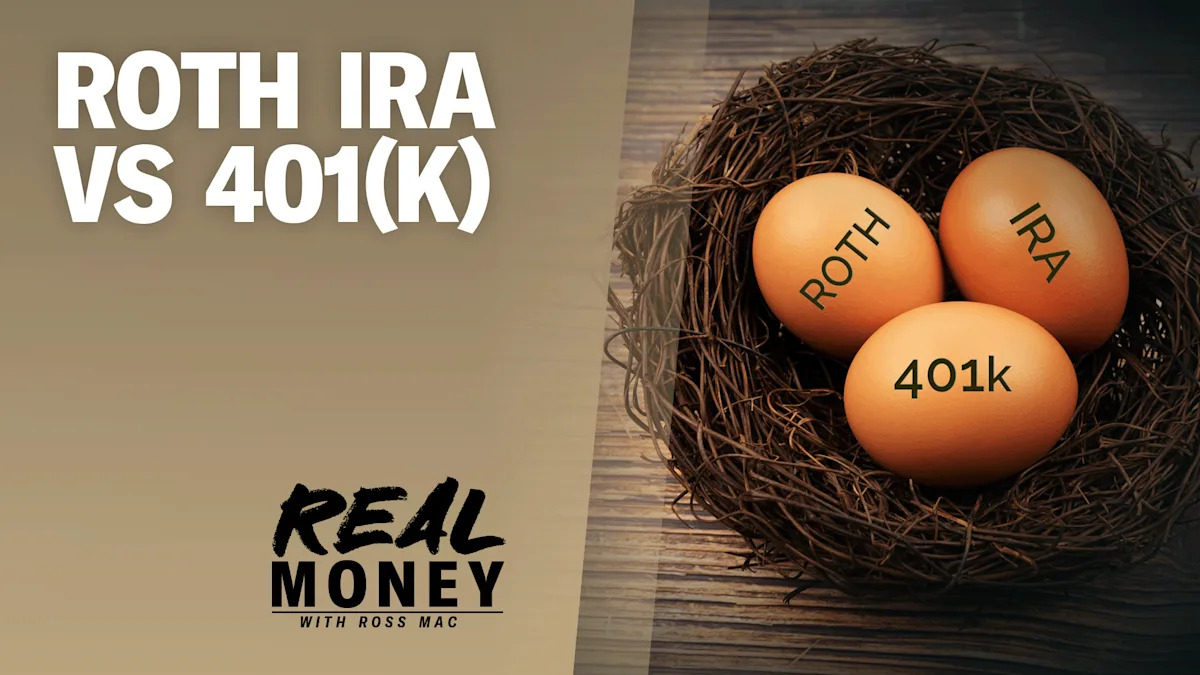
Comparing the Benefits of Roth IRA vs 401(k)

- Importance of Company Matching: If a company offers a 401(k) plan with a dollar-for-dollar match, such as up to 6%, investors can effectively double their contributions by investing $6,000 and receiving an additional $6,000, resulting in a 100% return on investment, which significantly enhances retirement savings efficiency.
- Tax Treatment Differences: While 401(k) accounts are taxed upon withdrawal, Roth IRAs are taxed before investment, allowing for completely tax-free withdrawals, making Roth IRAs more attractive for long-term investments, especially in a potentially rising tax environment.
- Long-term Tax Considerations: With the U.S. national debt increasing from $10 trillion to $30 trillion over the past decade, there is a risk of rising tax rates in the future; choosing a Roth IRA can help avoid potential high tax burdens at retirement, thus protecting investment gains.
- Impact of Contribution Limits: The contribution limit for Roth IRAs is $7,000, while 401(k) plans exceed $22,000, reflecting the IRS's expectations regarding future tax policies, and investors should consider their income levels and tax planning when making their choices.
Verizon Faces Debt Crisis, Dividend at Risk

- Rising Debt Burden: Verizon's total debt has surged to $172 billion, up from $158 billion at the end of last year and $144 billion a year ago, significantly exceeding its total equity of $105 billion, indicating increasing financial strain on the company.
- Acquisition Impact: The recent debt increase primarily stems from the $20 billion acquisition of Frontier Communications, and the $53 billion spent on C-band spectrum in 2021, which, while enhancing network quality, has further exacerbated the debt load.
- Ongoing Capital Expenditures: Verizon plans to allocate $16 billion to $16.5 billion in capital expenditures this year, only slightly down from $17 billion last year, which continues to pressure cash flow, as evidenced by a first-quarter free cash flow of $3.8 billion that barely covers $2.9 billion in dividend payments.
- Dividend Risk Escalation: With rising debt and interest expenses, Verizon may face the necessity to cut or suspend its dividend, akin to AT&T's situation in 2022, potentially prompting income investors to sell their shares, leading to short-term stock price declines.
AT&T Small Business Contest Returns with $50,000 Grand Prize
- Generous Prize Pool: The 2026 AT&T Small Business Contest opens on May 1, offering applicants a chance to win a grand prize of $50,000 for business investment, while four finalists will each receive $5,000, significantly enhancing financial support and growth potential for small businesses.
- Community Connection Opportunities: The contest aims to spotlight small businesses driving change in their communities, allowing participants not only to secure funding but also to join a network of small business owners, gaining access to essential tools and resources for growth, fostering a healthy business ecosystem.
- Cybersecurity Innovation: On May 4, AT&T will launch Dynamic Defense®, providing embedded proactive protection for small and medium-sized businesses, helping clients block cyber threats without adding hardware or operational complexity, ensuring business continuity.
- Support for Women Entrepreneurs: Winners of the AT&T Small Business Contest will be featured in her show, showcasing women's breakthroughs in business and sports, further elevating the influence and societal recognition of female entrepreneurs, and promoting the growth and development of the next generation.

AT&T Small Business Contest Launches with $50,000 Prize
- Contest Launch: The 2026 AT&T Small Business Contest opens for submissions from May 1 to July 31, offering a $50,000 grand prize to support small businesses driving community change.
- Cybersecurity Initiative: AT&T Dynamic Defense® will be available on May 4, providing a network-embedded cybersecurity solution that helps small and medium-sized businesses block cyber threats proactively without requiring additional hardware.
- Focus on Women Entrepreneurs: Winners of the AT&T Small Business Contest will be featured in the new season of 'She's Connected by AT&T,' highlighting women's breakthroughs in business and sports, thereby enhancing visibility for female entrepreneurs.
- Previous Winner: The 2025 AT&T Small Business Contest winner, Nourish + Bloom Market, is the first autonomous grocery store in the U.S., showcasing AT&T's ongoing commitment to innovation and community impact.

Telecom Stock Analysis: Comparing AT&T and Verizon for Dividend Investors
- Dividend Yield Comparison: Verizon offers a dividend yield of 6%, significantly higher than the S&P 500's average of 1.1%, while AT&T's yield stands at 4.3%, making both stocks appealing for stable dividend investments.
- Dividend Safety Analysis: AT&T's payout ratio is approximately 37%, indicating a safer dividend, whereas Verizon's payout ratio is around 67%, which, while higher, still suggests that both dividends are considered secure by investors.
- Dividend Growth Trends: Verizon increased its dividend by 2.5% in Q1 2026 and has seen a nearly 13% rise over the past five years, while AT&T has not raised its dividend since 2020, leading to erosion of dividend income due to inflation.
- Company Performance Insights: Verizon reported positive net adds for postpaid phones in Q1 2026, with adjusted earnings expected to rise by 5% to 6%; AT&T's revenue grew by 2.9% but free cash flow fell to $2.5 billion, reflecting investment pressures in its fiber business.

Telecom Stock Analysis: Comparing AT&T and Verizon
- Dividend Yield Comparison: Verizon offers a 6% dividend yield, significantly higher than the S&P 500's average of 1.1%, while AT&T's yield is 4.3%, with a payout ratio of only 37%, providing a greater safety buffer for investors.
- Stock Performance Divergence: Over the past five years, Verizon's stock has declined by 16%, contributing to its high yield, whereas AT&T's stock has increased by 11%, highlighting a notable difference in market performance between the two.
- Financial Health Assessment: Verizon's Q1 2026 results indicate positive net adds in postpaid phone users, with expected adjusted earnings per share growth of 5% to 6%, while AT&T's revenue rose by 2.9% but free cash flow fell to $2.5 billion, reflecting increased investments in its fiber business.
- Investment Recommendation: While both companies are performing well, Verizon stands out as a more attractive investment option due to its higher dividend yield and consistent dividend growth, particularly in the current market environment.
Comparing the Benefits of Roth IRA vs 401(k)
- Importance of Company Matching: If a company offers a 401(k) plan with a dollar-for-dollar match, such as up to 6%, investors can effectively double their contributions by investing $6,000 and receiving an additional $6,000, resulting in a 100% return on investment, which significantly enhances retirement savings efficiency.
- Tax Treatment Differences: While 401(k) accounts are taxed upon withdrawal, Roth IRAs are taxed before investment, allowing for completely tax-free withdrawals, making Roth IRAs more attractive for long-term investments, especially in a potentially rising tax environment.
- Long-term Tax Considerations: With the U.S. national debt increasing from $10 trillion to $30 trillion over the past decade, there is a risk of rising tax rates in the future; choosing a Roth IRA can help avoid potential high tax burdens at retirement, thus protecting investment gains.
- Impact of Contribution Limits: The contribution limit for Roth IRAs is $7,000, while 401(k) plans exceed $22,000, reflecting the IRS's expectations regarding future tax policies, and investors should consider their income levels and tax planning when making their choices.
Verizon Faces Debt Crisis, Dividend at Risk
- Rising Debt Burden: Verizon's total debt has surged to $172 billion, up from $158 billion at the end of last year and $144 billion a year ago, significantly exceeding its total equity of $105 billion, indicating increasing financial strain on the company.
- Acquisition Impact: The recent debt increase primarily stems from the $20 billion acquisition of Frontier Communications, and the $53 billion spent on C-band spectrum in 2021, which, while enhancing network quality, has further exacerbated the debt load.
- Ongoing Capital Expenditures: Verizon plans to allocate $16 billion to $16.5 billion in capital expenditures this year, only slightly down from $17 billion last year, which continues to pressure cash flow, as evidenced by a first-quarter free cash flow of $3.8 billion that barely covers $2.9 billion in dividend payments.
- Dividend Risk Escalation: With rising debt and interest expenses, Verizon may face the necessity to cut or suspend its dividend, akin to AT&T's situation in 2022, potentially prompting income investors to sell their shares, leading to short-term stock price declines.
AT&T Small Business Contest Returns with $50,000 Grand Prize
- Generous Prize Pool: The 2026 AT&T Small Business Contest opens on May 1, offering applicants a chance to win a grand prize of $50,000 for business investment, while four finalists will each receive $5,000, significantly enhancing financial support and growth potential for small businesses.
- Community Connection Opportunities: The contest aims to spotlight small businesses driving change in their communities, allowing participants not only to secure funding but also to join a network of small business owners, gaining access to essential tools and resources for growth, fostering a healthy business ecosystem.
- Cybersecurity Innovation: On May 4, AT&T will launch Dynamic Defense®, providing embedded proactive protection for small and medium-sized businesses, helping clients block cyber threats without adding hardware or operational complexity, ensuring business continuity.
- Support for Women Entrepreneurs: Winners of the AT&T Small Business Contest will be featured in her show, showcasing women's breakthroughs in business and sports, further elevating the influence and societal recognition of female entrepreneurs, and promoting the growth and development of the next generation.
AT&T Small Business Contest Launches with $50,000 Prize
- Contest Launch: The 2026 AT&T Small Business Contest opens for submissions from May 1 to July 31, offering a $50,000 grand prize to support small businesses driving community change.
- Cybersecurity Initiative: AT&T Dynamic Defense® will be available on May 4, providing a network-embedded cybersecurity solution that helps small and medium-sized businesses block cyber threats proactively without requiring additional hardware.
- Focus on Women Entrepreneurs: Winners of the AT&T Small Business Contest will be featured in the new season of 'She's Connected by AT&T,' highlighting women's breakthroughs in business and sports, thereby enhancing visibility for female entrepreneurs.
- Previous Winner: The 2025 AT&T Small Business Contest winner, Nourish + Bloom Market, is the first autonomous grocery store in the U.S., showcasing AT&T's ongoing commitment to innovation and community impact.
Telecom Stock Analysis: Comparing AT&T and Verizon for Dividend Investors
- Dividend Yield Comparison: Verizon offers a dividend yield of 6%, significantly higher than the S&P 500's average of 1.1%, while AT&T's yield stands at 4.3%, making both stocks appealing for stable dividend investments.
- Dividend Safety Analysis: AT&T's payout ratio is approximately 37%, indicating a safer dividend, whereas Verizon's payout ratio is around 67%, which, while higher, still suggests that both dividends are considered secure by investors.
- Dividend Growth Trends: Verizon increased its dividend by 2.5% in Q1 2026 and has seen a nearly 13% rise over the past five years, while AT&T has not raised its dividend since 2020, leading to erosion of dividend income due to inflation.
- Company Performance Insights: Verizon reported positive net adds for postpaid phones in Q1 2026, with adjusted earnings expected to rise by 5% to 6%; AT&T's revenue grew by 2.9% but free cash flow fell to $2.5 billion, reflecting investment pressures in its fiber business.
Telecom Stock Analysis: Comparing AT&T and Verizon
- Dividend Yield Comparison: Verizon offers a 6% dividend yield, significantly higher than the S&P 500's average of 1.1%, while AT&T's yield is 4.3%, with a payout ratio of only 37%, providing a greater safety buffer for investors.
- Stock Performance Divergence: Over the past five years, Verizon's stock has declined by 16%, contributing to its high yield, whereas AT&T's stock has increased by 11%, highlighting a notable difference in market performance between the two.
- Financial Health Assessment: Verizon's Q1 2026 results indicate positive net adds in postpaid phone users, with expected adjusted earnings per share growth of 5% to 6%, while AT&T's revenue rose by 2.9% but free cash flow fell to $2.5 billion, reflecting increased investments in its fiber business.
- Investment Recommendation: While both companies are performing well, Verizon stands out as a more attractive investment option due to its higher dividend yield and consistent dividend growth, particularly in the current market environment.