

Archer Aviation Shares Rise 0.69% to $5.08
Written by Emily J. Thompson, Senior Investment Analyst
Updated: Jun 11 2026
0mins
Moderately bullish activity in Archer Aviation (ACHR), with shares up 4c, or 0.69%, near $5.08. Options volume relatively light with 22k contracts traded and calls leading puts for a put/call ratio of 0.35, compared to a typical level near 0.28. Implied volatility (IV30) is higher by 1.4 points near 78.17,and below the 52wk median, suggesting an expected daily move of $0.25. Put-call skew steepened, indicating increased demand for downside protection.
Trade with 70% Backtested Accuracy
Stop guessing "Should I Buy ACHR?" and start using high-conviction signals backed by rigorous historical data.
Sign up today to access powerful investing tools and make smarter, data-driven decisions.
Analyst Views on ACHR
Wall Street analysts forecast ACHR stock price to rise
6 Analyst Rating
4 Buy
2 Hold
0 Sell
Moderate Buy
Current: 4.930

Low
8.00
Averages
12.40
High
18.00
Current: 4.930
Low
8.00
Averages
12.40
High
18.00
About ACHR
Archer Aviation Inc. is an aerospace company. It is engaged in providing customers with advanced aircraft and related technologies and services in the United States and internationally in both the commercial and defense sectors. Its commercial line of business consists of the sale of its commercial aircraft (Archer Direct), such as Midnight, to aircraft operators as well as technologies and services related thereto, including commercial launch (certification, testing, training, demonstration, market survey and early trial operations), and maintenance and repair. Its defense line of business consists of the sale of aircraft and related technologies for defense applications. Its initial product is intended to be a hybrid-propulsion, vertical take-off and landing (VTOL) aircraft. Its Midnight aircraft is designed around its proprietary 12-tilt-6 distributed electric propulsion platform. It carries four passengers plus a pilot. The aircraft is purpose-built for air taxi operations.
About the author

Emily J. Thompson
Emily J. Thompson, a Chartered Financial Analyst (CFA) with 12 years in investment research, graduated with honors from the Wharton School. Specializing in industrial and technology stocks, she provides in-depth analysis for Intellectia’s earnings and market brief reports.
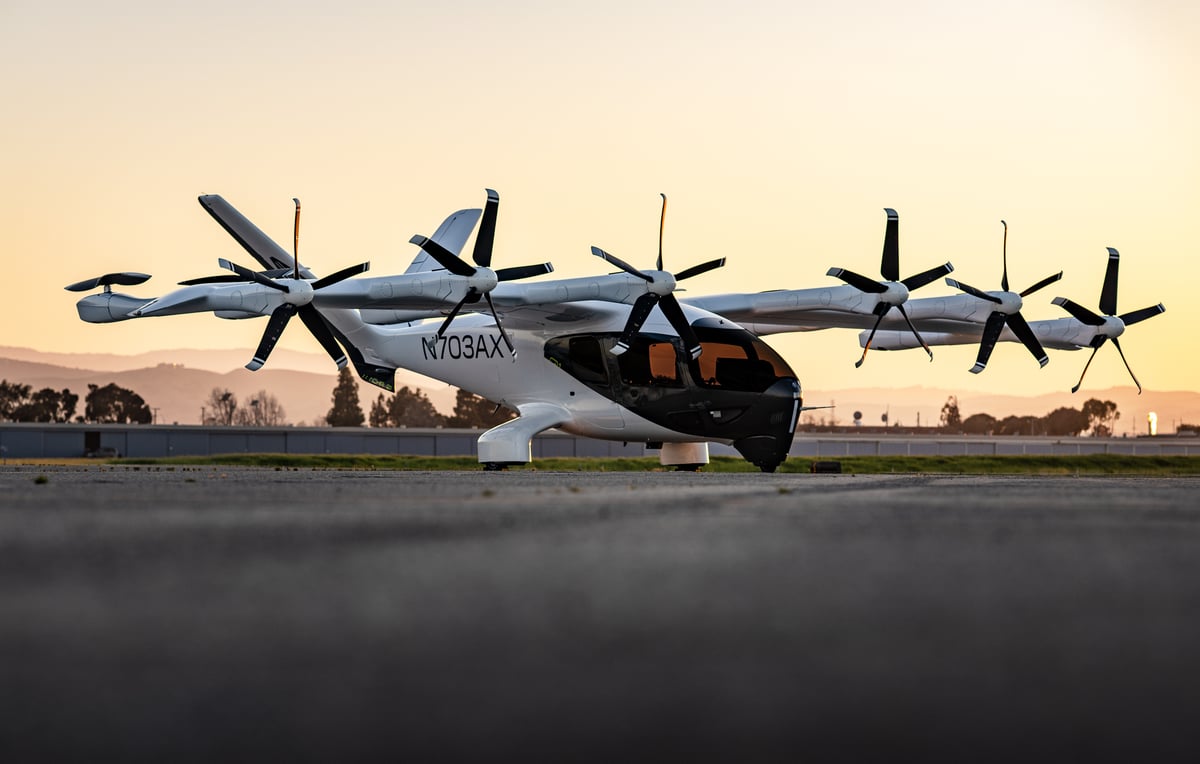
Archer Aviation's Stock Decline Presents Investment Opportunities

- Market Potential Assessment: Archer Aviation's stock has fallen over 60% from its all-time high, yet its electric vertical takeoff and landing (eVTOL) aircraft is nearing regulatory approval, with initial U.S. operations expected under the White House's eVTOL Pilot Integration Program, indicating potential in future markets.
- Military Contract Acquisition: The company has secured a military contract for up to six eVTOL aircraft and formed several commercial partnerships, including strategic support from United Airlines and Stellantis, laying a foundation for future revenue growth despite the limited market size.
- Revenue vs. Market Cap Comparison: With a current market cap of approximately $4 billion and trailing twelve-month sales of only $1.9 million, Archer Aviation faces challenges in its early commercialization phase, yet this also suggests significant potential for future investment returns.
- Market Share Expectations: If Archer Aviation captures 20% of the market by 2035, projected revenues could reach $1 billion, providing a realistic path for investment returns, although uncertainties regarding market valuation remain.
See More

Archer Aviation Poised to Launch Operations
- Market Outlook: Archer Aviation's electric vertical takeoff and landing (eVTOL) aircraft is nearing regulatory approval, with initial U.S. operations expected later this year, although the market size is limited, with the global eVTOL industry projected to grow to approximately $5 billion by 2035.
- Strategic Partnerships: Archer has secured a military contract for up to six eVTOL aircraft and formed multiple commercial partnerships with United Airlines and Stellantis, providing strategic support and financial backing for future market expansion.
- Sales and Valuation: Despite Archer's current market cap of $4 billion, which has fallen over 60% from its all-time high, the company reported only $1.9 million in trailing-12-month sales, highlighting the challenges and opportunities in its commercialization journey.
- Investor Confidence Rebuilding: The decline in Archer's stock price is viewed positively for long-term investors, as capturing 20% of the market by 2035 could yield revenues of $1 billion, offering a realistic path for sustainable investment returns.
See More

Archer Aviation Stock Experiences Significant Pullback

- Stock Pullback: Archer Aviation's stock fell 30.5% in June, contrasting with the S&P 500's 1.1% decline, indicating a significant loss of investor confidence in high-valuation growth stocks, leading to a market cap of approximately $4.1 billion being heavily impacted.
- Macroeconomic Concerns: Investor fears regarding potential interest rate hikes by the Federal Reserve, exacerbated by rising energy prices linked to the Iran conflict, have negatively influenced market expectations for Archer's future performance, contributing to the stock's decline.
- Signs of Market Recovery: In July, Archer's stock rebounded over 9%, contrasting with slight increases in the S&P 500 and Nasdaq, suggesting a renewed optimism in the electric vertical take-off and landing (eVTOL) industry.
- Industry Collaboration Outlook: Joby Aviation's partnership with Toyota is seen as a positive signal for the eVTOL sector, and Archer's similar collaboration with Stellantis may bolster investor confidence in the industry's future profitability, despite ongoing competitive pressures.
See More

Archer Aviation Stock Rebounds Amid eVTOL Industry Optimism
- Stock Recovery: Archer Aviation's stock rebounded over 9% in early July after a significant 30.5% drop in June, indicating a resurgence of market optimism surrounding the electric vertical take-off and landing (eVTOL) industry.
- Market Environment Impact: Despite a market capitalization of approximately $4.1 billion, Archer's stock has declined about 47% over the past year due to investor concerns over potential interest rate hikes by the Federal Reserve, highlighting the vulnerability of high-growth-dependent stocks in rising rate environments.
- Industry Developments: Joby Aviation's joint venture with Toyota is viewed as a positive signal for the eVTOL sector, and while Joby is a major competitor, this partnership could enhance the industry's outlook; Archer's collaboration with Stellantis is similarly seen as a strategic advantage.
- Investor Sentiment: The stock's recovery aligns with broader market improvements and positive news in the electric aviation sector, although the analyst team did not include Archer in their current top investment recommendations, the market remains optimistic about its future potential.
See More

Vertical Aerospace Secures Key Supplier Agreement for Valo eVTOL

- Supply Chain Risk Mitigation: Vertical Aerospace's long-term agreement with Astronics for power distribution systems significantly reduces supply chain risks for its Valo eVTOL, although substantial dilution risk remains due to ongoing cash needs.
- Production Capacity Enhancement: This deal is expected to accelerate development and production, bolstering the company's competitive position in the eVTOL market, despite projections indicating earnings won't materialize until 2032, leading to cautious optimism from the market.
- Enhanced Financing Capability: The company has secured access to up to $850 million in financing, which, while requiring equity issuance to raise cash, provides at least 12 months of financial runway for its operations.
- Shareholder Dilution Risk: Projections indicate that Vertical's share count will rise from 157 million in 2026 to 373 million by 2032, highlighting significant dilution risks for existing shareholders as the company executes its orders.
See More

Vertical Aerospace Signs Long-Term Agreement, Positive Outlook
- Supply Chain Assurance: Vertical Aerospace's long-term agreement with Astronics for power distribution systems ensures the supply for its Valo eVTOL, helping to de-risk the business model and accelerate production, thereby enhancing market competitiveness.
- Market Outlook: The company currently has 1,500 preorders for its Valo eVTOL, and while it faces challenges of not generating earnings until 2032, the signing of long-term agreements instills confidence in its future production capabilities.
- Financing Risks: Despite securing up to $850 million in financing to support operations, significant dilution risks for shareholders are anticipated, with projections indicating an increase in share count from 157 million in 2026 to 373 million by 2032.
- Investor Considerations: As a high-risk stock, Vertical Aerospace is suited for fully committed and patient eVTOL investors, although the ongoing cash needs and potential dilution issues remain critical points of concern.
See More
Archer Aviation's Stock Decline Presents Investment Opportunities
- Market Potential Assessment: Archer Aviation's stock has fallen over 60% from its all-time high, yet its electric vertical takeoff and landing (eVTOL) aircraft is nearing regulatory approval, with initial U.S. operations expected under the White House's eVTOL Pilot Integration Program, indicating potential in future markets.
- Military Contract Acquisition: The company has secured a military contract for up to six eVTOL aircraft and formed several commercial partnerships, including strategic support from United Airlines and Stellantis, laying a foundation for future revenue growth despite the limited market size.
- Revenue vs. Market Cap Comparison: With a current market cap of approximately $4 billion and trailing twelve-month sales of only $1.9 million, Archer Aviation faces challenges in its early commercialization phase, yet this also suggests significant potential for future investment returns.
- Market Share Expectations: If Archer Aviation captures 20% of the market by 2035, projected revenues could reach $1 billion, providing a realistic path for investment returns, although uncertainties regarding market valuation remain.
See More
Archer Aviation Poised to Launch Operations
- Market Outlook: Archer Aviation's electric vertical takeoff and landing (eVTOL) aircraft is nearing regulatory approval, with initial U.S. operations expected later this year, although the market size is limited, with the global eVTOL industry projected to grow to approximately $5 billion by 2035.
- Strategic Partnerships: Archer has secured a military contract for up to six eVTOL aircraft and formed multiple commercial partnerships with United Airlines and Stellantis, providing strategic support and financial backing for future market expansion.
- Sales and Valuation: Despite Archer's current market cap of $4 billion, which has fallen over 60% from its all-time high, the company reported only $1.9 million in trailing-12-month sales, highlighting the challenges and opportunities in its commercialization journey.
- Investor Confidence Rebuilding: The decline in Archer's stock price is viewed positively for long-term investors, as capturing 20% of the market by 2035 could yield revenues of $1 billion, offering a realistic path for sustainable investment returns.
See More
Archer Aviation Stock Experiences Significant Pullback
- Stock Pullback: Archer Aviation's stock fell 30.5% in June, contrasting with the S&P 500's 1.1% decline, indicating a significant loss of investor confidence in high-valuation growth stocks, leading to a market cap of approximately $4.1 billion being heavily impacted.
- Macroeconomic Concerns: Investor fears regarding potential interest rate hikes by the Federal Reserve, exacerbated by rising energy prices linked to the Iran conflict, have negatively influenced market expectations for Archer's future performance, contributing to the stock's decline.
- Signs of Market Recovery: In July, Archer's stock rebounded over 9%, contrasting with slight increases in the S&P 500 and Nasdaq, suggesting a renewed optimism in the electric vertical take-off and landing (eVTOL) industry.
- Industry Collaboration Outlook: Joby Aviation's partnership with Toyota is seen as a positive signal for the eVTOL sector, and Archer's similar collaboration with Stellantis may bolster investor confidence in the industry's future profitability, despite ongoing competitive pressures.
See More
Archer Aviation Stock Rebounds Amid eVTOL Industry Optimism
- Stock Recovery: Archer Aviation's stock rebounded over 9% in early July after a significant 30.5% drop in June, indicating a resurgence of market optimism surrounding the electric vertical take-off and landing (eVTOL) industry.
- Market Environment Impact: Despite a market capitalization of approximately $4.1 billion, Archer's stock has declined about 47% over the past year due to investor concerns over potential interest rate hikes by the Federal Reserve, highlighting the vulnerability of high-growth-dependent stocks in rising rate environments.
- Industry Developments: Joby Aviation's joint venture with Toyota is viewed as a positive signal for the eVTOL sector, and while Joby is a major competitor, this partnership could enhance the industry's outlook; Archer's collaboration with Stellantis is similarly seen as a strategic advantage.
- Investor Sentiment: The stock's recovery aligns with broader market improvements and positive news in the electric aviation sector, although the analyst team did not include Archer in their current top investment recommendations, the market remains optimistic about its future potential.
See More
Vertical Aerospace Secures Key Supplier Agreement for Valo eVTOL
- Supply Chain Risk Mitigation: Vertical Aerospace's long-term agreement with Astronics for power distribution systems significantly reduces supply chain risks for its Valo eVTOL, although substantial dilution risk remains due to ongoing cash needs.
- Production Capacity Enhancement: This deal is expected to accelerate development and production, bolstering the company's competitive position in the eVTOL market, despite projections indicating earnings won't materialize until 2032, leading to cautious optimism from the market.
- Enhanced Financing Capability: The company has secured access to up to $850 million in financing, which, while requiring equity issuance to raise cash, provides at least 12 months of financial runway for its operations.
- Shareholder Dilution Risk: Projections indicate that Vertical's share count will rise from 157 million in 2026 to 373 million by 2032, highlighting significant dilution risks for existing shareholders as the company executes its orders.
See More
Vertical Aerospace Signs Long-Term Agreement, Positive Outlook
- Supply Chain Assurance: Vertical Aerospace's long-term agreement with Astronics for power distribution systems ensures the supply for its Valo eVTOL, helping to de-risk the business model and accelerate production, thereby enhancing market competitiveness.
- Market Outlook: The company currently has 1,500 preorders for its Valo eVTOL, and while it faces challenges of not generating earnings until 2032, the signing of long-term agreements instills confidence in its future production capabilities.
- Financing Risks: Despite securing up to $850 million in financing to support operations, significant dilution risks for shareholders are anticipated, with projections indicating an increase in share count from 157 million in 2026 to 373 million by 2032.
- Investor Considerations: As a high-risk stock, Vertical Aerospace is suited for fully committed and patient eVTOL investors, although the ongoing cash needs and potential dilution issues remain critical points of concern.
See More





