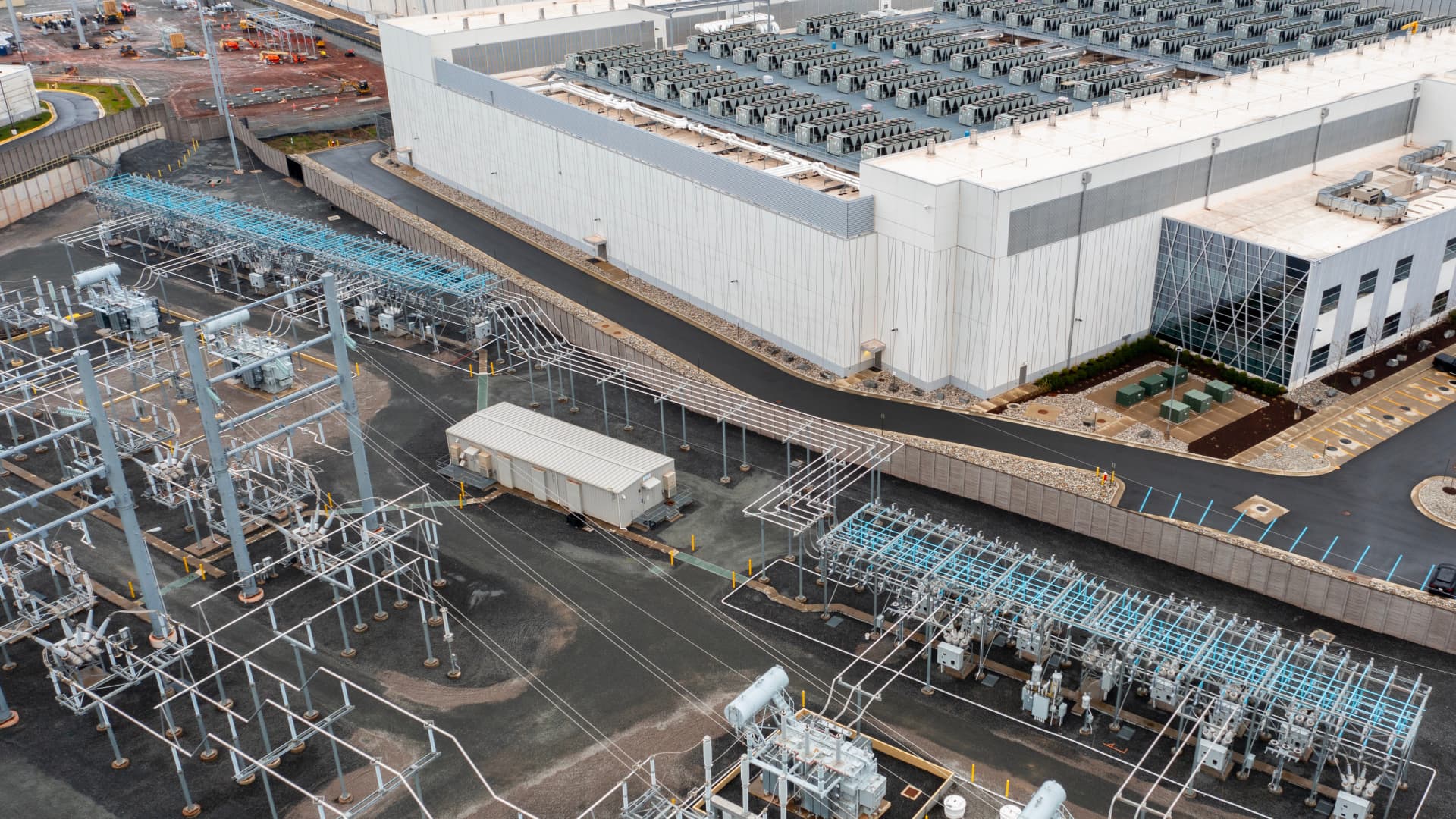
Approximately 20 banks to offer $18 billion loan for Oracle-related data center, according to Bloomberg.
Written by Emily J. Thompson, Senior Investment Analyst
Updated: Nov 07 2025
0mins

Project Finance Loan: A group of around 20 lenders is providing an $18 billion loan to finance the construction of a data center campus associated with Oracle, highlighting the ongoing investment in the AI sector.
Key Financial Institutions: Major banks involved in the loan include Sumitomo Mitsui, BNP Paribas, Goldman Sachs, and Mitsubishi UFJ Financial, which are acting as administrative agents for the financing deal.
Trade with 70% Backtested Accuracy
Stop guessing "Should I Buy ORCL?" and start using high-conviction signals backed by rigorous historical data.
Sign up today to access powerful investing tools and make smarter, data-driven decisions.
Analyst Views on ORCL
Wall Street analysts forecast ORCL stock price to rise
34 Analyst Rating
25 Buy
9 Hold
0 Sell
Moderate Buy
Current: 183.530

Low
180.00
Averages
309.59
High
400.00
Current: 183.530
Low
180.00
Averages
309.59
High
400.00
About ORCL
Oracle Corporation offers integrated suites of applications plus secure, autonomous infrastructure in the Oracle Cloud. The Company operates through three businesses: cloud and license, hardware and service. Its cloud and license business is engaged in the sale, marketing and delivery of its enterprise applications and infrastructure technologies through cloud and on-premise deployment models including its cloud services and license support offerings, and its cloud license and on-premise license offerings. Its hardware business provides infrastructure technologies including Oracle Engineered Systems, servers, storage, industry-specific hardware, operating systems, virtualization, management and other hardware-related software to support diverse IT environments. Its services business provides services to customers and partners to help maximize the performance of their investments in Oracle applications and infrastructure technologies.
About the author

Emily J. Thompson
Emily J. Thompson, a Chartered Financial Analyst (CFA) with 12 years in investment research, graduated with honors from the Wharton School. Specializing in industrial and technology stocks, she provides in-depth analysis for Intellectia’s earnings and market brief reports.

Is It Possible to Retire on $500,000?


- Investment Return Requirements: To achieve a median U.S. household income of $88,510 from an initial investment of $500,000, an annual return of 17.7% is necessary, which is challenging but feasible with strategic investments.
- Social Security Impact: Including the average annual Social Security benefit of $26,148 reduces the required annual return to 12.5%, and for married couples receiving benefits, it drops to 7.2%, highlighting the critical role of Social Security in retirement planning.
- Ares Capital Advantages: As the largest publicly traded business development company, Ares Capital boasts a diversified portfolio worth $21.5 billion and offers a high dividend yield of 10.6%, having maintained stable or increasing dividends for 67 consecutive quarters, demonstrating strong profitability and resilience.
- Energy Transition Potential: Energy Transfer LP operates over 140,000 miles of pipelines, providing an attractive distribution yield of approximately 7.2%, with management projecting annual distribution growth of 3% to 5%, positioning the company strongly for growth amid energy transition trends.
See More
Ares Capital and Pfizer Offer High-Yield Stocks for Retirement
- Stable Dividends from Ares Capital: Ares Capital (NASDAQ: ARCC), the largest publicly traded business development company, offers a high dividend yield of 10.6% and has maintained stable or increasing dividends for 67 consecutive quarters, demonstrating resilience and profitability even during economic crises.
- Tailwinds from Energy Transition: Energy Transfer (NYSE: ET), a leading midstream energy company in North America with over 140,000 miles of pipelines, expects to increase its distribution by 3% to 5% annually and benefits from the rapid build-out of AI data centers, enhancing its market position.
- Pfizer's Long-Term Commitment: Pfizer (NYSE: PFE) boasts a forward dividend yield of 6.8% and has increased its dividend for 16 consecutive years; despite facing patent expirations, the company is investing in new product development and acquisitions to bolster revenue growth potential, expecting solid growth beyond 2028.
- Retirement Investment Advice: While Ares Capital, Energy Transfer, and Pfizer present good investment options for retirement, relying solely on these three stocks is unwise; investors are advised to create a diversified portfolio to mitigate risks and enhance return potential.
See More

Wall Street's Lending Surge Fuels AI Growth


- Debt Financing Surge: Nvidia's recent $25 billion bond issuance exceeded its initial $20 billion target, reflecting strong market demand for AI infrastructure and is expected to drive future investments and growth for the company.
- Amazon's Debt Strategy: Having borrowed over $80 billion since early 2025 across various currencies, Amazon's actions indicate its intent to expand in the AI sector, while also showcasing the profitability of its robust cloud business.
- SpaceX's Financing Challenges: SpaceX is reportedly preparing a bond offering of at least $20 billion, despite posting a nearly $5 billion loss in 2025, highlighting the high risks associated with its AI investments, particularly due to significant operational losses in its AI division.
- Oracle's Financial Pressure: Although Oracle appears profitable on paper, its free cash flow was negative $24 billion in fiscal 2026, with debt exceeding $100 billion, indicating pressure from capital expenditures that may affect its future investment capabilities.
See More
Nvidia's $25 Billion Bond Sale Oversubscribed

- Successful Bond Sale: Nvidia's $25 billion bond issuance this month attracted over $85 billion in orders, reflecting strong market confidence in its financial health, with demand exceeding supply by three times, prompting the company to increase the offering from an initial $20 billion target.
- Strong Profitability: Nvidia reported nearly $43 billion in net income for its fiscal fourth quarter ending January 25, 2026, significantly surpassing the total amount raised through the bond sale, indicating robust profitability and cash flow that can support future investments in the rapidly growing AI market.
- Market Financing Surge: As AI infrastructure spending surges, companies like Amazon and Oracle are also actively raising funds, with Amazon borrowing over $80 billion since early 2025, showcasing the intent and confidence of major tech firms in investing in AI opportunities.
- SpaceX Financing Risks: Although SpaceX plans to issue at least $20 billion in bonds, it reported a nearly $5 billion loss in 2025 and a $4.28 billion loss in Q1 2026, highlighting investment risks in AI, especially given its current lack of profitability and the need for careful financial management.
See More
Massive Borrowing Amid AI Boom Raises Concerns

- Financing Trend: Amid the AI infrastructure spending surge, Nvidia's recent $25 billion bond issuance exceeded its initial target, reflecting strong market demand with orders surpassing $85 billion, indicating investor confidence in its future growth.
- Borrowing Scale: Oracle plans to raise up to $50 billion in fiscal 2026, despite negative free cash flow, its profitability supports this financing strategy, showcasing its strategic positioning in the AI sector.
- SpaceX's Challenges: SpaceX is preparing to issue at least $20 billion in bonds, despite a nearly $5 billion loss in 2025, suggesting that this financing is primarily for refinancing existing loans rather than funding new growth, highlighting its financial vulnerability.
- Market Watch: While Nvidia, Amazon, and Alphabet's borrowing appears robust, the high debt levels of Oracle and SpaceX raise concerns, prompting investors to closely monitor these companies' financial health to mitigate potential risks.
See More
Tech Companies Face Rising Debt Risks Amid AI Expansion

- Increased Debt Financing Demand: With tech giants like Amazon, Google, Microsoft, and Meta projected to invest $750 billion in AI infrastructure by 2026, the demand for debt financing has surged, particularly as rising interest rates increase borrowing costs, impacting the present value of future cash flows.
- Cash Flow Strain: An anticipated capital expenditure of up to $920 billion poses a risk of negative free cash flow for many tech companies, with Amazon expected to report negative cash flow, indicating that these firms are facing challenges similar to traditional capital-intensive industries.
- Heightened Rate Impact: Fed Chairman Kevin Warsh's indication of a potential rate hike in 2026 has triggered equity sell-offs and rising rates, with the 10-year Treasury yield nearing 4.45%, placing greater pressure on tech companies that rely on future profits, especially smaller firms.
- Shifting Market Reactions: Investors are beginning to pay attention to interest rates and inflation data, requiring tech investors to adapt to a new market environment, where debt financing has become a critical strategy for expansion in the high-risk AI investment sector, despite facing higher borrowing costs.
See More
Is It Possible to Retire on $500,000?
- Investment Return Requirements: To achieve a median U.S. household income of $88,510 from an initial investment of $500,000, an annual return of 17.7% is necessary, which is challenging but feasible with strategic investments.
- Social Security Impact: Including the average annual Social Security benefit of $26,148 reduces the required annual return to 12.5%, and for married couples receiving benefits, it drops to 7.2%, highlighting the critical role of Social Security in retirement planning.
- Ares Capital Advantages: As the largest publicly traded business development company, Ares Capital boasts a diversified portfolio worth $21.5 billion and offers a high dividend yield of 10.6%, having maintained stable or increasing dividends for 67 consecutive quarters, demonstrating strong profitability and resilience.
- Energy Transition Potential: Energy Transfer LP operates over 140,000 miles of pipelines, providing an attractive distribution yield of approximately 7.2%, with management projecting annual distribution growth of 3% to 5%, positioning the company strongly for growth amid energy transition trends.
See More
Ares Capital and Pfizer Offer High-Yield Stocks for Retirement
- Stable Dividends from Ares Capital: Ares Capital (NASDAQ: ARCC), the largest publicly traded business development company, offers a high dividend yield of 10.6% and has maintained stable or increasing dividends for 67 consecutive quarters, demonstrating resilience and profitability even during economic crises.
- Tailwinds from Energy Transition: Energy Transfer (NYSE: ET), a leading midstream energy company in North America with over 140,000 miles of pipelines, expects to increase its distribution by 3% to 5% annually and benefits from the rapid build-out of AI data centers, enhancing its market position.
- Pfizer's Long-Term Commitment: Pfizer (NYSE: PFE) boasts a forward dividend yield of 6.8% and has increased its dividend for 16 consecutive years; despite facing patent expirations, the company is investing in new product development and acquisitions to bolster revenue growth potential, expecting solid growth beyond 2028.
- Retirement Investment Advice: While Ares Capital, Energy Transfer, and Pfizer present good investment options for retirement, relying solely on these three stocks is unwise; investors are advised to create a diversified portfolio to mitigate risks and enhance return potential.
See More
Wall Street's Lending Surge Fuels AI Growth
- Debt Financing Surge: Nvidia's recent $25 billion bond issuance exceeded its initial $20 billion target, reflecting strong market demand for AI infrastructure and is expected to drive future investments and growth for the company.
- Amazon's Debt Strategy: Having borrowed over $80 billion since early 2025 across various currencies, Amazon's actions indicate its intent to expand in the AI sector, while also showcasing the profitability of its robust cloud business.
- SpaceX's Financing Challenges: SpaceX is reportedly preparing a bond offering of at least $20 billion, despite posting a nearly $5 billion loss in 2025, highlighting the high risks associated with its AI investments, particularly due to significant operational losses in its AI division.
- Oracle's Financial Pressure: Although Oracle appears profitable on paper, its free cash flow was negative $24 billion in fiscal 2026, with debt exceeding $100 billion, indicating pressure from capital expenditures that may affect its future investment capabilities.
See More
Nvidia's $25 Billion Bond Sale Oversubscribed
- Successful Bond Sale: Nvidia's $25 billion bond issuance this month attracted over $85 billion in orders, reflecting strong market confidence in its financial health, with demand exceeding supply by three times, prompting the company to increase the offering from an initial $20 billion target.
- Strong Profitability: Nvidia reported nearly $43 billion in net income for its fiscal fourth quarter ending January 25, 2026, significantly surpassing the total amount raised through the bond sale, indicating robust profitability and cash flow that can support future investments in the rapidly growing AI market.
- Market Financing Surge: As AI infrastructure spending surges, companies like Amazon and Oracle are also actively raising funds, with Amazon borrowing over $80 billion since early 2025, showcasing the intent and confidence of major tech firms in investing in AI opportunities.
- SpaceX Financing Risks: Although SpaceX plans to issue at least $20 billion in bonds, it reported a nearly $5 billion loss in 2025 and a $4.28 billion loss in Q1 2026, highlighting investment risks in AI, especially given its current lack of profitability and the need for careful financial management.
See More
Massive Borrowing Amid AI Boom Raises Concerns
- Financing Trend: Amid the AI infrastructure spending surge, Nvidia's recent $25 billion bond issuance exceeded its initial target, reflecting strong market demand with orders surpassing $85 billion, indicating investor confidence in its future growth.
- Borrowing Scale: Oracle plans to raise up to $50 billion in fiscal 2026, despite negative free cash flow, its profitability supports this financing strategy, showcasing its strategic positioning in the AI sector.
- SpaceX's Challenges: SpaceX is preparing to issue at least $20 billion in bonds, despite a nearly $5 billion loss in 2025, suggesting that this financing is primarily for refinancing existing loans rather than funding new growth, highlighting its financial vulnerability.
- Market Watch: While Nvidia, Amazon, and Alphabet's borrowing appears robust, the high debt levels of Oracle and SpaceX raise concerns, prompting investors to closely monitor these companies' financial health to mitigate potential risks.
See More
Tech Companies Face Rising Debt Risks Amid AI Expansion
- Increased Debt Financing Demand: With tech giants like Amazon, Google, Microsoft, and Meta projected to invest $750 billion in AI infrastructure by 2026, the demand for debt financing has surged, particularly as rising interest rates increase borrowing costs, impacting the present value of future cash flows.
- Cash Flow Strain: An anticipated capital expenditure of up to $920 billion poses a risk of negative free cash flow for many tech companies, with Amazon expected to report negative cash flow, indicating that these firms are facing challenges similar to traditional capital-intensive industries.
- Heightened Rate Impact: Fed Chairman Kevin Warsh's indication of a potential rate hike in 2026 has triggered equity sell-offs and rising rates, with the 10-year Treasury yield nearing 4.45%, placing greater pressure on tech companies that rely on future profits, especially smaller firms.
- Shifting Market Reactions: Investors are beginning to pay attention to interest rates and inflation data, requiring tech investors to adapt to a new market environment, where debt financing has become a critical strategy for expansion in the high-risk AI investment sector, despite facing higher borrowing costs.
See More