Analysis of Uber, Disney, and Novo Nordisk Earnings Reports
Written by Emily J. Thompson, Senior Investment Analyst
Updated: 1 day ago
0mins
Should l Buy UBER?
Source: Fool
- Uber Earnings Highlights: In Q1 2026, Uber reported a 14% revenue increase and a 25% rise in gross bookings, demonstrating resilience with a core business growing at a 20% annual rate despite a 12% stock price decline over the past year.
- Strategic Transformation Challenges: Uber is attempting to pivot from a ride-hailing service to a 'super app' by partnering with Expedia and Vrbo to add hotel and vacation rental options, although consumer acceptance in Western markets remains uncertain, potentially impacting long-term growth.
- Disney's Steady Growth: Disney achieved a record revenue of $25 billion in its latest earnings report, up 7% year-over-year, with operating income for Disney+ and Hulu soaring 88%, indicating strong performance in the entertainment sector despite pressures in its sports business.
- Novo Nordisk Market Rebound: Novo Nordisk's oral Wegovy drug generated $354 million in sales in the U.S., doubling analyst expectations, and overall sales jumped 32% year-over-year, showcasing strong demand in the obesity drug market despite challenges from price cuts and increasing competition.
Trade with 70% Backtested Accuracy
Stop guessing "Should I Buy UBER?" and start using high-conviction signals backed by rigorous historical data.
Sign up today to access powerful investing tools and make smarter, data-driven decisions.
Analyst Views on UBER
Wall Street analysts forecast UBER stock price to rise
32 Analyst Rating
28 Buy
3 Hold
1 Sell
Strong Buy
Current: 74.700

Low
72.00
Averages
107.10
High
150.00
Current: 74.700
Low
72.00
Averages
107.10
High
150.00
About UBER
Uber Technologies, Inc. operates a technology platform that uses network and technology to power movement from point A to point B. It develops and operates technology applications supporting a variety of offerings on its platform (platform(s)). Its segments include Mobility, Delivery and Freight. Mobility products connect consumers with drivers who provide rides in a variety of vehicles, such as cars, auto rickshaws, motorbikes, minibuses, or taxis. Delivery offerings allow consumers to search for and discover local restaurants, order a meal, and either pick-up at the restaurant or have the meal delivered. In certain markets, the Delivery segment provides offerings for grocery, alcohol, and convenience store delivery as well as select other goods. The Freight segment connects carriers with shippers on its platform, and gives carriers upfront, pricing and the ability to book a shipment. The Freight segment also includes transportation management and other logistics service offerings.
About the author

Emily J. Thompson
Emily J. Thompson, a Chartered Financial Analyst (CFA) with 12 years in investment research, graduated with honors from the Wharton School. Specializing in industrial and technology stocks, she provides in-depth analysis for Intellectia’s earnings and market brief reports.

Analysis of Uber, Disney, and Novo Nordisk Earnings Reports

- Uber Earnings Highlights: In Q1 2026, Uber reported a 14% revenue increase and a 25% rise in gross bookings, demonstrating resilience with a core business growing at a 20% annual rate despite a 12% stock price decline over the past year.
- Strategic Transformation Challenges: Uber is attempting to pivot from a ride-hailing service to a 'super app' by partnering with Expedia and Vrbo to add hotel and vacation rental options, although consumer acceptance in Western markets remains uncertain, potentially impacting long-term growth.
- Disney's Steady Growth: Disney achieved a record revenue of $25 billion in its latest earnings report, up 7% year-over-year, with operating income for Disney+ and Hulu soaring 88%, indicating strong performance in the entertainment sector despite pressures in its sports business.
- Novo Nordisk Market Rebound: Novo Nordisk's oral Wegovy drug generated $354 million in sales in the U.S., doubling analyst expectations, and overall sales jumped 32% year-over-year, showcasing strong demand in the obesity drug market despite challenges from price cuts and increasing competition.
See More

Acceleration of eVTOL Aircraft Commercialization in 2026


- FAA Certification Progress: Joby Aviation and Archer Aviation are accelerating the commercialization of electric vertical takeoff and landing (eVTOL) aircraft, with Archer completing the third stage of the FAA's four-stage certification process, becoming the first U.S. eVTOL company to do so, while Joby has successfully flown its first FAA-conforming aircraft, marking its entry into the final stage, which lays the groundwork for future commercial operations.
- Operational Plans: Both companies expect to begin U.S. operations in 2026 under a White House program, which will bring them closer to putting paying passengers in the air; although both stocks are risky, this progress indicates growing market confidence in the eVTOL concept.
- Business Model Differences: Joby Aviation adopts a vertically integrated business model, planning to manufacture its own parts and operate its aircraft through an air-taxi service similar to Uber, which, while requiring higher upfront R&D investment, could lead to higher profit margins in the long run.
- Supply Chain Control: In contrast, Archer Aviation outsources many components to reputable suppliers like Molicel and Honeywell, a strategy that may accelerate short-term progress but reduces its control over the supply chain, potentially impacting its long-term competitiveness.
See More
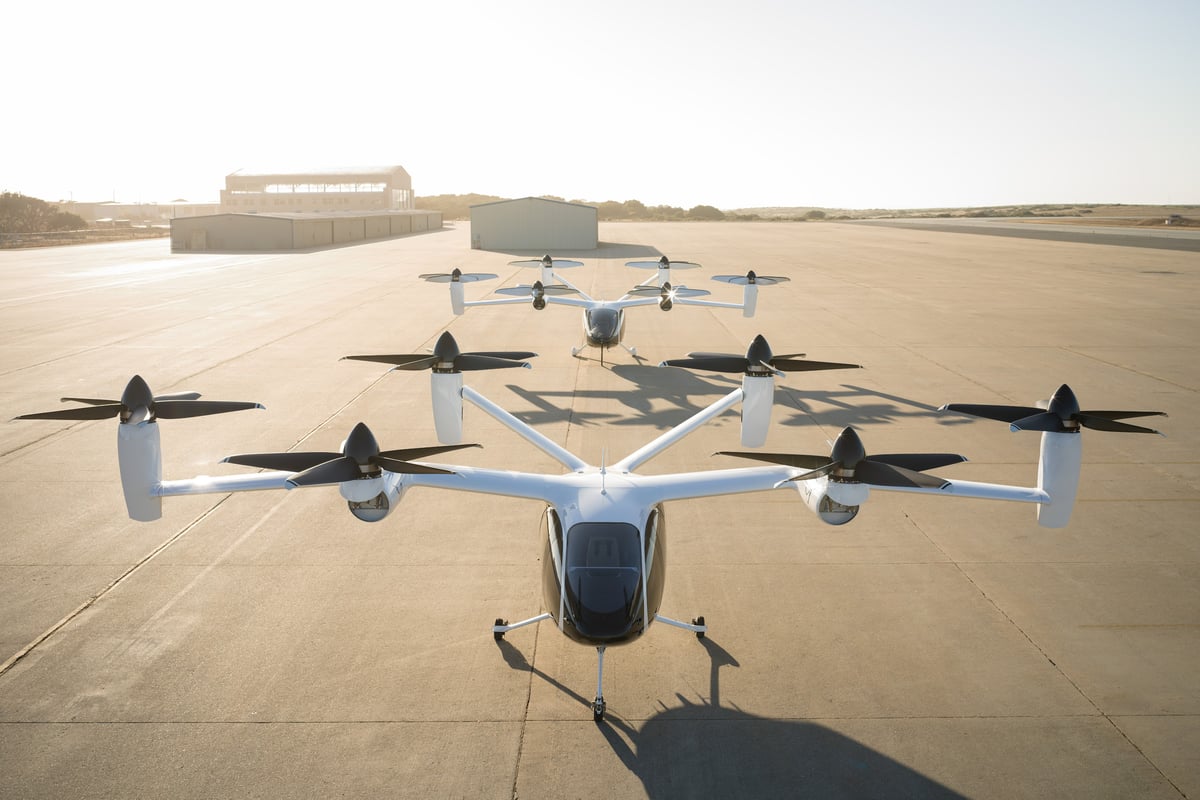
Joby Aviation: The Future of Flying Taxis

- Massive Market Potential: Morgan Stanley estimates that the eVTOL market could reach approximately $9 trillion by the middle of this century, indicating significant growth potential for the flying taxi industry, with Joby Aviation poised to play a crucial role as a pioneer.
- Clear Competitive Advantage: Joby Aviation's partnership with Uber provides a regulatory edge, and its strategy to manufacture all aircraft components in-house enhances economic control and long-term margins, positioning it favorably against rival Archer Aviation.
- Valuation and Growth Potential: With a current market cap of around $10.5 billion, if Joby reaches Uber's valuation of $155 billion, its stock could increase by approximately 15 times, presenting substantial return potential for investors despite the lack of meaningful revenue.
- Investment Risk Advisory: While Joby Aviation's positioning in a nascent industry attracts aggressive investors, its unproven business model necessitates caution, as it remains a speculative investment not suitable for placing all funds into.
See More

Cerebras IPO Exceeds Expectations, Market Cap Nears $95 Billion


- Strong IPO Performance: Cerebras began trading on Nasdaq with an IPO price of $185 per share, achieving an implied valuation of over $56 billion, and closing its first day up 68%, bringing its market cap close to $95 billion, indicating strong market confidence in its technology.
- Record Financing: The IPO raised $5.55 billion, marking the largest U.S. tech IPO since Uber in 2019, with underwriters having the option to exercise an additional 4.5 million shares, potentially increasing total proceeds to $6.38 billion, thereby enhancing the company's financial strength.
- Significant Technical Advantage: Cerebras' WSE-3 chip is 58 times larger than Nvidia's B200 model, featuring 250 times more on-chip memory and 2,625 times more memory bandwidth, which reduces reliance on external memory and enhances speed for specific tasks, showcasing its strong technological competitiveness.
- Future Growth Potential: In 2025, Cerebras is projected to grow total revenue by 76% to nearly $510 million, with hardware revenue accounting for 70%; despite facing an operating loss of $146 million, its cloud services are expected to grow 95% year-over-year, reflecting strong market demand and future growth potential.
See More

dLocal Reports 10% Drop in Q1 Net Profit Amid Tax Charges

- Profit Decline: dLocal reported a net profit of $41.9 million in Q1, falling 10% short of the $48.9 million expected by analysts, primarily due to one-off tax charges and increased expenses impacting profitability.
- Tax Adjustment Impact: The company noted a $9.7 million tax adjustment related to installment products, which hindered its ability to meet profit expectations, reflecting challenges in financial management.
- Significant Revenue Growth: Despite the profit decline, dLocal's revenue surged 55% to $335.9 million, exceeding analyst forecasts of $333.1 million, indicating strong market demand for its services.
- Transaction Volume Surge: Total payment volume (TPV) increased by 73% to $14.1 billion, up from $8.1 billion a year earlier, demonstrating the company's substantial growth in emerging markets.
See More

Uber, Lucid, and Nuro Expand Strategic Partnership into Europe

- Strategic Partnership Agreement: Uber, Lucid Group, and Nuro announced a strategic partnership in July 2025 to launch a premium global robotaxi program on the Uber platform, which is expected to further drive the electric vehicle market's growth.
- European Market Expansion: Lucid Motors' interim CEO confirmed that the collaboration will extend into European markets, although the timeline depends on regulatory approvals and certifications in each market, indicating the company's focus on international expansion.
- New Hub Establishment: Nuro is establishing its first European hub in Munich to support engineering, operations, and partner engagement, aimed at adapting its autonomous driving platform to diverse road and regulatory conditions, thereby enhancing its global footprint.
- Market Reaction: Despite retail sentiment around LCID and UBER remaining bearish, with LCID shares dropping over 25% in the past month and UBER shares down about 17% over the last 12 months, the market shows caution regarding the future of the partnership.
See More
Analysis of Uber, Disney, and Novo Nordisk Earnings Reports
- Uber Earnings Highlights: In Q1 2026, Uber reported a 14% revenue increase and a 25% rise in gross bookings, demonstrating resilience with a core business growing at a 20% annual rate despite a 12% stock price decline over the past year.
- Strategic Transformation Challenges: Uber is attempting to pivot from a ride-hailing service to a 'super app' by partnering with Expedia and Vrbo to add hotel and vacation rental options, although consumer acceptance in Western markets remains uncertain, potentially impacting long-term growth.
- Disney's Steady Growth: Disney achieved a record revenue of $25 billion in its latest earnings report, up 7% year-over-year, with operating income for Disney+ and Hulu soaring 88%, indicating strong performance in the entertainment sector despite pressures in its sports business.
- Novo Nordisk Market Rebound: Novo Nordisk's oral Wegovy drug generated $354 million in sales in the U.S., doubling analyst expectations, and overall sales jumped 32% year-over-year, showcasing strong demand in the obesity drug market despite challenges from price cuts and increasing competition.
See More
Acceleration of eVTOL Aircraft Commercialization in 2026
- FAA Certification Progress: Joby Aviation and Archer Aviation are accelerating the commercialization of electric vertical takeoff and landing (eVTOL) aircraft, with Archer completing the third stage of the FAA's four-stage certification process, becoming the first U.S. eVTOL company to do so, while Joby has successfully flown its first FAA-conforming aircraft, marking its entry into the final stage, which lays the groundwork for future commercial operations.
- Operational Plans: Both companies expect to begin U.S. operations in 2026 under a White House program, which will bring them closer to putting paying passengers in the air; although both stocks are risky, this progress indicates growing market confidence in the eVTOL concept.
- Business Model Differences: Joby Aviation adopts a vertically integrated business model, planning to manufacture its own parts and operate its aircraft through an air-taxi service similar to Uber, which, while requiring higher upfront R&D investment, could lead to higher profit margins in the long run.
- Supply Chain Control: In contrast, Archer Aviation outsources many components to reputable suppliers like Molicel and Honeywell, a strategy that may accelerate short-term progress but reduces its control over the supply chain, potentially impacting its long-term competitiveness.
See More
Joby Aviation: The Future of Flying Taxis
- Massive Market Potential: Morgan Stanley estimates that the eVTOL market could reach approximately $9 trillion by the middle of this century, indicating significant growth potential for the flying taxi industry, with Joby Aviation poised to play a crucial role as a pioneer.
- Clear Competitive Advantage: Joby Aviation's partnership with Uber provides a regulatory edge, and its strategy to manufacture all aircraft components in-house enhances economic control and long-term margins, positioning it favorably against rival Archer Aviation.
- Valuation and Growth Potential: With a current market cap of around $10.5 billion, if Joby reaches Uber's valuation of $155 billion, its stock could increase by approximately 15 times, presenting substantial return potential for investors despite the lack of meaningful revenue.
- Investment Risk Advisory: While Joby Aviation's positioning in a nascent industry attracts aggressive investors, its unproven business model necessitates caution, as it remains a speculative investment not suitable for placing all funds into.
See More
Cerebras IPO Exceeds Expectations, Market Cap Nears $95 Billion
- Strong IPO Performance: Cerebras began trading on Nasdaq with an IPO price of $185 per share, achieving an implied valuation of over $56 billion, and closing its first day up 68%, bringing its market cap close to $95 billion, indicating strong market confidence in its technology.
- Record Financing: The IPO raised $5.55 billion, marking the largest U.S. tech IPO since Uber in 2019, with underwriters having the option to exercise an additional 4.5 million shares, potentially increasing total proceeds to $6.38 billion, thereby enhancing the company's financial strength.
- Significant Technical Advantage: Cerebras' WSE-3 chip is 58 times larger than Nvidia's B200 model, featuring 250 times more on-chip memory and 2,625 times more memory bandwidth, which reduces reliance on external memory and enhances speed for specific tasks, showcasing its strong technological competitiveness.
- Future Growth Potential: In 2025, Cerebras is projected to grow total revenue by 76% to nearly $510 million, with hardware revenue accounting for 70%; despite facing an operating loss of $146 million, its cloud services are expected to grow 95% year-over-year, reflecting strong market demand and future growth potential.
See More
dLocal Reports 10% Drop in Q1 Net Profit Amid Tax Charges
- Profit Decline: dLocal reported a net profit of $41.9 million in Q1, falling 10% short of the $48.9 million expected by analysts, primarily due to one-off tax charges and increased expenses impacting profitability.
- Tax Adjustment Impact: The company noted a $9.7 million tax adjustment related to installment products, which hindered its ability to meet profit expectations, reflecting challenges in financial management.
- Significant Revenue Growth: Despite the profit decline, dLocal's revenue surged 55% to $335.9 million, exceeding analyst forecasts of $333.1 million, indicating strong market demand for its services.
- Transaction Volume Surge: Total payment volume (TPV) increased by 73% to $14.1 billion, up from $8.1 billion a year earlier, demonstrating the company's substantial growth in emerging markets.
See More
Uber, Lucid, and Nuro Expand Strategic Partnership into Europe
- Strategic Partnership Agreement: Uber, Lucid Group, and Nuro announced a strategic partnership in July 2025 to launch a premium global robotaxi program on the Uber platform, which is expected to further drive the electric vehicle market's growth.
- European Market Expansion: Lucid Motors' interim CEO confirmed that the collaboration will extend into European markets, although the timeline depends on regulatory approvals and certifications in each market, indicating the company's focus on international expansion.
- New Hub Establishment: Nuro is establishing its first European hub in Munich to support engineering, operations, and partner engagement, aimed at adapting its autonomous driving platform to diverse road and regulatory conditions, thereby enhancing its global footprint.
- Market Reaction: Despite retail sentiment around LCID and UBER remaining bearish, with LCID shares dropping over 25% in the past month and UBER shares down about 17% over the last 12 months, the market shows caution regarding the future of the partnership.
See More