Analysis of Microsoft's Future Growth Potential
Written by Emily J. Thompson, Senior Investment Analyst
Updated: 1 hour ago
0mins
Should l Buy MSFT?
Source: Fool
- Rapid Copilot Adoption: Microsoft's AI chatbot Copilot is embedded in 20 million licenses, representing a modest 5% penetration; however, with a monthly fee of around $30, it could generate billions in annual recurring revenue, significantly enhancing the company's financial performance.
- Surge in Azure Data Center Demand: Microsoft ended the third quarter with a staggering $627 billion order backlog, doubling year-over-year, indicating extremely high demand for AI computing capacity, prompting plans to double its global data center footprint in the next two years to meet this demand.
- Strong Cloud Business Growth: Azure's revenue grew by 40% year-over-year in the third quarter, reflecting robust market momentum, especially against the backdrop of the infrastructure backlog, suggesting that this growth trend is likely to continue and further solidify Microsoft's leadership in cloud computing.
- Attractive Stock Valuation: With a current P/E ratio of 24.6, near its lowest in a decade, a 37% increase in stock price would align it with the Nasdaq-100 index, potentially elevating its market cap to $4.2 trillion, indicating significant upside potential in the tech market.
Trade with 70% Backtested Accuracy
Stop guessing "Should I Buy MSFT?" and start using high-conviction signals backed by rigorous historical data.
Sign up today to access powerful investing tools and make smarter, data-driven decisions.
Analyst Views on MSFT
Wall Street analysts forecast MSFT stock price to rise
34 Analyst Rating
32 Buy
2 Hold
0 Sell
Strong Buy
Current: 407.780

Low
500.00
Averages
631.36
High
678.00
Current: 407.780
Low
500.00
Averages
631.36
High
678.00
About MSFT
Microsoft Corporation is a technology company. The Company develops and supports software, services, devices, and solutions. The Company’s segments include Productivity and Business Processes, Intelligent Cloud, and More Personal Computing. The Productivity and Business Processes segment consists of products and services in its portfolio of productivity, communication, and information services. This segment primarily comprises: Office Commercial, Office Consumer, LinkedIn, and Dynamics business solutions. The Intelligent Cloud segment consists of server products and cloud services, including Azure and other cloud services, SQL Server, Windows Server, Visual Studio, System Center, and related Client Access Licenses (CALs), and Nuance and GitHub; and Enterprise Services, including enterprise support services, industry solutions and Nuance professional services. The More Personal Computing segment primarily comprises Windows, Devices, Gaming, and search and news advertising.
About the author

Emily J. Thompson
Emily J. Thompson, a Chartered Financial Analyst (CFA) with 12 years in investment research, graduated with honors from the Wharton School. Specializing in industrial and technology stocks, she provides in-depth analysis for Intellectia’s earnings and market brief reports.

AI Investment Fuels Economic Growth Amid Record Earnings

- Earnings Growth Outlook: An expected 15.1% growth in corporate earnings for Q1 is maintaining market strength near record highs, boosting investor confidence and further propelling stock market gains.
- Surge in Corporate Spending: Major tech firms like Microsoft, Amazon, Meta, and Alphabet are ramping up capital expenditures in AI, with hyperscaler capex projected to reach $725 billion by 2026, driving growth across the entire sector.
- Significant GDP Contribution: According to the US Bureau of Economic Analysis, business investments were the primary driver of real GDP growth in Q1, surpassing consumer spending and highlighting the critical role of AI investments in economic stability.
- Diversification Strategy Recommended: Despite strong performances from big tech, UBS advises investors to diversify within AI investments, focusing on semiconductors and infrastructure to mitigate concentration risks and seize future growth opportunities.
See More

Musk Contacts OpenAI Executives for Settlement Before Trial
- Lawsuit Context: Elon Musk contacted OpenAI President Greg Brockman two days before a high-stakes trial in Oakland federal court to explore settlement options, indicating his serious concerns about the lawsuit's outcome.
- Intense Dialogue: During discussions about dropping claims, Musk warned that if they insisted on litigation, Brockman and OpenAI CEO Sam Altman would become the most hated men in America, highlighting the tense atmosphere surrounding the case.
- Claims Demand: Musk alleges that OpenAI's shift to a for-profit model betrays its original nonprofit mission, seeking changes in OpenAI's leadership and $150 billion in damages, reflecting his strong dissatisfaction with the company's future direction.
- Trial Progress: The trial began on April 28 and is expected to last several weeks, with a verdict possible by mid-May, involving testimonies from Altman, Brockman, and Microsoft CEO Satya Nadella, underscoring the case's complexity and significance.
See More

CGI Achieves Microsoft Copilot Specialization in Modern Work

- Microsoft Collaboration Success: CGI has achieved the Copilot specialization in Modern Work within the Microsoft AI Cloud Partner Program, indicating its capability in securely operationalizing cloud and AI investments, thereby enhancing its competitiveness in the digital transformation market.
- Secure Operational Capability: Through its global collaboration with Microsoft, CGI assists organizations in securely scaling cloud and AI investments while navigating complex compliance and cybersecurity challenges, which strengthens client trust and reliance on its services.
- Market Demand Response: CGI's new certification not only enhances its market image but also enables it to better meet client demands for modern work solutions, which is expected to drive future business growth and client expansion.
- Strategic Partnership Deepening: This certification marks a further deepening of the strategic partnership between CGI and Microsoft, which is anticipated to yield more synergies in future technological innovations and market expansions.
See More

Analysis of Microsoft's Future Growth Potential
- Rapid Copilot Adoption: Microsoft's AI chatbot Copilot is embedded in 20 million licenses, representing a modest 5% penetration; however, with a monthly fee of around $30, it could generate billions in annual recurring revenue, significantly enhancing the company's financial performance.
- Surge in Azure Data Center Demand: Microsoft ended the third quarter with a staggering $627 billion order backlog, doubling year-over-year, indicating extremely high demand for AI computing capacity, prompting plans to double its global data center footprint in the next two years to meet this demand.
- Strong Cloud Business Growth: Azure's revenue grew by 40% year-over-year in the third quarter, reflecting robust market momentum, especially against the backdrop of the infrastructure backlog, suggesting that this growth trend is likely to continue and further solidify Microsoft's leadership in cloud computing.
- Attractive Stock Valuation: With a current P/E ratio of 24.6, near its lowest in a decade, a 37% increase in stock price would align it with the Nasdaq-100 index, potentially elevating its market cap to $4.2 trillion, indicating significant upside potential in the tech market.
See More
Tech Stocks Surge on AI Demand and Earnings Reports


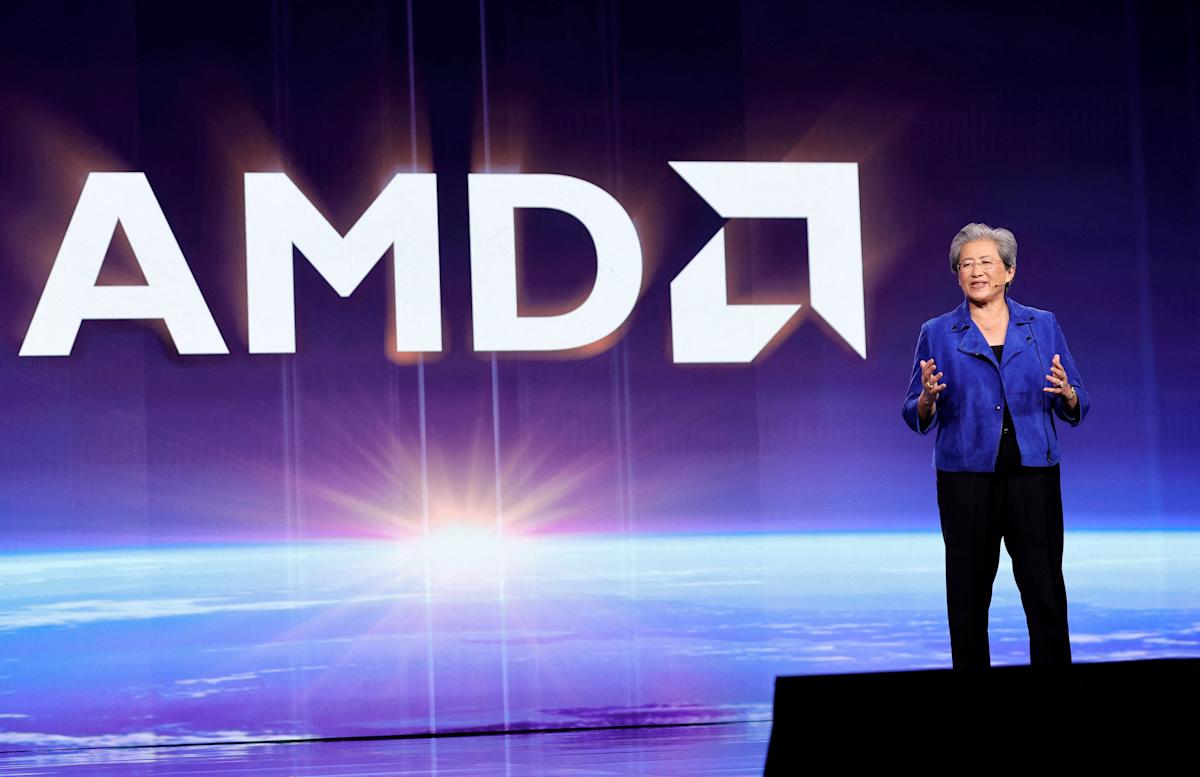
- Semiconductor Sector Outlook: With earnings reports from AMD and Arm on the horizon, the market's focus on data center chip demand and supply constraints is likely to further boost tech stocks, particularly against the backdrop of the AI boom.
- Apple's Strong Performance: Apple reported Q2 earnings of $2.01 per share and revenue of $111.2 billion, exceeding analyst expectations, with iPhone sales growing 20% to $56.99 billion, indicating robust market demand despite supply chain challenges.
- Meta's AI Acquisition: Meta's acquisition of Assured Robot Intelligence aims to enhance its humanoid robotics capabilities, which is expected to drive technological advancements in AI and further solidify its market position.
- Surge in AI Spending: Projected AI infrastructure spending is set to reach $650 billion in 2026, with Amazon accounting for $200 billion, reflecting the enthusiasm of cloud service providers for AI investments, despite facing cost pressures.
See More

Microsoft's AI Spending Surge Complicates Investment Outlook

- Strong Financial Performance: In Q3 of fiscal 2026, Microsoft reported an 18% year-over-year revenue growth, with operating income and non-GAAP net income both increasing by over 20%, indicating robust demand and performance in the AI sector.
- Surge in Capital Expenditures: Microsoft expects capital expenditures to exceed $40 billion in Q4 of fiscal 2026, with an annual forecast of $190 billion, a significant increase from $64.5 billion in fiscal 2025, reflecting an aggressive investment strategy in AI and cloud computing.
- Changes in OpenAI Partnership: Microsoft's commercial bookings fell by 46% due to reduced commitments from OpenAI, although the revised agreement grants Microsoft royalty-free access to OpenAI's IP until 2032, the decreased dependency may impact future revenue stability.
- Intensifying Market Competition: Microsoft faces pressure in the race for AI chips and networking equipment; despite strong performance from its Copilot product and rapid user growth, it lags behind Alphabet and Amazon in developing and implementing custom AI chips, which could affect its long-term profitability.
See More
AI Investment Fuels Economic Growth Amid Record Earnings
- Earnings Growth Outlook: An expected 15.1% growth in corporate earnings for Q1 is maintaining market strength near record highs, boosting investor confidence and further propelling stock market gains.
- Surge in Corporate Spending: Major tech firms like Microsoft, Amazon, Meta, and Alphabet are ramping up capital expenditures in AI, with hyperscaler capex projected to reach $725 billion by 2026, driving growth across the entire sector.
- Significant GDP Contribution: According to the US Bureau of Economic Analysis, business investments were the primary driver of real GDP growth in Q1, surpassing consumer spending and highlighting the critical role of AI investments in economic stability.
- Diversification Strategy Recommended: Despite strong performances from big tech, UBS advises investors to diversify within AI investments, focusing on semiconductors and infrastructure to mitigate concentration risks and seize future growth opportunities.
See More
Musk Contacts OpenAI Executives for Settlement Before Trial
- Lawsuit Context: Elon Musk contacted OpenAI President Greg Brockman two days before a high-stakes trial in Oakland federal court to explore settlement options, indicating his serious concerns about the lawsuit's outcome.
- Intense Dialogue: During discussions about dropping claims, Musk warned that if they insisted on litigation, Brockman and OpenAI CEO Sam Altman would become the most hated men in America, highlighting the tense atmosphere surrounding the case.
- Claims Demand: Musk alleges that OpenAI's shift to a for-profit model betrays its original nonprofit mission, seeking changes in OpenAI's leadership and $150 billion in damages, reflecting his strong dissatisfaction with the company's future direction.
- Trial Progress: The trial began on April 28 and is expected to last several weeks, with a verdict possible by mid-May, involving testimonies from Altman, Brockman, and Microsoft CEO Satya Nadella, underscoring the case's complexity and significance.
See More
CGI Achieves Microsoft Copilot Specialization in Modern Work
- Microsoft Collaboration Success: CGI has achieved the Copilot specialization in Modern Work within the Microsoft AI Cloud Partner Program, indicating its capability in securely operationalizing cloud and AI investments, thereby enhancing its competitiveness in the digital transformation market.
- Secure Operational Capability: Through its global collaboration with Microsoft, CGI assists organizations in securely scaling cloud and AI investments while navigating complex compliance and cybersecurity challenges, which strengthens client trust and reliance on its services.
- Market Demand Response: CGI's new certification not only enhances its market image but also enables it to better meet client demands for modern work solutions, which is expected to drive future business growth and client expansion.
- Strategic Partnership Deepening: This certification marks a further deepening of the strategic partnership between CGI and Microsoft, which is anticipated to yield more synergies in future technological innovations and market expansions.
See More
Analysis of Microsoft's Future Growth Potential
- Rapid Copilot Adoption: Microsoft's AI chatbot Copilot is embedded in 20 million licenses, representing a modest 5% penetration; however, with a monthly fee of around $30, it could generate billions in annual recurring revenue, significantly enhancing the company's financial performance.
- Surge in Azure Data Center Demand: Microsoft ended the third quarter with a staggering $627 billion order backlog, doubling year-over-year, indicating extremely high demand for AI computing capacity, prompting plans to double its global data center footprint in the next two years to meet this demand.
- Strong Cloud Business Growth: Azure's revenue grew by 40% year-over-year in the third quarter, reflecting robust market momentum, especially against the backdrop of the infrastructure backlog, suggesting that this growth trend is likely to continue and further solidify Microsoft's leadership in cloud computing.
- Attractive Stock Valuation: With a current P/E ratio of 24.6, near its lowest in a decade, a 37% increase in stock price would align it with the Nasdaq-100 index, potentially elevating its market cap to $4.2 trillion, indicating significant upside potential in the tech market.
See More
Tech Stocks Surge on AI Demand and Earnings Reports
- Semiconductor Sector Outlook: With earnings reports from AMD and Arm on the horizon, the market's focus on data center chip demand and supply constraints is likely to further boost tech stocks, particularly against the backdrop of the AI boom.
- Apple's Strong Performance: Apple reported Q2 earnings of $2.01 per share and revenue of $111.2 billion, exceeding analyst expectations, with iPhone sales growing 20% to $56.99 billion, indicating robust market demand despite supply chain challenges.
- Meta's AI Acquisition: Meta's acquisition of Assured Robot Intelligence aims to enhance its humanoid robotics capabilities, which is expected to drive technological advancements in AI and further solidify its market position.
- Surge in AI Spending: Projected AI infrastructure spending is set to reach $650 billion in 2026, with Amazon accounting for $200 billion, reflecting the enthusiasm of cloud service providers for AI investments, despite facing cost pressures.
See More
Microsoft's AI Spending Surge Complicates Investment Outlook
- Strong Financial Performance: In Q3 of fiscal 2026, Microsoft reported an 18% year-over-year revenue growth, with operating income and non-GAAP net income both increasing by over 20%, indicating robust demand and performance in the AI sector.
- Surge in Capital Expenditures: Microsoft expects capital expenditures to exceed $40 billion in Q4 of fiscal 2026, with an annual forecast of $190 billion, a significant increase from $64.5 billion in fiscal 2025, reflecting an aggressive investment strategy in AI and cloud computing.
- Changes in OpenAI Partnership: Microsoft's commercial bookings fell by 46% due to reduced commitments from OpenAI, although the revised agreement grants Microsoft royalty-free access to OpenAI's IP until 2032, the decreased dependency may impact future revenue stability.
- Intensifying Market Competition: Microsoft faces pressure in the race for AI chips and networking equipment; despite strong performance from its Copilot product and rapid user growth, it lags behind Alphabet and Amazon in developing and implementing custom AI chips, which could affect its long-term profitability.
See More