Analysis of Hedge Fund Manager Investment Strategies
Written by Emily J. Thompson, Senior Investment Analyst
Updated: Mar 03 2026
0mins

Should l Buy MU?
Source: Fool
- Tepper's Stake Reduction: David Tepper reduced his Nvidia stake by about 10% and Amazon stake by 13% in Q4, raising eyebrows as both stocks have been long-term winners, suggesting he may be taking profits or reallocating funds for other investments.
- Investor Information Lag: Investors receive a snapshot of hedge fund managers' moves about 45 days after the quarter ends, making it less effective for short-term trading, especially for managers who frequently trade.
- Increased AI Stock Holdings: Tepper increased his stakes in Alphabet, Micron Technology, and Meta Platforms by 29%, 200%, and 62% respectively in Q4, indicating a bullish outlook on the AI data center buildout despite reducing positions in Nvidia and Amazon.
- Memory Chip Market Outlook: Micron's stock has surged nearly 50% in 2026 due to a memory chip shortage driven by data center expansion, and this trend is expected to last for several years, potentially supporting Micron's long-term stock price and outperforming other AI-related stocks.
Trade with 70% Backtested Accuracy
Stop guessing "Should I Buy MU?" and start using high-conviction signals backed by rigorous historical data.
Sign up today to access powerful investing tools and make smarter, data-driven decisions.
Analyst Views on MU
Wall Street analysts forecast MU stock price to fall
26 Analyst Rating
24 Buy
2 Hold
0 Sell
Strong Buy
Current: 367.850

Low
235.00
Averages
336.12
High
500.00
Current: 367.850
Low
235.00
Averages
336.12
High
500.00
About MU
Micron Technology, Inc. provides memory and storage solutions. The Company delivers a portfolio of high-performance dynamic random-access memory (DRAM), NAND, and NOR memory and storage products through its Micron and Crucial brands. The Company's products enable advancing in artificial intelligence (AI) and compute-intensive applications. Its segments include Cloud Memory Business Unit (CMBU), Core Data Center Business Unit (CDBU), Mobile and Client Business Unit (MCBU) and Automotive and Embedded Business Unit (AEBU). CMBU is focused on memory solutions for large hyperscale cloud customers, and high bandwidth memory (HBM) for all data center customers. CDBU is focused on memory solutions for mid-tier cloud, enterprise, and OEM data center customers and storage solutions for all data center customers. MCBU is focused on memory and storage solutions for mobile and client segments. AEBU is focused on memory and storage solutions for the automotive, industrial, and consumer segments.
About the author

Emily J. Thompson
Emily J. Thompson, a Chartered Financial Analyst (CFA) with 12 years in investment research, graduated with honors from the Wharton School. Specializing in industrial and technology stocks, she provides in-depth analysis for Intellectia’s earnings and market brief reports.

Micron Technology's Low Valuation Requires Proof of Growth Potential

- Valuation Analysis: Micron Technology's forward P/E ratio stands at just 3.3 times, despite tripling its quarterly revenue and increasing gross margin from 36.8% to 74.4%, indicating a significant undervaluation; however, market confidence in its future growth remains to be proven.
- Market Cyclicality: Micron's primary business, DRAM, accounts for 80% of its revenue and has historically experienced significant cyclical fluctuations; while the rise of AI has boosted DRAM demand, the company must demonstrate structural growth drivers to sustain its valuation.
- Growing HBM Demand: The surge in demand for high-bandwidth memory (HBM) linked to AI chip growth has created a DRAM market shortage, driving up Micron's revenue and gross margin, yet the sustainability of this growth remains uncertain.
- Long-term Contract Strategy: Micron is working to secure long-term agreements with HBM customers to mitigate business cyclicality; if it can successfully transition into a long-term AI infrastructure winner, a tripling of its stock price by 2030 is feasible, but this requires enhanced stability and market trust.
See More

Micron Technology Emerges as a Key Player in AI Chip Market

- Surging Market Demand: As the demand for high-bandwidth memory (HBM) in AI models continues to rise, Micron Technology's stock has surged 309% over the past 12 months, highlighting its critical role in AI infrastructure.
- Growing Capital Expenditure: The five major hyperscalers are projected to spend $700 billion on AI infrastructure by 2026, providing robust market support for Micron's memory and storage chips, further driving its business growth.
- Supply Chain Transformation: Micron not only supplies dynamic random access memory (DRAM) and NAND flash but is also actively expanding its manufacturing capacity to meet the increasing computational demands, thereby solidifying its competitive edge in the AI chip sector.
- Optimistic Industry Outlook: Although Micron's applications are more specialized compared to Nvidia, its importance in the AI revolution is becoming increasingly evident, and it is expected to continue benefiting from the long-term tailwinds of accelerated capital expenditures from big tech.
See More
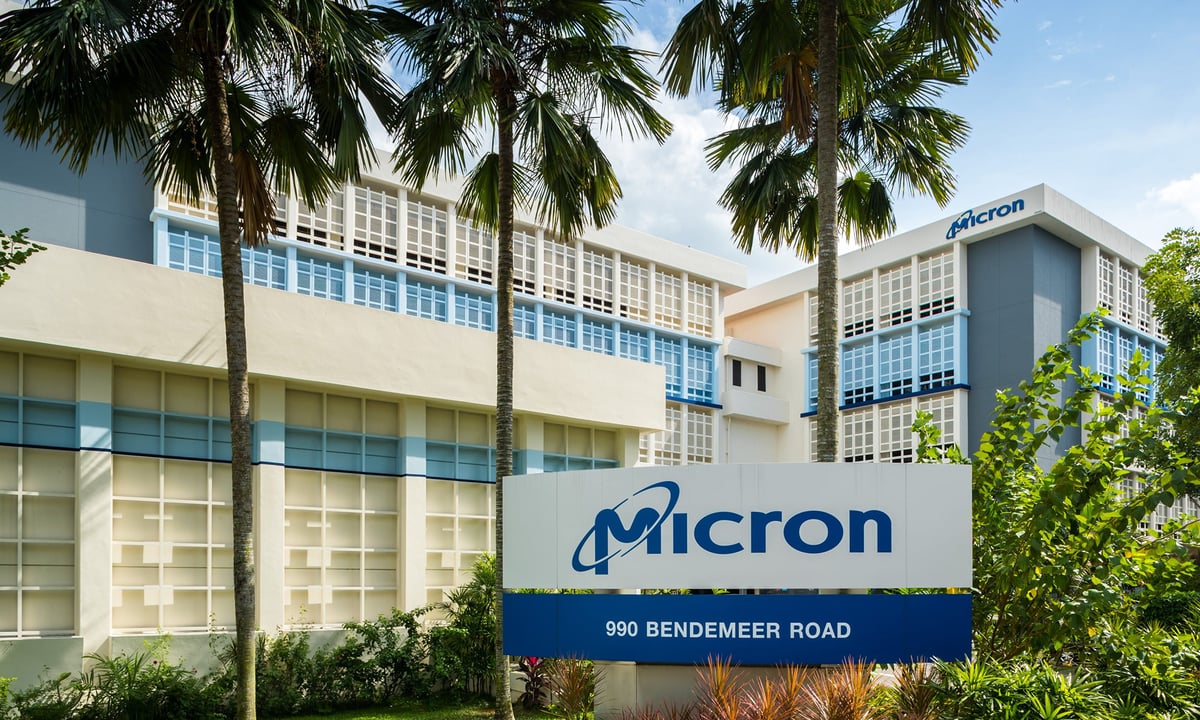
Micron Technology: Potential New Nvidia?
- AI Chip Market Dynamics: From 2023 to 2025, Nvidia's chipsets became the backbone of generative AI, propelling its market value to the highest globally, although growth investors have shown less interest in big tech in 2026, with Nvidia's stock down 5.2% year-to-date.
- Micron Stock Surge: Micron Technology's shares have risen 27% this year and nearly 309% over the past 12 months, reflecting its strong performance in the AI chip sector, particularly amid surging demand for memory and storage from big tech companies.
- Key Role of Memory and Storage: Micron's dynamic random access memory (DRAM) and NAND flash memory are becoming central to AI infrastructure, with big tech expected to spend $700 billion on AI infrastructure, leading to a sustained increase in demand for Micron's storage chips.
- Future Outlook and Investment Strategy: While Micron's application in AI is more specialized compared to Nvidia's, its growing importance in AI building projects is evident, prompting investors to carefully evaluate opportunities between Micron and the more diversified Nvidia.
See More

Google's Breakthrough Algorithm Shakes Memory Chip Market

- Memory Demand Shift: Google's TurboQuant algorithm reduces memory requirements for generative AI models by six times, triggering nearly a 20% drop in Micron and Sandisk stocks, indicating a drastic shift in market expectations for memory prices.
- Overreaction in Market: While efficiency gains may increase demand, Micron projects the high-bandwidth memory market to grow from $35 billion to $100 billion, suggesting that supply constraints remain, and the current stock decline could represent a buying opportunity.
- Open Source Impact: By open-sourcing the TurboQuant algorithm, Google allows all AI companies to leverage this breakthrough, potentially increasing demand for memory chips and further impacting market prices and supply chains.
- Cautious Investor Approach: Despite the panic triggered by TurboQuant news, investors should monitor consumer memory prices to assess whether Micron faces risks of falling product prices, remaining vigilant in their investment strategies.
See More

Google Breakthrough Triggers Memory Stock Sell-off

- Significant Memory Demand Reduction: Google's TurboQuant algorithm reduces the memory required for generative AI by six times, leading to a nearly 20% drop in Micron's stock price and shaking confidence across the memory chip sector.
- Overreaction in the Market: Despite the potential for increased demand due to efficiency gains, the market's bearish reaction towards Micron seems excessive, especially as the company projects the high-bandwidth memory market to grow from $35 billion to $100 billion, indicating robust future demand.
- Impact of Jevons Paradox: As memory becomes more efficient, demand may actually rise, suggesting that Micron's market position might not be fundamentally threatened, potentially presenting a buying opportunity for investors.
- Cautious Investor Approach: While the TurboQuant breakthrough is significant, investors should monitor consumer memory prices to assess the risk of falling prices for Micron, remaining vigilant to avoid potential losses.
See More

Google's TurboQuant Algorithm Triggers Memory Chip Market Volatility
- Algorithm Efficiency Boost: Google's TurboQuant algorithm reduces memory usage by at least 6x and speeds up processing by up to 8x without any accuracy loss, potentially decreasing memory demand by 83%.
- Market Reaction: Following this announcement, shares of memory chipmakers Micron Technology and Sandisk fell by 10% and 14%, respectively, as investors feared a significant drop in demand, although some experts caution that these fears may be overblown.
- Historical Insight: The Jevons Paradox suggests that increased efficiency can lower costs and ultimately increase demand; historical examples, such as improved fuel efficiency in cars leading to higher fuel consumption, indicate that memory chip demand may not decline as expected.
- Investment Opportunity: Despite the initial pullback in Micron and Sandisk stocks, analysts believe that the launch of TurboQuant will drive further AI adoption and strengthen demand for memory chips, with Mizuho analysts reiterating their outperform ratings, suggesting this is a buying opportunity.
See More
Micron Technology's Low Valuation Requires Proof of Growth Potential
- Valuation Analysis: Micron Technology's forward P/E ratio stands at just 3.3 times, despite tripling its quarterly revenue and increasing gross margin from 36.8% to 74.4%, indicating a significant undervaluation; however, market confidence in its future growth remains to be proven.
- Market Cyclicality: Micron's primary business, DRAM, accounts for 80% of its revenue and has historically experienced significant cyclical fluctuations; while the rise of AI has boosted DRAM demand, the company must demonstrate structural growth drivers to sustain its valuation.
- Growing HBM Demand: The surge in demand for high-bandwidth memory (HBM) linked to AI chip growth has created a DRAM market shortage, driving up Micron's revenue and gross margin, yet the sustainability of this growth remains uncertain.
- Long-term Contract Strategy: Micron is working to secure long-term agreements with HBM customers to mitigate business cyclicality; if it can successfully transition into a long-term AI infrastructure winner, a tripling of its stock price by 2030 is feasible, but this requires enhanced stability and market trust.
See More
Micron Technology Emerges as a Key Player in AI Chip Market
- Surging Market Demand: As the demand for high-bandwidth memory (HBM) in AI models continues to rise, Micron Technology's stock has surged 309% over the past 12 months, highlighting its critical role in AI infrastructure.
- Growing Capital Expenditure: The five major hyperscalers are projected to spend $700 billion on AI infrastructure by 2026, providing robust market support for Micron's memory and storage chips, further driving its business growth.
- Supply Chain Transformation: Micron not only supplies dynamic random access memory (DRAM) and NAND flash but is also actively expanding its manufacturing capacity to meet the increasing computational demands, thereby solidifying its competitive edge in the AI chip sector.
- Optimistic Industry Outlook: Although Micron's applications are more specialized compared to Nvidia, its importance in the AI revolution is becoming increasingly evident, and it is expected to continue benefiting from the long-term tailwinds of accelerated capital expenditures from big tech.
See More
Micron Technology: Potential New Nvidia?
- AI Chip Market Dynamics: From 2023 to 2025, Nvidia's chipsets became the backbone of generative AI, propelling its market value to the highest globally, although growth investors have shown less interest in big tech in 2026, with Nvidia's stock down 5.2% year-to-date.
- Micron Stock Surge: Micron Technology's shares have risen 27% this year and nearly 309% over the past 12 months, reflecting its strong performance in the AI chip sector, particularly amid surging demand for memory and storage from big tech companies.
- Key Role of Memory and Storage: Micron's dynamic random access memory (DRAM) and NAND flash memory are becoming central to AI infrastructure, with big tech expected to spend $700 billion on AI infrastructure, leading to a sustained increase in demand for Micron's storage chips.
- Future Outlook and Investment Strategy: While Micron's application in AI is more specialized compared to Nvidia's, its growing importance in AI building projects is evident, prompting investors to carefully evaluate opportunities between Micron and the more diversified Nvidia.
See More
Google's Breakthrough Algorithm Shakes Memory Chip Market
- Memory Demand Shift: Google's TurboQuant algorithm reduces memory requirements for generative AI models by six times, triggering nearly a 20% drop in Micron and Sandisk stocks, indicating a drastic shift in market expectations for memory prices.
- Overreaction in Market: While efficiency gains may increase demand, Micron projects the high-bandwidth memory market to grow from $35 billion to $100 billion, suggesting that supply constraints remain, and the current stock decline could represent a buying opportunity.
- Open Source Impact: By open-sourcing the TurboQuant algorithm, Google allows all AI companies to leverage this breakthrough, potentially increasing demand for memory chips and further impacting market prices and supply chains.
- Cautious Investor Approach: Despite the panic triggered by TurboQuant news, investors should monitor consumer memory prices to assess whether Micron faces risks of falling product prices, remaining vigilant in their investment strategies.
See More
Google Breakthrough Triggers Memory Stock Sell-off
- Significant Memory Demand Reduction: Google's TurboQuant algorithm reduces the memory required for generative AI by six times, leading to a nearly 20% drop in Micron's stock price and shaking confidence across the memory chip sector.
- Overreaction in the Market: Despite the potential for increased demand due to efficiency gains, the market's bearish reaction towards Micron seems excessive, especially as the company projects the high-bandwidth memory market to grow from $35 billion to $100 billion, indicating robust future demand.
- Impact of Jevons Paradox: As memory becomes more efficient, demand may actually rise, suggesting that Micron's market position might not be fundamentally threatened, potentially presenting a buying opportunity for investors.
- Cautious Investor Approach: While the TurboQuant breakthrough is significant, investors should monitor consumer memory prices to assess the risk of falling prices for Micron, remaining vigilant to avoid potential losses.
See More
Google's TurboQuant Algorithm Triggers Memory Chip Market Volatility
- Algorithm Efficiency Boost: Google's TurboQuant algorithm reduces memory usage by at least 6x and speeds up processing by up to 8x without any accuracy loss, potentially decreasing memory demand by 83%.
- Market Reaction: Following this announcement, shares of memory chipmakers Micron Technology and Sandisk fell by 10% and 14%, respectively, as investors feared a significant drop in demand, although some experts caution that these fears may be overblown.
- Historical Insight: The Jevons Paradox suggests that increased efficiency can lower costs and ultimately increase demand; historical examples, such as improved fuel efficiency in cars leading to higher fuel consumption, indicate that memory chip demand may not decline as expected.
- Investment Opportunity: Despite the initial pullback in Micron and Sandisk stocks, analysts believe that the launch of TurboQuant will drive further AI adoption and strengthen demand for memory chips, with Mizuho analysts reiterating their outperform ratings, suggesting this is a buying opportunity.
See More