Analysis of Archer Aviation's Electric Flying Car Prospects
Written by Emily J. Thompson, Senior Investment Analyst
Updated: 1 hour ago
0mins
Source: Fool
- Weak Market Performance: Archer Aviation's stock has underperformed in 2026, currently trading between $5 and $6 with a market cap of approximately $4.5 billion, as investor concerns about FAA certification timelines and ongoing losses intensify, leading to decreased confidence.
- Tenfold Growth Potential: If Archer's stock achieves a tenfold increase, its market cap could reach $45 billion, although the actual market cap required may be higher due to significant share dilution over the years, indicating potential future dilution risks.
- Revenue Target Setting: Analysts expect Archer's revenue to approach $500 million within the next two years, while achieving a $45 billion market cap would necessitate generating around $2.3 billion in revenue, a target that is not overly ambitious but still requires overcoming significant FAA certification hurdles.
- FAA Certification Challenges: Despite the White House's eagerness to see electric aircraft in operation, Archer must navigate a lengthy FAA certification process, and historical precedents suggest that the FAA will not expedite this process, potentially leading to increased operating costs and delays that could impact stock growth expectations.
Trade with 70% Backtested Accuracy
Stop guessing "Should I Buy ACHR?" and start using high-conviction signals backed by rigorous historical data.
Sign up today to access powerful investing tools and make smarter, data-driven decisions.
Analyst Views on ACHR
Wall Street analysts forecast ACHR stock price to rise
6 Analyst Rating
4 Buy
2 Hold
0 Sell
Moderate Buy
Current: 5.300

Low
8.00
Averages
12.40
High
18.00
Current: 5.300
Low
8.00
Averages
12.40
High
18.00
About ACHR
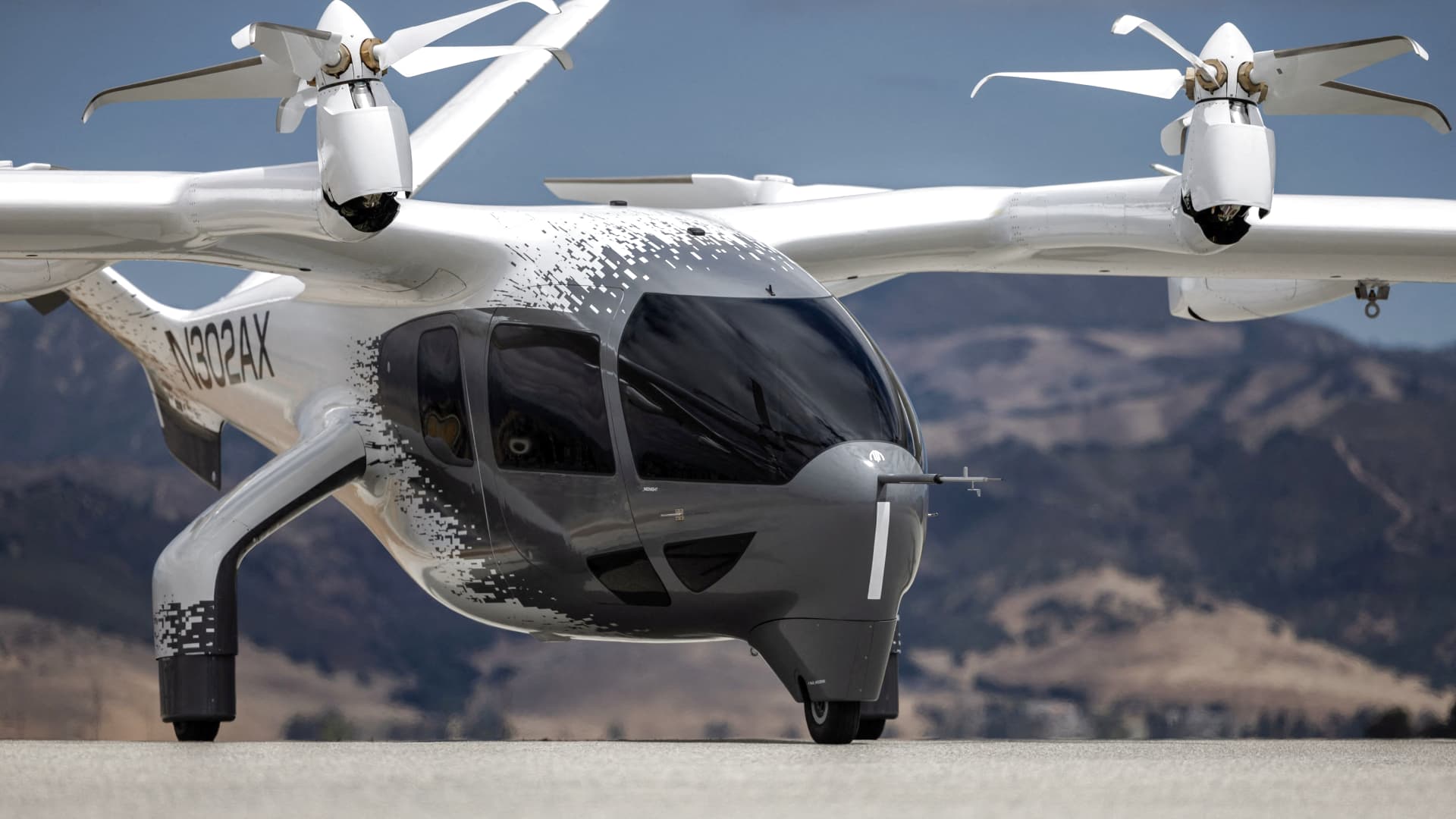
Archer Aviation Inc. is an aerospace company. It is engaged in providing customers with advanced aircraft and related technologies and services in the United States and internationally in both the commercial and defense sectors. Its commercial line of business consists of the sale of its commercial aircraft (Archer Direct), such as Midnight, to aircraft operators as well as technologies and services related thereto, including commercial launch (certification, testing, training, demonstration, market survey and early trial operations), and maintenance and repair. Its defense line of business consists of the sale of aircraft and related technologies for defense applications. Its initial product is intended to be a hybrid-propulsion, vertical take-off and landing (VTOL) aircraft. Its Midnight aircraft is designed around its proprietary 12-tilt-6 distributed electric propulsion platform. It carries four passengers plus a pilot. The aircraft is purpose-built for air taxi operations.
About the author

Emily J. Thompson
Emily J. Thompson, a Chartered Financial Analyst (CFA) with 12 years in investment research, graduated with honors from the Wharton School. Specializing in industrial and technology stocks, she provides in-depth analysis for Intellectia’s earnings and market brief reports.
Archer Aviation Faces Challenges and Opportunities Ahead

- FAA Certification Progress: Archer Aviation has completed one-third of the FAA type certification process, becoming the first eVTOL company to reach this stage, although it still requires 1-2 years for final certification, laying a foundation for future market entry.
- Diminished Market Confidence: Over the past six months, Archer's stock has consistently declined, currently priced at $5.19, significantly down from a 52-week high of $14.62, indicating a lack of investor confidence in the company's future, especially amid cash burn and competition from Joby Aviation.
- Investor Divestment: Cathie Wood's Ark Invest sold approximately 2.2 million shares of Archer last week, reflecting market concerns about its future prospects, which may further impact Archer's stock price and financing capabilities, increasing the financial pressure on the company.
- Future Outlook: Despite challenges, Archer still holds the potential for substantial returns; if its stock achieves a 40-fold increase, its market value could reach $180 billion, but this requires overcoming regulatory hurdles and establishing a robust manufacturing capability, with the current market environment remaining highly uncertain.
See More
Archer Aviation's eVTOL Air Taxi Prospects

- Market Potential Analysis: Archer Aviation's stock currently trades between $5 and $6, with a market cap of approximately $4.5 billion; a tenfold increase in stock price could elevate its market cap to $45 billion, indicating strong market expectations for eVTOL technology.
- Revenue Expectations: Analysts project Archer's revenue to approach $500 million within two years, and while facing FAA certification challenges, successful navigation through this process could significantly boost revenue and support long-term objectives.
- FAA Certification Challenges: Despite the White House's eagerness to advance electric aircraft commercialization, historical precedents suggest that the FAA certification process may take years, and Archer must overcome this hurdle to enter the market, impacting its future growth.
- Investor Confidence: Although Archer Aviation was not included in The Motley Fool Stock Advisor's top investment picks, its innovations in the eVTOL sector continue to attract investor interest, reflecting market confidence in the long-term potential of this technology.
See More

Analysis of Archer Aviation's Electric Flying Car Prospects
- Weak Market Performance: Archer Aviation's stock has underperformed in 2026, currently trading between $5 and $6 with a market cap of approximately $4.5 billion, as investor concerns about FAA certification timelines and ongoing losses intensify, leading to decreased confidence.
- Tenfold Growth Potential: If Archer's stock achieves a tenfold increase, its market cap could reach $45 billion, although the actual market cap required may be higher due to significant share dilution over the years, indicating potential future dilution risks.
- Revenue Target Setting: Analysts expect Archer's revenue to approach $500 million within the next two years, while achieving a $45 billion market cap would necessitate generating around $2.3 billion in revenue, a target that is not overly ambitious but still requires overcoming significant FAA certification hurdles.
- FAA Certification Challenges: Despite the White House's eagerness to see electric aircraft in operation, Archer must navigate a lengthy FAA certification process, and historical precedents suggest that the FAA will not expedite this process, potentially leading to increased operating costs and delays that could impact stock growth expectations.
See More

Analysis of Competition in the eVTOL Market

- Market Outlook: According to Eve Air Mobility's Global Market Outlook, by 2045, there could be 30,000 eVTOLs in operation carrying three billion passengers, despite Joby and Archer lacking FAA approval for commercial flights, which has led to depressed stock prices for both companies.
- Technical Comparison: Joby's S4 and Archer's Midnight exhibit significant design differences, with the S4 achieving a maximum range of 150 miles and a speed of 200 mph, while the Midnight has a range of 100 miles and a speed of 150 mph, highlighting Joby's technological advantage.
- Financial Projections: Analysts expect Joby's revenue to grow from $53 million in 2025 to $458 million in 2028, with a net loss narrowing to $722 million, whereas Archer's revenue is projected to surge from under $1 million in 2025 to $482 million in 2028, but its net loss is expected to widen to $868 million.
- Investment Advantages: Joby's market cap stands at $9.2 billion, trading at 20 times its 2028 sales, reflecting its potential in the
See More

Joby and Archer's eVTOL Aircraft Prospects
- Market Outlook: According to Eve Air Mobility's Global Market Outlook, by 2045, there could be 30,000 eVTOLs operating globally, carrying three billion passengers, presenting potential market opportunities for both Joby and Archer.
- FAA Approval Challenges: Both Joby and Archer must navigate the lengthy multi-stage approval process from the Federal Aviation Administration (FAA), with full commercial flight approvals likely not occurring until late 2026 or 2027, contributing to stock pressure this year.
- Financial Projections Comparison: Analysts expect Joby's revenue to grow from $53 million in 2025 to $458 million in 2028, while Archer's revenue is projected to surge from under $1 million to $482 million, although both companies are expected to widen their net losses, indicating differing market expectations.
- Investment Value Assessment: Joby trades at a market cap of $9.2 billion at 20 times its 2028 sales, while Archer's $4.0 billion market cap trades at just eight times its 2028 sales; despite Archer appearing more attractive, Joby's vertically integrated model and stronger liquidity position it as a more compelling long-term investment.
See More
Joby Aviation: Future of eVTOL Aircraft

- Market Performance Fluctuations: Joby Aviation went public via SPAC on August 11, 2021, opening at $10.62 per share and reaching a record high of $20.39 on August 4, 2025, but now trades around $9, indicating waning investor confidence in its commercialization progress.
- Significant Technical Advantages: Joby's S4 eVTOL can carry one pilot and four passengers, travel 150 miles on a single charge, and reach speeds of 200 mph, surpassing competitor Archer Aviation's Midnight eVTOL due to its tilt-rotor design.
- Strategic Partnerships: Joby is backed by major investors like Toyota, Delta Air Lines, and Uber, with Toyota assisting in mass production, Delta planning to use the S4 for airport-to-home air taxi services, and Uber integrating these flights into its app.
- Future Growth Potential: Joby's revenue is expected to surge from $53 million in 2025 to $458 million by 2028, and if the FAA approves its commercial flights, its eVTOLs could replace traditional helicopters, potentially tripling its stock price over the next five years.
See More
Archer Aviation Faces Challenges and Opportunities Ahead
- FAA Certification Progress: Archer Aviation has completed one-third of the FAA type certification process, becoming the first eVTOL company to reach this stage, although it still requires 1-2 years for final certification, laying a foundation for future market entry.
- Diminished Market Confidence: Over the past six months, Archer's stock has consistently declined, currently priced at $5.19, significantly down from a 52-week high of $14.62, indicating a lack of investor confidence in the company's future, especially amid cash burn and competition from Joby Aviation.
- Investor Divestment: Cathie Wood's Ark Invest sold approximately 2.2 million shares of Archer last week, reflecting market concerns about its future prospects, which may further impact Archer's stock price and financing capabilities, increasing the financial pressure on the company.
- Future Outlook: Despite challenges, Archer still holds the potential for substantial returns; if its stock achieves a 40-fold increase, its market value could reach $180 billion, but this requires overcoming regulatory hurdles and establishing a robust manufacturing capability, with the current market environment remaining highly uncertain.
See More
Archer Aviation's eVTOL Air Taxi Prospects
- Market Potential Analysis: Archer Aviation's stock currently trades between $5 and $6, with a market cap of approximately $4.5 billion; a tenfold increase in stock price could elevate its market cap to $45 billion, indicating strong market expectations for eVTOL technology.
- Revenue Expectations: Analysts project Archer's revenue to approach $500 million within two years, and while facing FAA certification challenges, successful navigation through this process could significantly boost revenue and support long-term objectives.
- FAA Certification Challenges: Despite the White House's eagerness to advance electric aircraft commercialization, historical precedents suggest that the FAA certification process may take years, and Archer must overcome this hurdle to enter the market, impacting its future growth.
- Investor Confidence: Although Archer Aviation was not included in The Motley Fool Stock Advisor's top investment picks, its innovations in the eVTOL sector continue to attract investor interest, reflecting market confidence in the long-term potential of this technology.
See More
Analysis of Archer Aviation's Electric Flying Car Prospects
- Weak Market Performance: Archer Aviation's stock has underperformed in 2026, currently trading between $5 and $6 with a market cap of approximately $4.5 billion, as investor concerns about FAA certification timelines and ongoing losses intensify, leading to decreased confidence.
- Tenfold Growth Potential: If Archer's stock achieves a tenfold increase, its market cap could reach $45 billion, although the actual market cap required may be higher due to significant share dilution over the years, indicating potential future dilution risks.
- Revenue Target Setting: Analysts expect Archer's revenue to approach $500 million within the next two years, while achieving a $45 billion market cap would necessitate generating around $2.3 billion in revenue, a target that is not overly ambitious but still requires overcoming significant FAA certification hurdles.
- FAA Certification Challenges: Despite the White House's eagerness to see electric aircraft in operation, Archer must navigate a lengthy FAA certification process, and historical precedents suggest that the FAA will not expedite this process, potentially leading to increased operating costs and delays that could impact stock growth expectations.
See More
Analysis of Competition in the eVTOL Market
- Market Outlook: According to Eve Air Mobility's Global Market Outlook, by 2045, there could be 30,000 eVTOLs in operation carrying three billion passengers, despite Joby and Archer lacking FAA approval for commercial flights, which has led to depressed stock prices for both companies.
- Technical Comparison: Joby's S4 and Archer's Midnight exhibit significant design differences, with the S4 achieving a maximum range of 150 miles and a speed of 200 mph, while the Midnight has a range of 100 miles and a speed of 150 mph, highlighting Joby's technological advantage.
- Financial Projections: Analysts expect Joby's revenue to grow from $53 million in 2025 to $458 million in 2028, with a net loss narrowing to $722 million, whereas Archer's revenue is projected to surge from under $1 million in 2025 to $482 million in 2028, but its net loss is expected to widen to $868 million.
- Investment Advantages: Joby's market cap stands at $9.2 billion, trading at 20 times its 2028 sales, reflecting its potential in the
See More
Joby and Archer's eVTOL Aircraft Prospects
- Market Outlook: According to Eve Air Mobility's Global Market Outlook, by 2045, there could be 30,000 eVTOLs operating globally, carrying three billion passengers, presenting potential market opportunities for both Joby and Archer.
- FAA Approval Challenges: Both Joby and Archer must navigate the lengthy multi-stage approval process from the Federal Aviation Administration (FAA), with full commercial flight approvals likely not occurring until late 2026 or 2027, contributing to stock pressure this year.
- Financial Projections Comparison: Analysts expect Joby's revenue to grow from $53 million in 2025 to $458 million in 2028, while Archer's revenue is projected to surge from under $1 million to $482 million, although both companies are expected to widen their net losses, indicating differing market expectations.
- Investment Value Assessment: Joby trades at a market cap of $9.2 billion at 20 times its 2028 sales, while Archer's $4.0 billion market cap trades at just eight times its 2028 sales; despite Archer appearing more attractive, Joby's vertically integrated model and stronger liquidity position it as a more compelling long-term investment.
See More
Joby Aviation: Future of eVTOL Aircraft
- Market Performance Fluctuations: Joby Aviation went public via SPAC on August 11, 2021, opening at $10.62 per share and reaching a record high of $20.39 on August 4, 2025, but now trades around $9, indicating waning investor confidence in its commercialization progress.
- Significant Technical Advantages: Joby's S4 eVTOL can carry one pilot and four passengers, travel 150 miles on a single charge, and reach speeds of 200 mph, surpassing competitor Archer Aviation's Midnight eVTOL due to its tilt-rotor design.
- Strategic Partnerships: Joby is backed by major investors like Toyota, Delta Air Lines, and Uber, with Toyota assisting in mass production, Delta planning to use the S4 for airport-to-home air taxi services, and Uber integrating these flights into its app.
- Future Growth Potential: Joby's revenue is expected to surge from $53 million in 2025 to $458 million by 2028, and if the FAA approves its commercial flights, its eVTOLs could replace traditional helicopters, potentially tripling its stock price over the next five years.
See More