Analysis of AI Integration Status and Challenges
Written by Emily J. Thompson, Senior Investment Analyst
Updated: 1 hour ago
0mins
Should l Buy APPN?
Source: Newsfilter
- Current AI Application: Research from Harvard Business Review indicates that while 59% of organizations have AI in production, most focus on efficiency gains, with only 30% of respondents noting an impact on new revenue streams, highlighting the untapped potential of AI in driving business growth.
- Integration and Value: 71% of organizations embedding AI into processes report substantial or moderate value, while 76% believe that modernizing legacy systems is crucial for AI returns, indicating that successful AI implementation relies on effective system integration and process optimization.
- Barriers and Challenges: 69% of respondents feel that legacy systems limit AI scalability, with 34% citing siloed data issues and 30% pointing to a lack of AI talent, collectively hindering effective AI application in core business areas.
- Governance and Regulation Needs: 92% of respondents agree that AI agents require rules-based guardrails, yet only 48% believe their organization has defined such rules, emphasizing the critical need for establishing clear governance frameworks as AI applications expand.
Trade with 70% Backtested Accuracy
Stop guessing "Should I Buy APPN?" and start using high-conviction signals backed by rigorous historical data.
Sign up today to access powerful investing tools and make smarter, data-driven decisions.
Analyst Views on APPN
Wall Street analysts forecast APPN stock price to rise
3 Analyst Rating
2 Buy
0 Hold
1 Sell
Moderate Buy
Current: 21.790

Low
34.00
Averages
42.33
High
48.00
Current: 21.790
Low
34.00
Averages
42.33
High
48.00
About APPN
Appian Corporation is a software company that offers platform, which help organizations run better processes that reduce costs, and improve customer experiences. The Company’s Appian platform is an integrated automation platform for process orchestration, automation, and intelligence. The platform provides everything an organization needs to design, automate, and optimize critical processes. Its capabilities include data fabric, robotic process automation (RPA); intelligent document processing (IDP); generative artificial intelligence (AI); AI agents; low-code design; application programming interfaces (APIs); and process intelligence capabilities in a single platform. Its data fabric is an integrated data layer that unifies data across systems without requiring companies to migrate their data. Its patented data fabric technology supports both analytical and transactional workloads, which allows users to build applications that create and update enterprise data.
About the author

Emily J. Thompson
Emily J. Thompson, a Chartered Financial Analyst (CFA) with 12 years in investment research, graduated with honors from the Wharton School. Specializing in industrial and technology stocks, she provides in-depth analysis for Intellectia’s earnings and market brief reports.

Appian Announces 2026 North American Innovation Award Winners

- AI-Driven Process Innovation: AARP automates its invoice management process using AI, significantly increasing processing speed and reducing bottlenecks, allowing staff to focus more on supporting Americans aged 50 and older, thereby enhancing operational efficiency and service quality.
- Payment Process Modernization: Carlyle's Global Payment Management platform enhances payment transparency and control through standardized, AI-enabled workflows, improving invoice-to-payment cycle times and establishing a scalable foundation for future growth and automation.
- Claims Processing Efficiency Boost: Global Excel Management partners with Xebia to implement the Appian Connected Claims platform, applying AI for automated summaries, resulting in over a 50% increase in claims processing productivity and halving manual intervention, significantly improving service delivery for global clients.
- Digital Transformation in Aviation Regulation: The FAA's Aircraft Certification Service creates a transparent automated environment using Appian's Data Fabric and External Portal, eliminating cumbersome administrative tasks and allowing Aviation Safety Inspectors to focus more on critical oversight, thus enhancing regulatory efficiency.
See More

Current State and Challenges of AI Adoption in Enterprises
- Current AI Adoption: Research from Harvard Business Review indicates that while 59% of organizations have AI in production, most are still focused on efficiency gains rather than revenue growth, highlighting the untapped potential of AI in driving business outcomes.
- Integration and Value: 71% of organizations that embed AI into workflows report substantial or moderate value, suggesting that effectively integrating AI into operational work is crucial for achieving sustainable ROI.
- Legacy System Barriers: 69% of respondents agree that legacy systems limit their ability to scale AI, emphasizing the need for modernization and better integration across systems to overcome issues like siloed or low-quality data.
- Governance and Safety: 92% of respondents believe AI agents require rules-based guardrails, yet fewer than half have defined such rules, indicating the critical importance of governance as organizations look to expand AI agent adoption.
See More

Companies Face Challenges in AI Utilization
- Current AI Utilization: While 59% of companies are using AI to some extent, only 30% of respondents believe it generates new revenue streams, indicating a significant gap in leveraging AI's potential, which hampers overall business growth.
- Integration Challenges: Only 18% of companies embed AI into workflows, with 34% still using it as standalone tools, limiting AI's ability to support business outcomes and highlighting the need for better integration with core processes.
- Initial Returns but Limited Impact: Most companies have begun to see returns from AI investments, yet only 16% report significant measurable benefits, indicating that the commercial impact of AI has not been fully realized and necessitating optimized implementation strategies.
- Governance and Process Design: 92% of respondents believe AI agents require clear rules for safe and effective operation, but only 48% of companies have established such guidelines, underscoring the importance of building a governance framework in AI implementation.
See More
Analysis of AI Integration Status and Challenges
- Current AI Application: Research from Harvard Business Review indicates that while 59% of organizations have AI in production, most focus on efficiency gains, with only 30% of respondents noting an impact on new revenue streams, highlighting the untapped potential of AI in driving business growth.
- Integration and Value: 71% of organizations embedding AI into processes report substantial or moderate value, while 76% believe that modernizing legacy systems is crucial for AI returns, indicating that successful AI implementation relies on effective system integration and process optimization.
- Barriers and Challenges: 69% of respondents feel that legacy systems limit AI scalability, with 34% citing siloed data issues and 30% pointing to a lack of AI talent, collectively hindering effective AI application in core business areas.
- Governance and Regulation Needs: 92% of respondents agree that AI agents require rules-based guardrails, yet only 48% believe their organization has defined such rules, emphasizing the critical need for establishing clear governance frameworks as AI applications expand.
See More
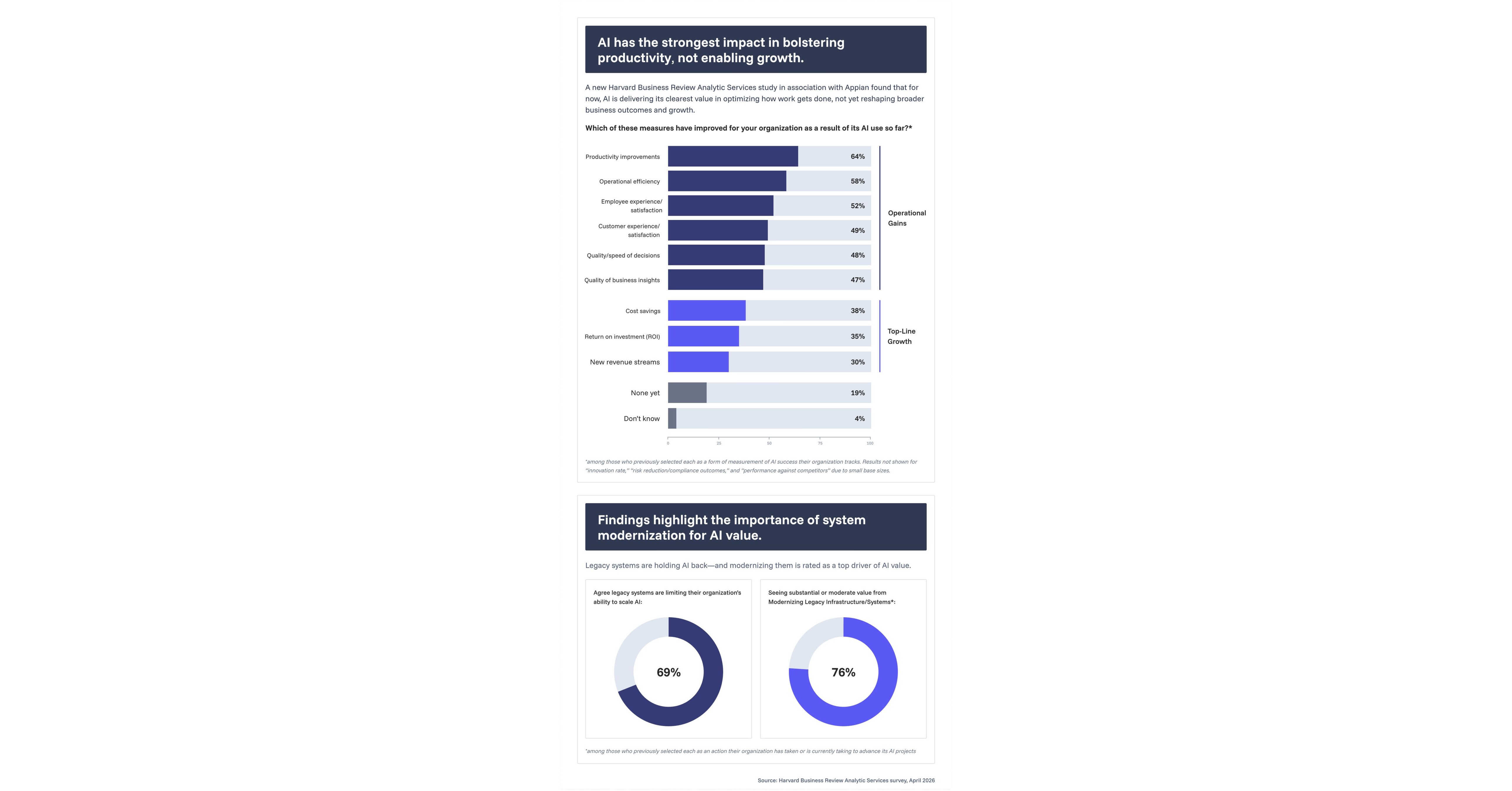
Current State and Challenges of AI Adoption in Enterprises
- Current AI Adoption: Research from Harvard Business Review indicates that while 59% of organizations have AI in production, most focus on efficiency gains, with only 30% reporting impacts on new revenue streams, highlighting the untapped potential of AI for driving business growth.
- Integration and Value: 71% of organizations embedding AI into workflows realize substantial or moderate value, while 76% gain strong returns from modernizing legacy systems, indicating that the value of AI is closely tied to its integration into operational processes.
- Legacy System Limitations: 69% of respondents believe legacy systems hinder AI scalability, with 34% citing siloed or low-quality data as major barriers to embedding AI, underscoring the need for modernization and better system integration.
- Governance and Safety: 92% of respondents agree that AI agents require rules-based guardrails, yet fewer than half have defined such rules, emphasizing the critical importance of governance and safety frameworks as organizations expand AI agent usage.
See More

Appian Unveils AI-Driven Features to Transform Workflows
- AI-Driven Development: Appian's newly launched AI-driven, specification-based development feature extracts detailed specifications from legacy applications, enabling businesses to create visual plans quickly, thereby accelerating application delivery and reducing rework, which enhances development efficiency.
- Advancements in Intelligent Agents: The newly introduced AI agents possess better structure and context, allowing for more effective and secure communication with external enterprise systems, thereby enhancing overall workflow coordination and intelligence, ensuring high operational efficiency in complex environments.
- Data Integration and Collaboration: Appian's technology partnership with Snowflake combines the AI Data Cloud with Appian's data structure, providing a unified metadata model that allows employees to interact directly with Snowflake Cortex AI, facilitating data-driven intelligent decision-making and improving business efficiency.
- Enterprise-Level Control: By introducing the Model Context Protocol (MCP), Appian ensures that AI-generated code meets compliance requirements, avoiding the accumulation of technical debt while enhancing enterprise control over the AI development process, thus maximizing business value.
See More
Appian Announces 2026 North American Innovation Award Winners
- AI-Driven Process Innovation: AARP automates its invoice management process using AI, significantly increasing processing speed and reducing bottlenecks, allowing staff to focus more on supporting Americans aged 50 and older, thereby enhancing operational efficiency and service quality.
- Payment Process Modernization: Carlyle's Global Payment Management platform enhances payment transparency and control through standardized, AI-enabled workflows, improving invoice-to-payment cycle times and establishing a scalable foundation for future growth and automation.
- Claims Processing Efficiency Boost: Global Excel Management partners with Xebia to implement the Appian Connected Claims platform, applying AI for automated summaries, resulting in over a 50% increase in claims processing productivity and halving manual intervention, significantly improving service delivery for global clients.
- Digital Transformation in Aviation Regulation: The FAA's Aircraft Certification Service creates a transparent automated environment using Appian's Data Fabric and External Portal, eliminating cumbersome administrative tasks and allowing Aviation Safety Inspectors to focus more on critical oversight, thus enhancing regulatory efficiency.
See More
Current State and Challenges of AI Adoption in Enterprises
- Current AI Adoption: Research from Harvard Business Review indicates that while 59% of organizations have AI in production, most are still focused on efficiency gains rather than revenue growth, highlighting the untapped potential of AI in driving business outcomes.
- Integration and Value: 71% of organizations that embed AI into workflows report substantial or moderate value, suggesting that effectively integrating AI into operational work is crucial for achieving sustainable ROI.
- Legacy System Barriers: 69% of respondents agree that legacy systems limit their ability to scale AI, emphasizing the need for modernization and better integration across systems to overcome issues like siloed or low-quality data.
- Governance and Safety: 92% of respondents believe AI agents require rules-based guardrails, yet fewer than half have defined such rules, indicating the critical importance of governance as organizations look to expand AI agent adoption.
See More
Companies Face Challenges in AI Utilization
- Current AI Utilization: While 59% of companies are using AI to some extent, only 30% of respondents believe it generates new revenue streams, indicating a significant gap in leveraging AI's potential, which hampers overall business growth.
- Integration Challenges: Only 18% of companies embed AI into workflows, with 34% still using it as standalone tools, limiting AI's ability to support business outcomes and highlighting the need for better integration with core processes.
- Initial Returns but Limited Impact: Most companies have begun to see returns from AI investments, yet only 16% report significant measurable benefits, indicating that the commercial impact of AI has not been fully realized and necessitating optimized implementation strategies.
- Governance and Process Design: 92% of respondents believe AI agents require clear rules for safe and effective operation, but only 48% of companies have established such guidelines, underscoring the importance of building a governance framework in AI implementation.
See More
Analysis of AI Integration Status and Challenges
- Current AI Application: Research from Harvard Business Review indicates that while 59% of organizations have AI in production, most focus on efficiency gains, with only 30% of respondents noting an impact on new revenue streams, highlighting the untapped potential of AI in driving business growth.
- Integration and Value: 71% of organizations embedding AI into processes report substantial or moderate value, while 76% believe that modernizing legacy systems is crucial for AI returns, indicating that successful AI implementation relies on effective system integration and process optimization.
- Barriers and Challenges: 69% of respondents feel that legacy systems limit AI scalability, with 34% citing siloed data issues and 30% pointing to a lack of AI talent, collectively hindering effective AI application in core business areas.
- Governance and Regulation Needs: 92% of respondents agree that AI agents require rules-based guardrails, yet only 48% believe their organization has defined such rules, emphasizing the critical need for establishing clear governance frameworks as AI applications expand.
See More
Current State and Challenges of AI Adoption in Enterprises
- Current AI Adoption: Research from Harvard Business Review indicates that while 59% of organizations have AI in production, most focus on efficiency gains, with only 30% reporting impacts on new revenue streams, highlighting the untapped potential of AI for driving business growth.
- Integration and Value: 71% of organizations embedding AI into workflows realize substantial or moderate value, while 76% gain strong returns from modernizing legacy systems, indicating that the value of AI is closely tied to its integration into operational processes.
- Legacy System Limitations: 69% of respondents believe legacy systems hinder AI scalability, with 34% citing siloed or low-quality data as major barriers to embedding AI, underscoring the need for modernization and better system integration.
- Governance and Safety: 92% of respondents agree that AI agents require rules-based guardrails, yet fewer than half have defined such rules, emphasizing the critical importance of governance and safety frameworks as organizations expand AI agent usage.
See More
Appian Unveils AI-Driven Features to Transform Workflows
- AI-Driven Development: Appian's newly launched AI-driven, specification-based development feature extracts detailed specifications from legacy applications, enabling businesses to create visual plans quickly, thereby accelerating application delivery and reducing rework, which enhances development efficiency.
- Advancements in Intelligent Agents: The newly introduced AI agents possess better structure and context, allowing for more effective and secure communication with external enterprise systems, thereby enhancing overall workflow coordination and intelligence, ensuring high operational efficiency in complex environments.
- Data Integration and Collaboration: Appian's technology partnership with Snowflake combines the AI Data Cloud with Appian's data structure, providing a unified metadata model that allows employees to interact directly with Snowflake Cortex AI, facilitating data-driven intelligent decision-making and improving business efficiency.
- Enterprise-Level Control: By introducing the Model Context Protocol (MCP), Appian ensures that AI-generated code meets compliance requirements, avoiding the accumulation of technical debt while enhancing enterprise control over the AI development process, thus maximizing business value.
See More