

Amazon's Attempt to Block Saks Financing Dismissed; Saks Secures $400 Million Support
Written by Emily J. Thompson, Senior Investment Analyst
Updated: Jan 16 2026
0mins
Source: Benzinga
- Financing Approval: U.S. Judge Alfredo Perez approved a $400 million financing package for Saks Global Enterprises despite Amazon's objections regarding financial management, highlighting the retailer's urgent need during bankruptcy proceedings.
- Debt Crisis Intensifies: Saks filed for bankruptcy with $3.4 billion in debt, citing cash shortfalls from its merger with Neiman Marcus that hindered its ability to restock inventory, severely impacting operational capacity.
- Amazon Investment Risks: Amazon's $475 million investment in Saks is deemed 'presumptively worthless' as it claims Saks failed to meet agreements, potentially leading to more drastic remedies, escalating tensions between the two companies.
- Restructuring Challenges: Saks' Chief Restructuring Officer stated that without new financing, the company would be 'dead in the water', underscoring the liquidity crisis facing the luxury retail sector and its implications for suppliers and employees.
Trade with 70% Backtested Accuracy
Stop guessing "Should I Buy AMZN?" and start using high-conviction signals backed by rigorous historical data.
Sign up today to access powerful investing tools and make smarter, data-driven decisions.
Analyst Views on AMZN
Wall Street analysts forecast AMZN stock price to rise
44 Analyst Rating
41 Buy
3 Hold
0 Sell
Strong Buy
Current: 237.500

Low
175.00
Averages
280.01
High
325.00
Current: 237.500
Low
175.00
Averages
280.01
High
325.00
About AMZN
Amazon.com, Inc. provides a range of products and services to customers. The products offered through its stores include merchandise and content it has purchased for resale and products offered by third-party sellers. The Company’s segments include North America, International and Amazon Web Services (AWS). It serves consumers through its online and physical stores and focuses on selection, price, and convenience. Customers access its offerings through its websites, mobile apps, Alexa, devices, streaming, and physically visiting its stores. It also manufactures and sells electronic devices, including Kindle, Fire tablet, Fire TV, Echo, Ring, Blink, and eero, and develops and produces media content. It serves developers and enterprises of all sizes, including start-ups, government agencies, and academic institutions, through AWS, which offers a set of on-demand technology services, including compute, storage, database, analytics, and machine learning, and other services.
About the author

Emily J. Thompson
Emily J. Thompson, a Chartered Financial Analyst (CFA) with 12 years in investment research, graduated with honors from the Wharton School. Specializing in industrial and technology stocks, she provides in-depth analysis for Intellectia’s earnings and market brief reports.

Electric Vehicle Market Outlook and Investment Opportunities


- Market Growth Outlook: Grand View Research forecasts a 26.7% CAGR for the global EV market from 2026 to 2033, indicating strong growth potential despite challenges such as reduced government subsidies and supply chain disruptions.
- Rivian's Production Issues: Rivian's stock has plummeted from $78 in 2021 to around $16 today, yet it anticipates delivering 62,000-67,000 vehicles in 2023; however, production challenges and high starting prices have limited its market appeal, resulting in a market cap of only $20 billion.
- Nio's Market Share Growth: Nio's annual deliveries surged from 43,728 in 2020 to 326,028 by 2025, with its current stock price at $5, while its share in China's premium EV market continues to expand, projecting revenues nearing $25.8 billion by 2028.
- Improving Profitability: Nio has recently spun off its unprofitable chip-making segment, reducing operating costs, and has maintained profitability over the past two quarters, with analysts expecting it to achieve its first full-year profit in 2027, suggesting significant undervaluation of its stock.
See More

German AI Researcher Launches Hedge Fund with 1,000% Returns


- Outstanding Fund Performance: Leopold Aschenbrenner's Situational Awareness hedge fund, launched in September 2024, has delivered over 1,000% returns since inception and currently manages more than $20 billion in assets, highlighting its strong performance and market appeal in AI investments.
- Clear Investment Focus: Aschenbrenner believes that the growth bottleneck for the AI market lies in the physical constraints of data centers, chips, and power grids, which is why his fund heavily invests in 'neocloud' companies that provide infrastructure services specifically for AI firms, offering greater flexibility and cost efficiency.
- Massive Market Potential: According to Synergy Research Group, the neocloud market is expected to grow at an explosive 58% CAGR from 2025 to 2031, indicating significant investment opportunities as the AI market expands.
- Key Investment Companies: The fund's investments in Nebius, CoreWeave, and IREN are attracting attention, with projected explosive revenue growth of 550%, 147%, and 46% respectively over the next few years, underscoring their strategic importance in the AI infrastructure sector.
See More

Investment Potential Analysis of Emerging Neocloud Companies
- Market Growth Potential: According to Synergy Research Group, the neocloud market is projected to grow at a 58% CAGR from 2025 to 2031, indicating that the rapid expansion of the AI market will drive demand for cloud infrastructure services.
- Significant Investment Returns: Leopold Aschenbrenner's Situational Awareness hedge fund has achieved over 1,000% returns since inception by investing in three neocloud companies—Nebius, CoreWeave, and IREN—managing over $20 billion in assets, showcasing the success of its investment strategy.
- Company Financial Performance: Nebius, CoreWeave, and IREN are expected to achieve revenue growth of 550%, 147%, and 46% respectively in 2026, and although their current price-to-sales ratios are six, three, and seven times, economies of scale could reduce costs and stabilize profit growth in the long term.
- Competitive Advantage in Industry: Neocloud companies accelerate AI task processing by installing specialized hardware like data center GPUs, offering more flexible contracts compared to traditional hyperscale cloud providers, thereby enhancing their competitive edge in the AI sector.
See More
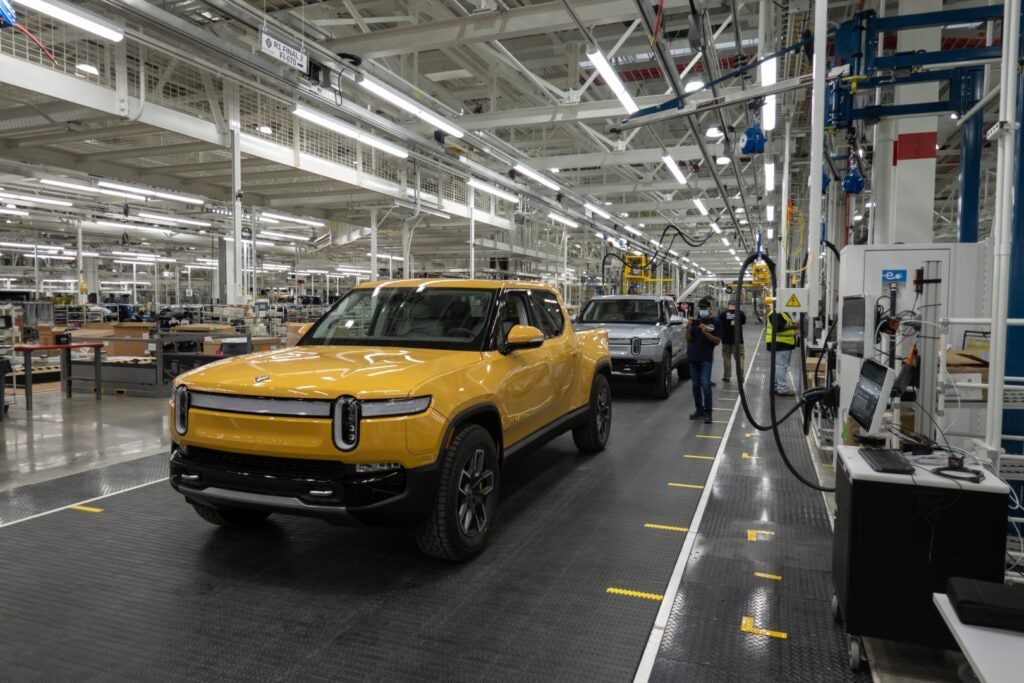
Rivian and Nio: Analyzing EV Market Prospects
- Rivian R2 Launch: Rivian plans to launch its R2 SUV in 2023, with expected annual deliveries reaching 62,000 to 67,000 units, indicating significant growth potential and transformation opportunities in the EV market compared to 2022.
- Production and Sales Challenges: Despite producing 57,232 vehicles in 2023, Rivian anticipates a decline in production for 2024 and 2025 due to supply chain issues and increased competition, reflecting uncertainty in its market position.
- Nio's Market Expansion: Nio aims to nearly double its annual revenue to 174.4 billion yuan ($25.8 billion) from 2025 to 2028 by launching its ONVO and Firefly sub-brands, showcasing growth potential in China's premium EV market.
- Improving Profitability: Nio has remained profitable for the past two quarters and is expected to achieve its first full-year profit in 2027, indicating success in cost control and market share enhancement, which may attract more investor interest.
See More

Amazon Employees Investigated Over AI Data Center Expansion Criticism

- Employee Protest Investigation: Five Amazon employees criticized the company's rapid expansion of AI data centers at Seattle City Council meetings, calling for stronger government regulation, leading to an investigation by the company that could result in disciplinary actions, including termination, highlighting the company's sensitivity to employee dissent.
- Political Activity Monitoring: The complaint alleges that Amazon monitored employees' political advocacy at the City Council, attempting to identify others involved in political activities, which may violate Seattle ordinances and raises further questions about corporate governance and employee rights.
- AI Investment and Layoffs: Amazon plans to spend up to $200 billion on AI infrastructure in 2025 while laying off 30,000 corporate employees since October, reflecting a tension between pursuing technological innovation and managing operational costs amid a significant workforce reduction.
- Public Opposition: A recent Gallup poll found that 70% of Americans oppose the construction of AI data centers in their local areas, primarily due to concerns about environmental impacts and quality of life, indicating widespread societal apprehension regarding AI projects.
See More

Stocks Rise as Apple Signals Price Increases for Chips


- Market Performance: U.S. stocks closed higher on Friday, recovering from losses earlier in the week, with the S&P 500 up about 1% for the week, reflecting optimism about the economic outlook, particularly as crude prices fell due to tankers exiting the Strait of Hormuz.
- Apple's Price Increase Signals: Apple CEO Tim Cook indicated that the company will raise prices due to rising memory and storage chip costs, suggesting that memory prices are unlikely to decrease soon, which exacerbates supply-demand imbalances and drives up related chip stocks.
- Amazon's Chip Business Potential: Amazon shares rose after reports of talks to sell custom chips to third-party data centers, with CEO Andy Jassy estimating that the chip business could generate an annual revenue run rate of $50 billion, a figure comparable to analyst estimates for AMD, highlighting Amazon's potential in the semiconductor market.
- Upcoming Earnings Reports: Next week, earnings will be released from FedEx and its recently spun-off FedEx Freight, along with significant reports from memory chipmaker Micron and other key companies, as the market closely monitors these data points to assess economic health.
See More
Electric Vehicle Market Outlook and Investment Opportunities
- Market Growth Outlook: Grand View Research forecasts a 26.7% CAGR for the global EV market from 2026 to 2033, indicating strong growth potential despite challenges such as reduced government subsidies and supply chain disruptions.
- Rivian's Production Issues: Rivian's stock has plummeted from $78 in 2021 to around $16 today, yet it anticipates delivering 62,000-67,000 vehicles in 2023; however, production challenges and high starting prices have limited its market appeal, resulting in a market cap of only $20 billion.
- Nio's Market Share Growth: Nio's annual deliveries surged from 43,728 in 2020 to 326,028 by 2025, with its current stock price at $5, while its share in China's premium EV market continues to expand, projecting revenues nearing $25.8 billion by 2028.
- Improving Profitability: Nio has recently spun off its unprofitable chip-making segment, reducing operating costs, and has maintained profitability over the past two quarters, with analysts expecting it to achieve its first full-year profit in 2027, suggesting significant undervaluation of its stock.
See More
German AI Researcher Launches Hedge Fund with 1,000% Returns
- Outstanding Fund Performance: Leopold Aschenbrenner's Situational Awareness hedge fund, launched in September 2024, has delivered over 1,000% returns since inception and currently manages more than $20 billion in assets, highlighting its strong performance and market appeal in AI investments.
- Clear Investment Focus: Aschenbrenner believes that the growth bottleneck for the AI market lies in the physical constraints of data centers, chips, and power grids, which is why his fund heavily invests in 'neocloud' companies that provide infrastructure services specifically for AI firms, offering greater flexibility and cost efficiency.
- Massive Market Potential: According to Synergy Research Group, the neocloud market is expected to grow at an explosive 58% CAGR from 2025 to 2031, indicating significant investment opportunities as the AI market expands.
- Key Investment Companies: The fund's investments in Nebius, CoreWeave, and IREN are attracting attention, with projected explosive revenue growth of 550%, 147%, and 46% respectively over the next few years, underscoring their strategic importance in the AI infrastructure sector.
See More
Investment Potential Analysis of Emerging Neocloud Companies
- Market Growth Potential: According to Synergy Research Group, the neocloud market is projected to grow at a 58% CAGR from 2025 to 2031, indicating that the rapid expansion of the AI market will drive demand for cloud infrastructure services.
- Significant Investment Returns: Leopold Aschenbrenner's Situational Awareness hedge fund has achieved over 1,000% returns since inception by investing in three neocloud companies—Nebius, CoreWeave, and IREN—managing over $20 billion in assets, showcasing the success of its investment strategy.
- Company Financial Performance: Nebius, CoreWeave, and IREN are expected to achieve revenue growth of 550%, 147%, and 46% respectively in 2026, and although their current price-to-sales ratios are six, three, and seven times, economies of scale could reduce costs and stabilize profit growth in the long term.
- Competitive Advantage in Industry: Neocloud companies accelerate AI task processing by installing specialized hardware like data center GPUs, offering more flexible contracts compared to traditional hyperscale cloud providers, thereby enhancing their competitive edge in the AI sector.
See More
Rivian and Nio: Analyzing EV Market Prospects
- Rivian R2 Launch: Rivian plans to launch its R2 SUV in 2023, with expected annual deliveries reaching 62,000 to 67,000 units, indicating significant growth potential and transformation opportunities in the EV market compared to 2022.
- Production and Sales Challenges: Despite producing 57,232 vehicles in 2023, Rivian anticipates a decline in production for 2024 and 2025 due to supply chain issues and increased competition, reflecting uncertainty in its market position.
- Nio's Market Expansion: Nio aims to nearly double its annual revenue to 174.4 billion yuan ($25.8 billion) from 2025 to 2028 by launching its ONVO and Firefly sub-brands, showcasing growth potential in China's premium EV market.
- Improving Profitability: Nio has remained profitable for the past two quarters and is expected to achieve its first full-year profit in 2027, indicating success in cost control and market share enhancement, which may attract more investor interest.
See More
Amazon Employees Investigated Over AI Data Center Expansion Criticism
- Employee Protest Investigation: Five Amazon employees criticized the company's rapid expansion of AI data centers at Seattle City Council meetings, calling for stronger government regulation, leading to an investigation by the company that could result in disciplinary actions, including termination, highlighting the company's sensitivity to employee dissent.
- Political Activity Monitoring: The complaint alleges that Amazon monitored employees' political advocacy at the City Council, attempting to identify others involved in political activities, which may violate Seattle ordinances and raises further questions about corporate governance and employee rights.
- AI Investment and Layoffs: Amazon plans to spend up to $200 billion on AI infrastructure in 2025 while laying off 30,000 corporate employees since October, reflecting a tension between pursuing technological innovation and managing operational costs amid a significant workforce reduction.
- Public Opposition: A recent Gallup poll found that 70% of Americans oppose the construction of AI data centers in their local areas, primarily due to concerns about environmental impacts and quality of life, indicating widespread societal apprehension regarding AI projects.
See More
Stocks Rise as Apple Signals Price Increases for Chips
- Market Performance: U.S. stocks closed higher on Friday, recovering from losses earlier in the week, with the S&P 500 up about 1% for the week, reflecting optimism about the economic outlook, particularly as crude prices fell due to tankers exiting the Strait of Hormuz.
- Apple's Price Increase Signals: Apple CEO Tim Cook indicated that the company will raise prices due to rising memory and storage chip costs, suggesting that memory prices are unlikely to decrease soon, which exacerbates supply-demand imbalances and drives up related chip stocks.
- Amazon's Chip Business Potential: Amazon shares rose after reports of talks to sell custom chips to third-party data centers, with CEO Andy Jassy estimating that the chip business could generate an annual revenue run rate of $50 billion, a figure comparable to analyst estimates for AMD, highlighting Amazon's potential in the semiconductor market.
- Upcoming Earnings Reports: Next week, earnings will be released from FedEx and its recently spun-off FedEx Freight, along with significant reports from memory chipmaker Micron and other key companies, as the market closely monitors these data points to assess economic health.
See More




