Voyager Technologies Faces Market Challenges Amid ISS Competition

Voyager Technologies Inc's stock fell by 10.20% as it crossed below the 5-day SMA, reflecting broader market weakness with the Nasdaq-100 down 0.76% and the S&P 500 down 0.40%.
The decline in Voyager's stock comes amid a competitive landscape for space station development, particularly with the announcement that it plans to launch its Starlab space station for $90 million using SpaceX's Starship in 2029. Despite this cost advantage, analysts have noted that Voyager is not currently among the top investment stocks, which may be contributing to the stock's downward pressure.
The implications of this situation suggest that while Voyager has a promising project in Starlab, investor sentiment may be cautious due to its current market positioning and the competitive dynamics in the space sector.
Trade with 70% Backtested Accuracy
Analyst Views on VOYG

About VOYG
About the author


Voyager Secures NASA Order for Seventh Private Astronaut Mission
- NASA Order Confirmation: Voyager Technologies announced it has secured a NASA order for its seventh private astronaut mission, VOYG-1, targeted for launch no earlier than 2028, which aligns with NASA's strategy to transition low-Earth orbit operations to commercial providers, fostering a sustainable private spaceflight ecosystem.
- Life Support System Development: This contract will enable Voyager to develop and test life-support systems, crew operations, and integrated spacecraft architecture necessary for future space stations, thereby laying a foundation for the company's long-term growth in the aerospace sector.
- Strategic Investment Enhancement: The contract not only strengthens the company's broader space strategy but also complements its lunar initiatives and multi-million-dollar investment in Max Space, demonstrating the company's commitment to diversifying its aerospace business.
- Positive Stock Reaction: Following the announcement, Voyager Technologies' stock traded approximately 4.68% higher to around $31.31 in after-hours trading, reflecting market optimism regarding the company's future space projects.
US Stocks Close Higher with Chipmakers Rallying


- Market Recovery: On Thursday, the S&P 500 rose by 0.26% and the Nasdaq 100 by 0.49%, reaching new highs, indicating a strong rebound after early losses and reflecting investor confidence in economic recovery.
- Chip Sector Boost: Taiwan Semiconductor Manufacturing Co raised its 2026 revenue forecast, highlighting strong AI demand, which propelled chipmakers' stock prices, particularly benefiting major suppliers to Nvidia and Apple, further enhancing market optimism.
- Oil Price Impact: Despite the stock market gains, crude oil prices surged over 3%, raising concerns about the Middle East situation and limiting the market's upward momentum, illustrating the potential impact of energy prices on the overall economy.
- Mixed Economic Data: Initial jobless claims fell to 207,000, exceeding expectations and indicating labor market strength, but unexpected declines in manufacturing production reflect economic uncertainty, which could influence future monetary policy.

US Stocks Dip Slightly as Chipmakers Weigh on Market


- Market Performance: The S&P 500 index fell by 0.15%, the Dow Jones Industrial Average decreased by 0.06%, and the Nasdaq 100 dropped by 0.21%, indicating a slight market pullback after reaching new highs, particularly pressured by weakness in chipmakers.
- Economic Data: Initial jobless claims in the US fell by 11,000 to 207,000, indicating a stronger labor market than the expected 213,000; additionally, the Philadelphia Fed business outlook unexpectedly rose by 8.6 to a 15-month high of 26.7, reflecting potential economic recovery.
- Oil Price Fluctuations: WTI crude oil prices increased by over 1% as the US naval blockade of the Strait of Hormuz enters its fourth day, which could exacerbate global oil and fuel shortages, impacting future energy market stability.
- Earnings Season: Q1 earnings for the S&P 500 are projected to rise by 12% year-over-year, but excluding the technology sector, the earnings growth is only 3%, the lowest in two years, indicating a cautious market outlook on profit growth.
US Stocks Rise Slightly, Chipmakers Rebound

- Chipmaker Rebound: Taiwan Semiconductor Manufacturing Co raised its 2026 revenue forecast, reflecting strong AI demand, which led to a rebound in chipmakers, with ON Semiconductor up over 10% and AMD up over 5%, indicating renewed market confidence in tech stocks.
- Mixed Economic Data: Initial jobless claims fell to 207,000, below the expected 213,000, suggesting a strong labor market; however, manufacturing production unexpectedly declined by 0.1%, highlighting the unevenness of economic recovery, which could influence future policy decisions.
- Oil Price Surge Impact: WTI crude oil prices rose over 2% due to escalating tensions between Iran and the US, potentially exacerbating global oil and fuel shortages, which negatively affects airline and cruise line profitability, leading to declines in related stocks.
- Earnings Season Begins: Q1 earnings for the S&P 500 are projected to rise by 12% year-over-year, but excluding the tech sector, growth is only expected at 3%, raising concerns about the profitability of non-tech stocks and potentially impacting investor confidence.
AMD Shares Surge 7% Following Price Target Increase

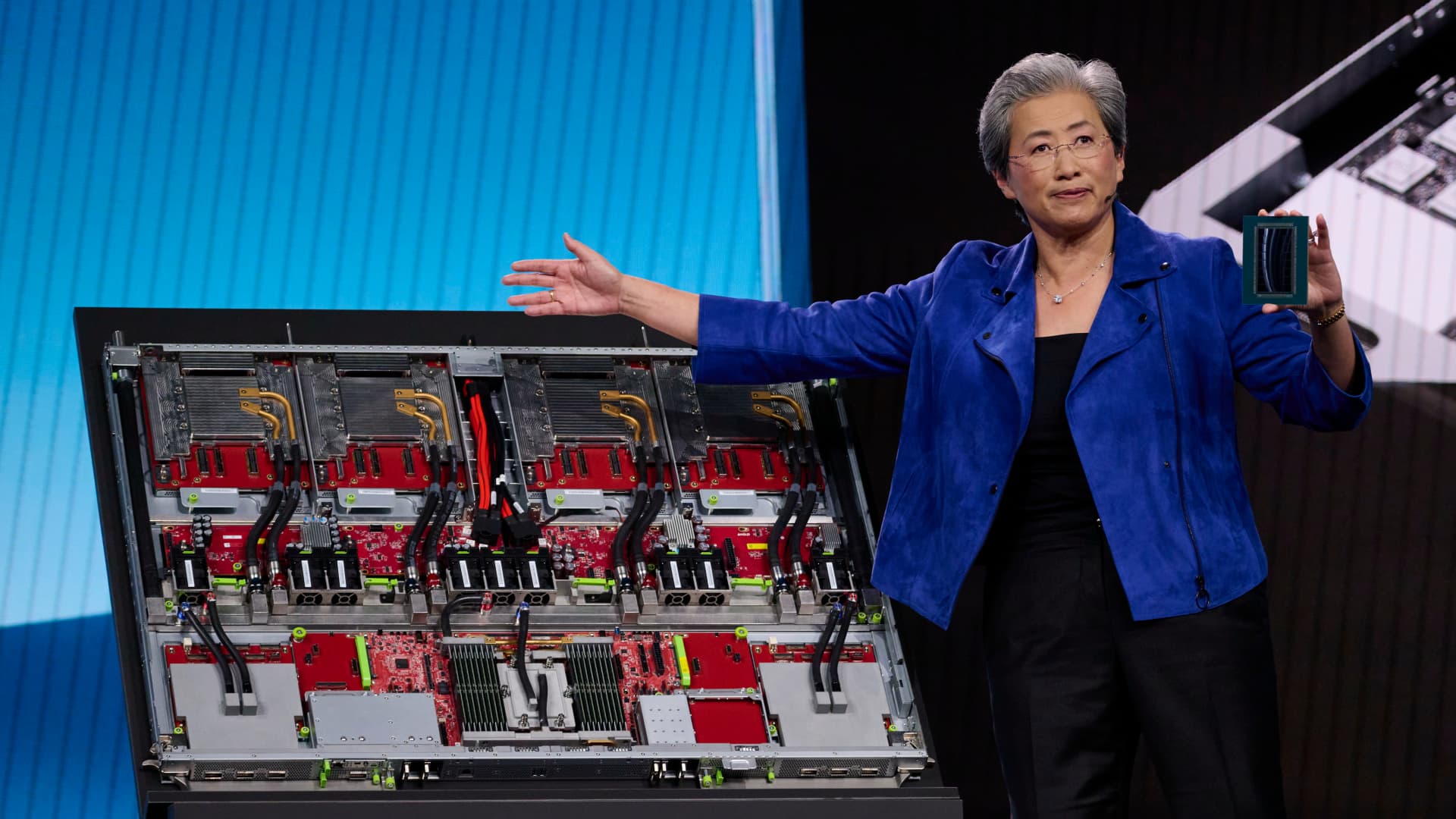
- AMD Stock Surge: AMD shares rose over 7% after Bernstein raised its price target from $235 to $265, with analyst Stacy Rasgon highlighting the company's benefits from strong server CPU demand, which is expected to enhance its market performance further.
- Intel Price Target Increase: Bernstein also lifted Intel's price target from $36 to $60, resulting in a nearly 5% stock increase, reflecting growing market confidence in Intel's future growth potential, which may attract more investor interest.
- Aehr Test Systems Order Boost: Aehr Test Systems announced a $41 million production order from a leading hyperscale AI customer, leading to an 11% stock increase, which not only strengthens the company's market position but also potentially drives future earnings growth.
- PPG Global Price Hike: PPG Industries announced a global price increase of up to 20% across its product portfolio, resulting in about a 5% stock rise, as this move addresses rising raw material and packaging costs, demonstrating the company's proactive strategy in navigating market challenges.

PepsiCo Beats Expectations, Stock Rises 1%

- Earnings Beat: PepsiCo reported first-quarter adjusted earnings of $1.61 per share on revenues of $19.44 billion, surpassing analyst expectations of $1.55 and $18.94 billion, resulting in a 1% stock increase, indicating strong performance in a competitive market.
- Price Increase Strategy: PPG Industries announced a global price increase of up to 20%, leading to a 6% stock rise, driven by rising raw material and packaging costs due to volatility in petrochemical, energy, and transportation markets, showcasing the company's proactive approach to cost pressures.
- Space Tech Advancement: Voyager Technologies' stock jumped 7% after being selected by NASA for its seventh private astronaut mission, expected to launch no earlier than 2028, marking a significant recognition and advancement in the space technology sector.
- REIT Challenges: SL Green Realty's shares fell 2% despite net rental revenue of approximately $166 million exceeding expectations of $144.5 million, as funds from operations per share dropped to $0.84 from $1.40 last year, reflecting pressures in the real estate market.
Voyager Secures NASA Order for Seventh Private Astronaut Mission
- NASA Order Confirmation: Voyager Technologies announced it has secured a NASA order for its seventh private astronaut mission, VOYG-1, targeted for launch no earlier than 2028, which aligns with NASA's strategy to transition low-Earth orbit operations to commercial providers, fostering a sustainable private spaceflight ecosystem.
- Life Support System Development: This contract will enable Voyager to develop and test life-support systems, crew operations, and integrated spacecraft architecture necessary for future space stations, thereby laying a foundation for the company's long-term growth in the aerospace sector.
- Strategic Investment Enhancement: The contract not only strengthens the company's broader space strategy but also complements its lunar initiatives and multi-million-dollar investment in Max Space, demonstrating the company's commitment to diversifying its aerospace business.
- Positive Stock Reaction: Following the announcement, Voyager Technologies' stock traded approximately 4.68% higher to around $31.31 in after-hours trading, reflecting market optimism regarding the company's future space projects.
US Stocks Close Higher with Chipmakers Rallying
- Market Recovery: On Thursday, the S&P 500 rose by 0.26% and the Nasdaq 100 by 0.49%, reaching new highs, indicating a strong rebound after early losses and reflecting investor confidence in economic recovery.
- Chip Sector Boost: Taiwan Semiconductor Manufacturing Co raised its 2026 revenue forecast, highlighting strong AI demand, which propelled chipmakers' stock prices, particularly benefiting major suppliers to Nvidia and Apple, further enhancing market optimism.
- Oil Price Impact: Despite the stock market gains, crude oil prices surged over 3%, raising concerns about the Middle East situation and limiting the market's upward momentum, illustrating the potential impact of energy prices on the overall economy.
- Mixed Economic Data: Initial jobless claims fell to 207,000, exceeding expectations and indicating labor market strength, but unexpected declines in manufacturing production reflect economic uncertainty, which could influence future monetary policy.
US Stocks Dip Slightly as Chipmakers Weigh on Market
- Market Performance: The S&P 500 index fell by 0.15%, the Dow Jones Industrial Average decreased by 0.06%, and the Nasdaq 100 dropped by 0.21%, indicating a slight market pullback after reaching new highs, particularly pressured by weakness in chipmakers.
- Economic Data: Initial jobless claims in the US fell by 11,000 to 207,000, indicating a stronger labor market than the expected 213,000; additionally, the Philadelphia Fed business outlook unexpectedly rose by 8.6 to a 15-month high of 26.7, reflecting potential economic recovery.
- Oil Price Fluctuations: WTI crude oil prices increased by over 1% as the US naval blockade of the Strait of Hormuz enters its fourth day, which could exacerbate global oil and fuel shortages, impacting future energy market stability.
- Earnings Season: Q1 earnings for the S&P 500 are projected to rise by 12% year-over-year, but excluding the technology sector, the earnings growth is only 3%, the lowest in two years, indicating a cautious market outlook on profit growth.
US Stocks Rise Slightly, Chipmakers Rebound
- Chipmaker Rebound: Taiwan Semiconductor Manufacturing Co raised its 2026 revenue forecast, reflecting strong AI demand, which led to a rebound in chipmakers, with ON Semiconductor up over 10% and AMD up over 5%, indicating renewed market confidence in tech stocks.
- Mixed Economic Data: Initial jobless claims fell to 207,000, below the expected 213,000, suggesting a strong labor market; however, manufacturing production unexpectedly declined by 0.1%, highlighting the unevenness of economic recovery, which could influence future policy decisions.
- Oil Price Surge Impact: WTI crude oil prices rose over 2% due to escalating tensions between Iran and the US, potentially exacerbating global oil and fuel shortages, which negatively affects airline and cruise line profitability, leading to declines in related stocks.
- Earnings Season Begins: Q1 earnings for the S&P 500 are projected to rise by 12% year-over-year, but excluding the tech sector, growth is only expected at 3%, raising concerns about the profitability of non-tech stocks and potentially impacting investor confidence.
AMD Shares Surge 7% Following Price Target Increase
- AMD Stock Surge: AMD shares rose over 7% after Bernstein raised its price target from $235 to $265, with analyst Stacy Rasgon highlighting the company's benefits from strong server CPU demand, which is expected to enhance its market performance further.
- Intel Price Target Increase: Bernstein also lifted Intel's price target from $36 to $60, resulting in a nearly 5% stock increase, reflecting growing market confidence in Intel's future growth potential, which may attract more investor interest.
- Aehr Test Systems Order Boost: Aehr Test Systems announced a $41 million production order from a leading hyperscale AI customer, leading to an 11% stock increase, which not only strengthens the company's market position but also potentially drives future earnings growth.
- PPG Global Price Hike: PPG Industries announced a global price increase of up to 20% across its product portfolio, resulting in about a 5% stock rise, as this move addresses rising raw material and packaging costs, demonstrating the company's proactive strategy in navigating market challenges.
PepsiCo Beats Expectations, Stock Rises 1%
- Earnings Beat: PepsiCo reported first-quarter adjusted earnings of $1.61 per share on revenues of $19.44 billion, surpassing analyst expectations of $1.55 and $18.94 billion, resulting in a 1% stock increase, indicating strong performance in a competitive market.
- Price Increase Strategy: PPG Industries announced a global price increase of up to 20%, leading to a 6% stock rise, driven by rising raw material and packaging costs due to volatility in petrochemical, energy, and transportation markets, showcasing the company's proactive approach to cost pressures.
- Space Tech Advancement: Voyager Technologies' stock jumped 7% after being selected by NASA for its seventh private astronaut mission, expected to launch no earlier than 2028, marking a significant recognition and advancement in the space technology sector.
- REIT Challenges: SL Green Realty's shares fell 2% despite net rental revenue of approximately $166 million exceeding expectations of $144.5 million, as funds from operations per share dropped to $0.84 from $1.40 last year, reflecting pressures in the real estate market.