Ulta Beauty Surges Past 5-Day SMA Amid Mixed Signals
Shares of Ulta Beauty Inc. (ULTA.O) experienced a notable uptick, crossing above its 5-day simple moving average (SMA) as the stock closed at $497.72, despite a 1.9% decline on the day. This technical breakout signals a potential shift in momentum, even as the company faces scrutiny over its valuation, with analysts suggesting it may be overvalued by 37.7% based on discounted cash flow models. The recent trading activity has been marked by a significant volume of options, with 2,610 contracts traded, indicating heightened investor interest ahead of the upcoming earnings report. Investors are anticipating Ulta's earnings release, projecting a year-over-year decline in earnings but an increase in revenue, reflecting the mixed signals in the retail sector following Target's disappointing sales figures. As Ulta navigates these challenges, its performance remains under close watch, particularly in light of its recent pullback and the broader market dynamics.
Trade with 70% Backtested Accuracy
Analyst Views on ULTA

About ULTA
About the author


Ulta Beauty's Positive Outlook Ahead of Earnings Report
- Stock Performance: Ulta Beauty closed at $553.36, marking a 2.58% increase from the previous day, outperforming the S&P 500's 1.2% gain, indicating strong market resilience.
- Financial Forecast: The upcoming earnings report is expected to show an EPS of $6.94, reflecting a 3.58% year-over-year increase, with projected revenue of $3.08 billion, an 8.16% rise, highlighting the company's growth trajectory.
- Valuation Metrics: Ulta Beauty's forward P/E ratio stands at 18.99, significantly above the industry average of 16, suggesting strong market confidence in its future growth, while its PEG ratio of 1.98 is slightly higher than the industry average of 1.8.
- Analyst Ratings: Currently rated as Zacks Rank #3 (Hold), Ulta Beauty's EPS projection has slightly decreased by 0.01% in the last 30 days, yet analysts maintain a favorable outlook on the company's health, indicating potential positive stock movements in the near term.
Naomi Watts Advocates for Menopause Conversations
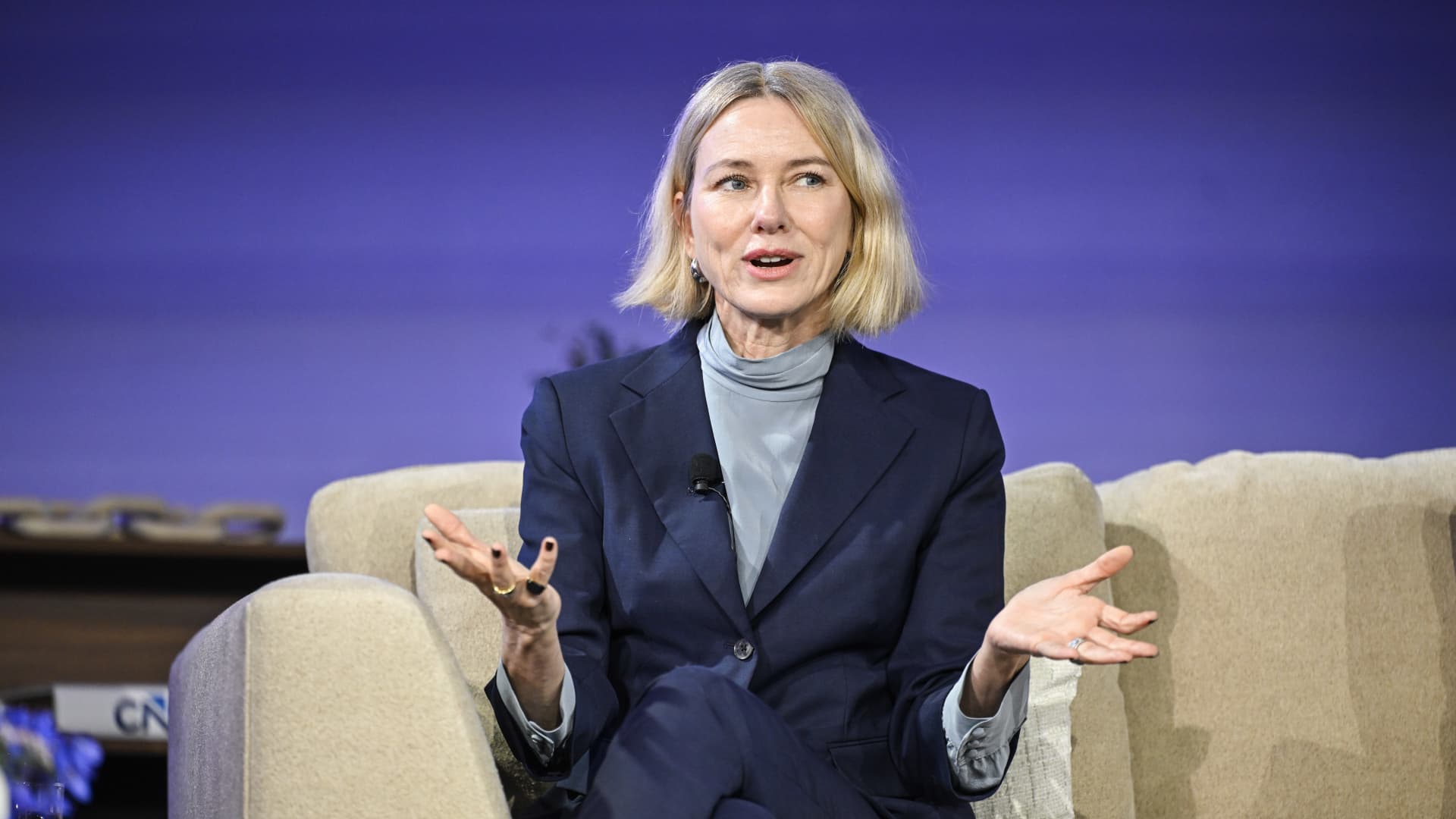
- Health Advocacy: At the CNBC Changemakers Summit, Naomi Watts emphasized the importance of women feeling confident in their bodies while navigating menopause and physical changes, aiming to break societal taboos surrounding these topics and help women embrace their identities.
- Business Growth: Founded in 2022, her company Stripes Beauty focuses on assisting women with perimenopause and menopause challenges, successfully entering major retailers like Ulta Beauty and Sephora, indicating a shift of this previously niche category into mainstream consumer health.
- Market Impact: According to Midi Health, 6,000 women enter menopause daily in the U.S., totaling 1.3 million annually, and Watts' advocacy helps raise public awareness of this natural biological process, potentially driving demand for women's health products.
- Social Responsibility: By launching

Market Volatility and AI Outlook Analysis
- Earnings Season Outlook: As Q1 concludes, the market enters earnings season, with analysts focusing on company guidance amidst geopolitical turmoil and oil price fluctuations, which may lead firms to adjust or withdraw guidance, impacting investor confidence.
- AI Infrastructure Investment: Predictions indicate that capital expenditures from the four major hyperscalers could reach $650-$700 billion in 2026; however, power and water constraints may delay or cancel data center constructions, affecting growth potential in AI-related businesses.
- SaaS Industry Prospects: Analysts express caution regarding the future of the SaaS sector, monitoring revenue growth and margin changes, particularly as economic uncertainties may prompt companies to reduce investments, putting pressure on market valuations.
- Meta's AI Developments: Meta announced a $21 billion infrastructure deal with CoreWeave, and while its AI model has excelled in various benchmarks, the challenge remains in monetizing it effectively, especially when compared to competitors like Google and Microsoft.

Market Turbulence and AI Investment Outlook
- Market Volatility Analysis: As Q1 concludes, the market faces challenges from the resumption of the Iran war and rising oil prices, with analysts predicting that companies may issue cautious guidance in the upcoming earnings season, potentially impacting investor confidence.
- AI Infrastructure Spending: The top four cloud companies are expected to allocate $650-$700 billion for capital expenditures in 2026, although power supply constraints may delay or cancel data center construction, affecting the long-term growth potential of the AI sector.
- Software Industry Outlook: Analysts are closely monitoring the SaaS sector, particularly as revenue growth slows and margin compression occurs, which could undermine investor confidence in related companies amid increasing economic uncertainty.
- Stock Buyback Trends: In light of an unclear economic outlook, companies may reduce stock buybacks, reflecting management's cautious stance on future prospects, which could influence market perceptions of these firms in the long run.

GLP-1 Drugs Drive Growth in U.S. Apparel Spending


- Surge in Apparel Demand: Approximately 80% of GLP-1 users anticipate needing new clothing due to size changes, with a Circana survey revealing that 55% of active users have already purchased new items, indicating a fresh wave of consumer spending in the apparel market.
- Significant Market Potential: Bernstein estimates that GLP-1 users could purchase between 150 million and 700 million apparel items due to weight loss, translating to an additional $13 billion in annual spending in the U.S. apparel sector, highlighting robust market demand.
- Brands Adapting to Change: Retailers like Stitch Fix have launched targeted marketing campaigns for weight loss users, with client mentions of weight loss requests tripling over the past two years, demonstrating brands' proactive adaptation to this emerging trend.
- Shift in Consumer Behavior: An increasing number of consumers are opting for more affordable clothing during their weight loss journey, with Destination XL's CEO noting that about 25% of their customers are using GLP-1 drugs, leading to a preference for cost-effective options.

Trump Announces U.S.-Iran Ceasefire Agreement

- Market Surge: Following Trump's announcement of a two-week ceasefire between the U.S. and Iran, stocks soared, with S&P 500 futures rising sharply, reflecting market optimism about the potential end of the conflict.
- Crude Price Plunge: The ceasefire led to an 18% drop in West Texas Intermediate futures to around $92 per barrel, while Brent oil fell 16.7%, alleviating inflationary pressures and potentially boosting consumer spending.
- Airline Stocks Rally: Lower crude prices resulted in significant gains for airlines, with United Airlines up over 12% and Delta Air Lines rising about 11%, indicating that reduced fuel costs could enhance profitability and stimulate travel demand.
- Tech Stocks Strengthen: Stocks like Sandisk and On Semiconductor, identified by JPMorgan as inversely correlated with WTI, saw premarket gains of 9% and 5% respectively, suggesting renewed investor confidence in technology amid the positive market sentiment.
Ulta Beauty's Positive Outlook Ahead of Earnings Report
- Stock Performance: Ulta Beauty closed at $553.36, marking a 2.58% increase from the previous day, outperforming the S&P 500's 1.2% gain, indicating strong market resilience.
- Financial Forecast: The upcoming earnings report is expected to show an EPS of $6.94, reflecting a 3.58% year-over-year increase, with projected revenue of $3.08 billion, an 8.16% rise, highlighting the company's growth trajectory.
- Valuation Metrics: Ulta Beauty's forward P/E ratio stands at 18.99, significantly above the industry average of 16, suggesting strong market confidence in its future growth, while its PEG ratio of 1.98 is slightly higher than the industry average of 1.8.
- Analyst Ratings: Currently rated as Zacks Rank #3 (Hold), Ulta Beauty's EPS projection has slightly decreased by 0.01% in the last 30 days, yet analysts maintain a favorable outlook on the company's health, indicating potential positive stock movements in the near term.
Naomi Watts Advocates for Menopause Conversations
- Health Advocacy: At the CNBC Changemakers Summit, Naomi Watts emphasized the importance of women feeling confident in their bodies while navigating menopause and physical changes, aiming to break societal taboos surrounding these topics and help women embrace their identities.
- Business Growth: Founded in 2022, her company Stripes Beauty focuses on assisting women with perimenopause and menopause challenges, successfully entering major retailers like Ulta Beauty and Sephora, indicating a shift of this previously niche category into mainstream consumer health.
- Market Impact: According to Midi Health, 6,000 women enter menopause daily in the U.S., totaling 1.3 million annually, and Watts' advocacy helps raise public awareness of this natural biological process, potentially driving demand for women's health products.
- Social Responsibility: By launching
Market Volatility and AI Outlook Analysis
- Earnings Season Outlook: As Q1 concludes, the market enters earnings season, with analysts focusing on company guidance amidst geopolitical turmoil and oil price fluctuations, which may lead firms to adjust or withdraw guidance, impacting investor confidence.
- AI Infrastructure Investment: Predictions indicate that capital expenditures from the four major hyperscalers could reach $650-$700 billion in 2026; however, power and water constraints may delay or cancel data center constructions, affecting growth potential in AI-related businesses.
- SaaS Industry Prospects: Analysts express caution regarding the future of the SaaS sector, monitoring revenue growth and margin changes, particularly as economic uncertainties may prompt companies to reduce investments, putting pressure on market valuations.
- Meta's AI Developments: Meta announced a $21 billion infrastructure deal with CoreWeave, and while its AI model has excelled in various benchmarks, the challenge remains in monetizing it effectively, especially when compared to competitors like Google and Microsoft.
Market Turbulence and AI Investment Outlook
- Market Volatility Analysis: As Q1 concludes, the market faces challenges from the resumption of the Iran war and rising oil prices, with analysts predicting that companies may issue cautious guidance in the upcoming earnings season, potentially impacting investor confidence.
- AI Infrastructure Spending: The top four cloud companies are expected to allocate $650-$700 billion for capital expenditures in 2026, although power supply constraints may delay or cancel data center construction, affecting the long-term growth potential of the AI sector.
- Software Industry Outlook: Analysts are closely monitoring the SaaS sector, particularly as revenue growth slows and margin compression occurs, which could undermine investor confidence in related companies amid increasing economic uncertainty.
- Stock Buyback Trends: In light of an unclear economic outlook, companies may reduce stock buybacks, reflecting management's cautious stance on future prospects, which could influence market perceptions of these firms in the long run.
GLP-1 Drugs Drive Growth in U.S. Apparel Spending
- Surge in Apparel Demand: Approximately 80% of GLP-1 users anticipate needing new clothing due to size changes, with a Circana survey revealing that 55% of active users have already purchased new items, indicating a fresh wave of consumer spending in the apparel market.
- Significant Market Potential: Bernstein estimates that GLP-1 users could purchase between 150 million and 700 million apparel items due to weight loss, translating to an additional $13 billion in annual spending in the U.S. apparel sector, highlighting robust market demand.
- Brands Adapting to Change: Retailers like Stitch Fix have launched targeted marketing campaigns for weight loss users, with client mentions of weight loss requests tripling over the past two years, demonstrating brands' proactive adaptation to this emerging trend.
- Shift in Consumer Behavior: An increasing number of consumers are opting for more affordable clothing during their weight loss journey, with Destination XL's CEO noting that about 25% of their customers are using GLP-1 drugs, leading to a preference for cost-effective options.
Trump Announces U.S.-Iran Ceasefire Agreement
- Market Surge: Following Trump's announcement of a two-week ceasefire between the U.S. and Iran, stocks soared, with S&P 500 futures rising sharply, reflecting market optimism about the potential end of the conflict.
- Crude Price Plunge: The ceasefire led to an 18% drop in West Texas Intermediate futures to around $92 per barrel, while Brent oil fell 16.7%, alleviating inflationary pressures and potentially boosting consumer spending.
- Airline Stocks Rally: Lower crude prices resulted in significant gains for airlines, with United Airlines up over 12% and Delta Air Lines rising about 11%, indicating that reduced fuel costs could enhance profitability and stimulate travel demand.
- Tech Stocks Strengthen: Stocks like Sandisk and On Semiconductor, identified by JPMorgan as inversely correlated with WTI, saw premarket gains of 9% and 5% respectively, suggesting renewed investor confidence in technology amid the positive market sentiment.