Robinhood Shares Decline Amid Market Weakness

Robinhood Markets Inc. shares fell by 5% as it crossed below the 5-day SMA, reflecting a challenging trading environment.
Despite the recent SEC regulatory changes that eased day-trading requirements, which previously boosted Robinhood's stock by 10%, analysts remain cautious about the company's future performance. The lack of inclusion in recent investment recommendations highlights concerns regarding investor confidence and market positioning. The overall market sentiment, with the Nasdaq-100 and S&P 500 both down, has contributed to the stock's decline, indicating a sector rotation away from Robinhood despite the positive regulatory backdrop.
The implications of this decline suggest that while regulatory changes may enhance trading activity in the long term, immediate market conditions are weighing heavily on Robinhood's stock. Investors may need to reassess their positions as the company navigates through this volatile environment.
Trade with 70% Backtested Accuracy
Analyst Views on HOOD

About HOOD
About the author


Robinhood Ventures Fund I Closes Up 14% Amid Strong Performance
- Strong Fund Performance: Robinhood Ventures Fund I closed up over 14% on Friday at $39.13 per share, achieving an impressive cumulative gain of over 86% since its listing, significantly outperforming major indices and reflecting robust market demand and investor confidence.
- Major Investment Announcement: The fund garnered significant attention after announcing a $75 million investment in AI company OpenAI on April 17, which is expected to lay the groundwork for the company's upcoming public listing, further enhancing the fund's market appeal.
- Market Capitalization Milestone: Robinhood Ventures Fund I surpassed a $1 billion market capitalization on Friday, with CEO Vlad Tenev highlighting this achievement on social media, emphasizing the importance of retail investors in the market and the company's commitment to providing more opportunities for everyday investors.
- Diverse Investment Portfolio: The fund has also invested $14.6 million in Stripe and nearly $20 million in ElevenLabs, holding stakes in companies like Databricks, Revolut, Mercor, and Airwallex, showcasing its extensive positioning in high-value private firms.
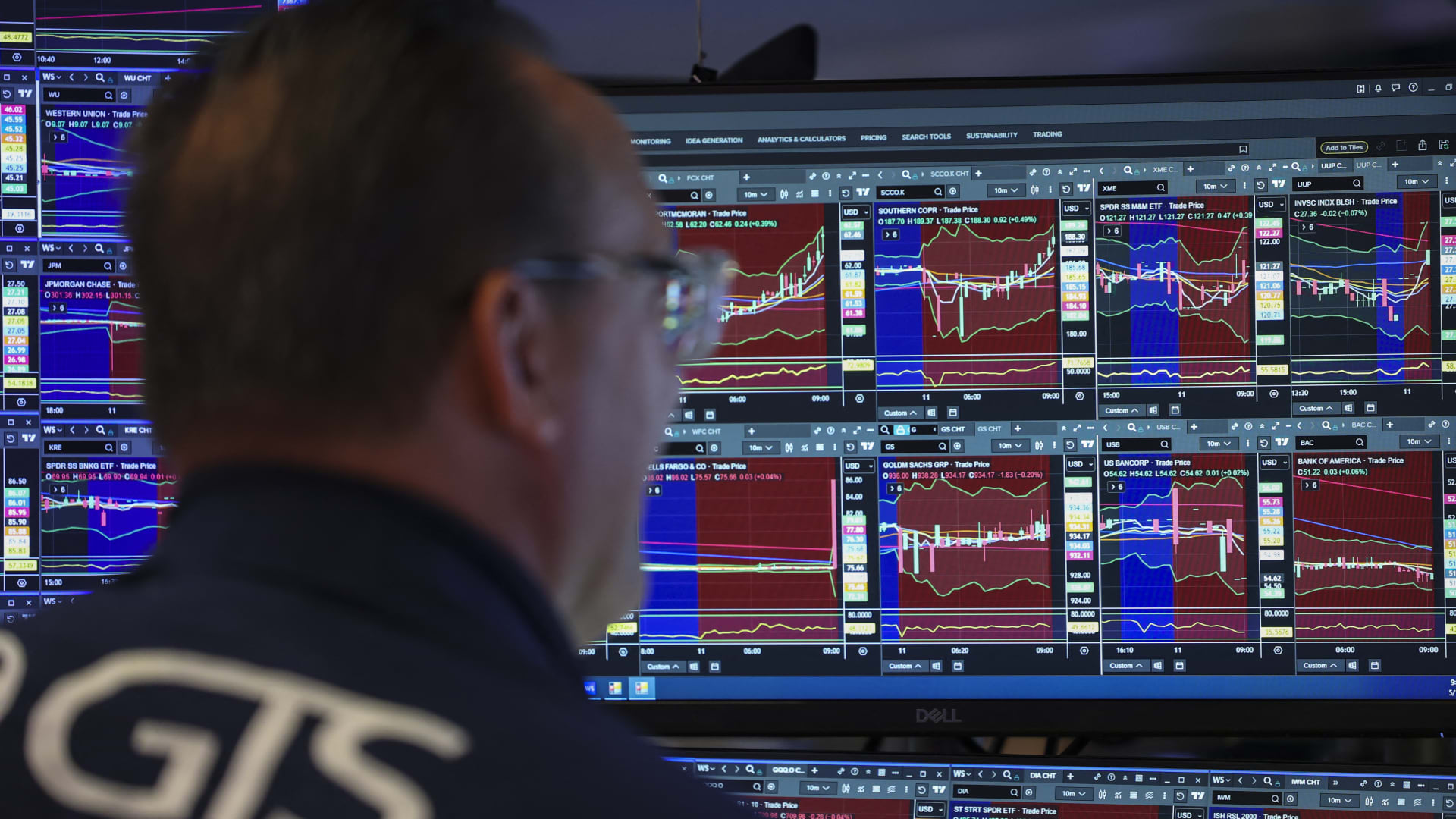
Retail Traders Show Renewed Optimism in Tech Stocks


- Surge in Retail Trading: According to Cboe's report, retail traders are buying calls on the 'Mag 10' stocks at the highest rate since 2021, with 52% of new positions being call purchases, indicating strong investor confidence in a market rebound.
- Market Sentiment Reversal: The current call-buying metric has risen 15 points from a month ago, suggesting that investors have shifted focus from geopolitical concerns and oil prices to actively participating in the market rally.
- Options Prices Soar: The price of call contracts on the Nasdaq-100 index has reached a 52-week high, nearing a three-year record, reflecting strong demand for tech stocks and bullish investor sentiment.
- Increased Single-Stock Volatility: As traders focus more on single stocks, the ratio of Cboe's S&P 500 Constituent Volatility Index to VIX has widened to the 98th percentile, indicating a significant rise in attention towards individual stocks in the market.

Robinhood Reports Strong Q1 2026 Financial Results
- Significant Revenue Growth: Robinhood's Q1 total net revenues increased by 15% year-over-year to $1.07 billion, with transaction-based revenues rising 7% and net interest revenues up 24%, indicating strong market performance.
- Slight Net Income Increase: The company's net income rose 3% year-over-year to $346 million, maintaining profitability despite challenges from lower short-term interest rates, reflecting the resilience of its business model.
- Substantial Asset Growth: Total platform assets surged 39% year-over-year to $307 billion, driven by continued net deposits and higher equity valuations, indicating increased customer confidence and market activity.
- Enhanced Trading Activity: Active trader engagement was robust in Q1, leading to double-digit year-over-year growth in equity and options volumes, alongside record volumes in Prediction Markets, Futures, Index Options, Shorting, and Margin, showcasing the company's leadership in diversified financial services.

Coinbase and Kraken Account for 22% of AI Mentions in Crypto


- Market Share Analysis: According to the 5W Public Relations’ 2026 Crypto AI Visibility Index, Coinbase and Kraken together account for 22% of AI mentions in the crypto sector, highlighting their significant presence in consumer intent queries, far exceeding other U.S. exchanges.
- Regulatory Credibility Advantage: Gemini ranks third in the crypto market due to its “regulatory-credibility moat,” possessing a NYDFS trust company charter and full-reserve model, which allows it to lead in regulated trust prompts despite its smaller market scale.
- BlackRock IBIT's Market Impact: BlackRock's IBIT claims between 45% and 49% of U.S. spot Bitcoin ETF assets and an even larger share of Bitcoin ETF AI mentions, demonstrating its rapid consolidation in crypto asset management.
- Retail Sentiment Shift: Although Coinbase's stock dipped 0.1% in after-hours trading, its retail sentiment on Stocktwits remains in the 'bullish' zone, while Kraken's sentiment is in the 'neutral' range, reflecting differing market perceptions of these two companies.

Analysis of Robinhood Markets' 32% Stock Price Decline
- Earnings Report Shortfall: Robinhood's Q1 2026 earnings report fell short of expectations, leading to a stock price drop of over 32%, raising investor concerns that could impact market confidence and future investment decisions.
- Cryptocurrency Revenue Volatility: While cryptocurrency revenue peaked at $358 million in Q4 2024, it plummeted to $134 million in Q1 2026, a 47% quarter-over-quarter decline, highlighting the cyclical nature and volatility of this segment, which may hinder overall revenue growth.
- Diversification Strategy: Robinhood's other transaction revenue rose 7% year-over-year to $623 million, with prediction market revenue surging 320% to $147 million, indicating the company's efforts to diversify its revenue streams and reduce reliance on cryptocurrency.
- Long-Term Market Opportunity: Analysts project that by 2030, trading volume in prediction markets could reach $1 trillion, suggesting that if Robinhood can capitalize on this opportunity, it may significantly enhance its revenue and market position in the coming years.

Analysis of Robinhood's 32% Stock Drop
- Earnings Report Shortfall: Robinhood's Q1 2026 earnings report fell short of investor expectations, contributing to a stock price drop of over 32%, reflecting market concerns about its future growth, particularly amid volatile cryptocurrency revenue.
- Cryptocurrency Revenue Fluctuations: While cryptocurrency revenue reached $358 million in Q4 2024, surpassing the total of the previous three quarters, it plummeted to $134 million in Q1 2026, a 47% decline from the prior quarter, highlighting the cyclical and unstable nature of this segment.
- Diversification Strategy: Robinhood's transaction-based revenue rose 7% year-over-year to $623 million, with 'other transaction revenue' soaring 320% to $147 million, indicating potential in prediction markets, with April trading volumes expected to hit $3 billion, marking its second-best month ever.
- Market Sentiment Impact: Despite progress in diversifying revenue, the market remains fixated on cryptocurrency income, suggesting that Robinhood's stock price may continue to be influenced by fluctuations in crypto market sentiment, prompting investors to carefully consider their holding strategies.
Robinhood Ventures Fund I Closes Up 14% Amid Strong Performance
- Strong Fund Performance: Robinhood Ventures Fund I closed up over 14% on Friday at $39.13 per share, achieving an impressive cumulative gain of over 86% since its listing, significantly outperforming major indices and reflecting robust market demand and investor confidence.
- Major Investment Announcement: The fund garnered significant attention after announcing a $75 million investment in AI company OpenAI on April 17, which is expected to lay the groundwork for the company's upcoming public listing, further enhancing the fund's market appeal.
- Market Capitalization Milestone: Robinhood Ventures Fund I surpassed a $1 billion market capitalization on Friday, with CEO Vlad Tenev highlighting this achievement on social media, emphasizing the importance of retail investors in the market and the company's commitment to providing more opportunities for everyday investors.
- Diverse Investment Portfolio: The fund has also invested $14.6 million in Stripe and nearly $20 million in ElevenLabs, holding stakes in companies like Databricks, Revolut, Mercor, and Airwallex, showcasing its extensive positioning in high-value private firms.
Retail Traders Show Renewed Optimism in Tech Stocks
- Surge in Retail Trading: According to Cboe's report, retail traders are buying calls on the 'Mag 10' stocks at the highest rate since 2021, with 52% of new positions being call purchases, indicating strong investor confidence in a market rebound.
- Market Sentiment Reversal: The current call-buying metric has risen 15 points from a month ago, suggesting that investors have shifted focus from geopolitical concerns and oil prices to actively participating in the market rally.
- Options Prices Soar: The price of call contracts on the Nasdaq-100 index has reached a 52-week high, nearing a three-year record, reflecting strong demand for tech stocks and bullish investor sentiment.
- Increased Single-Stock Volatility: As traders focus more on single stocks, the ratio of Cboe's S&P 500 Constituent Volatility Index to VIX has widened to the 98th percentile, indicating a significant rise in attention towards individual stocks in the market.
Robinhood Reports Strong Q1 2026 Financial Results
- Significant Revenue Growth: Robinhood's Q1 total net revenues increased by 15% year-over-year to $1.07 billion, with transaction-based revenues rising 7% and net interest revenues up 24%, indicating strong market performance.
- Slight Net Income Increase: The company's net income rose 3% year-over-year to $346 million, maintaining profitability despite challenges from lower short-term interest rates, reflecting the resilience of its business model.
- Substantial Asset Growth: Total platform assets surged 39% year-over-year to $307 billion, driven by continued net deposits and higher equity valuations, indicating increased customer confidence and market activity.
- Enhanced Trading Activity: Active trader engagement was robust in Q1, leading to double-digit year-over-year growth in equity and options volumes, alongside record volumes in Prediction Markets, Futures, Index Options, Shorting, and Margin, showcasing the company's leadership in diversified financial services.
Coinbase and Kraken Account for 22% of AI Mentions in Crypto
- Market Share Analysis: According to the 5W Public Relations’ 2026 Crypto AI Visibility Index, Coinbase and Kraken together account for 22% of AI mentions in the crypto sector, highlighting their significant presence in consumer intent queries, far exceeding other U.S. exchanges.
- Regulatory Credibility Advantage: Gemini ranks third in the crypto market due to its “regulatory-credibility moat,” possessing a NYDFS trust company charter and full-reserve model, which allows it to lead in regulated trust prompts despite its smaller market scale.
- BlackRock IBIT's Market Impact: BlackRock's IBIT claims between 45% and 49% of U.S. spot Bitcoin ETF assets and an even larger share of Bitcoin ETF AI mentions, demonstrating its rapid consolidation in crypto asset management.
- Retail Sentiment Shift: Although Coinbase's stock dipped 0.1% in after-hours trading, its retail sentiment on Stocktwits remains in the 'bullish' zone, while Kraken's sentiment is in the 'neutral' range, reflecting differing market perceptions of these two companies.
Analysis of Robinhood Markets' 32% Stock Price Decline
- Earnings Report Shortfall: Robinhood's Q1 2026 earnings report fell short of expectations, leading to a stock price drop of over 32%, raising investor concerns that could impact market confidence and future investment decisions.
- Cryptocurrency Revenue Volatility: While cryptocurrency revenue peaked at $358 million in Q4 2024, it plummeted to $134 million in Q1 2026, a 47% quarter-over-quarter decline, highlighting the cyclical nature and volatility of this segment, which may hinder overall revenue growth.
- Diversification Strategy: Robinhood's other transaction revenue rose 7% year-over-year to $623 million, with prediction market revenue surging 320% to $147 million, indicating the company's efforts to diversify its revenue streams and reduce reliance on cryptocurrency.
- Long-Term Market Opportunity: Analysts project that by 2030, trading volume in prediction markets could reach $1 trillion, suggesting that if Robinhood can capitalize on this opportunity, it may significantly enhance its revenue and market position in the coming years.
Analysis of Robinhood's 32% Stock Drop
- Earnings Report Shortfall: Robinhood's Q1 2026 earnings report fell short of investor expectations, contributing to a stock price drop of over 32%, reflecting market concerns about its future growth, particularly amid volatile cryptocurrency revenue.
- Cryptocurrency Revenue Fluctuations: While cryptocurrency revenue reached $358 million in Q4 2024, surpassing the total of the previous three quarters, it plummeted to $134 million in Q1 2026, a 47% decline from the prior quarter, highlighting the cyclical and unstable nature of this segment.
- Diversification Strategy: Robinhood's transaction-based revenue rose 7% year-over-year to $623 million, with 'other transaction revenue' soaring 320% to $147 million, indicating potential in prediction markets, with April trading volumes expected to hit $3 billion, marking its second-best month ever.
- Market Sentiment Impact: Despite progress in diversifying revenue, the market remains fixated on cryptocurrency income, suggesting that Robinhood's stock price may continue to be influenced by fluctuations in crypto market sentiment, prompting investors to carefully consider their holding strategies.