Rigetti Computing Faces Revenue Challenges Amid Quantum Sector Growth

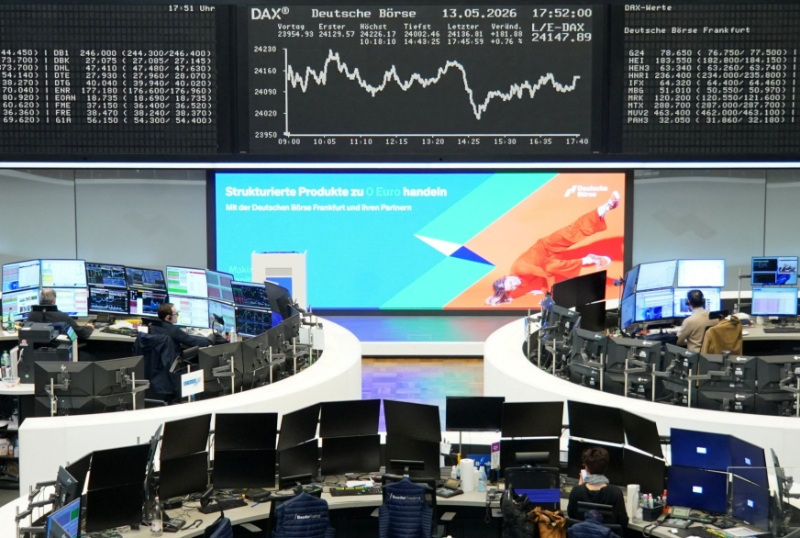
Rigetti Computing Inc. saw its shares decline by 5.04% as it crossed below the 5-day SMA, reflecting investor concerns amid a broader market downturn.
Despite the recent surge in quantum computing stocks following Nvidia's AI announcement, Rigetti reported a net loss of $18 million in Q4 2025, raising questions about its competitive position in the rapidly evolving quantum sector. The company achieved $3.1 million in revenue in Q1 2024, but the overall revenue growth remains weak compared to competitors like D-Wave Quantum, which reported significant revenue increases.
The quantum computing market is still in its infancy, and while Rigetti faces challenges, the potential for growth remains. Investors are advised to monitor upcoming quarterly reports closely to assess whether Rigetti can narrow the revenue gap with its competitors.
Trade with 70% Backtested Accuracy
Analyst Views on RGTI

About RGTI
About the author

Rigetti Computing Faces Significant Challenges Amidst Quantum Hype
- Poor Financial Performance: Rigetti Computing generated approximately $7.1 million in revenue in 2025, a slight decline from the previous year, while net losses exceeded $216 million, indicating that its financial health is difficult to defend under any conventional valuation framework.
- Valuation Risks: With a price-to-sales (P/S) ratio of 607, Rigetti's market valuation of $6.2 billion reflects expectations for future revenue that are severely disconnected from current performance, lacking near-term evidence to support this outlook.
- Insider Selling: CEO Subodh Kulkarni sold roughly 1 million shares near the stock's peak for about $11 million, suggesting a potential disconnect between the frothy valuation and underlying fundamentals, raising concerns among investors.
- Ongoing Losses and Liquidity: Despite burning through nearly $100 million annually, Rigetti maintains a liquidity position of approximately $570 million with no significant debt, providing several years of runway, yet failing to validate its struggling business model.

Quantum Computing Stocks Experience Collective Decline
- Revenue Surge: IonQ's CEO reported a staggering 755% year-over-year revenue increase to $64.67 million in Q1, despite a 9% stock drop, indicating strong growth potential in the quantum computing sector.
- Market Volatility: Quantum Computing stocks saw a collective decline, with Quantum Computing Inc. and D-Wave Quantum down 9% and 7% respectively, reflecting a risk-off sentiment in the market despite no significant changes in fundamentals.
- Strong Cash Position: D-Wave and Rigetti hold $588.4 million and $569 million in cash with no debt, showcasing their financial stability in the current market environment, which may support future investments and expansions.
- Investor Focus: With D-Wave's Investor Day scheduled for June 1 at the NYSE, the market will closely monitor the stability of these stocks, particularly whether IonQ can maintain support above $50, which will indicate shifts in market sentiment.
Investor Interest Grows in Quantum Computing Market

- Stock Performance: Rigetti Computing's stock has surged nearly 70% over the past year, while IonQ's stock has also risen over 70%, indicating strong investor interest in the quantum computing market, although both companies remain unprofitable and richly valued.
- Technology Comparison: Rigetti accelerates electrons in superconducting loops to achieve quantum states, while IonQ manipulates ions with lasers; despite IonQ's higher manufacturing costs, its ability to operate at room temperature makes it easier to maintain.
- Revenue Projections: Analysts expect Rigetti's revenue to soar from $7 million to $100 million between 2025 and 2028, driven by sales of its Novera 9-qubit QPUs, while IonQ's revenue is projected to rise from $130 million to $638 million, fueled by an influx of government contracts.
- Market Outlook: The quantum computing market is expected to expand at a 31.6% CAGR from 2026 to 2034; although both Rigetti and IonQ are speculative stocks, IonQ is viewed as a more attractive investment due to its higher revenues and innovative technology.
Rigetti Computing's Q1 Revenue Surges but Stock Price Falls
- Revenue Surge: Rigetti Computing reported a Q1 revenue of $4.4 million, tripling from the previous quarter and exceeding the analyst consensus of $4.09 million, primarily driven by the sale of its Novera quantum processing unit to the University of Saskatchewan, indicating a growing market demand for quantum computing solutions.
- Margins and Expenses: While gross margins improved slightly to 31%, operating expenses surged by 24% to $7.3 million, leading to an adjusted EPS loss of $0.04, which, although better than last year's loss of $0.06, still raises concerns about the company's profitability amidst rising costs.
- Technological Advances and Challenges: The launch of the Cepheus-1-108Q quantum system, touted as the world's largest modular quantum computing system, achieved a 2-qubit fidelity of 99.1%, yet it falls short of the 99.5% target and lags behind competitors like IonQ, which boasts a 99.99% fidelity, highlighting ongoing accuracy challenges that could impact future competitiveness.
- Market Outlook and Valuation: Despite Rigetti's market capitalization exceeding $6 billion, analysts project revenues of less than $24 million by 2026, making the current valuation appear unreasonable given the company's fidelity issues, suggesting that investors should approach the stock with caution.

Quantum Secure Encryption Corp. Launches QPA v2 Platform for Post-Quantum Migration

- Platform Launch: Quantum Secure Encryption Corp. officially launched QPA v2 on March 31, 2026, marking a significant advancement in supporting organizations transitioning to quantum-resilient security architectures, which is expected to enhance market competitiveness.
- Feature Innovation: QPA v2 transforms traditional manual assessment processes into a structured, data-driven workflow with real-time visibility into quantum readiness and migration progress through the introduction of a PQC Planning Wizard, AI-enhanced assessment modules, and a centralized executive dashboard, thereby improving enterprise security and compliance.
- Market Demand: With NIST standards and regulatory deadlines approaching, all custom and legacy applications must migrate by 2030, positioning QSE's QPA v2 platform to meet the urgent needs of enterprises in quantum security migration, presenting a substantial market opportunity.
- Global Expansion: QSE expanded its footprint to 13 countries in Q1 2026 and engaged in several international cybersecurity and post-quantum security conferences, enhancing interactions with global industry, government, and enterprise stakeholders, further solidifying its market position.

Quantum Secure Encryption Corp. Launches QPA v2 Platform for Post-Quantum Migration
- Platform Launch: Quantum Secure Encryption Corp. officially launched the QPA v2 platform on March 31, 2026, marking a significant advancement in supporting organizations transitioning to quantum-resilient architectures, which is expected to accelerate enterprise migration ahead of the 2030 deadline.
- Innovative Features: QPA v2 transforms traditional manual assessment processes by introducing a PQC Planning Wizard, AI-enhanced assessment modules, and a centralized dashboard, enabling organizations to monitor quantum readiness and risk levels in real-time, thereby improving migration efficiency.
- Market Demand: With the global post-quantum cryptography market projected to reach $17.69 billion by 2034 and annual cybercrime costs expected to hit $10.5 trillion in 2026, the launch of QPA v2 addresses the urgent need for practical migration tools in the market.
- Strategic Positioning: QSE's global footprint across 13 countries and its engagement with the public sector, combined with a refreshed long-term equity incentive structure, further solidify its market position in quantum security, ensuring a competitive edge ahead of impending regulatory deadlines.
Rigetti Computing Faces Significant Challenges Amidst Quantum Hype
- Poor Financial Performance: Rigetti Computing generated approximately $7.1 million in revenue in 2025, a slight decline from the previous year, while net losses exceeded $216 million, indicating that its financial health is difficult to defend under any conventional valuation framework.
- Valuation Risks: With a price-to-sales (P/S) ratio of 607, Rigetti's market valuation of $6.2 billion reflects expectations for future revenue that are severely disconnected from current performance, lacking near-term evidence to support this outlook.
- Insider Selling: CEO Subodh Kulkarni sold roughly 1 million shares near the stock's peak for about $11 million, suggesting a potential disconnect between the frothy valuation and underlying fundamentals, raising concerns among investors.
- Ongoing Losses and Liquidity: Despite burning through nearly $100 million annually, Rigetti maintains a liquidity position of approximately $570 million with no significant debt, providing several years of runway, yet failing to validate its struggling business model.
Quantum Computing Stocks Experience Collective Decline
- Revenue Surge: IonQ's CEO reported a staggering 755% year-over-year revenue increase to $64.67 million in Q1, despite a 9% stock drop, indicating strong growth potential in the quantum computing sector.
- Market Volatility: Quantum Computing stocks saw a collective decline, with Quantum Computing Inc. and D-Wave Quantum down 9% and 7% respectively, reflecting a risk-off sentiment in the market despite no significant changes in fundamentals.
- Strong Cash Position: D-Wave and Rigetti hold $588.4 million and $569 million in cash with no debt, showcasing their financial stability in the current market environment, which may support future investments and expansions.
- Investor Focus: With D-Wave's Investor Day scheduled for June 1 at the NYSE, the market will closely monitor the stability of these stocks, particularly whether IonQ can maintain support above $50, which will indicate shifts in market sentiment.
Investor Interest Grows in Quantum Computing Market
- Stock Performance: Rigetti Computing's stock has surged nearly 70% over the past year, while IonQ's stock has also risen over 70%, indicating strong investor interest in the quantum computing market, although both companies remain unprofitable and richly valued.
- Technology Comparison: Rigetti accelerates electrons in superconducting loops to achieve quantum states, while IonQ manipulates ions with lasers; despite IonQ's higher manufacturing costs, its ability to operate at room temperature makes it easier to maintain.
- Revenue Projections: Analysts expect Rigetti's revenue to soar from $7 million to $100 million between 2025 and 2028, driven by sales of its Novera 9-qubit QPUs, while IonQ's revenue is projected to rise from $130 million to $638 million, fueled by an influx of government contracts.
- Market Outlook: The quantum computing market is expected to expand at a 31.6% CAGR from 2026 to 2034; although both Rigetti and IonQ are speculative stocks, IonQ is viewed as a more attractive investment due to its higher revenues and innovative technology.
Rigetti Computing's Q1 Revenue Surges but Stock Price Falls
- Revenue Surge: Rigetti Computing reported a Q1 revenue of $4.4 million, tripling from the previous quarter and exceeding the analyst consensus of $4.09 million, primarily driven by the sale of its Novera quantum processing unit to the University of Saskatchewan, indicating a growing market demand for quantum computing solutions.
- Margins and Expenses: While gross margins improved slightly to 31%, operating expenses surged by 24% to $7.3 million, leading to an adjusted EPS loss of $0.04, which, although better than last year's loss of $0.06, still raises concerns about the company's profitability amidst rising costs.
- Technological Advances and Challenges: The launch of the Cepheus-1-108Q quantum system, touted as the world's largest modular quantum computing system, achieved a 2-qubit fidelity of 99.1%, yet it falls short of the 99.5% target and lags behind competitors like IonQ, which boasts a 99.99% fidelity, highlighting ongoing accuracy challenges that could impact future competitiveness.
- Market Outlook and Valuation: Despite Rigetti's market capitalization exceeding $6 billion, analysts project revenues of less than $24 million by 2026, making the current valuation appear unreasonable given the company's fidelity issues, suggesting that investors should approach the stock with caution.
Quantum Secure Encryption Corp. Launches QPA v2 Platform for Post-Quantum Migration
- Platform Launch: Quantum Secure Encryption Corp. officially launched QPA v2 on March 31, 2026, marking a significant advancement in supporting organizations transitioning to quantum-resilient security architectures, which is expected to enhance market competitiveness.
- Feature Innovation: QPA v2 transforms traditional manual assessment processes into a structured, data-driven workflow with real-time visibility into quantum readiness and migration progress through the introduction of a PQC Planning Wizard, AI-enhanced assessment modules, and a centralized executive dashboard, thereby improving enterprise security and compliance.
- Market Demand: With NIST standards and regulatory deadlines approaching, all custom and legacy applications must migrate by 2030, positioning QSE's QPA v2 platform to meet the urgent needs of enterprises in quantum security migration, presenting a substantial market opportunity.
- Global Expansion: QSE expanded its footprint to 13 countries in Q1 2026 and engaged in several international cybersecurity and post-quantum security conferences, enhancing interactions with global industry, government, and enterprise stakeholders, further solidifying its market position.
Quantum Secure Encryption Corp. Launches QPA v2 Platform for Post-Quantum Migration
- Platform Launch: Quantum Secure Encryption Corp. officially launched the QPA v2 platform on March 31, 2026, marking a significant advancement in supporting organizations transitioning to quantum-resilient architectures, which is expected to accelerate enterprise migration ahead of the 2030 deadline.
- Innovative Features: QPA v2 transforms traditional manual assessment processes by introducing a PQC Planning Wizard, AI-enhanced assessment modules, and a centralized dashboard, enabling organizations to monitor quantum readiness and risk levels in real-time, thereby improving migration efficiency.
- Market Demand: With the global post-quantum cryptography market projected to reach $17.69 billion by 2034 and annual cybercrime costs expected to hit $10.5 trillion in 2026, the launch of QPA v2 addresses the urgent need for practical migration tools in the market.
- Strategic Positioning: QSE's global footprint across 13 countries and its engagement with the public sector, combined with a refreshed long-term equity incentive structure, further solidify its market position in quantum security, ensuring a competitive edge ahead of impending regulatory deadlines.