Nebius Group Shares Drop Amid CoreWeave's Disappointing Earnings

Nebius Group shares fell by 14.9% in pre-market trading, hitting a 5-day low, as investor sentiment was negatively impacted by CoreWeave's widening losses and disappointing earnings report.
The decline in Nebius's stock is largely attributed to the negative market reaction following CoreWeave's earnings report, which raised concerns about the financial health of companies in the AI cloud sector. Despite Nebius's projected revenue growth of 531% to $3.35 billion by 2026, the current market sentiment remains cautious due to the significant losses both companies are experiencing.
Investors are closely monitoring Nebius's ability to transition from a GPU provider to a key player in AI infrastructure, as the company aims to capitalize on the growing demand for AI computing. However, the recent stock drop highlights the volatility and risks associated with investing in this emerging sector.
Trade with 70% Backtested Accuracy
Analyst Views on NBIS

About NBIS
About the author


Nebius Group Partners with Nvidia for Early Technology Access
- Rapid Revenue Growth: Nebius Group reported a staggering 547% increase in total revenue and an 802% rise in its core AI business in Q4 2023, indicating strong market demand during its rapid expansion, with projected annual recurring revenue reaching $7 to $9 billion by 2026, significantly boosting investor confidence.
- Strategic Partnership with Nvidia: By securing a deal with Nvidia, Nebius gains early access to cutting-edge technology, providing its clients with a competitive edge and likely attracting more developers and AI hyperscalers to its platform, thereby accelerating market share growth.
- Market Potential and Risks: With a market value of approximately $25 billion, Nebius is still in the process of expanding its computing footprint and has yet to achieve profitability; however, its growth potential in the AI sector positions it as a multibagger stock, necessitating investor attention on the timing of its profitability transition.
- Elevating Industry Position: As a neocloud company focused on AI-first infrastructure, Nebius is emerging as a leader in the market with its full-stack solutions, and despite profitability challenges, its ongoing technological investments and market demand suggest promising growth opportunities ahead.

Investment Opportunities Amid AI Stock Market Pullback


- Market Pullback Context: AI stocks are facing sell-offs due to uncertainty surrounding the Iran war and skepticism about AI spending returns; however, the long-term outlook remains bullish, presenting a buying opportunity for investors.
- Nvidia and Broadcom Competition: Nvidia's GPUs are considered the industry standard, with projected sales of $1 trillion for Blackwell and Rubin chips by 2027, while Broadcom is partnering with AI hyperscalers to design custom chips, expecting over $100 billion in annual revenue by 2027.
- Cloud Giants' Investments: Alphabet and Microsoft are seeing significant returns on their cloud computing investments, with Azure and Google Cloud revenues growing 39% and 48% year-over-year, respectively; despite both stocks being down over 20%, their investment value remains intact.
- Nebius's Rapid Growth: Nebius focuses on AI hardware and expects its annual revenue to soar from $1.25 billion to between $7 billion and $9 billion by the end of 2025, indicating strong demand for AI computing power, and with its stock down 30% from its all-time high, it presents a great investment opportunity.

AI Demand Fuels Growth in Computing Units Market
- Strong Market Demand: The insatiable demand for AI is driving profits for cloud computing companies, with Nvidia projected to achieve $1 trillion in chip sales by 2027 and Broadcom's custom AI chips expected to generate over $100 billion in annual revenue.
- Cloud Giants Performance: Alphabet and Microsoft are reaping significant returns from their cloud computing investments, with Azure and Google Cloud revenues increasing by 39% and 48% year-over-year, respectively, despite both companies' stock prices dropping over 20%, indicating their sustained market leadership.
- Investment Opportunities Arise: While skepticism surrounds AI stocks regarding uncertain returns, the long-term outlook remains bullish, suggesting that the current 20% drop in stock prices presents a prime buying opportunity for investors.
- Emerging Company Surge: Nebius, focused on AI hardware, anticipates its annual revenue to soar from $1.25 billion to between $7 billion and $9 billion by the end of 2025, reflecting the rapid growth in demand for AI computing power, and its stock is down 30%, making it an attractive investment option.
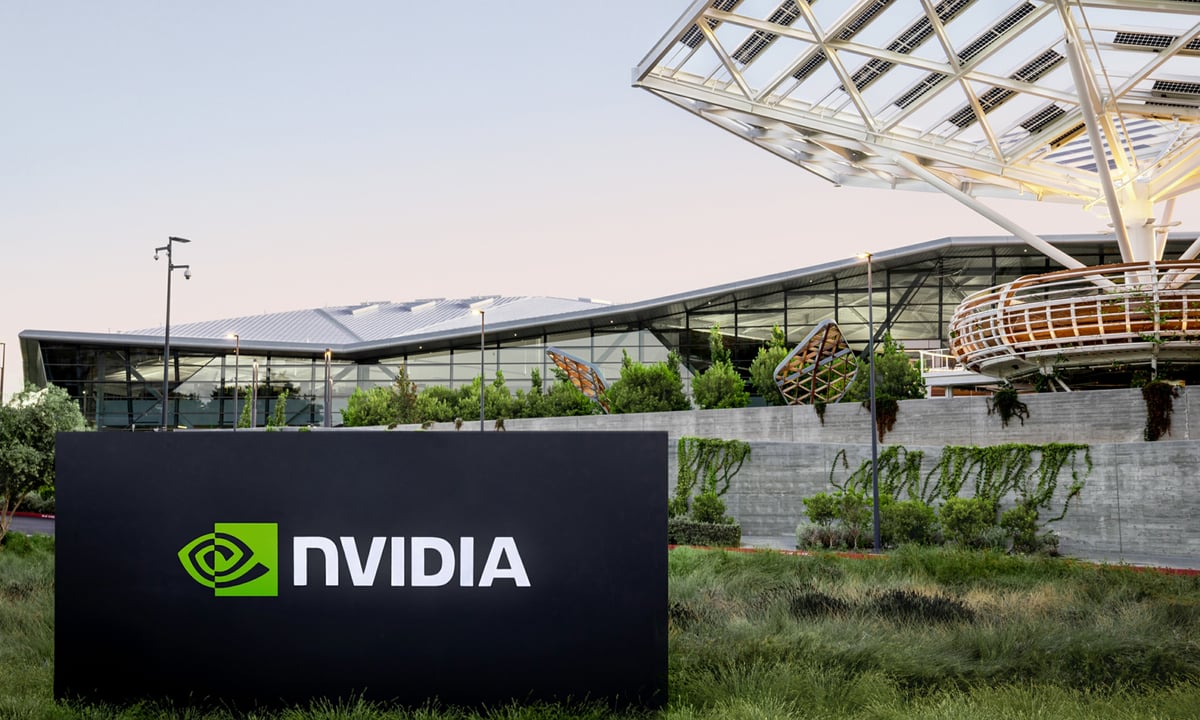
Nvidia Leads a New Era in AI Market
- Enterprise AI Adoption Accelerates: Through its partnership with Palantir Technologies, Nvidia is evolving from merely selling hardware to developing full-stack AI solutions, enabling Fortune 500 companies to build proprietary AI systems, which creates high-margin recurring revenue and transforms into long-term partnerships.
- Inference and Infrastructure Era Arrives: As the demand for AI inference surges, Nvidia is not only supplying GPUs but also a comprehensive software stack including CUDA, TensorRT, and NIM, creating a powerful flywheel effect that drives ongoing AI development and infrastructure upgrades.
- Physical AI Applications Present Vast Opportunities: Nvidia's platforms are central to accelerating robotics, autonomous vehicles, and quantum computing, with future deployments of AI-powered robots in warehouses and supply chains, establishing a long-duration revenue cycle for the company.
- Future Stock Price Expectations: If Nvidia succeeds across these new vectors, a reasonable forecast suggests an annual compound growth rate of 25% over the next five years, potentially leading to a four- or fivefold increase in stock price and a market valuation exceeding $20 trillion, reflecting sustained hypergrowth potential.

The Magnificent Seven Tech Stocks Face Challenges

- Market Performance Decline: The Magnificent Seven tech stocks, which have excelled in the market over the past few years, have recently faced declines or stagnation due to concerns about AI revenue opportunities and uncertainties in the economic and geopolitical landscape, impacting investor confidence.
- AI Chip Market Outlook: While Nvidia leads the AI chip market, Taiwan Semiconductor Manufacturing, as its chip manufacturer, is expected to play a significant role in future AI growth due to its diversified product line and broad market demand, thereby expanding its market opportunities.
- Broadcom's Growth Potential: Broadcom forecasts AI chip revenue exceeding $100 billion by 2027, successfully meeting strong customer demand with its custom chips, indicating robust growth potential in the AI sector.
- Nebius's Rapid Growth: Nebius Group excels in the AI cloud services space, achieving annual recurring revenue of $1.25 billion, with expectations to grow to $7 billion to $9 billion this year, showcasing its competitiveness and future growth potential in the rapidly expanding AI market.

Emerging Tech Stars in the Market
- TSMC's AI Potential: Taiwan Semiconductor Manufacturing (TSM), a global leader in chip manufacturing, holds a market cap of $1.8 trillion and is poised to benefit from broad market demand in AI chip production, particularly in smartphones and personal computers over the coming years.
- Broadcom's Custom Chip Advantage: Broadcom (AVGO) forecasts over $100 billion in AI chip revenue by 2027, successfully carving out a niche in the AI market with its custom chips designed for specific tasks, reflecting strong customer demand and market potential.
- Nebius Group's Rapid Growth: Nebius Group (NBIS) focuses on AI workloads, achieving annual recurring revenue of $1.25 billion in the recent year, with expectations to rise to $7 billion to $9 billion this year, showcasing its strong growth potential in the cloud computing sector.
- Market Environment Challenges: Despite concerns about the economy and geopolitical factors affecting the Magnificent Seven tech stocks, emerging companies like TSMC, Broadcom, and Nebius Group demonstrate robust growth potential, positioning themselves as future market leaders.
Nebius Group Partners with Nvidia for Early Technology Access
- Rapid Revenue Growth: Nebius Group reported a staggering 547% increase in total revenue and an 802% rise in its core AI business in Q4 2023, indicating strong market demand during its rapid expansion, with projected annual recurring revenue reaching $7 to $9 billion by 2026, significantly boosting investor confidence.
- Strategic Partnership with Nvidia: By securing a deal with Nvidia, Nebius gains early access to cutting-edge technology, providing its clients with a competitive edge and likely attracting more developers and AI hyperscalers to its platform, thereby accelerating market share growth.
- Market Potential and Risks: With a market value of approximately $25 billion, Nebius is still in the process of expanding its computing footprint and has yet to achieve profitability; however, its growth potential in the AI sector positions it as a multibagger stock, necessitating investor attention on the timing of its profitability transition.
- Elevating Industry Position: As a neocloud company focused on AI-first infrastructure, Nebius is emerging as a leader in the market with its full-stack solutions, and despite profitability challenges, its ongoing technological investments and market demand suggest promising growth opportunities ahead.
Investment Opportunities Amid AI Stock Market Pullback
- Market Pullback Context: AI stocks are facing sell-offs due to uncertainty surrounding the Iran war and skepticism about AI spending returns; however, the long-term outlook remains bullish, presenting a buying opportunity for investors.
- Nvidia and Broadcom Competition: Nvidia's GPUs are considered the industry standard, with projected sales of $1 trillion for Blackwell and Rubin chips by 2027, while Broadcom is partnering with AI hyperscalers to design custom chips, expecting over $100 billion in annual revenue by 2027.
- Cloud Giants' Investments: Alphabet and Microsoft are seeing significant returns on their cloud computing investments, with Azure and Google Cloud revenues growing 39% and 48% year-over-year, respectively; despite both stocks being down over 20%, their investment value remains intact.
- Nebius's Rapid Growth: Nebius focuses on AI hardware and expects its annual revenue to soar from $1.25 billion to between $7 billion and $9 billion by the end of 2025, indicating strong demand for AI computing power, and with its stock down 30% from its all-time high, it presents a great investment opportunity.
AI Demand Fuels Growth in Computing Units Market
- Strong Market Demand: The insatiable demand for AI is driving profits for cloud computing companies, with Nvidia projected to achieve $1 trillion in chip sales by 2027 and Broadcom's custom AI chips expected to generate over $100 billion in annual revenue.
- Cloud Giants Performance: Alphabet and Microsoft are reaping significant returns from their cloud computing investments, with Azure and Google Cloud revenues increasing by 39% and 48% year-over-year, respectively, despite both companies' stock prices dropping over 20%, indicating their sustained market leadership.
- Investment Opportunities Arise: While skepticism surrounds AI stocks regarding uncertain returns, the long-term outlook remains bullish, suggesting that the current 20% drop in stock prices presents a prime buying opportunity for investors.
- Emerging Company Surge: Nebius, focused on AI hardware, anticipates its annual revenue to soar from $1.25 billion to between $7 billion and $9 billion by the end of 2025, reflecting the rapid growth in demand for AI computing power, and its stock is down 30%, making it an attractive investment option.
Nvidia Leads a New Era in AI Market
- Enterprise AI Adoption Accelerates: Through its partnership with Palantir Technologies, Nvidia is evolving from merely selling hardware to developing full-stack AI solutions, enabling Fortune 500 companies to build proprietary AI systems, which creates high-margin recurring revenue and transforms into long-term partnerships.
- Inference and Infrastructure Era Arrives: As the demand for AI inference surges, Nvidia is not only supplying GPUs but also a comprehensive software stack including CUDA, TensorRT, and NIM, creating a powerful flywheel effect that drives ongoing AI development and infrastructure upgrades.
- Physical AI Applications Present Vast Opportunities: Nvidia's platforms are central to accelerating robotics, autonomous vehicles, and quantum computing, with future deployments of AI-powered robots in warehouses and supply chains, establishing a long-duration revenue cycle for the company.
- Future Stock Price Expectations: If Nvidia succeeds across these new vectors, a reasonable forecast suggests an annual compound growth rate of 25% over the next five years, potentially leading to a four- or fivefold increase in stock price and a market valuation exceeding $20 trillion, reflecting sustained hypergrowth potential.
The Magnificent Seven Tech Stocks Face Challenges
- Market Performance Decline: The Magnificent Seven tech stocks, which have excelled in the market over the past few years, have recently faced declines or stagnation due to concerns about AI revenue opportunities and uncertainties in the economic and geopolitical landscape, impacting investor confidence.
- AI Chip Market Outlook: While Nvidia leads the AI chip market, Taiwan Semiconductor Manufacturing, as its chip manufacturer, is expected to play a significant role in future AI growth due to its diversified product line and broad market demand, thereby expanding its market opportunities.
- Broadcom's Growth Potential: Broadcom forecasts AI chip revenue exceeding $100 billion by 2027, successfully meeting strong customer demand with its custom chips, indicating robust growth potential in the AI sector.
- Nebius's Rapid Growth: Nebius Group excels in the AI cloud services space, achieving annual recurring revenue of $1.25 billion, with expectations to grow to $7 billion to $9 billion this year, showcasing its competitiveness and future growth potential in the rapidly expanding AI market.
Emerging Tech Stars in the Market
- TSMC's AI Potential: Taiwan Semiconductor Manufacturing (TSM), a global leader in chip manufacturing, holds a market cap of $1.8 trillion and is poised to benefit from broad market demand in AI chip production, particularly in smartphones and personal computers over the coming years.
- Broadcom's Custom Chip Advantage: Broadcom (AVGO) forecasts over $100 billion in AI chip revenue by 2027, successfully carving out a niche in the AI market with its custom chips designed for specific tasks, reflecting strong customer demand and market potential.
- Nebius Group's Rapid Growth: Nebius Group (NBIS) focuses on AI workloads, achieving annual recurring revenue of $1.25 billion in the recent year, with expectations to rise to $7 billion to $9 billion this year, showcasing its strong growth potential in the cloud computing sector.
- Market Environment Challenges: Despite concerns about the economy and geopolitical factors affecting the Magnificent Seven tech stocks, emerging companies like TSMC, Broadcom, and Nebius Group demonstrate robust growth potential, positioning themselves as future market leaders.