Market Decline Affects Epam Systems Amid Broader Weakness
Written by Emily J. Thompson, Senior Investment Analyst
Updated: Jan 13 2026
0mins
Should l Buy EPAM?
Source: Benzinga
Epam Systems Inc. has seen its stock price drop as it hits a 20-day low, reflecting broader market trends.
The decline in Epam's stock is part of a larger market movement, with the Nasdaq-100 down 0.52% and the S&P 500 down 0.21%. This sector rotation has led to declines in software stocks as investors react to economic indicators and upcoming earnings reports from major companies.
As the market continues to grapple with economic uncertainties, investors are closely monitoring the performance of key sectors, including software, which may face further challenges.
Trade with 70% Backtested Accuracy
Stop guessing "Should I Buy EPAM?" and start using high-conviction signals backed by rigorous historical data.
Sign up today to access powerful investing tools and make smarter, data-driven decisions.
Analyst Views on EPAM
Wall Street analysts forecast EPAM stock price to rise
13 Analyst Rating
9 Buy
4 Hold
0 Sell
Moderate Buy
Current: 132.120

Low
170.00
Averages
214.70
High
246.00
Current: 132.120
Low
170.00
Averages
214.70
High
246.00
About EPAM
EPAM Systems, Inc. is a global provider of digital engineering, cloud and artificial intelligence-enabled transformation services, and a business and experience consulting partner for global enterprises and start-ups. The Company leverages AI to deliver transformative solutions that accelerate its clients' digital innovation. Through platforms like EPAM AI/RUN and initiatives like DIALX Lab, it integrates advanced AI technologies into tailored business strategies. Its services include strategy; engineering, cloud, data & analytics; artificial intelligence; cybersecurity, and CX+. Its clients operate in five main industry verticals (financial services; consumer goods, retail and travel; software and hi-tech; business information and media, and life sciences and healthcare) as well as a number of emerging verticals. Its strategy services include optimizing for growth, talent enablement, and mergers and acquisitions. Its engineering services include open source and quality engineering.
About the author

Emily J. Thompson
Emily J. Thompson, a Chartered Financial Analyst (CFA) with 12 years in investment research, graduated with honors from the Wharton School. Specializing in industrial and technology stocks, she provides in-depth analysis for Intellectia’s earnings and market brief reports.
EPAM Systems to Host Q1 2026 Financial Results Conference Call
- Conference Call Announcement: EPAM Systems will host a conference call on May 7, 2026, at 8:00 a.m. ET to discuss its Q1 2026 financial results, with a news release expected to be issued prior to the call for investor reference.
- Live Streaming Details: The conference call will be streamed live on EPAM's website, requiring investors to register at least 15 minutes in advance to participate, while those unable to attend live can access a replay in the Investor Relations section, ensuring timely information dissemination.
- Company Overview: EPAM Systems is a global leader in digital transformation services and product engineering, boasting over 30 years of expertise in custom software and platform engineering, dedicated to enabling Fortune Global 2000 companies and ambitious startups to achieve AI transformation and drive value from innovation and digital investments.
- Industry Recognition: EPAM has been recognized by major publications such as Forbes, Glassdoor, and Newsweek as a Most Loved Workplace globally, highlighting its leadership position in the industry and commitment to employee satisfaction.
See More

EPAM Systems Under Investigation for Securities Fraud
- Investigation Launched: The Portnoy Law Firm has initiated an investigation into EPAM Systems for possible securities fraud and may file a class action on behalf of investors, aiming to protect their legal rights and recover losses.
- Significant Stock Decline: EPAM's stock price plummeted by $9.20, or 6.61%, over two trading days, closing at $129.96, primarily due to a significant revenue reduction disclosed in the company's fiscal year 2025 financial results, which severely impacted investor confidence.
- Client Loss Impact: During the earnings call, the CFO confirmed that the largest customer of the NEORIS business would ramp down operations between Q4 and Q1, raising concerns about future revenue and exacerbating the stock price decline as the market adjusted to this anticipated loss.
- Investor Losses Worsen: The reduction in a major client has led to a pessimistic outlook on EPAM's organic growth and quarterly revenue targets, resulting in a steady erosion of shareholder value, with the Portnoy Law Firm committed to seeking compensation for affected investors.
See More
EPAM Recognized as Top IT Sourcing Vendor in Belgium and Luxembourg
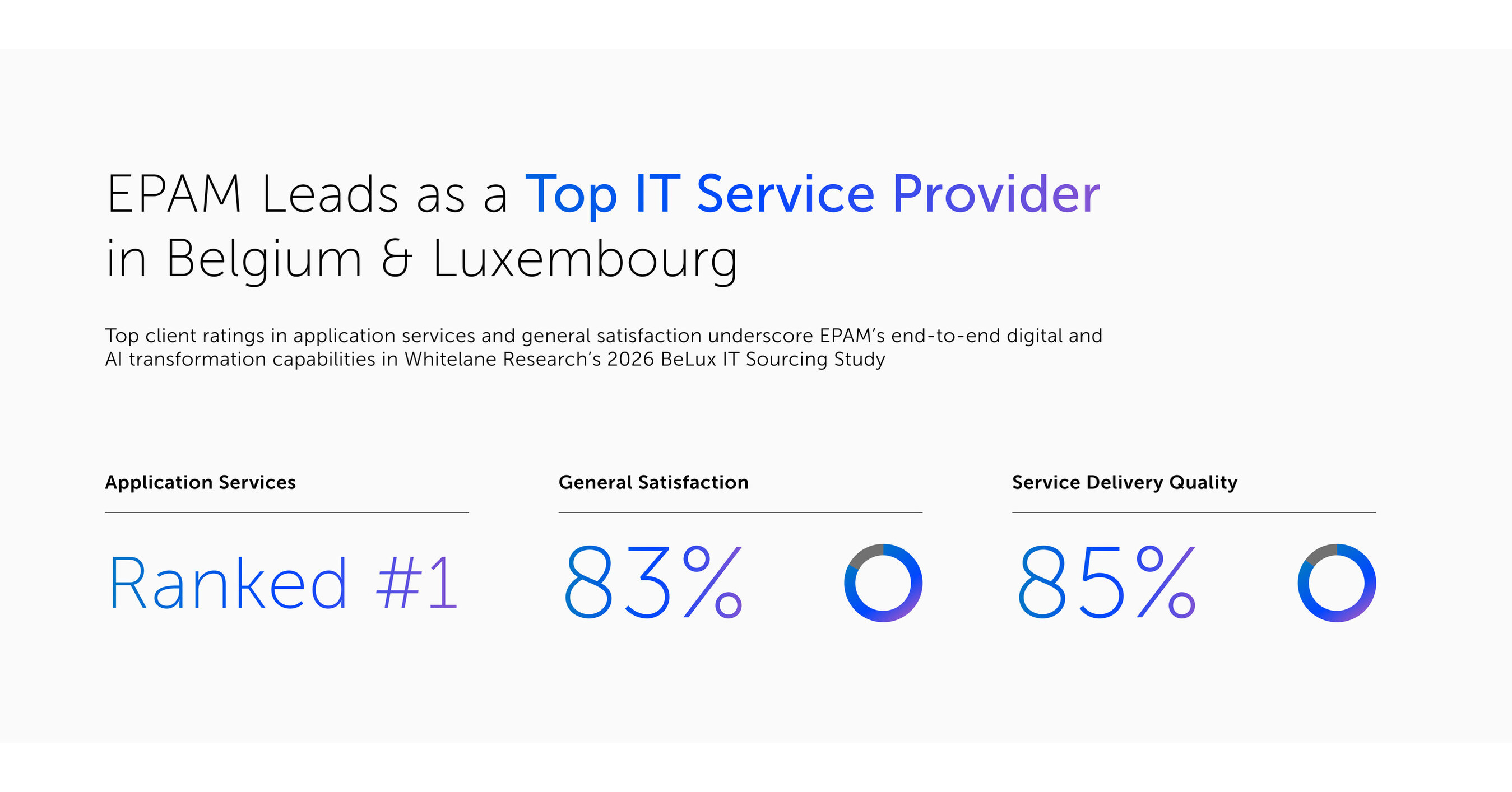
- Customer Satisfaction Boost: EPAM has been recognized as a top IT sourcing vendor in Belgium and Luxembourg by Whitelane Research in its 2026 study, highlighting its exceptional capabilities in digital and AI transformation, which further solidifies its market leadership.
- Integrated Technical Expertise: EPAM's strong engineering expertise and integrated technical capabilities enable it to accelerate clients' transformation processes, ensuring they are AI-ready in a rapidly changing market environment, thereby enhancing their competitive edge.
- Enhanced Market Adaptability: As organizations continuously adapt and scale to meet evolving market demands, EPAM's services are deemed critical for achieving digital transformation, underscoring its significance and influence within the industry.
- Increased Industry Recognition: This accolade not only reflects EPAM's outstanding performance in the IT outsourcing sector but also lays a solid foundation for future business growth and market expansion, enhancing client trust in its services.
See More

EPAM Recognized as Top IT Sourcing Vendor in Belgium and Luxembourg
- Outstanding Client Satisfaction: EPAM achieved an impressive 83% rating in both application services and overall satisfaction in Whitelane Research's 2026 BeLux IT Sourcing Study, highlighting its robust capabilities in digital and AI transformation and reinforcing its position as a trusted IT service partner.
- Leading Service Delivery Quality: With a service delivery quality rating of 85%, EPAM stands out as an exceptional performer in the industry, reflecting its strong alignment with modern enterprise needs and providing clients with consistent, measurable value that enhances competitive advantage.
- Growing Market Recognition: For the third consecutive year, EPAM has been recognized as a leading IT provider in Europe, ranking first across multiple key categories, indicating a strengthening leadership position in the IT market, particularly in Belgium and Luxembourg.
- Solid Client Base: The survey revealed zero dissatisfied clients, which not only validates EPAM's exceptional service quality but also lays a solid foundation for future business growth, further driving the company's strategic development in AI and digital transformation.
See More

Blue Door Asset Management Increases Stake in NICE


- Share Increase: Blue Door Asset Management acquired an additional 88,100 shares of NICE in Q4 2025, with an estimated transaction value of $10.64 million, indicating confidence in the company's future growth prospects.
- Value Growth: The value of NICE's position at quarter-end rose by $8.22 million, reflecting both the addition of shares and price appreciation, showcasing the company's robust performance in the market.
- Financial Performance: NICE generated $2.95 billion in revenue for 2025, an 8% year-over-year increase, with its cloud segment growing 13% to $2.24 billion, highlighting strong demand in the digital transformation space.
- Market Performance: Despite a 16.5% decline in NICE's stock price over the past year, shares have risen about 4% at the start of 2026, demonstrating investor recognition of its long-term value.
See More
EPAM Joins Microsoft Intelligent Security Association to Enhance Cybersecurity Collaboration
- Strategic Milestone: EPAM Systems announced its membership in the Microsoft Intelligent Security Association (MISA), reflecting the maturity of its security services and enhancing its existing collaboration with Microsoft to better protect customers against increasing cyber threats.
- Integrated Security Services: EPAM's security services are centered on an engineering-led approach utilizing Microsoft Security technologies, such as Microsoft Sentinel and Microsoft Defender XDR, helping clients integrate and operate security as a unified platform, thereby improving efficiency and effectiveness in security management.
- Ecosystem Collaboration: Joining MISA means tighter technical collaboration between EPAM and Microsoft, accelerating execution and improving security outcomes in production environments while supporting customers in continuously enhancing their security operations across cloud and AI-enabled environments.
- Industry Leadership: Since its establishment in 2018, MISA has grown into a vibrant ecosystem of the most reliable security vendors globally, and EPAM's membership further solidifies its leadership position in the cybersecurity community, enabling customers to predict, detect, and respond to security threats more rapidly.
See More
EPAM Systems to Host Q1 2026 Financial Results Conference Call
- Conference Call Announcement: EPAM Systems will host a conference call on May 7, 2026, at 8:00 a.m. ET to discuss its Q1 2026 financial results, with a news release expected to be issued prior to the call for investor reference.
- Live Streaming Details: The conference call will be streamed live on EPAM's website, requiring investors to register at least 15 minutes in advance to participate, while those unable to attend live can access a replay in the Investor Relations section, ensuring timely information dissemination.
- Company Overview: EPAM Systems is a global leader in digital transformation services and product engineering, boasting over 30 years of expertise in custom software and platform engineering, dedicated to enabling Fortune Global 2000 companies and ambitious startups to achieve AI transformation and drive value from innovation and digital investments.
- Industry Recognition: EPAM has been recognized by major publications such as Forbes, Glassdoor, and Newsweek as a Most Loved Workplace globally, highlighting its leadership position in the industry and commitment to employee satisfaction.
See More
EPAM Systems Under Investigation for Securities Fraud
- Investigation Launched: The Portnoy Law Firm has initiated an investigation into EPAM Systems for possible securities fraud and may file a class action on behalf of investors, aiming to protect their legal rights and recover losses.
- Significant Stock Decline: EPAM's stock price plummeted by $9.20, or 6.61%, over two trading days, closing at $129.96, primarily due to a significant revenue reduction disclosed in the company's fiscal year 2025 financial results, which severely impacted investor confidence.
- Client Loss Impact: During the earnings call, the CFO confirmed that the largest customer of the NEORIS business would ramp down operations between Q4 and Q1, raising concerns about future revenue and exacerbating the stock price decline as the market adjusted to this anticipated loss.
- Investor Losses Worsen: The reduction in a major client has led to a pessimistic outlook on EPAM's organic growth and quarterly revenue targets, resulting in a steady erosion of shareholder value, with the Portnoy Law Firm committed to seeking compensation for affected investors.
See More
EPAM Recognized as Top IT Sourcing Vendor in Belgium and Luxembourg
- Customer Satisfaction Boost: EPAM has been recognized as a top IT sourcing vendor in Belgium and Luxembourg by Whitelane Research in its 2026 study, highlighting its exceptional capabilities in digital and AI transformation, which further solidifies its market leadership.
- Integrated Technical Expertise: EPAM's strong engineering expertise and integrated technical capabilities enable it to accelerate clients' transformation processes, ensuring they are AI-ready in a rapidly changing market environment, thereby enhancing their competitive edge.
- Enhanced Market Adaptability: As organizations continuously adapt and scale to meet evolving market demands, EPAM's services are deemed critical for achieving digital transformation, underscoring its significance and influence within the industry.
- Increased Industry Recognition: This accolade not only reflects EPAM's outstanding performance in the IT outsourcing sector but also lays a solid foundation for future business growth and market expansion, enhancing client trust in its services.
See More
EPAM Recognized as Top IT Sourcing Vendor in Belgium and Luxembourg
- Outstanding Client Satisfaction: EPAM achieved an impressive 83% rating in both application services and overall satisfaction in Whitelane Research's 2026 BeLux IT Sourcing Study, highlighting its robust capabilities in digital and AI transformation and reinforcing its position as a trusted IT service partner.
- Leading Service Delivery Quality: With a service delivery quality rating of 85%, EPAM stands out as an exceptional performer in the industry, reflecting its strong alignment with modern enterprise needs and providing clients with consistent, measurable value that enhances competitive advantage.
- Growing Market Recognition: For the third consecutive year, EPAM has been recognized as a leading IT provider in Europe, ranking first across multiple key categories, indicating a strengthening leadership position in the IT market, particularly in Belgium and Luxembourg.
- Solid Client Base: The survey revealed zero dissatisfied clients, which not only validates EPAM's exceptional service quality but also lays a solid foundation for future business growth, further driving the company's strategic development in AI and digital transformation.
See More
Blue Door Asset Management Increases Stake in NICE
- Share Increase: Blue Door Asset Management acquired an additional 88,100 shares of NICE in Q4 2025, with an estimated transaction value of $10.64 million, indicating confidence in the company's future growth prospects.
- Value Growth: The value of NICE's position at quarter-end rose by $8.22 million, reflecting both the addition of shares and price appreciation, showcasing the company's robust performance in the market.
- Financial Performance: NICE generated $2.95 billion in revenue for 2025, an 8% year-over-year increase, with its cloud segment growing 13% to $2.24 billion, highlighting strong demand in the digital transformation space.
- Market Performance: Despite a 16.5% decline in NICE's stock price over the past year, shares have risen about 4% at the start of 2026, demonstrating investor recognition of its long-term value.
See More
EPAM Joins Microsoft Intelligent Security Association to Enhance Cybersecurity Collaboration
- Strategic Milestone: EPAM Systems announced its membership in the Microsoft Intelligent Security Association (MISA), reflecting the maturity of its security services and enhancing its existing collaboration with Microsoft to better protect customers against increasing cyber threats.
- Integrated Security Services: EPAM's security services are centered on an engineering-led approach utilizing Microsoft Security technologies, such as Microsoft Sentinel and Microsoft Defender XDR, helping clients integrate and operate security as a unified platform, thereby improving efficiency and effectiveness in security management.
- Ecosystem Collaboration: Joining MISA means tighter technical collaboration between EPAM and Microsoft, accelerating execution and improving security outcomes in production environments while supporting customers in continuously enhancing their security operations across cloud and AI-enabled environments.
- Industry Leadership: Since its establishment in 2018, MISA has grown into a vibrant ecosystem of the most reliable security vendors globally, and EPAM's membership further solidifies its leadership position in the cybersecurity community, enabling customers to predict, detect, and respond to security threats more rapidly.
See More